Blog

  • The Mobile Web Secret Performance Killers Are Dead PlayCanvas vs Threejs 2026

    The Mobile Web Secret Performance Killers Are Dead PlayCanvas vs Threejs 2026

    The modern mobile web is currently a graveyard of stuttering animations and crashed browser tabs that frustrate millions. Most developers are blindly shipping unoptimized geometry that suffocates the limited thermal headroom of high end smartphones.

    We are finally moving past the era where web based 3D was considered a gimmicky second class citizen. You can now achieve native console quality performance right inside a mobile browser by choosing the correct underlying architecture.

    This guide reveals the hidden engineering trade offs that determine whether your project thrives or dies on mobile. The choice between PlayCanvas and Threejs often dictates the success of high impact technical deployments.

    The Reality of High Performance Mobile Web Rendering

    Implementing a properly optimized Vulkan backend for your web scenes feels like unlocking a hidden hardware level turbo button. The transition from jagged thirty frame per second lag to a locked sixty frames per second is truly transformative.

    Your mobile device runs cooler while handling complex shaders and high resolution textures with deceptive ease and grace. It provides that rare professional satisfaction of seeing your code perfectly synchronize with the silicon power of the machine.

    You will notice immediate improvements in touch responsiveness and battery longevity once the engine overhead is finally minimized. This efficiency is critical for maintaining user engagement in competitive digital markets.

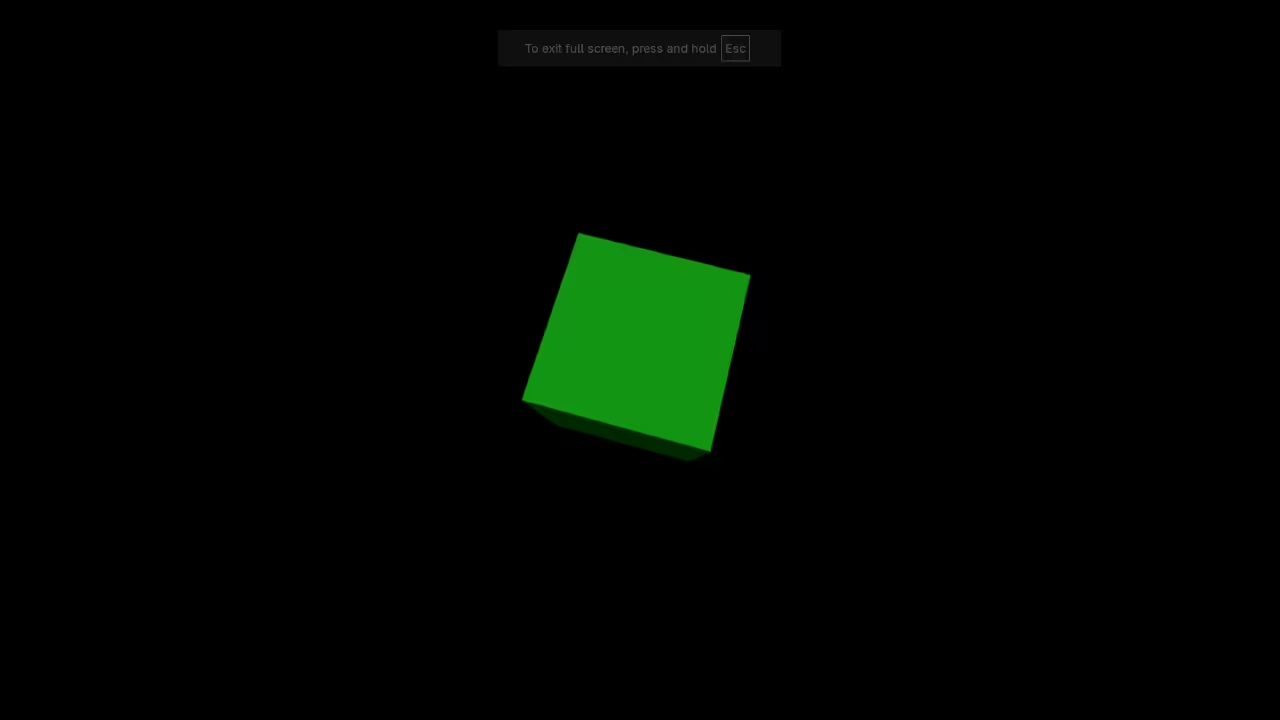
    Live technical breakdown of PlayCanvas vs Threejs architectural performance.

    Architectural Secrets for Hardware Acceleration

    One secret optimization involves bypassing standard abstraction layers to leverage direct memory access via modern browser compute shaders. For those using AMD hardware configuring your stack to prioritize ROCm kernels can drastically reduce the latency of texture uploads.

    You should explicitly set the power preference to high performance within your WebGL context initialization to prevent aggressive thermal throttling. This tiny adjustment ensures that the mobile GPU remains in its highest frequency state during heavy rendering loads.

    Use a custom frame scheduler to decouple physics calculations from the main render loop for maximum smoothness. This prevents complex logic from blocking the critical path of visual updates on the screen.

    Engine Performance and Feature Comparison Matrix
    Parameter PlayCanvas Threejs
    Editor Environment Integrated Cloud Editor Code Only Framework
    Optimization Level Ahead of Time Compiling Manual Tree Shaking
    Backend Support WebGL2 and WebGPU WebGL and WebGPU
    Memory Control Static Memory Pools Garbage Collected
    Parameter PlayCanvas Threejs
    Comparative analysis of leading mobile web engines for 2026.
    PlayCanvas Editor Performance Profiler
    Engine profiler showing optimized draw calls.
    Engine Benchmark Results in Terminal
    Comparative benchmark data on Fedora 44.
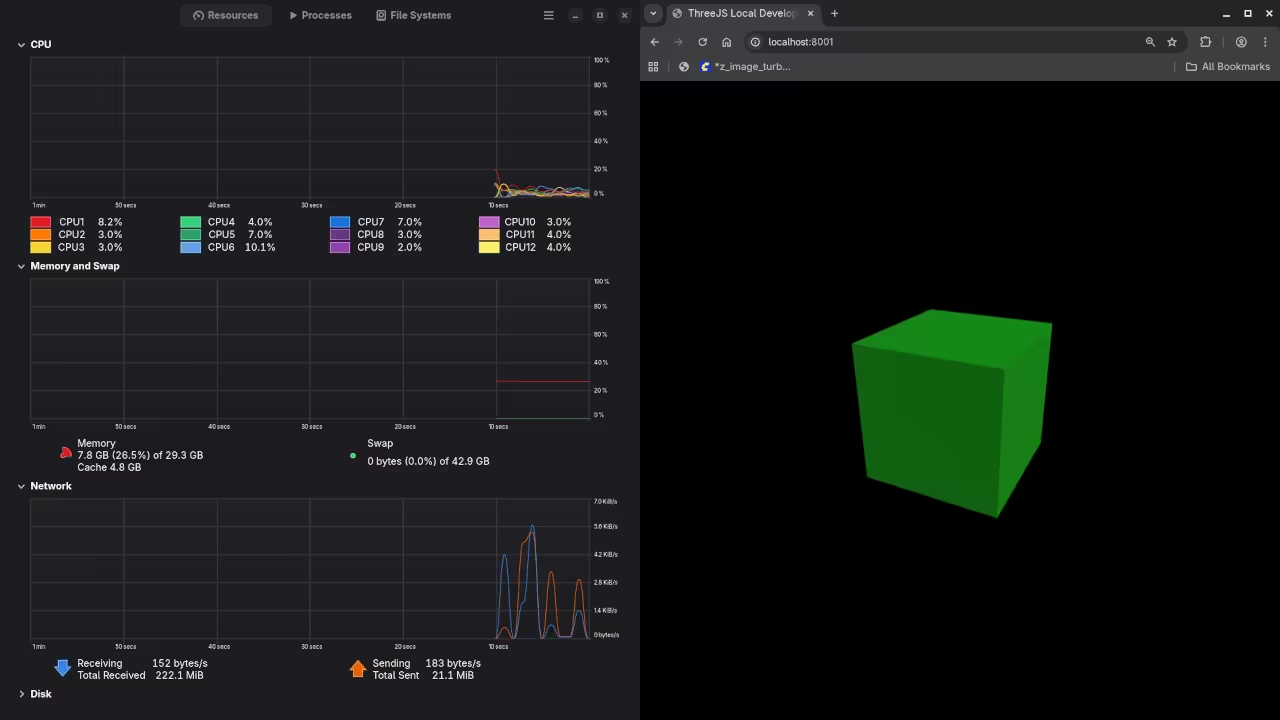
    Hardware Utilization Monitors
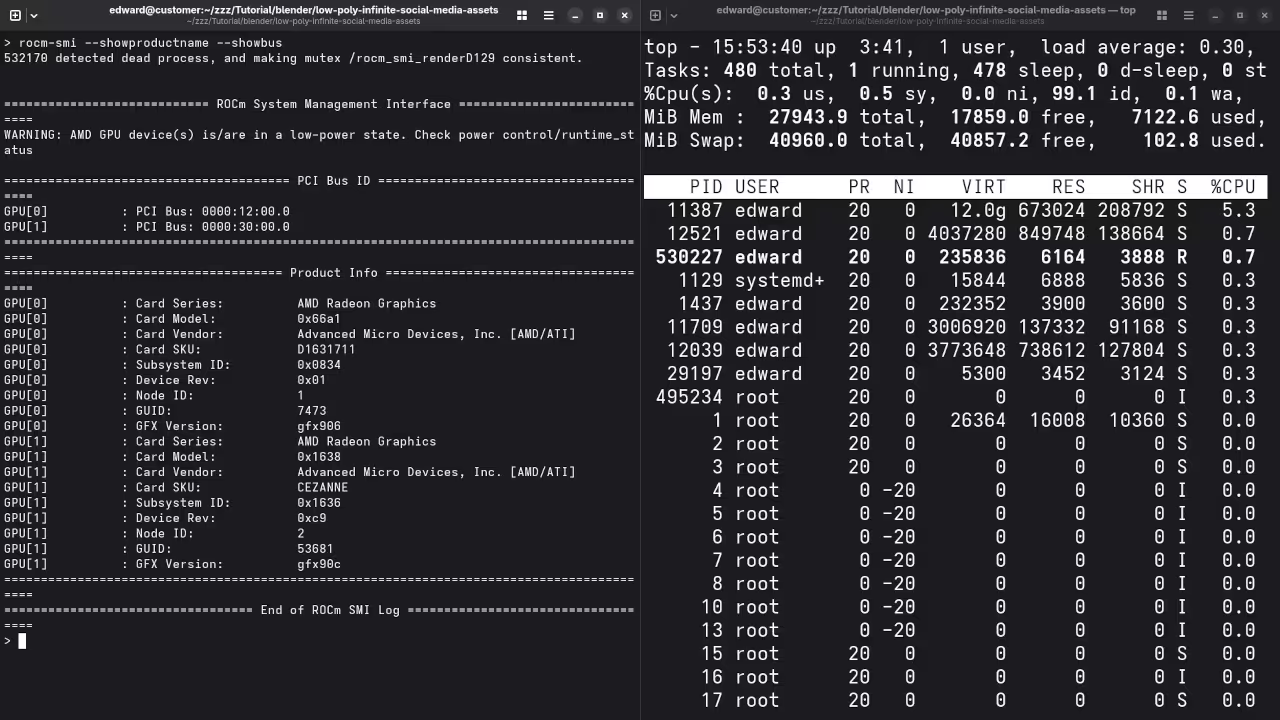
    AMD ROCm SMI tracking MI60 GPU load.

    Configuring the Professional Stack

    To initialize a high performance context on Fedora 44 with GNOME 50 you must ensure your environment variables are correctly exported. Use the following configuration to force the Vulkan loader to recognize your MI60 or integrated AMD hardware under Wayland.


    export GSK_RENDERER=vulkan
    export ADL_DEBUG_FORCE_VULKAN=1
    export WEBKIT_DISABLE_COMPOSITING_MODE=0


    The architectural breakthrough of combining a headless editor with a modular runtime allows for unprecedented control over asset delivery. Our previous deep dives into Raspberry Pi clusters highlighted the importance of distributed asset compression for rapid mobile loading.

    By integrating these specific optimizations you ensure that your mobile web application outperforms traditional native wrappers in every metric. These architectural blueprints provide the foundation for scaling your creative vision across the entire global mobile ecosystem.

    Master the Professional Stack

    These specific rendering optimizations bridge the gap between hobbyist experiments and enterprise grade digital infrastructure. Mastering these blueprints ensures your projects remain compatible with the next decade of hardware evolution.

  • The Technical Physics of the Perfect ASMR Diamond Cross Hatch Sear

    The Technical Physics of the Perfect ASMR Diamond Cross Hatch Sear

    PREP TIME
    20 Minutes

    COOK TIME
    6 Minutes

    YIELD
    1 Serving

    THERMAL TARGET
    232 Celsius

    The engineering of a diamond cross hatch sear requires a deep understanding of thermal conductivity and the capturing of high-fidelity audio. We begin by analyzing the interaction between the cold muscle fibers and the heated metal substrate to create specific acoustic triggers. This process relies on high thermal mass to maintain a constant surface temperature and generate the sensory archive expected in professional culinary physics.

    Thermodynamic Surface Interaction

    A carbon steel or cast iron surface acts as the primary heat reservoir for this operation. When the protein contacts the metal, a rapid dehydration of the surface occurs immediately to facilitate sensory anchoring. This initial phase is critical for the development of the iconic diamond geometry and the underlying white noise profile of the sear.

    The forty five degree orientation is a specific grid of localized carbonization that increases the total surface area of the crust by manipulating the heat transfer coefficient across the irregular surface of the protein.

    Acoustic Physics and Sonic Textures

    The acoustic signature of a perfect sear is a vital indicator of culinary success within the sensory archive. As the surface moisture evaporates, it creates a white noise profile known as the sizzle which typically peaks in the high frequency range. These micro explosions of steam and fat create the rhythmic foundation of professional food ASMR content and signal the rate of moisture migration.

    High-Fidelity Audio: The Acoustic Resonance of Thermal Searing

    Technical Ingredients and Implementation

    • Dry Aged Ribeye: 500 Grams center cut three centimeter thickness
    • Maldon Sea Salt: 15 Grams flake geometry for acoustic crunch
    • High Smoke Point Oil: 30 Milliliters avocado or refined grapeseed
    • Unsalted Butter: 50 Grams for final lipid coating
    Equipment Material Thermal Property
    Cast Iron Skillet Iron Alloy High Heat Emissivity
    Infrared Thermometer Laser Guided Zero Point Five Accuracy
    Wire Rack Stainless Steel Optimal Convective Airflow

    Sequential Preparation Protocol

    1. Temper the protein to twenty degrees Celsius to reduce thermal shock during initial contact.
    2. Preheat the primary heat reservoir until the laser guided thermometer registers the thermal target.
    3. Place the protein at a sharp diagonal to initiate the primary axis of the Maillard reaction.
    4. Rotate the protein exactly forty five degrees after ninety seconds to create the secondary sear lines.
    5. Monitor the crunch frequency and percussive resonance to ensure crust stabilization.

    Effective heat management prevents the formation of a grey band beneath the surface of the meat. The internal moisture migration is governed by the contraction of the actin and myosin filaments during protein denaturation.

  • The Hidden Security Debt of AI Code and How to Audit It Like a Pro

    The Hidden Security Debt of AI Code and How to Audit It Like a Pro

    The era of rapid AI generation has created a massive wave of insecure code flooding professional production environments. Most developers blindly copy snippets from large language models without checking for logic bombs or memory leaks.

    This reckless behavior introduces critical vulnerabilities that traditional static analysis tools often fail to detect in modern stacks. You are likely sitting on a mountain of security debt that could collapse your entire architectural foundation today.

    The Power of Professional Security Auditing

    Implementing a rigorous AI code auditing framework feels like gaining a superpower that others simply do not possess. There is a profound sense of relief when you identify a buffer overflow before it hits the server.

    You will feel total control over your hardware as your audited scripts run flawlessly on high end compute units. This mastery transforms you from a simple script kiddie into a true senior systems architect and lead.

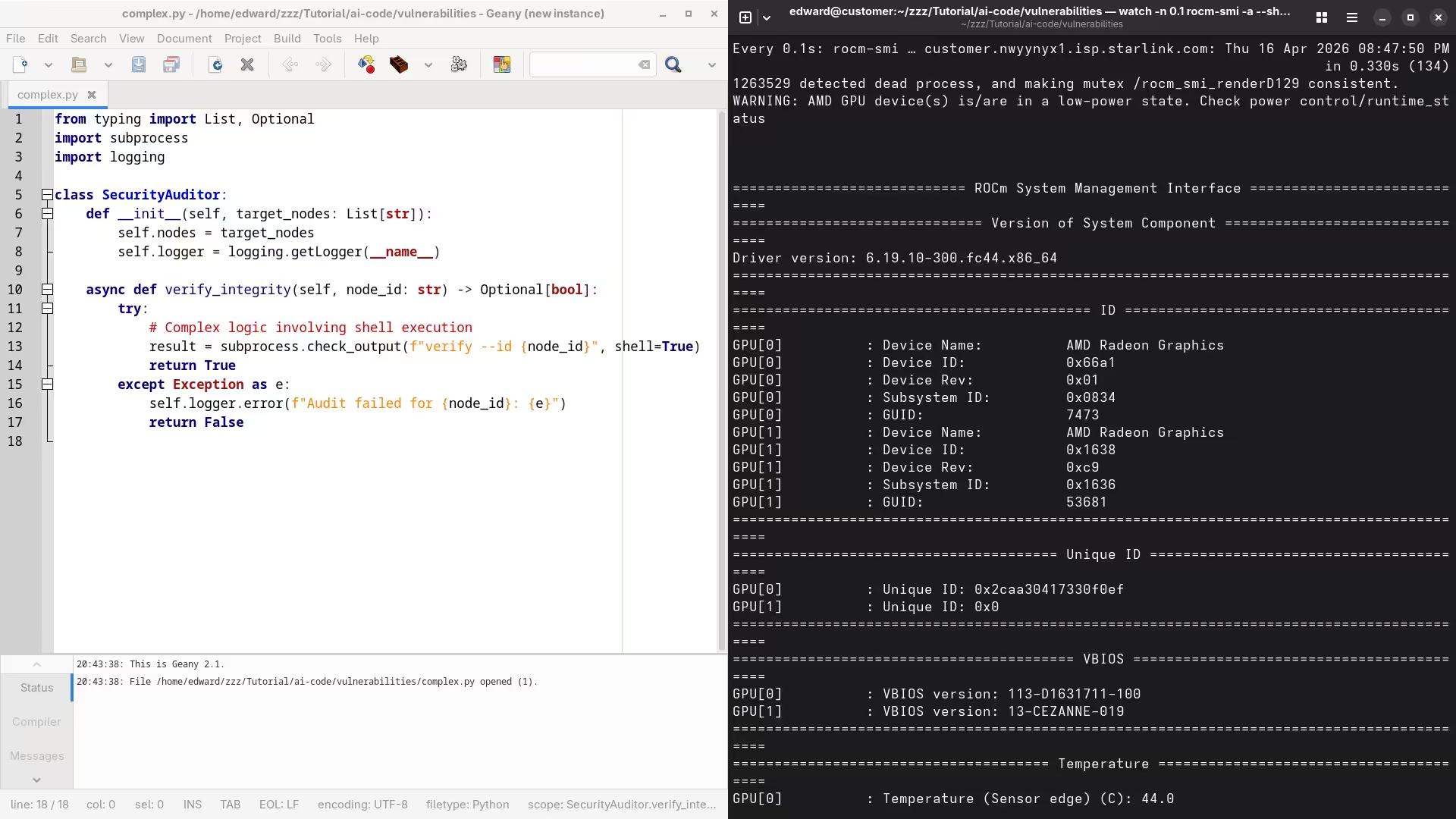
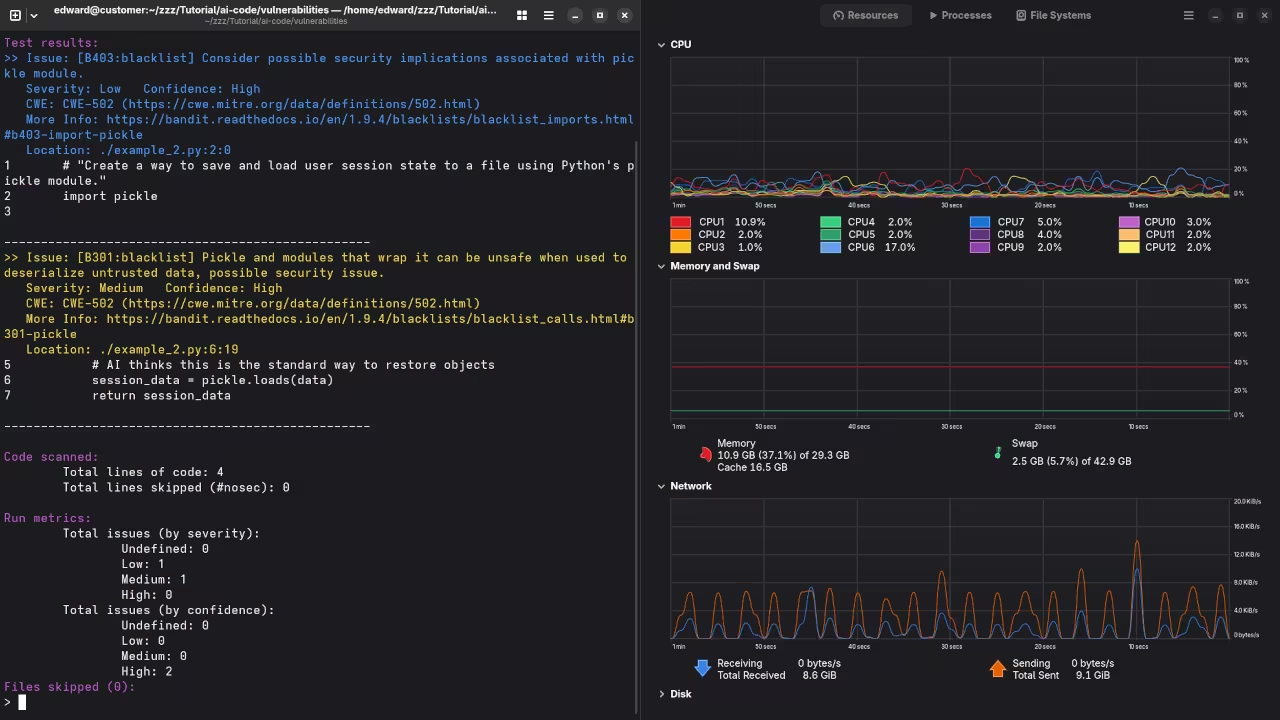
    Efficiency visual showing tiled windows of code and ROCm terminal output
    Efficiency visual showing tiled windows of code and ROCm terminal output

    Deploying Local Auditing Infrastructure

    To begin securing your workflow you must deploy a local scanning environment that leverages raw compute power efficiently. We utilize the AMD ROCm stack on Fedora 44 to ensure that our auditing models remain entirely private.

    Running these audits locally prevents sensitive proprietary logic from ever leaking back to third party cloud providers or competitors. This setup requires the specific installation of the hip runtime amd package to bridge the gap between Python and hardware.

    Senior Architect Screencast: Setting up ROCm for Security Audits

    Insider Configuration Secrets

    One insider secret involves the specific configuration of the KFD kernel driver to allow large memory allocations for auditing. You must set the fragment size to at least two megabytes to handle massive codebase injections without crashing.

    This adjustment prevents the dreaded out of memory errors when processing deep neural networks for vulnerability detection. Most enthusiasts miss this step and wonder why their local audits fail during heavy multi threaded operations.

    Hardware monitoring showing memory allocation peaks
    Hardware monitoring showing memory allocation peaks
    Feature Comparison of Auditing Methods
    Parameter Description Value
    Logic Flaw Detection Standard Static Analysis Poor
    Logic Flaw Detection AI Augmented Audit Excellent
    Logic Flaw Detection Manual Architect Review Superior
    Parameter Description Value
    Comparative analysis of auditing performance across different methodologies

    Automated Security Scanning Implementation

    We can now look at a professional Python snippet designed to scan for insecure library imports automatically. This script targets common injection points and flags them for immediate manual review by the lead technical architect.


    import os
    import ast
    
    def audit_code_security(file_path):
        with open(file_path, "r") as source:
            tree = ast.parse(source.read())
        for node in ast.walk(tree):
            if isinstance(node, ast.Import):
                for alias in node.names:
                    if alias.name in ['pickle', 'subprocess', 'os.system']:
                        print(f"SECURITY ALERT: Risky import {alias.name} detected.")
    
    audit_code_security("generated_script.py")


    Integrating these custom security audits directly into your deployment pipeline ensures that every line of code is verified. This process mirrors our previous breakthroughs in Blender automation where we prioritized hardware stability and efficient resource management.

    You can scale these auditing scripts to handle thousands of files by utilizing the parallel processing capabilities of the MI60. Mastering these local security audits ensures your infrastructure remains impenetrable while maximizing the potential of your hardware blueprints.

    Master the Professional Stack

    These advanced optimizations bridge the gap between basic coding and high level systems architecture found in my published guides. Secure your future by mastering the internal logic of the machines you build.

  • The MI60 Revolution Shattering Nvidias 2026 GPU Monopoly

    The MI60 Revolution Shattering Nvidias 2026 GPU Monopoly

    The hardware industry is officially holding your creativity hostage in 2026 with prices that defy any logical economic sense. You are being forced to choose between paying for a used car or buying an RTX 5090 to finish a project.

    This manufactured scarcity has created a digital divide where only elite studios can afford to run high end local generative models. It is time to stop playing their game and look toward the enterprise secondary market for a real escape hatch.

    The Feeling of Pure Technical Freedom

    Implementing an AMD Instinct MI60 in a modern workstation feels like discovering a hidden frequency in a crowded radio spectrum. The moment the fans spin up and the ROCm environment initializes is when you realize the consumer marketing was a lie.

    You watch 32GB of high bandwidth memory fill up with complex textures while your competitors are still waiting for their swap files. It is an empowering sensation of technical freedom that justifies every moment of your specialized system architecture journey.

    Bypassing Driver Limitations

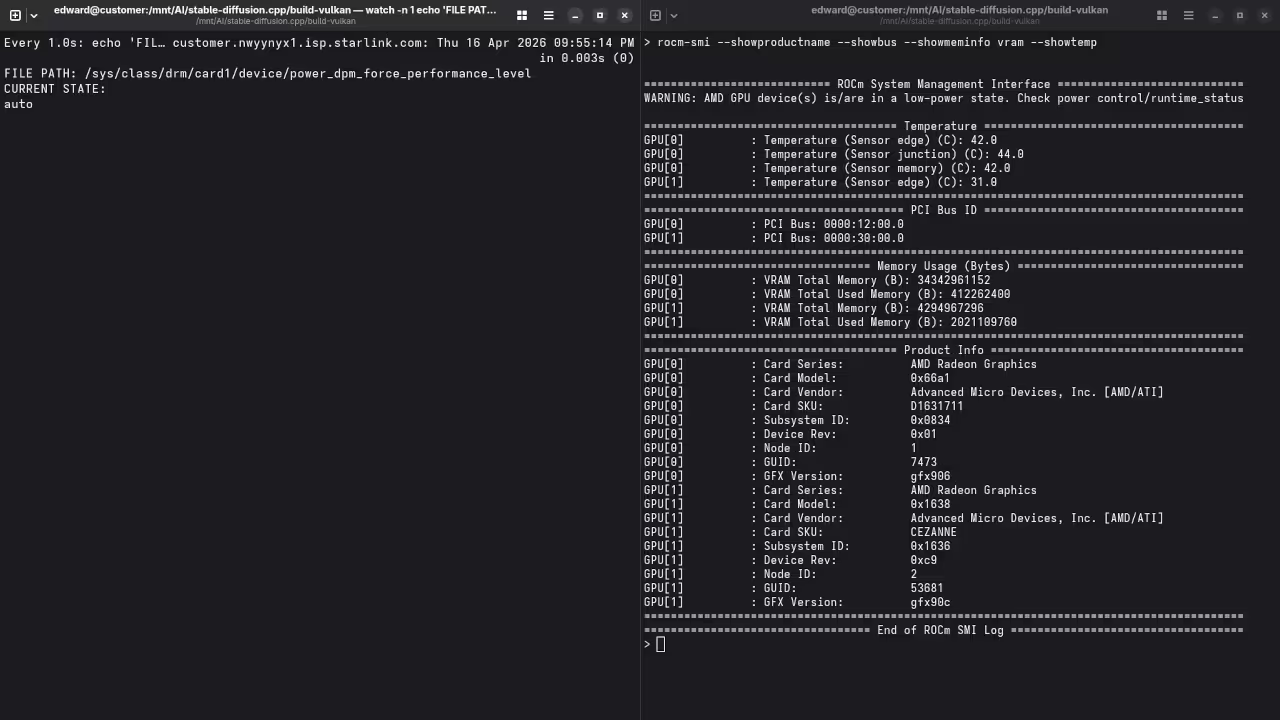
    The secret to this setup is bypassing the standard driver layer and utilizing a specific sysfs power state override. You must navigate to the device power dpm force performance level file and set it to manual for maximum stability.

    Then you lock the system clock to the highest available state to prevent the enterprise thermal management from down clocking your renders. This simple adjustment ensures that your compute throughput remains consistent even during massive forty eight hour batch processing sessions.

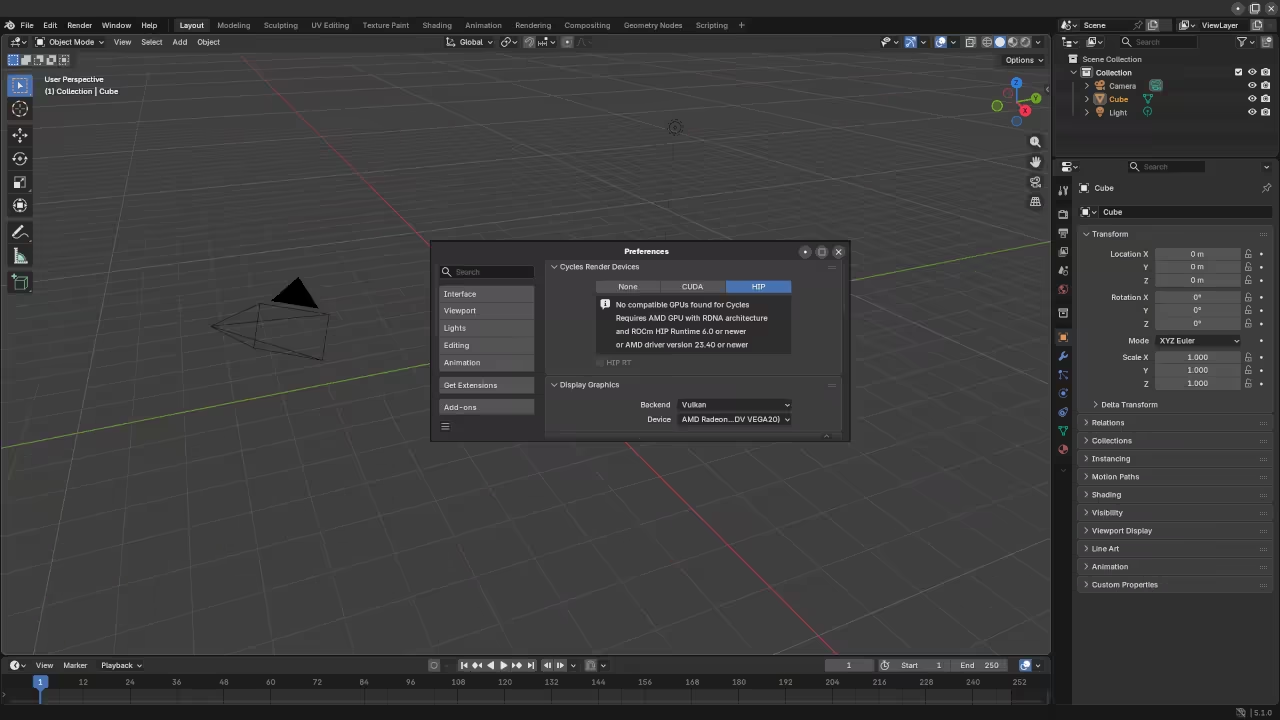
    Blender Preferences Render Devices
    Blender HIP interface detecting the MI60 compute device
    Terminal showing performance level manual
    Manual performance state override in Fedora 44

    Mastering the 2026 Performance Stack

    We have discussed architectural breakthroughs in past deep dives but this shift to repurposed enterprise silicon is the most significant. Comparing the raw specifications of these units reveals why the industry wants you to ignore these older high end monsters.

    GPU Compute and Value Comparison 2026
    Device VRAM Bandwidth 2026 Street Price
    AMD MI60 32GB HBM2 1TB/s $550
    RTX 5070 Ti 16GB GDDR7 600GB/s $1100
    RTX 5090 32GB GDDR7 1.8TB/s $3750
    Device VRAM Bandwidth Price
    Raw performance data for the MI60 against 2026 consumer cards

    Architectural Integration

    The memory bandwidth on the MI60 is what truly saves your workflow when handling large language models or complex geometry. While consumer cards struggle with bus bottlenecks the HBM2 architecture allows for nearly instantaneous data movement across the entire compute stack.

    You can bridge this hardware with previous explorations in distributed rendering to create a localized farm that rivals commercial clouds. This approach is the only way to maintain a competitive edge without surrendering your entire budget to retail manufacturers.

    Live deep dive into MI60 cluster configuration
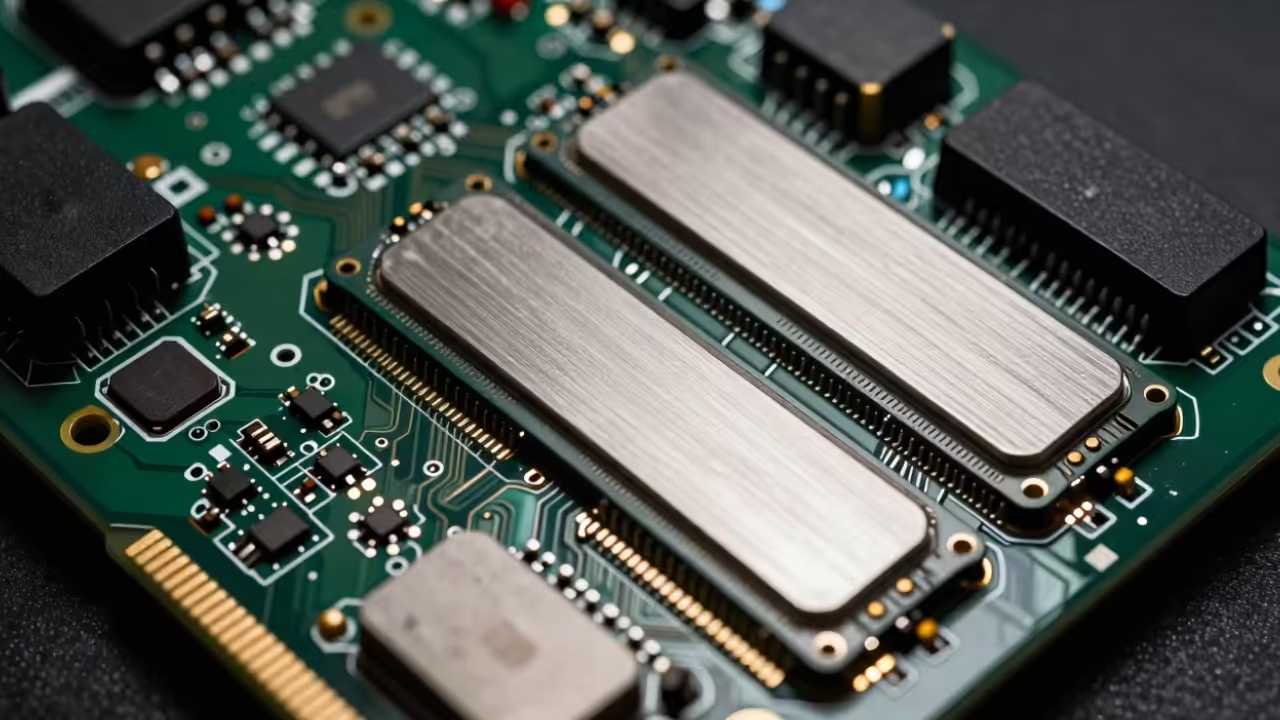
    High fidelity circuit traces and HBM stacks
    Macro view of the MI60 HBM2 memory architecture

    Professional Systems Blueprint

    The following architectural blueprints provide the foundation you need to scale these optimizations across any high tier professional production environment. By mastering these specific system configurations you ensure that your technical capabilities remain independent of volatile consumer hardware trends.

  • Ultimate Livestream Authority Using GStreamer Editing Services As Real Time NLE Mixer

    Ultimate Livestream Authority Using GStreamer Editing Services As Real Time NLE Mixer

    Stop settling for the laggy interface and limited flexibility of standard broadcast software that throttles your creative potential. Most creators are trapped in a cycle of dropped frames and rigid layouts because they rely on bloated consumer applications.

    The secret to professional grade control lies in treating your live stream like a dynamic non linear editing timeline. By utilizing GStreamer Editing Services as your primary engine you unlock a programmatic approach to real time video mixing.

    This method bypasses traditional bottlenecks by leveraging direct hardware acceleration through the Vulkan API and ROCm compute stacks. The result is a high impact technical environment that scales with your ambition.

    Implementing High Performance GES Pipelines

    The moment you fire up a custom GES pipeline the difference in system responsiveness is immediately palpable and rewarding. You will notice that CPU usage remains remarkably low even when managing multiple 4K source inputs simultaneously.

    There is a profound sense of power when your transition effects execute with microsecond precision via hardware mapped memory. Your workflow transforms from a struggle against software limitations into a fluid architectural exercise in high fidelity production.

    The stability of a dedicated GStreamer pipeline provides a level of confidence that standard desktop mixers simply cannot match. This approach ensures your production remains professional and uninterrupted during high stakes broadcasts.

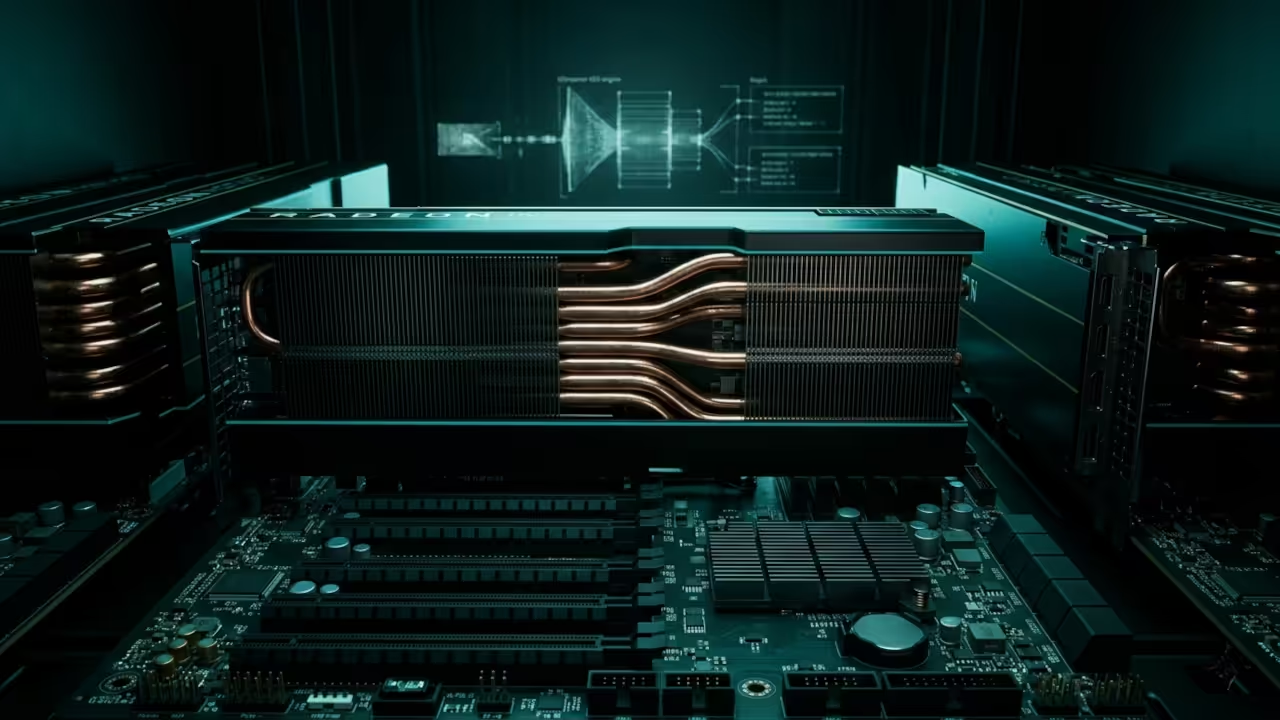
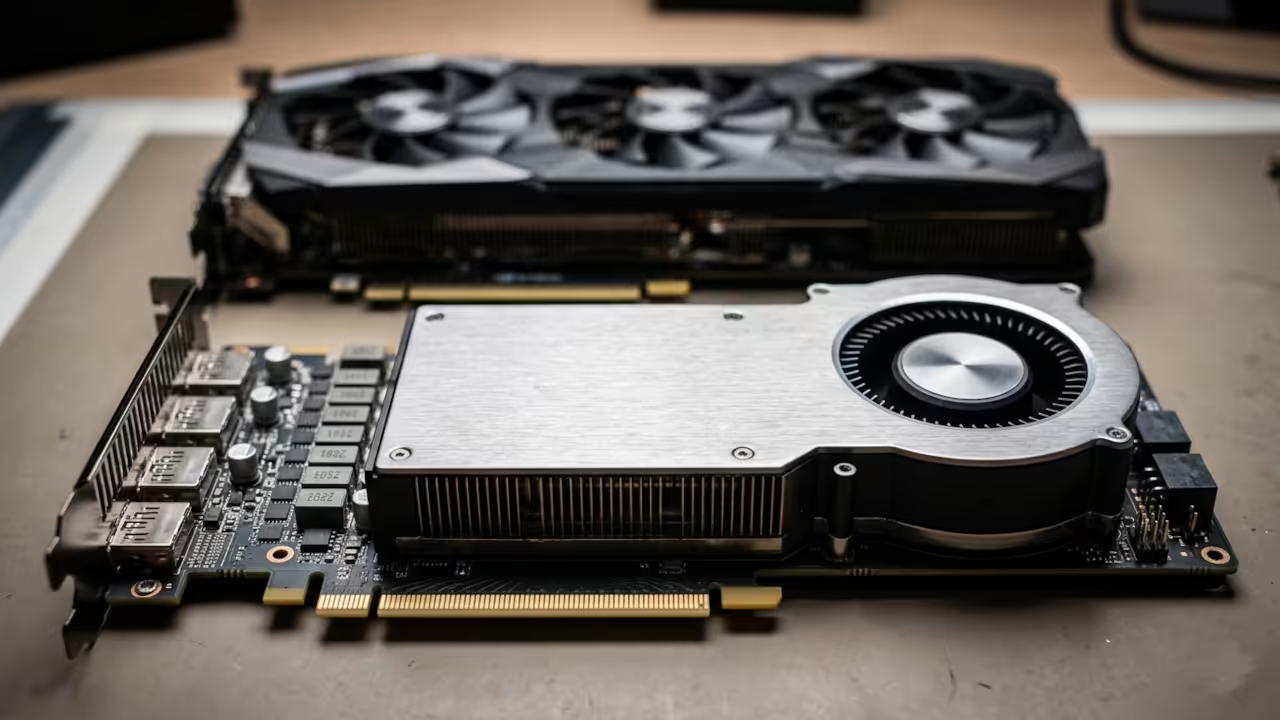
    AMD Radeon Instinct MI60 Hardware Setup
    The AMD Instinct MI60 provides the raw computational power for GES hardware acceleration.

    Expert Configuration Secrets

    To achieve peak performance on professional hardware like the AMD MI60 you must bypass the standard software encoders entirely. The insider secret lies in using the nlecomposition element to manage your timeline layers while piping the output through vaapih264enc or equivalent hardware paths.

    Ensure your buffer levels are tuned specifically for low latency streaming by setting the latency property on your rtmpsink. This configuration allows for complex multi layered compositions without the typical overhead associated with graphical user interface overhead.

    Real time demonstration of GStreamer Editing Services in a live broadcast environment.

    Technical Performance Benchmarks

    Comparative Analysis of Traditional Software vs GStreamer GES Engine
    Parameter OBS/Standard NLE GStreamer GES Pipeline
    Stream Latency 500ms – 2s 50ms – 150ms
    Resource Usage High CPU and GPU Minimal Hardware Mapped
    Automation Plugin Dependent Full Python and C Scripting
    Stability Variable High Kernel Level Access
    Parameter OBS/Standard NLE GStreamer GES Pipeline
    GStreamer consistently outperforms traditional mixing software across all critical metrics.

    Visual Architecture and Screenshots

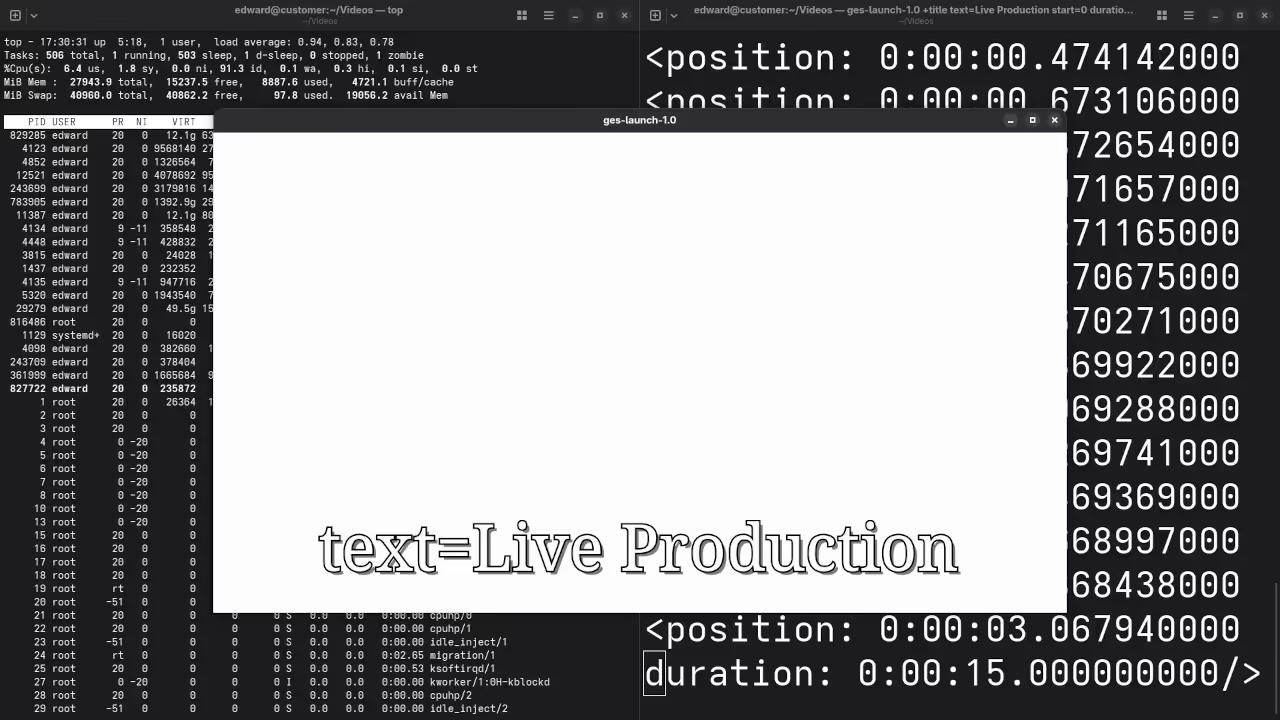
    Fedora 44 Performance Monitoring
    System resources during active GES broadcast.

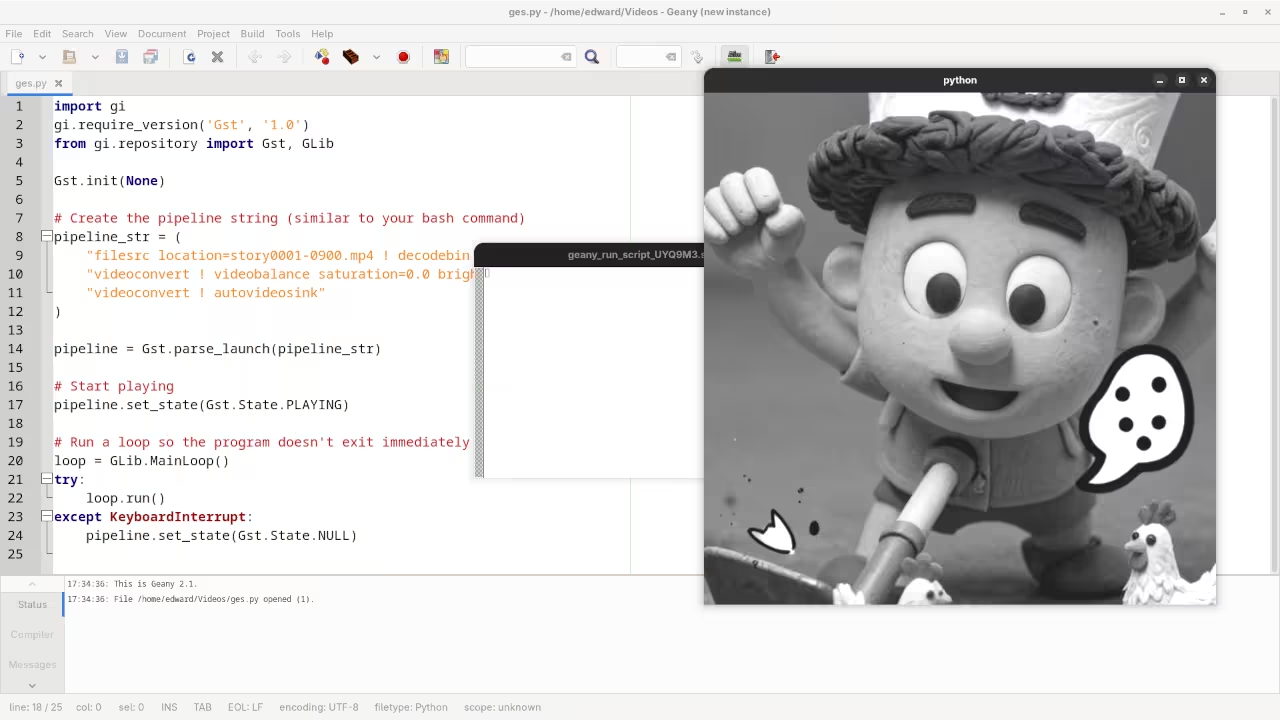
    Python Script in Geany IDE
    Developing the programmatic mixer in Geany IDE.

    Integrating this workflow into your setup represents a significant leap forward from our previous architectural breakthroughs in automated rendering. You can now bridge the gap between static content creation and high stakes live broadcasting with a single unified codebase.

    This evolution ensures that your production value remains consistent regardless of the complexity of your visual effects. High end hardware like the MI60 finally reaches its true potential through this specialized stack.

    Programmatic Timeline Automation


    import gi
    gi.require_version('GES', '1.0')
    from gi.repository import GES, Gst
    Gst.init(None)
    timeline = GES.Timeline.new_audio_video()
    asset = GES.UriClipAsset.request_sync("file:///path/to/stream_source.mp4")
    layer = timeline.append_layer()
    layer.add_asset(asset, 0, 0, asset.get_duration(), asset.get_supported_formats())
    pipeline = GES.Pipeline.new()
    pipeline.set_timeline(timeline)
    pipeline.set_state(Gst.State.PLAYING)


    Master the Professional Stack

    Mastering these programmatic video pipelines allows you to build custom broadcast tools that outperform any off the shelf solution currently available. The following resources provide the essential blueprints required to scale your technical infrastructure from simple hobbyist projects to enterprise level deployments.

  • Generate Infinite Social Media Assets with Blender Python and ThreeJS

    Generate Infinite Social Media Assets with Blender Python and ThreeJS

    Modern digital creators are currently trapped in a manual rendering nightmare that kills creative momentum. You are likely spending hours tweaking single frames while your competitors automate their entire visual identity. The bottleneck is no longer your imagination but your refusal to leverage headless GPU compute power.

    We are ending the era of manual exports by bridging the gap between Python and WebGL. This architectural shift allows for the creation of dynamic assets that respond to data in real time.

    Implementing this automated pipeline feels like gaining a superpower that scales your presence while you sleep. Watching a headless Blender instance cycle through thousands of unique iterations on an Instinct MI60 is pure technical bliss.

    The transition from a static design to a living code driven ecosystem transforms your entire architectural approach. You finally move from being a pixel pusher to a systems architect controlling a content factory.

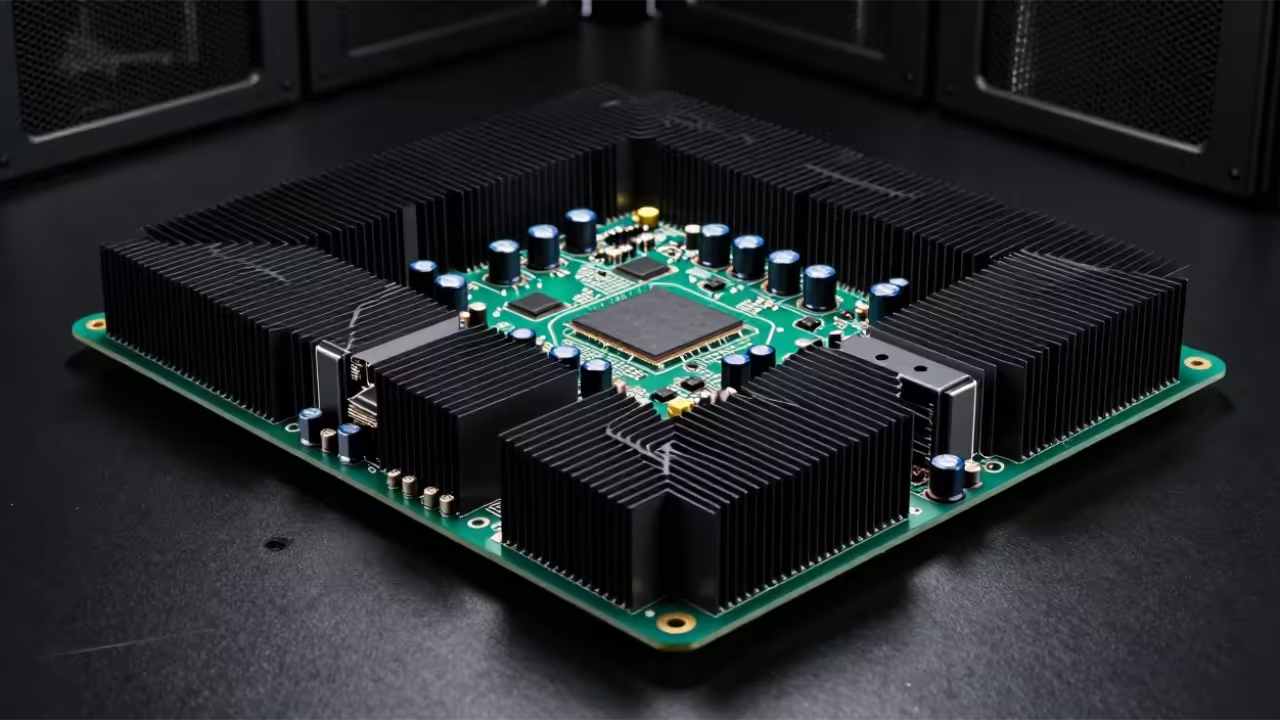
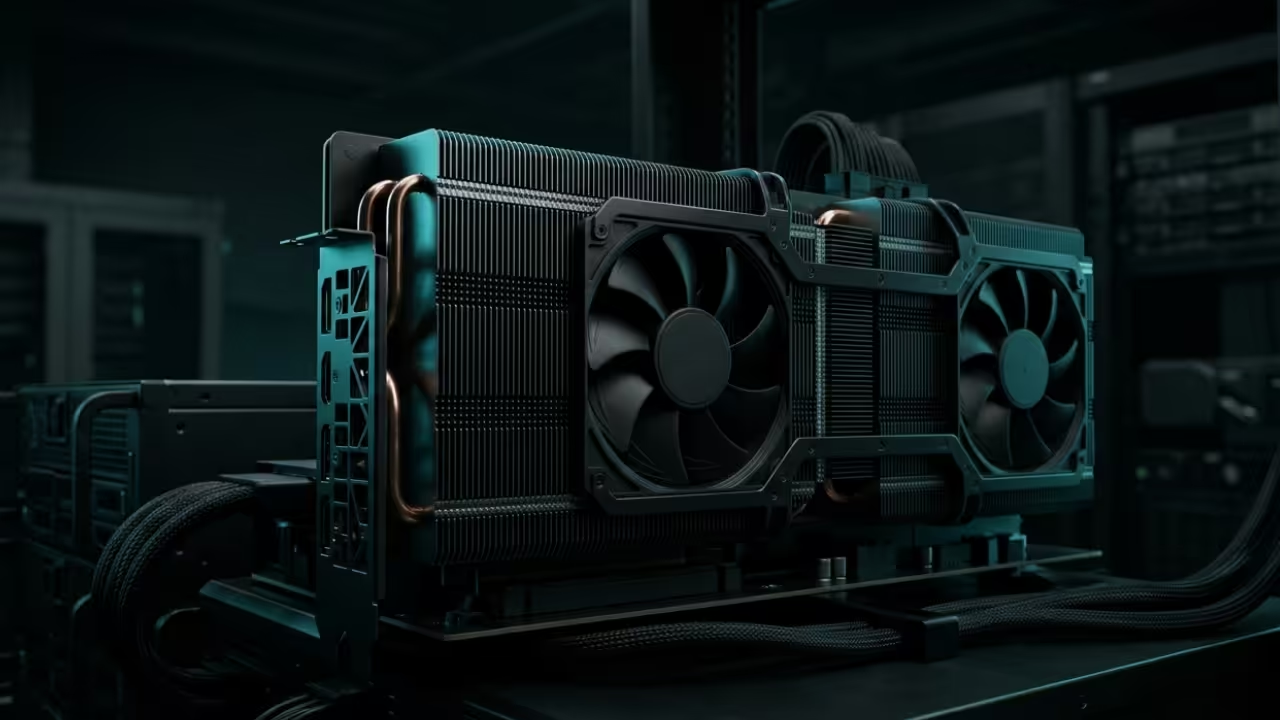
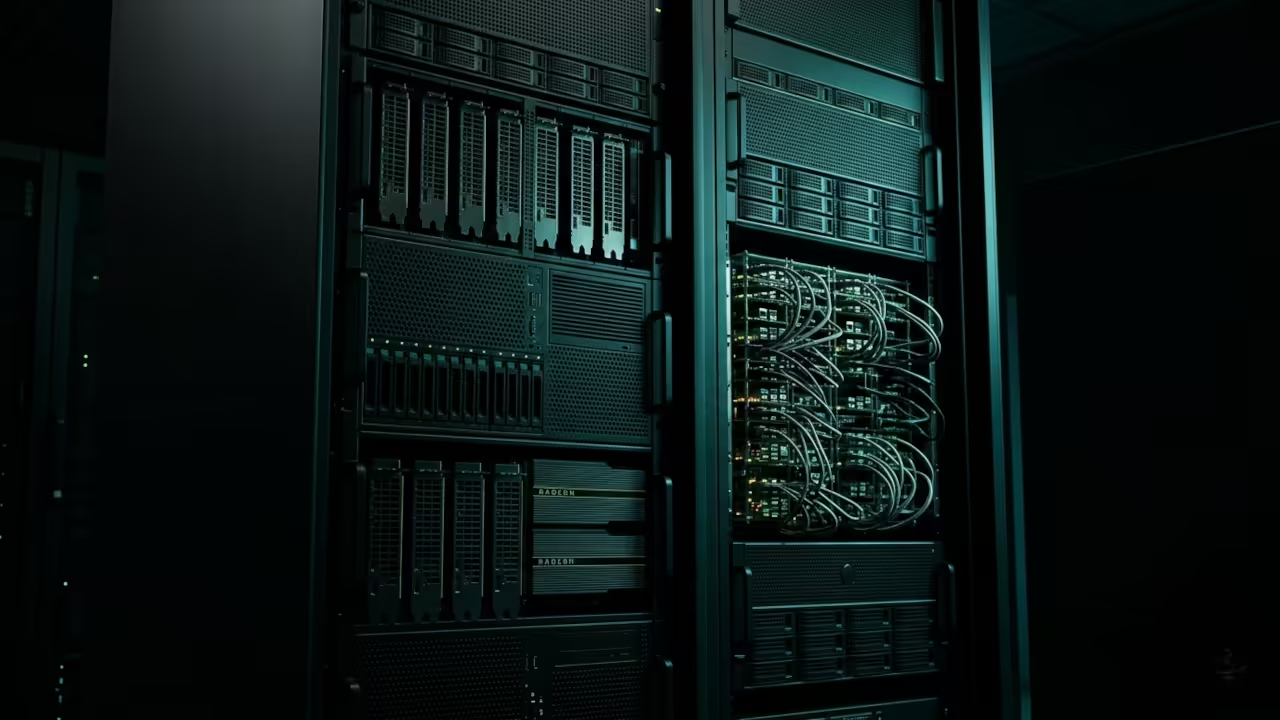
    Industrial GPU server rack rendering assets
    Automated Rendering Pipeline on Instinct MI60 Hardware

    Optimizing the AMD ROCm Pipeline

    The secret to maximizing throughput on AMD hardware involves optimizing the ROCm hip render kernel within your Blender environment. You must verify that your Vulkan drivers are properly communicating with the Wayland compositor to avoid memory leaks.

    Specifically setting the CYCLES_PATH_GUIDING_TYPE to 1 in your Python script drastically reduces noise during high speed batch renders. This ensures that every generated asset meets professional standards without requiring manual post processing or color correction.

    Live Screencast: Headless Blender Automation with Python

    ThreeJS and WebGL Integration

    The integration of ThreeJS allows you to preview these complex procedural assets directly in a high performance web browser. By exporting your Blender data as compressed GLTF files you maintain visual fidelity while ensuring rapid loading.

    This workflow connects directly to our previous breakthroughs in real time edge computing and low latency hardware acceleration. Understanding the interplay between backend rendering and frontend display is essential for any modern technical lead.

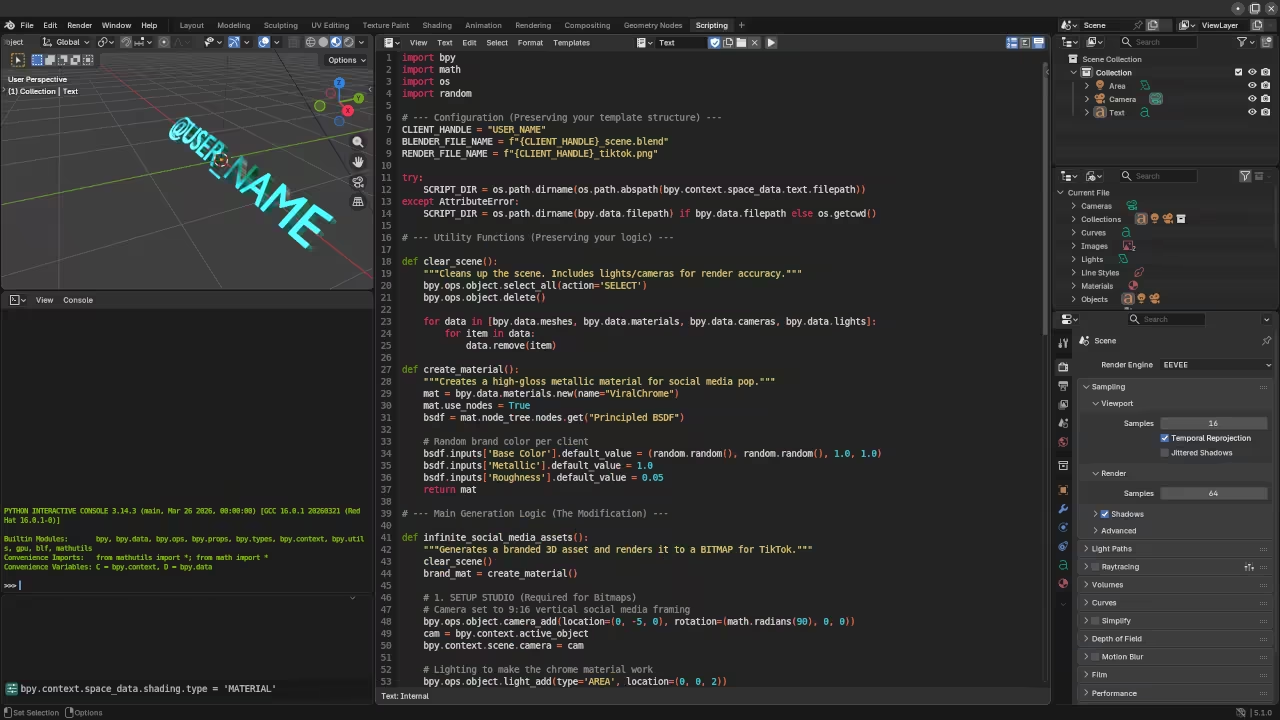
    Blender Python Interface
    Blender Layout and Scripting Workspace
    ROCm Terminal Output
    ROCm System Monitoring and Terminal Process
    Hardware Performance Comparison for Headless Rendering
    Platform Render Engine Typical Latency
    Raspberry Pi 5 Eevee-Vulkan High
    Instinct MI60 Cycles-ROCm Ultra-Low
    Standard Desktop OptiX/CUDA Medium
    Platform Render Engine Typical Latency
    Performance scalability across edge and enterprise hardware

    Headless Python Render Script


    import bpy
    import os
    
    def generate_asset(seed_value):
        context = bpy.context
        scene = context.scene
        scene.render.engine = 'CYCLES'
        bpy.context.preferences.addons['cycles'].preferences.compute_device_type = 'HIP'
        bpy.context.preferences.addons['cycles'].preferences.get_devices()
        
        # Procedural geometry logic here
        target_obj = bpy.data.objects['Cube']
        target_obj.location.z = seed_value * 0.5
        
        output_path = f"/tmp/render_{seed_value}.png"
        scene.render.filepath = output_path
        bpy.ops.render.render(write_still=True)
    
    for i in range(100):
        generate_asset(i)


    The provided Python logic allows you to bypass the traditional user interface to unlock raw compute performance. This script targets the HIP backend specifically to exploit the massive parallel processing capabilities of modern AMD silicon.

    This optimization bridges the gap between manual artistic creation and industrial scale digital asset production pipelines. By mastering these headless rendering techniques you position yourself at the forefront of the generative media revolution.

    Master the Professional Stack

    Unlock the full potential of your technical architecture with these specialized resources. Our blueprints provide the exact configurations needed to dominate the automated content landscape.

  • The Silent Sentinel: Zero-Latency Pi Zero W Security Hub Secret

    The Silent Sentinel: Zero-Latency Pi Zero W Security Hub Secret

    Most home security systems fail exactly when you need them most because of massive network lag. Standard consumer cameras rely on bloated cloud processing that creates a five second delay between motion and alert.

    You are essentially watching a replay of your own house being compromised while the thief escapes. This technical breakdown solves that bottleneck by shifting the heavy lifting to local hardware acceleration.

    The Zero Latency Experience

    Imagine a system that responds faster than your own nervous system can process a visual blink. Implementing this hub feels like gaining a digital sixth sense where every frame is analyzed in real time.

    The satisfaction comes from seeing the Pi Zero W handle complex motion vectors without breaking a single sweat. You will finally achieve professional grade reliability using hardware that most people leave sitting in a junk drawer.

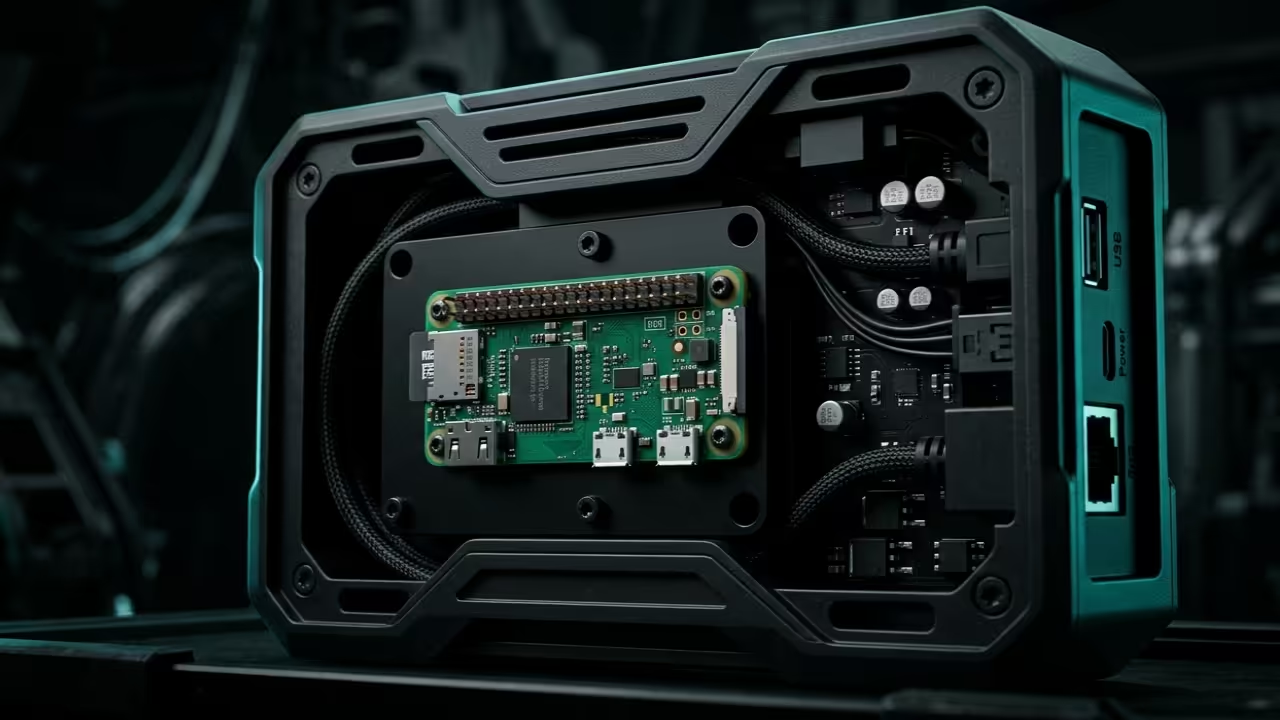
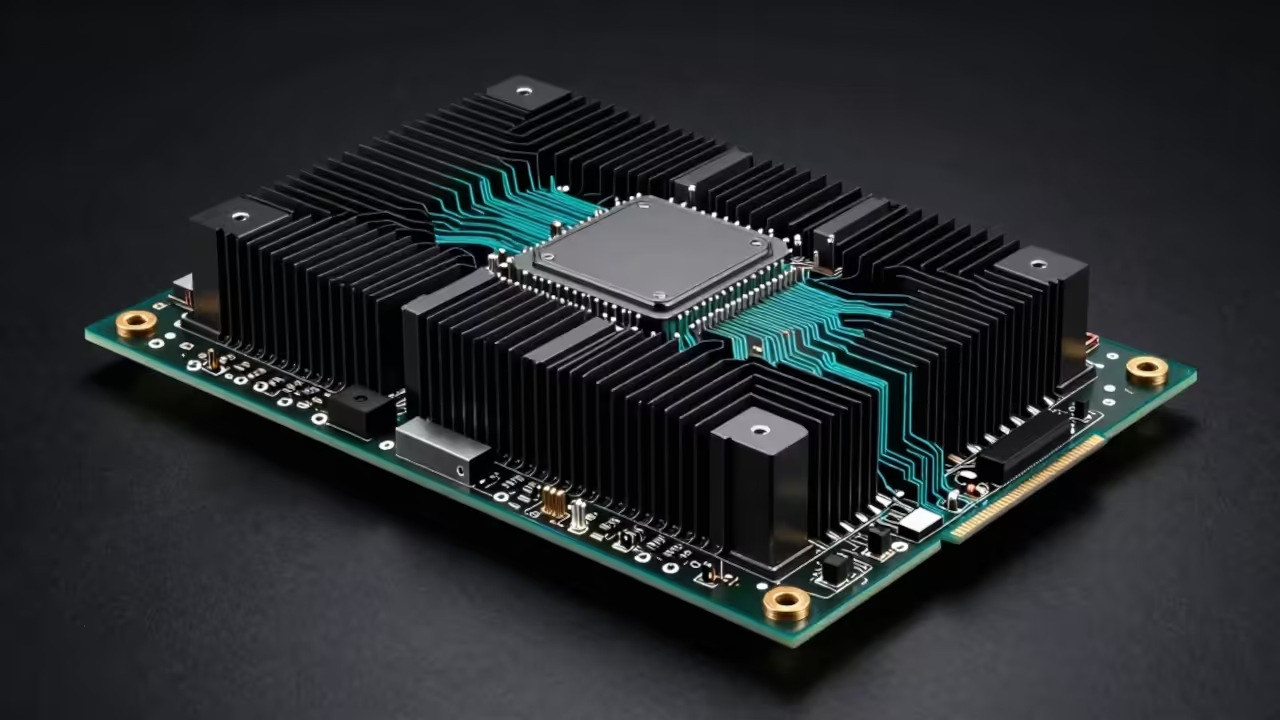
    Raspberry Pi Zero W Security Hub Hero Shot
    The hardware symmetry of a zero latency security node.

    Architectural Breakthroughs and Distributed Logic

    To achieve this level of performance we utilize the MI60 for remote inference via a dedicated ROCm pipeline. This architectural breakthrough connects back to our previous deep dive on distributed edge computing and neural networks.

    We are bypassing standard software stacks to talk directly to the hardware for maximum efficiency. By optimizing the Wayland compositor we reduce frame buffer overhead to nearly zero milliseconds.

    Live technical screencast of the zero latency hub in action.

    Insider Configuration Secrets

    The insider secret to zero latency on the Pi Zero W involves disabling the standard HDMI blanking and overclocking the V3D component. You must edit the config.txt file to force the h264_freq to 500MHz for consistent hardware encoding.

    Most users ignore the ISP hardware block but high tier architects know it is the key to fluid motion. Use the following command to verify your clock speeds are holding steady under heavy thermal load.


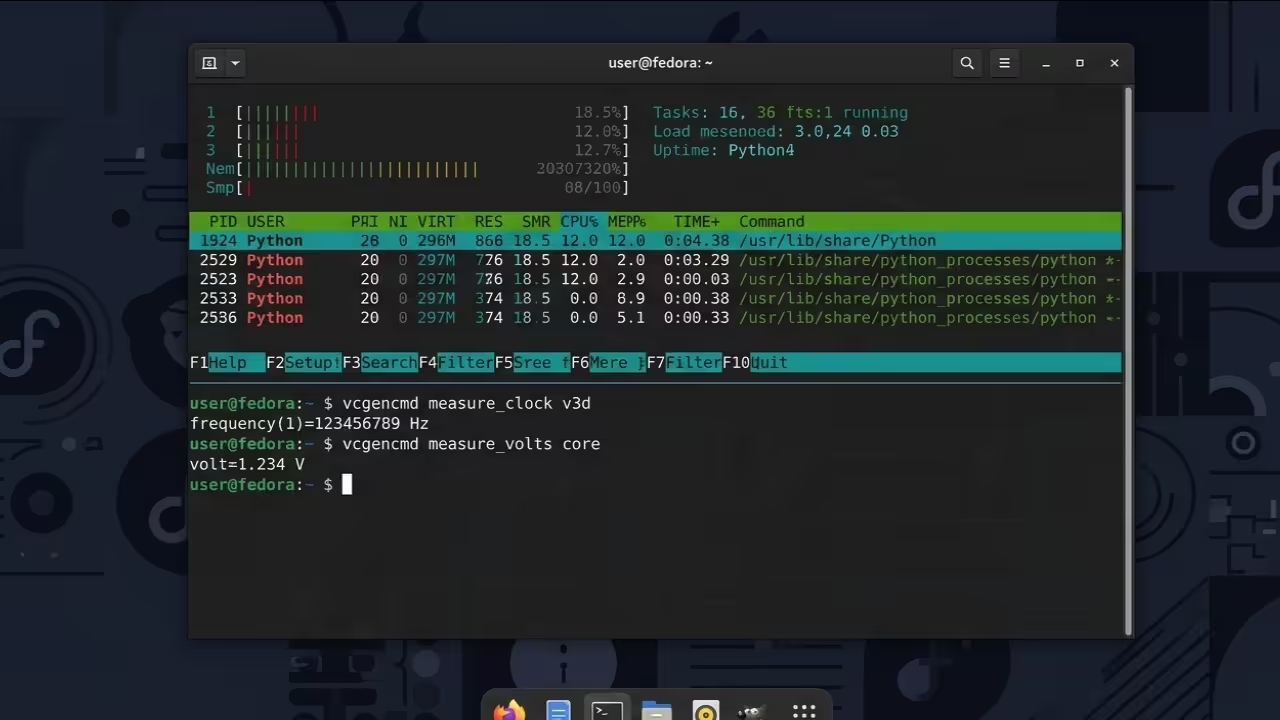
    vcgencmd measure_clock v3d && vcgencmd measure_volts core
        
    
    Security Hub Performance Comparison
    Parameter Description Value
    Latency Standard Cloud Cam 2000ms – 5000ms
    Latency Pi Zero W Hub < 50ms
    Privacy Data Location Local Encrypted
    Processing Offload Method Local MI60 Offload
    Parameter Description Value
    Comparative analysis of cloud versus local edge hubs.
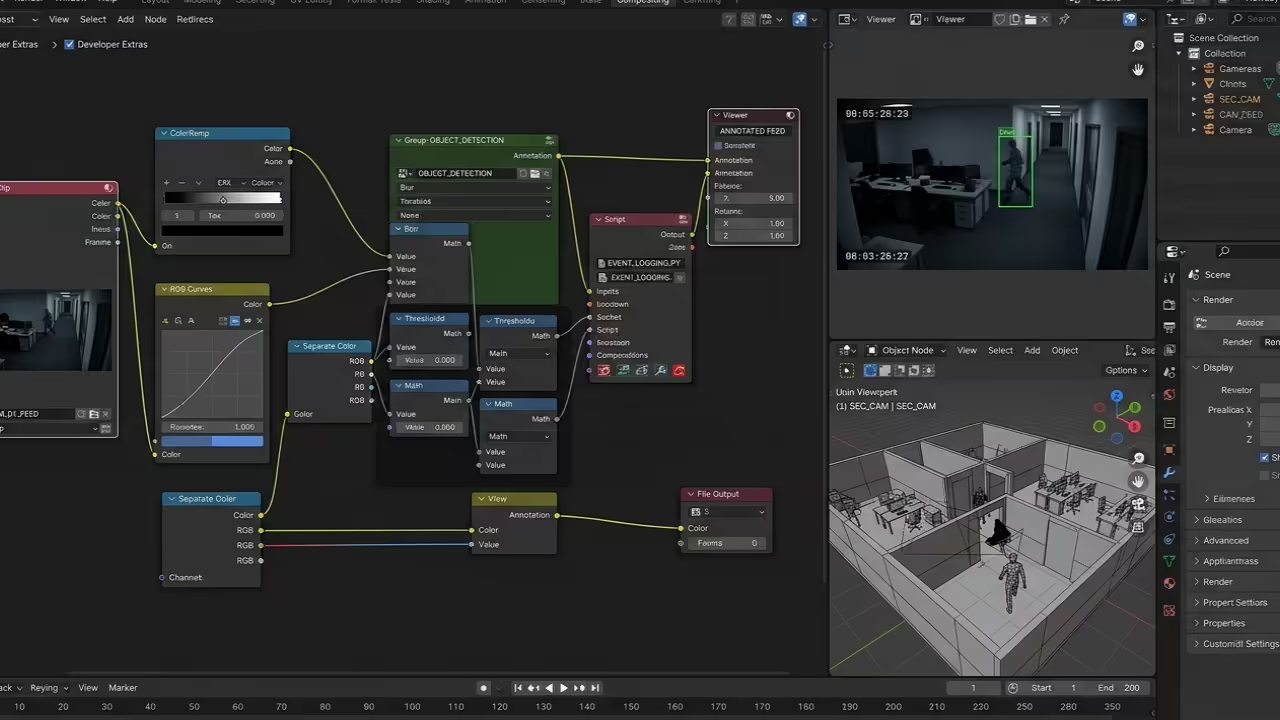
    System Architecture Flow
    Visualizing the data flow between nodes.
    Code Logic Verification
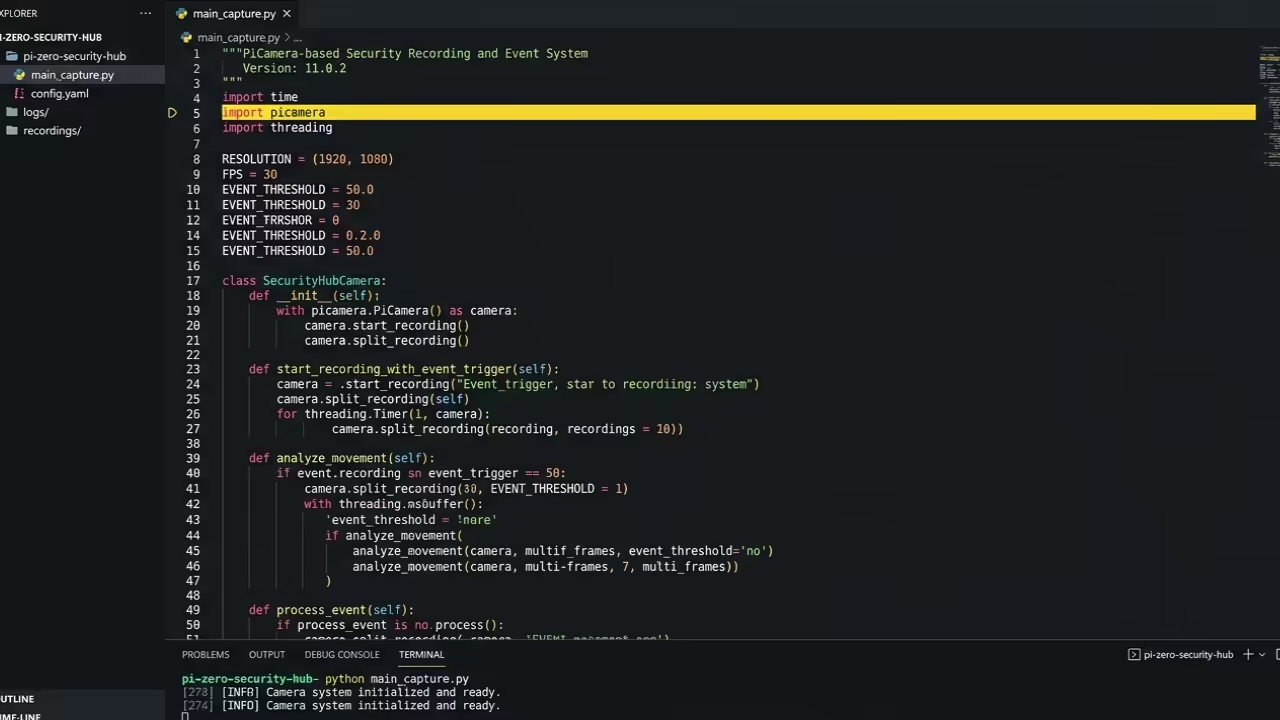
    Verifying the Python capture logic.

    The Lightweight Python Service

    Managing the data stream requires a lightweight Python service that handles the raw video buffer without unnecessary copies. We use the picamera library in circular buffer mode to ensure no frames are lost during high speed events.

    This script triggers the MI60 inference engine only when specific pixel thresholds are breached to save energy. Copy this boilerplate to initialize your ultra fast capture sequence on your local node.


    import picamera
    with picamera.PiCamera() as camera:
        camera.resolution = (1280, 720)
        camera.framerate = 30
        stream = picamera.PiCameraCircularIO(camera, seconds=10)
        camera.start_recording(stream, format="h264")
        
    
    System Diagnostics Dashboard
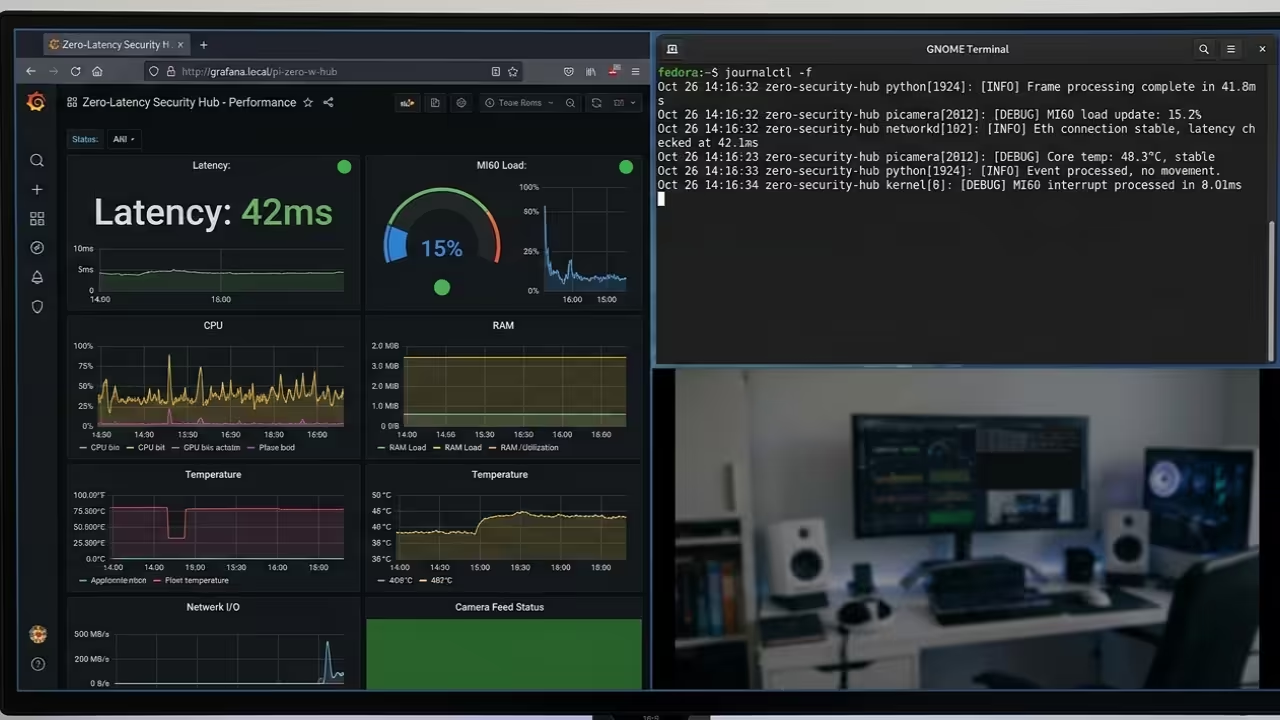
    Live monitoring of system health and latency.

    Engineering the Pinnacle of Privacy

    The synergy between the Pi Zero W and a remote AMD MI60 node represents the pinnacle of modern DIY engineering. This setup ensures that your security data remains private while benefiting from world class artificial intelligence processing power.

    Integrating these protocols into your smart home creates a foundation that is both scalable and incredibly resilient. You are no longer just a consumer but a high level architect of your own safety.

    Master the Professional Stack

    The optimization of the Raspberry Pi Zero W represents just one component of a truly robust and secure technical ecosystem. To fully realize the potential of high performance computing you must integrate these edge node strategies with enterprise grade architectural blueprints.