
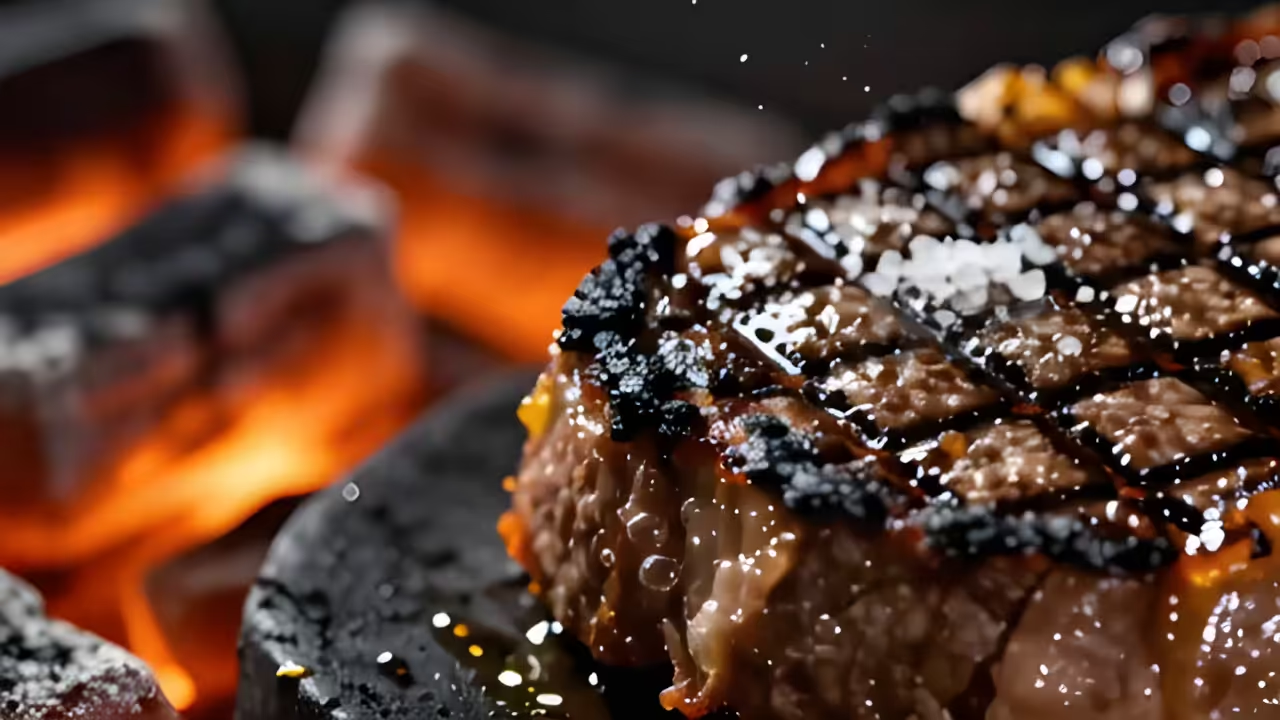
The engineering of a diamond cross hatch sear requires a deep understanding of thermal conductivity and the capturing of high-fidelity audio. We begin by analyzing the interaction between the cold muscle fibers and the heated metal substrate to create specific acoustic triggers. This process relies on high thermal mass to maintain a constant surface temperature and generate the sensory archive expected in professional culinary physics.
Thermodynamic Surface Interaction
A carbon steel or cast iron surface acts as the primary heat reservoir for this operation. When the protein contacts the metal, a rapid dehydration of the surface occurs immediately to facilitate sensory anchoring. This initial phase is critical for the development of the iconic diamond geometry and the underlying white noise profile of the sear.
The forty five degree orientation is a specific grid of localized carbonization that increases the total surface area of the crust by manipulating the heat transfer coefficient across the irregular surface of the protein.
Acoustic Physics and Sonic Textures
The acoustic signature of a perfect sear is a vital indicator of culinary success within the sensory archive. As the surface moisture evaporates, it creates a white noise profile known as the sizzle which typically peaks in the high frequency range. These micro explosions of steam and fat create the rhythmic foundation of professional food ASMR content and signal the rate of moisture migration.
Technical Ingredients and Implementation
- Dry Aged Ribeye: 500 Grams center cut three centimeter thickness
- Maldon Sea Salt: 15 Grams flake geometry for acoustic crunch
- High Smoke Point Oil: 30 Milliliters avocado or refined grapeseed
- Unsalted Butter: 50 Grams for final lipid coating
| Equipment | Material | Thermal Property |
|---|---|---|
| Cast Iron Skillet | Iron Alloy | High Heat Emissivity |
| Infrared Thermometer | Laser Guided | Zero Point Five Accuracy |
| Wire Rack | Stainless Steel | Optimal Convective Airflow |
Sequential Preparation Protocol
- Temper the protein to twenty degrees Celsius to reduce thermal shock during initial contact.
- Preheat the primary heat reservoir until the laser guided thermometer registers the thermal target.
- Place the protein at a sharp diagonal to initiate the primary axis of the Maillard reaction.
- Rotate the protein exactly forty five degrees after ninety seconds to create the secondary sear lines.
- Monitor the crunch frequency and percussive resonance to ensure crust stabilization.
Effective heat management prevents the formation of a grey band beneath the surface of the meat. The internal moisture migration is governed by the contraction of the actin and myosin filaments during protein denaturation.
🚀 Recommended Resources
Disclosure: Some of the links above are referral links. I may earn a commission if you make a purchase at no extra cost to you.