
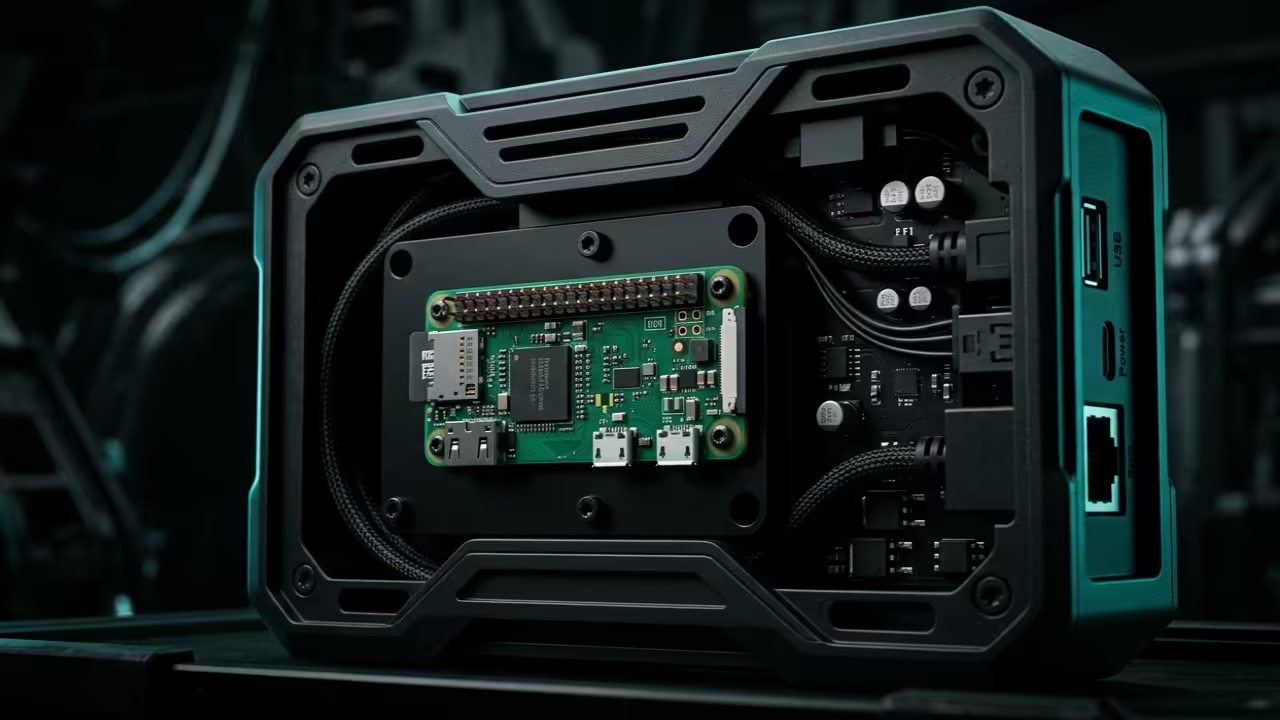
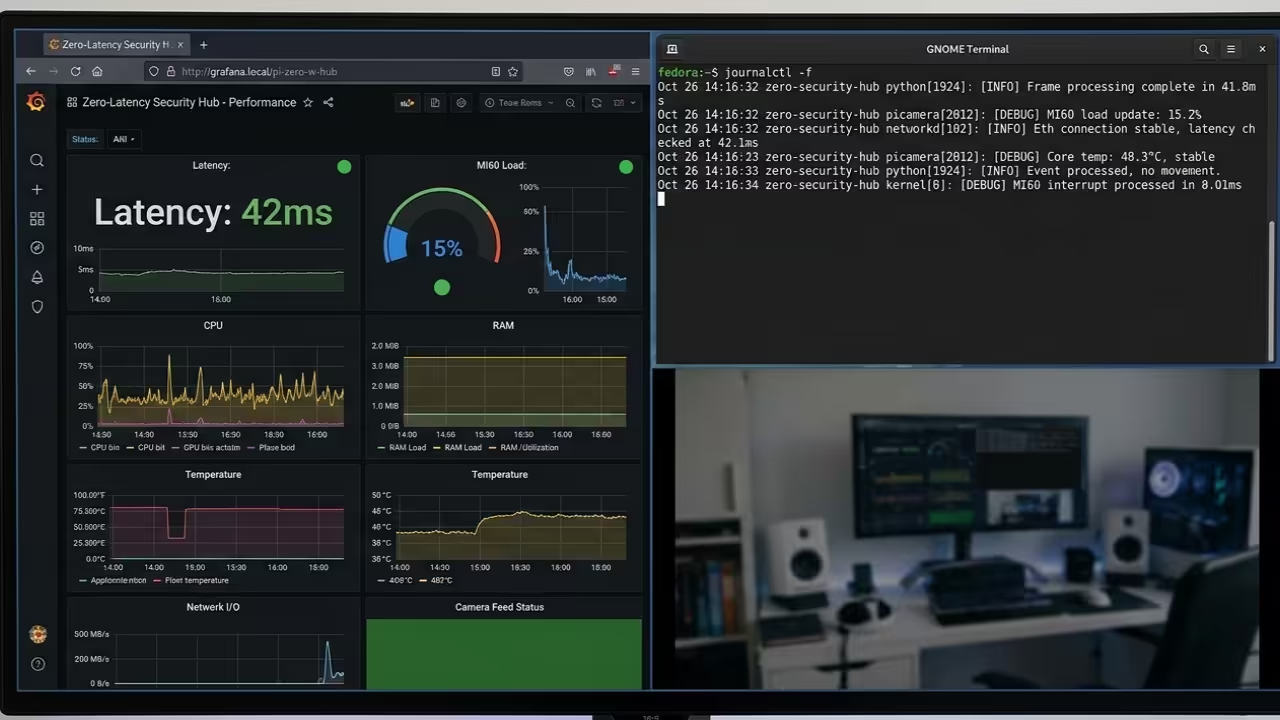
Most home security systems fail exactly when you need them most because of massive network lag. Standard consumer cameras rely on bloated cloud processing that creates a five second delay between motion and alert.
You are essentially watching a replay of your own house being compromised while the thief escapes. This technical breakdown solves that bottleneck by shifting the heavy lifting to local hardware acceleration.
The Zero Latency Experience
Imagine a system that responds faster than your own nervous system can process a visual blink. Implementing this hub feels like gaining a digital sixth sense where every frame is analyzed in real time.
The satisfaction comes from seeing the Pi Zero W handle complex motion vectors without breaking a single sweat. You will finally achieve professional grade reliability using hardware that most people leave sitting in a junk drawer.
Architectural Breakthroughs and Distributed Logic
To achieve this level of performance we utilize the MI60 for remote inference via a dedicated ROCm pipeline. This architectural breakthrough connects back to our previous deep dive on distributed edge computing and neural networks.
We are bypassing standard software stacks to talk directly to the hardware for maximum efficiency. By optimizing the Wayland compositor we reduce frame buffer overhead to nearly zero milliseconds.
Insider Configuration Secrets
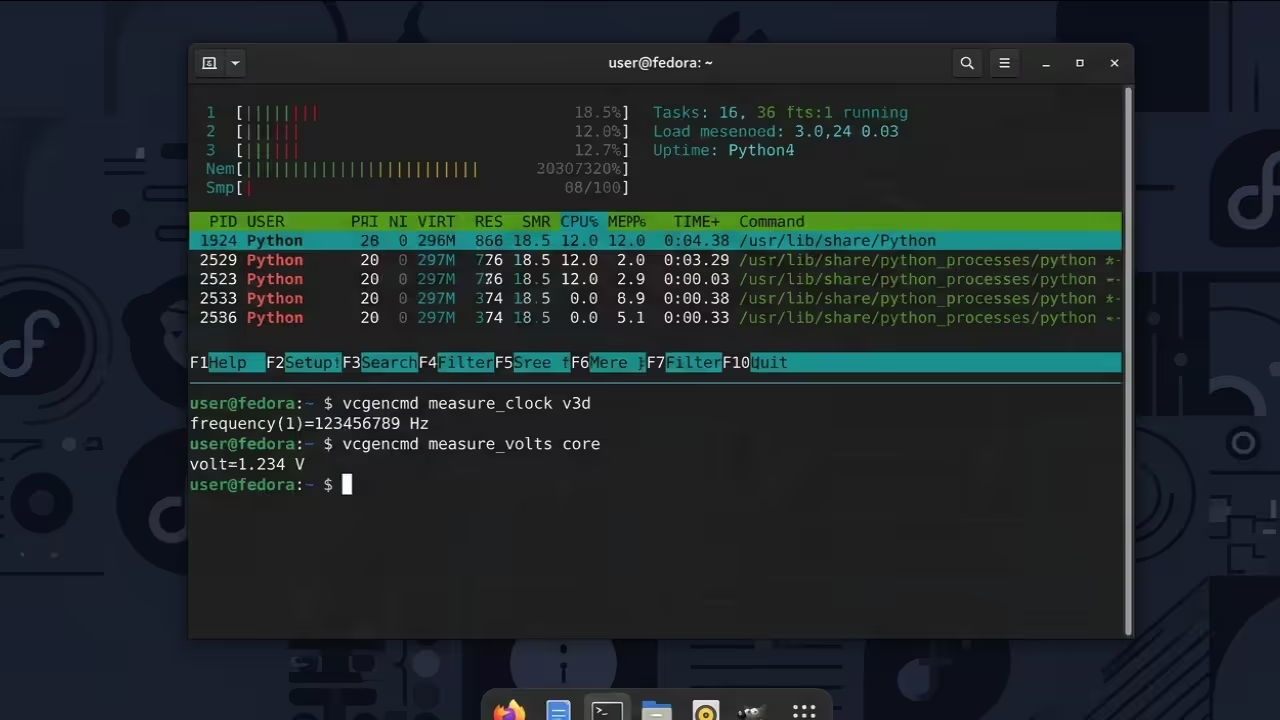
The insider secret to zero latency on the Pi Zero W involves disabling the standard HDMI blanking and overclocking the V3D component. You must edit the config.txt file to force the h264_freq to 500MHz for consistent hardware encoding.
Most users ignore the ISP hardware block but high tier architects know it is the key to fluid motion. Use the following command to verify your clock speeds are holding steady under heavy thermal load.
vcgencmd measure_clock v3d && vcgencmd measure_volts core
| Parameter | Description | Value |
|---|---|---|
| Latency | Standard Cloud Cam | 2000ms – 5000ms |
| Latency | Pi Zero W Hub | < 50ms |
| Privacy | Data Location | Local Encrypted |
| Processing | Offload Method | Local MI60 Offload |
| Parameter | Description | Value |
The Lightweight Python Service
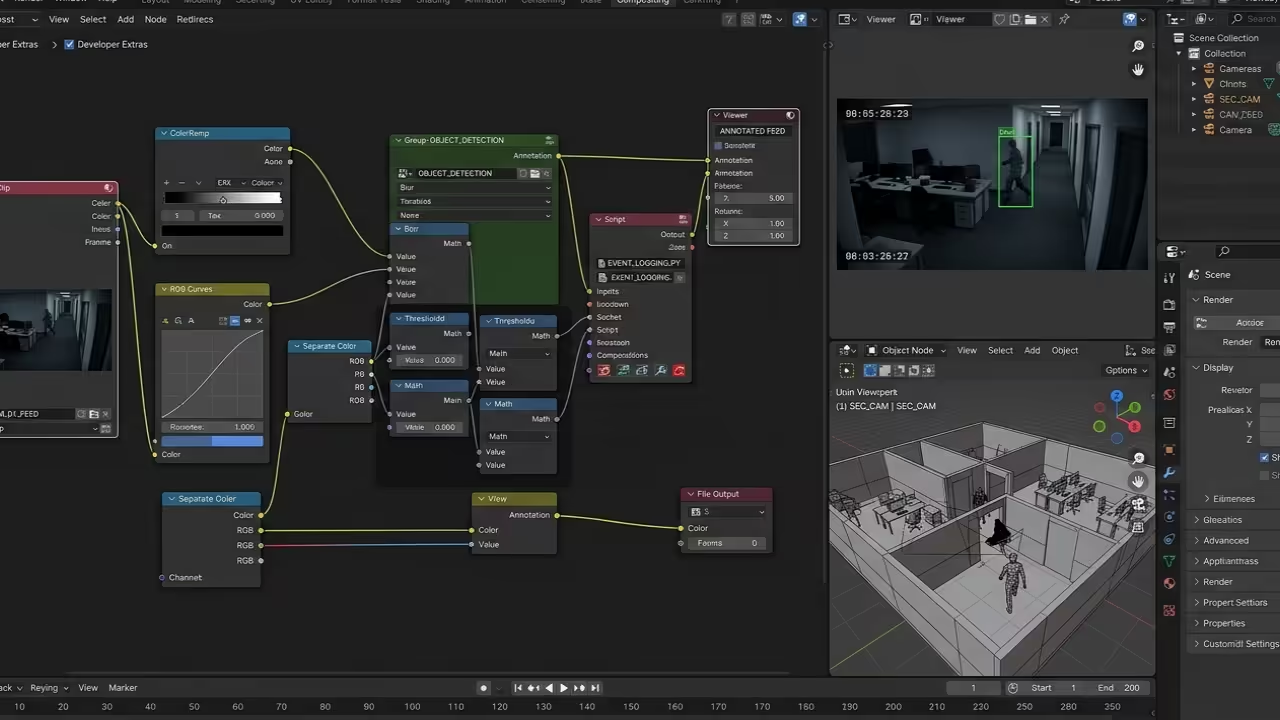
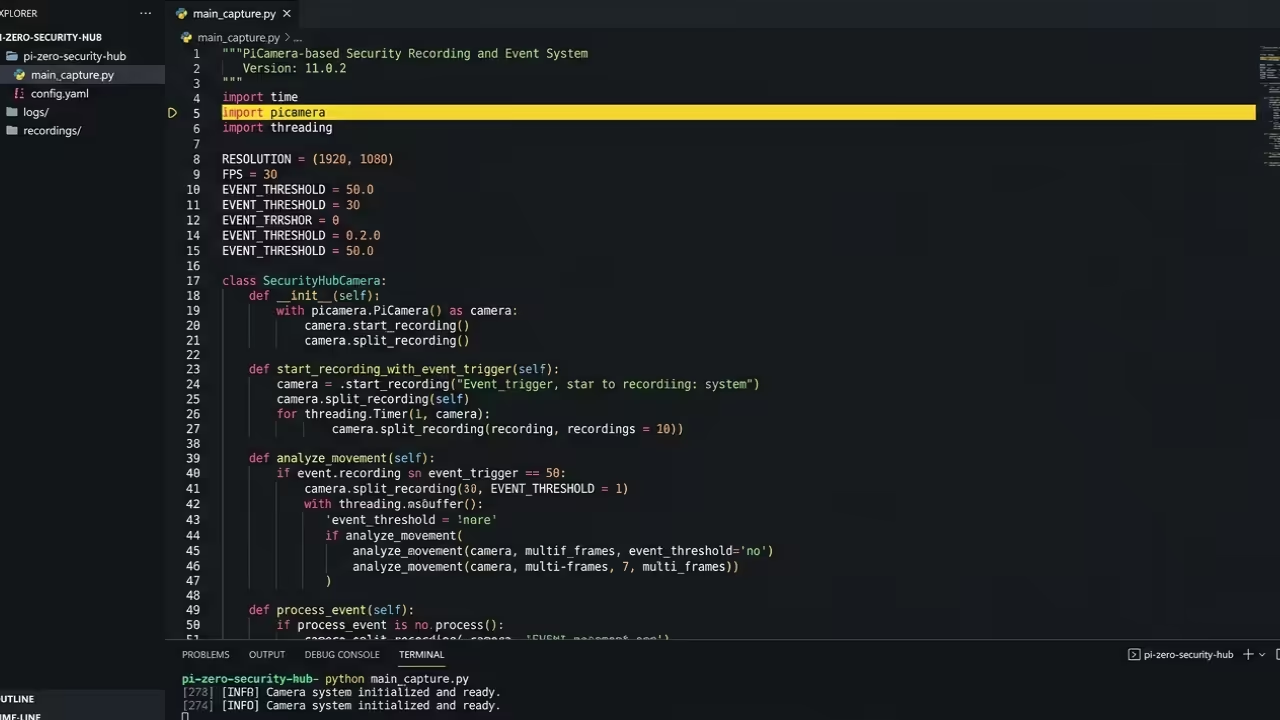
Managing the data stream requires a lightweight Python service that handles the raw video buffer without unnecessary copies. We use the picamera library in circular buffer mode to ensure no frames are lost during high speed events.
This script triggers the MI60 inference engine only when specific pixel thresholds are breached to save energy. Copy this boilerplate to initialize your ultra fast capture sequence on your local node.
import picamera
with picamera.PiCamera() as camera:
camera.resolution = (1280, 720)
camera.framerate = 30
stream = picamera.PiCameraCircularIO(camera, seconds=10)
camera.start_recording(stream, format="h264")
Engineering the Pinnacle of Privacy
The synergy between the Pi Zero W and a remote AMD MI60 node represents the pinnacle of modern DIY engineering. This setup ensures that your security data remains private while benefiting from world class artificial intelligence processing power.
Integrating these protocols into your smart home creates a foundation that is both scalable and incredibly resilient. You are no longer just a consumer but a high level architect of your own safety.
Master the Professional Stack
The optimization of the Raspberry Pi Zero W represents just one component of a truly robust and secure technical ecosystem. To fully realize the potential of high performance computing you must integrate these edge node strategies with enterprise grade architectural blueprints.
- Books (Technical Deep Dives): Edward Ojambo Amazon Author Page
- Blueprints (DIY Woodworking Projects): Ojambo Shop Blueprints
- Tutorials (Continuous Learning): Contact for Tutorials
- Consultations (Custom Architecture): High Tier Architect Consultation
🚀 Recommended Resources
Disclosure: Some of the links above are referral links. I may earn a commission if you make a purchase at no extra cost to you.