
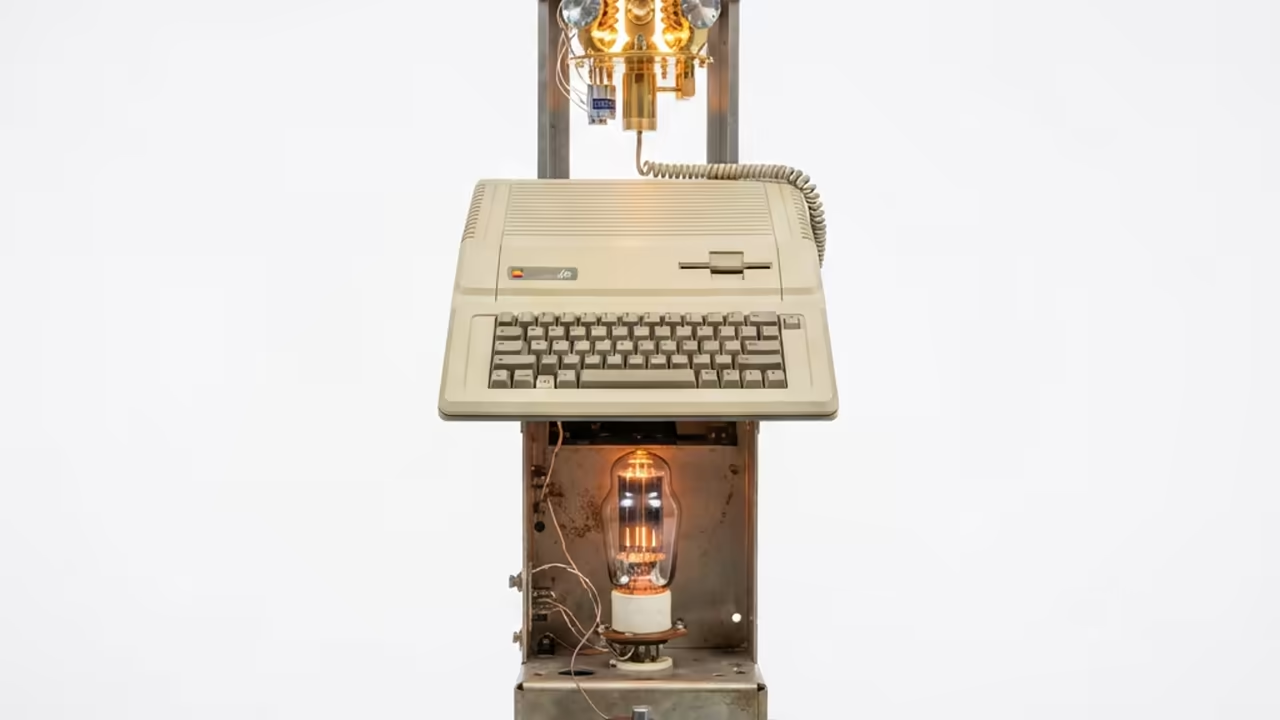
The technical history of this entity is a study in sonic evolution. It spans over a century of engineering breakthroughs. The historical baseline moves from mechanical clicks to quantum silence. This system architecture transition defines the operational metrics of modern computing, scaling from early punch cards to a current capacity of one hundred and fifty six programmable qubits.
The structural shifts reflect a broader movement in computing science. Each era introduced a new way to process information. These changes altered the physical and auditory environment of the workspace.
Disclaimer: I may earn a commission from purchases made through these links at no extra cost to you.


MECHANICAL RESONANCE
The Hollerith tabulator relied on a physical and auditory feedback loop. A spring loaded pin made a wet slap as it hit mercury. This electrical closure triggered a loud metallic ring from a bell.
The sorting boxes used electromagnets to trip spring hinged lids. These lids made a sharp snap as they popped open. This sound signaled a successful data sort to the operator.
These mechanical sounds provided a real time status report. The operator knew the machine was working by the rhythm. It was a tactile era of data management.
MAINFRAME HARMONICS
The System three sixty era introduced an industrial auditory signature. Massive cooling fans created a constant low frequency drone. This white noise filled the cavernous rooms of the data center.
The system used a channel subsystem to offload input and output operations. This design allowed the main processor to focus on calculations and maximize throughput.
Magnetic tape reels spun with a rhythmic and sweeping whir. The physical movement of the tape created a unique sonic texture. It was the sound of massive data throughput in the sixties.
Unified Architecture
Microcode resided in read only storage to manage the hardware. This layer allowed for a unified architecture across different models. It ensured that software remained compatible as the hardware grew.
THE SILICON RHYTHM
The personal computer brought a new tactile rhythm to the workspace. The mechanical keyboard produced a sharp and satisfying clack. Each key press felt like a physical confirmation of a command.
The Intel eight zero eight eight processor ran at four point seven seven megahertz. This clock frequency governed the timing of the entire system.
Five point twenty five inch floppy drives made a mechanical chugging sound. The drive head moved with a rhythmic clicking noise. This auditory signature defined the home computing experience of the eighties.
Operational Metrics
The system used a basic input output system to manage hardware. This firmware performed a power on self test upon every boot. It insulated the software from the complexities of the physical circuitry.
The open architecture allowed other companies to build compatible clones. This decision standardized the personal computer industry for decades. It moved the focus from hardware to software.
QUANTUM SILENCE
Modern quantum systems operate in a state of extreme engineered silence. The dilution refrigerator uses liquid helium to reach absolute zero. A high frequency whine comes from the external cooling compressors.
The decoherence time for these qubits is roughly two hundred microseconds. This brief window allows for the execution of complex quantum gates.
Inside the gold plated chandelier the environment is perfectly still. The Heron processor uses a heavy hexagonal lattice of qubits. This structure minimizes the noise that causes decoherence.
Hybrid Integration
The hybrid cloud acts as a classical orchestrator for these units. It coordinates high performance clusters with the quantum processing units. This integration allows for a seamless flow of quantum and classical data.
The use of tunable couplers eliminates the problem of cross talk. This allows the system to execute thousands of entangling gates. It represents the peak of modern precision engineering.
TECHNICAL SPECIFICATIONS
The following table outlines the hardware equipment used across different eras.
| Hardware Item | Primary Engineering Detail |
|---|---|
| Hollerith Tabulator | Mercury Cup Electrical Contact |
| System 360 | Microprogrammed Read Only Storage |
| PC 5150 | Eight Bit Industry Standard Architecture |
| Heron Processor | Superconducting Heavy Hex Lattice |
The memory ceiling of the early personal computer was six hundred and forty kilobytes. This limitation forced developers to optimize every byte of code. It created a legacy of extreme efficiency.
🚀 Recommended Resources
Disclosure: Some of the links above are referral links. I may earn a commission if you make a purchase at no extra cost to you.
Leave a Reply