

The Physics Friction Problem
Most indie developers waste months fighting erratic physics engines. They struggle with momentum conservation and jittery collision boxes.
This technical friction kills the creative flow of puzzle design. It prevents the implementation of precise mechanics.
Disclaimer: I may earn a commission from purchases made through these links at no extra cost to you.


The Enigma Experience
Implementing a complex laser array feels like magic in Enigma. You simply declare the object in a Lua script.
The simulation handles the heavy lifting instantly. This allows for rapid prototyping of complex levels.
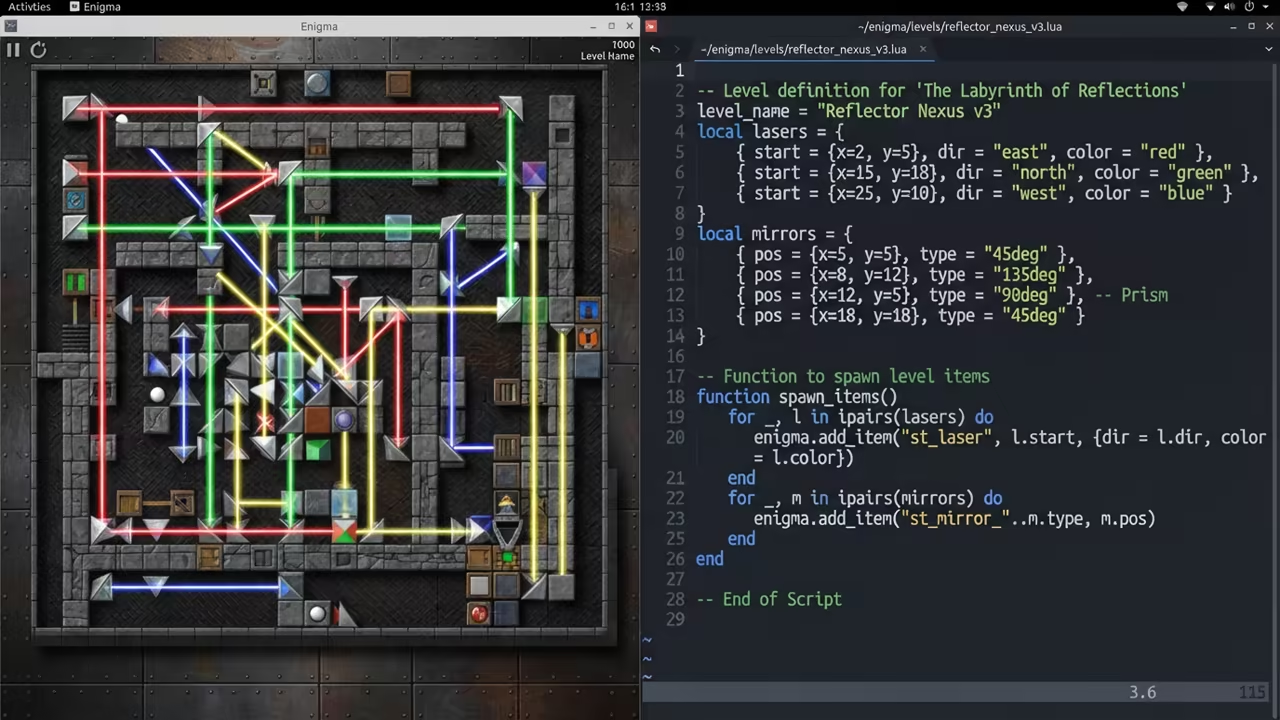
Hybrid Core Architecture
The system uses a hybrid C++ and Lua architecture. High performance physics run in the core engine.
Custom logic flows through the embedded scripting interface. This split ensures stability and flexibility.
This design allows the engine to simulate over five hundred unique objects. You can deploy mirrors and gravity fields with minimal effort.
It is a masterclass in data driven framework design. The overhead is remarkably low for the complexity provided.
The VFS Log Secret
Locating internal assets can be a nightmare for new users. Boot the executable with the –log flag in the terminal.
This reveals the exact Virtual File System paths to stdout. It is the fastest way to map asset directories.
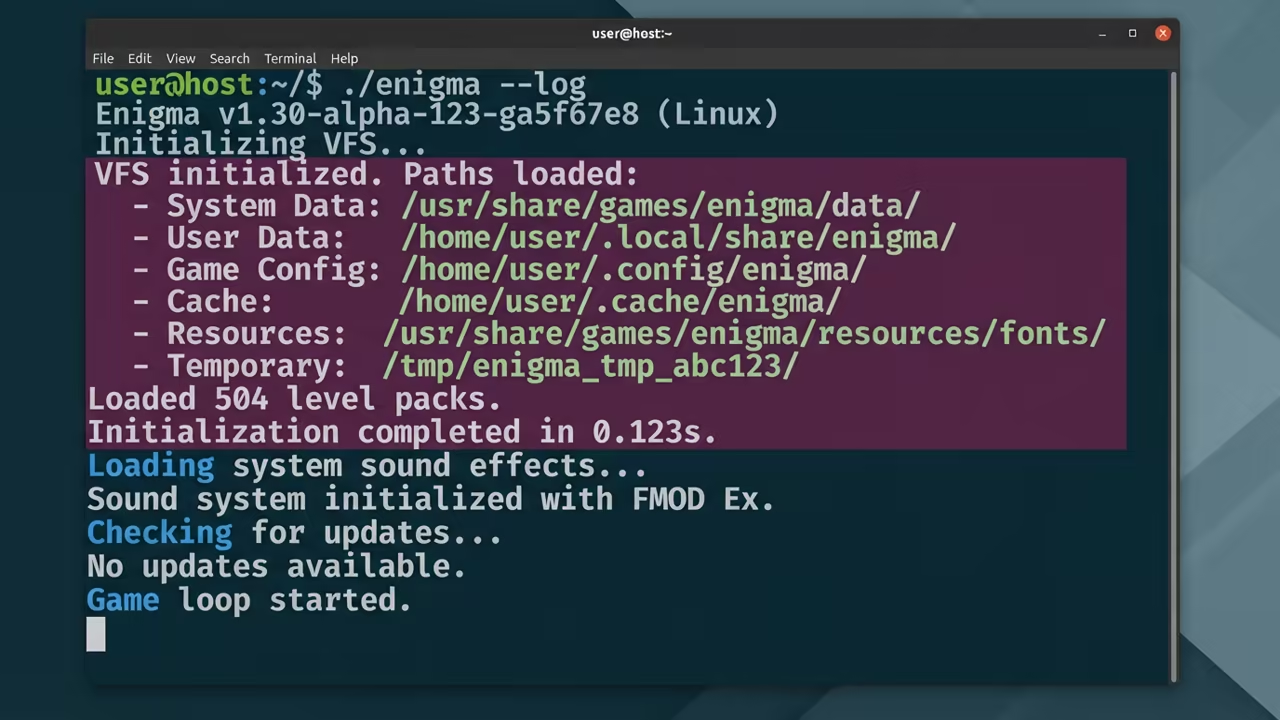
You can also hit F2 in the main menu. This displays the active asset search directories for the current session.
It is essential for debugging custom Lua libraries. This avoids guessing where the engine looks for files.
Optimizing for Fedora
Fedora users should avoid generic binary packages for better performance. Install development packages for SDL and Xerces-C first.
This ensures all dependencies are mapped to the local hardware. It prevents runtime crashes during physics calculations.
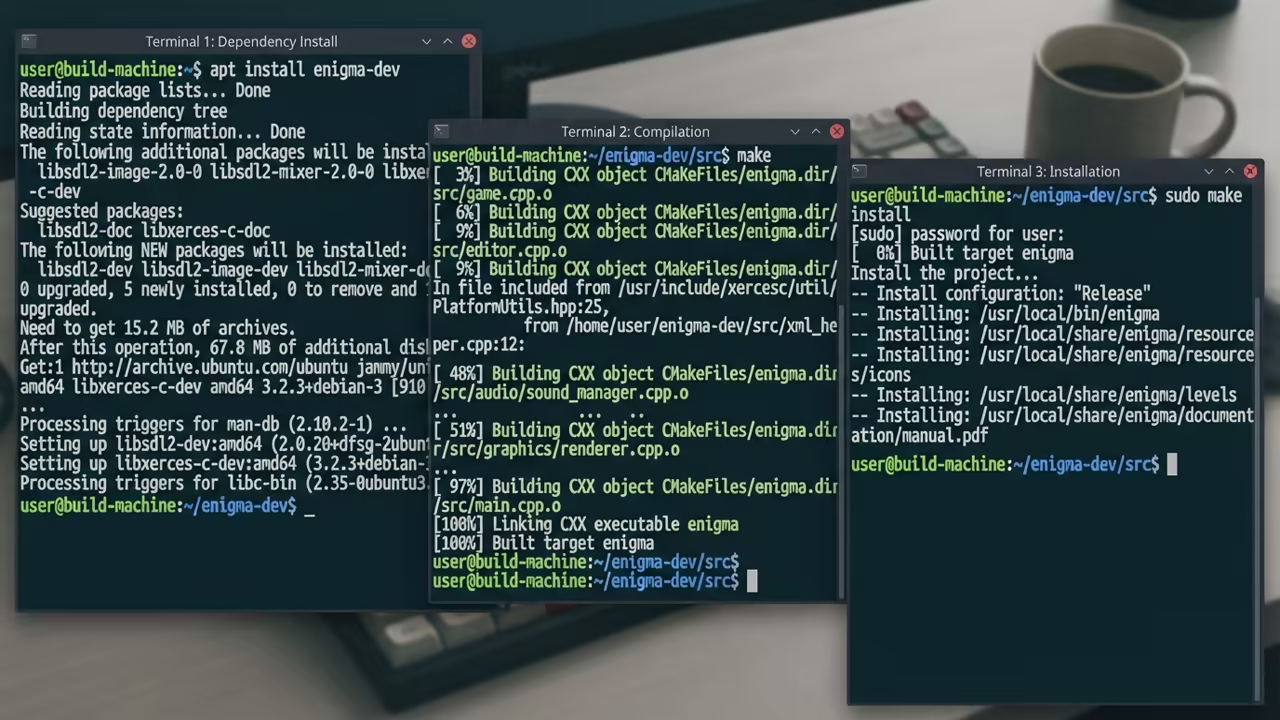
Then run the GNU Autotools chain to build from source. This process optimizes the binary for your specific CPU architecture.
It eliminates the lag found in precompiled versions. The resulting binary is lean and highly responsive.
./autogen.sh && ./configure && make && sudo make install
Dynamic Environment Behaviors
Level files can integrate custom Lua libraries via XML nodes. This forces the preloader to evaluate scripts before the arena state.
It allows for truly dynamic environment behaviors. You can change physics rules on the fly based on game events.
You can create complex multi room maps using lightweight text scripts. This removes the need for bulky GUI editors entirely.
The workflow is fast and highly iterative. Changes are applied instantly upon reloading the level.
| Parameter | Enigma | Godot | Enigma Dev |
|---|---|---|---|
| Nature | Puzzle Framework | General Engine | Compiler Framework |
| Architecture | 2D Tile Physics | 2D and 3D | Executable Transpiler |
| Scripting | Lua and XML | GDScript and C# | EDL and C++ |
| Workflow | Data Driven | Visual Editor | Code IDE |
| Performance | C++ State Engine | C++ Core | Native Machine Code |
Legacy Integration and Precision
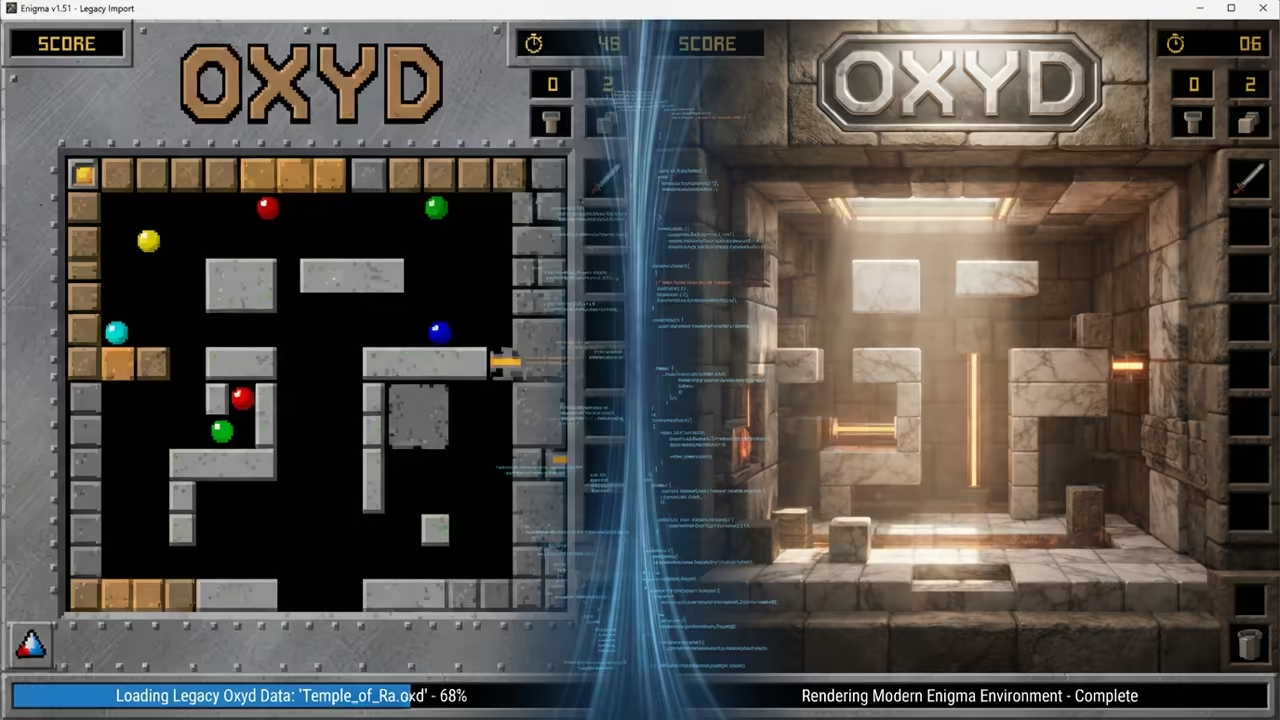
Enigma includes a powerful legacy parser for historical game data. It can natively read layouts from original closed source Oxyd files.
This bridges the gap between retro classics and modern hardware. It preserves the history of the puzzle genre.
This feature allows developers to study classic puzzle design patterns. You can import ancient maps and modify them with Lua.
It is a digital archaeology tool for game designers. It provides a foundation for modern iterations.

The Logic State Machine
The embedded logic engine handles trigger mechanisms with extreme precision. You can link switches to distant doors using simple identifiers.
The state machine ensures consistent behavior across all platforms. This reliability is a core strength of the framework.
This precision is critical for high stakes puzzle gameplay. One pixel of error can break a complex solution.
Enigma eliminates this variance through its tuned physics loop. The results are deterministic and fair.
The Lean Software Advantage
This framework proves that specialized tools beat general engines for puzzle logic. It removes the boilerplate associated with sprite colliders and layer matrices.
You spend more time designing puzzles and less time fighting tools. The efficiency gain is substantial for solo developers.
This approach connects to previous architectural breakthroughs in lean software design. It prioritizes function over feature bloat.
It is the ultimate secret for high efficiency indie development. Lean tools enable faster shipping cycles.
Learning and Support
Reach out for personalized technical help to optimize your game build. Dive deeper with our detailed online tutorials to master the framework.
Online Tutorials & Technical Help: https://ojambo.com/contact
🚀 Recommended Resources
Disclosure: Some of the links above are referral links. I may earn a commission if you make a purchase at no extra cost to you.