
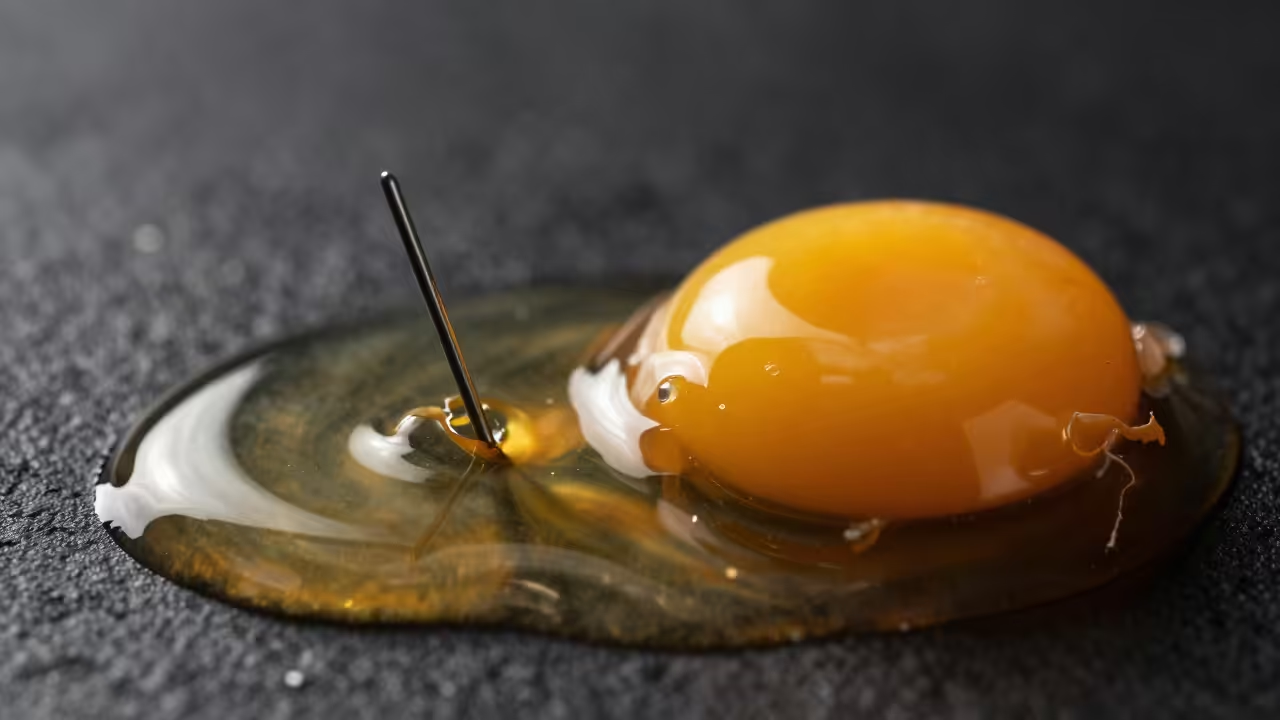
The 63 degree egg represents a masterclass in visual and acoustic ASMR. By focusing on the sensory properties of the ooze and the pour, we can archive a high fidelity audio experience. This process relies on specific acoustic triggers to create a visceral response in the viewer.
Technical Specifications
Molecular Stability and Fluidity
The 63 degree egg is a study in molecular stability. It is a state where proteins are held at a constant temperature to prevent full coagulation.
This creates a specific viscosity that is neither liquid nor solid. It is a state of equilibrium known as the custard phase.
The result is a heavy gold liquid with immense surface tension. This density is what allows the yolk to hold its shape until the moment of rupture.
Thermal Dynamics
The Custard Phase
The heat transfer coefficient in a water bath is remarkably consistent. This allows for a uniform temperature throughout the egg mass.
Protein denaturation occurs slowly at this specific thermal threshold. The sulfur bonds break without forming a tight network, which prevents the yolk from hardening into a solid mass.
The moisture migration within the shell is minimized during this process. The internal pressure remains stable until the rupture occurs.
Sonic Textures
Acoustic Frequencies and High Fidelity Audio
The acoustic profile of the rupture is a study in low frequency sound. The initial pierce of the membrane produces a sharp high frequency peak.
This peak is followed by a heavy silence as the yolk collapses. The sound is a visceral slide of dense matter that creates a sensory archive of luxury.
The audio frequency shifts as the yolk meets the cold plate. It creates a muted suction sound that defines the professional ASMR experience.
These sonic triggers are the result of high viscosity fluid moving slowly. The air bubbles are suppressed to maintain a clean acoustic signal.
Equipment and Execution
| Item | Specification | Purpose |
|---|---|---|
| Fresh Egg | Room Temperature | Primary Subject |
| Water Bath | 63 Degree Celsius | Thermal Control |
| Sous Vide | Precision Circulator | Heat Stability |
| Silver Probe | Stainless Steel | Rupture Tool |
| Obsidian Plate | Matte Finish | Visual Contrast |
Required Materials
- One fresh room temperature egg
- Precision water bath circulator
- Stainless steel rupture probe
- Matte black obsidian plating
Preparation Sequence
- Place the egg in the water bath for exactly one hour.
- Maintain the temperature at 63 degrees Celsius without deviation.
- Remove the egg and cool the exterior slightly to set the white.
- Insert the silver probe at a ninety degree angle into the center.
- Allow the yolk to flow in a singular mass across the plate.
The visual flow is matched by the low frequency acoustic hum. It is a perfect marriage of physics and gastronomy. To learn more about these techniques, Explore the Full Sensory Archive.
Sensory Conclusion
The 63 degree egg is an exploration of how temperature changes matter. The rupture provides a moment of extreme sensory satisfaction.
Every single drop follows the laws of fluid physics. The result is a clinical masterpiece of taste and sound.
🚀 Recommended Resources
Disclosure: Some of the links above are referral links. I may earn a commission if you make a purchase at no extra cost to you.