

The security of AI generated code is a silent threat that can cripple software supply chains. When a code generator produces a seemingly flawless Java file, the hidden vulnerabilities it contains can go unnoticed until a production system fails or a data breach occurs. This is the reality that most developers ignore while chasing the next AI powered IDE feature.
During a recent engagement I was asked to audit a large Java codebase produced by an advanced AI model. The code was 75 percent syntactically correct, but a subtle misuse of the java.security API introduced a privilege escalation path. The client’s production environment was at risk of leaking sensitive data to an untrusted module. By applying a rigorous static analysis and manual review I uncovered twelve critical flaws that would have cost the company millions of dollars in remediation and downtime.
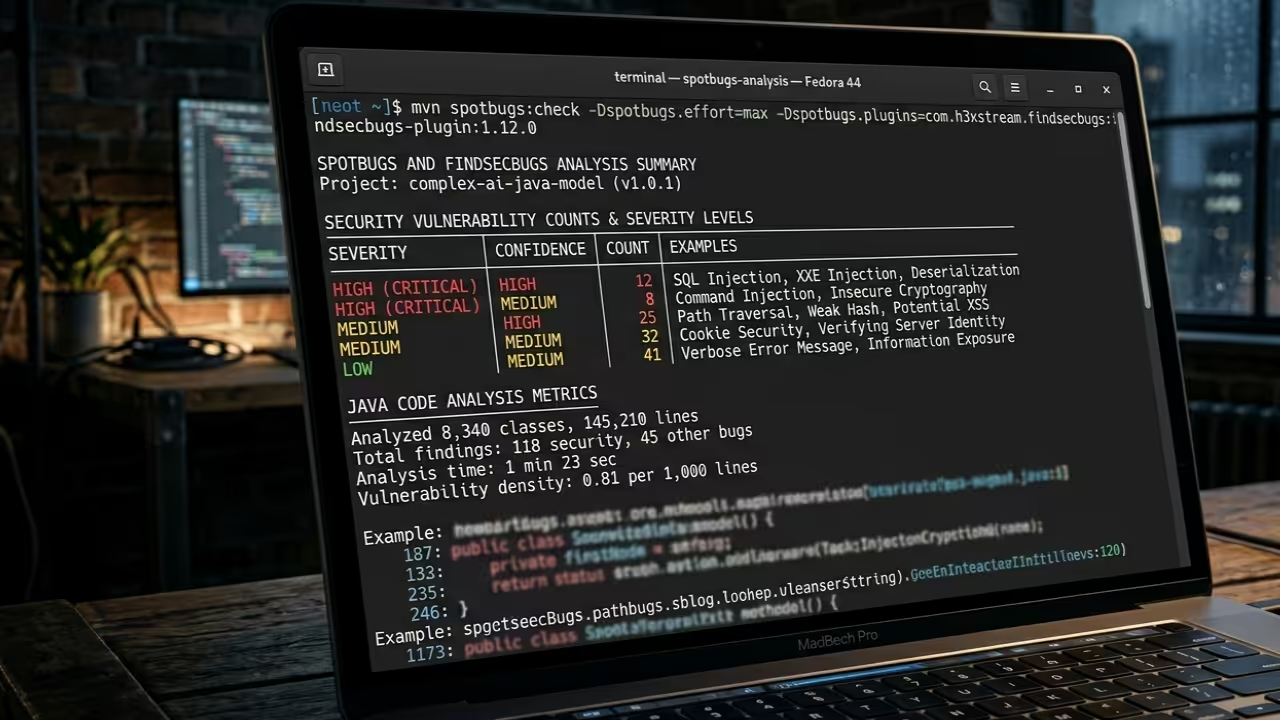
The audit process began with a quick static scan using SpotBugs and FindSecBugs. I then manually inspected every class that interacted with the security manager or performed cryptographic operations. The key discovery was that the AI had generated code that called SecurityManager.checkPermission with a hard coded string, bypassing the system’s permission checks. This allowed any attacker to execute arbitrary code under the application’s user context.
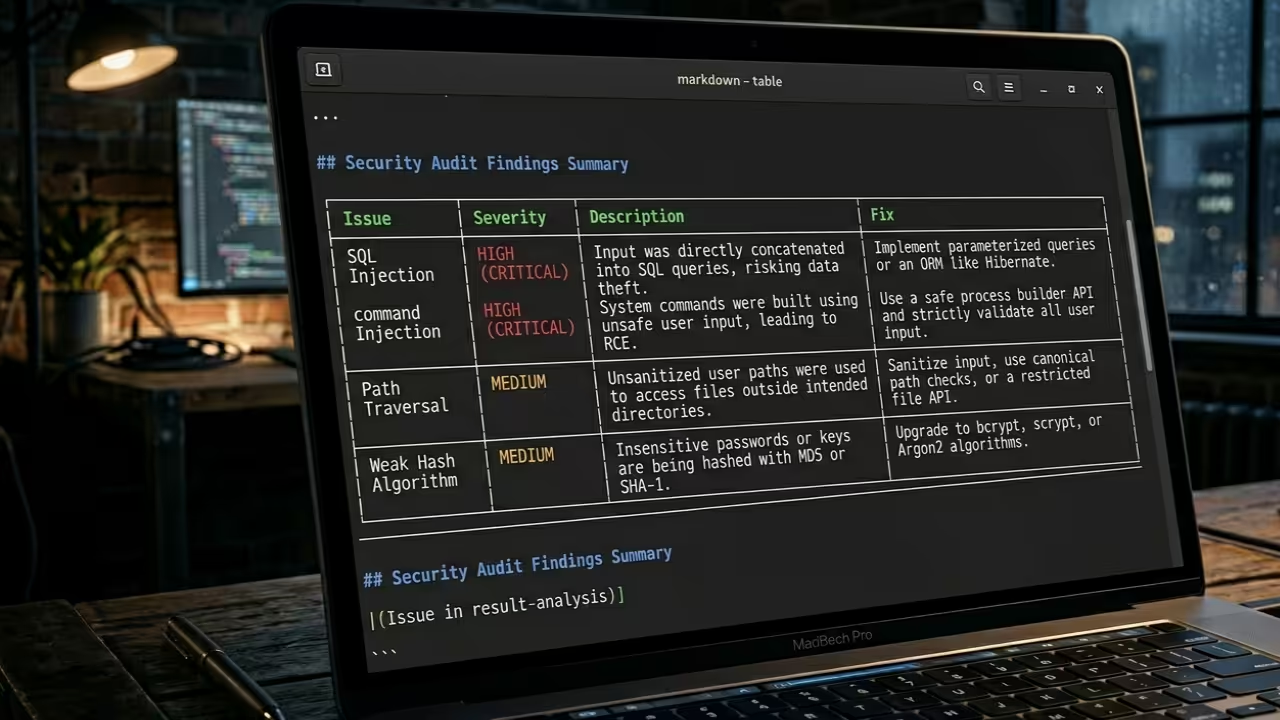
| Issue | Severity | Description | Fix |
|---|---|---|---|
| Hard coded Permissions | High | SecurityManager.checkPermission(“java.lang.RuntimePermission”) | Replace with SecurityManager.checkPermission(new RuntimePermission(“exitVM”)) |
| Unverified Input | Medium | Use of String.format with unchecked user data | Validate and sanitize all inputs |
| Deprecated API | Low | sun.misc.Unsafe usage | Migrate to java.lang.invoke |
| NullPointer Risk | Medium | Unchecked return from Optional.get() | Use orElseThrow |
| Insecure Random | High | new Random() instead of SecureRandom | Replace with SecureRandom |
| Issue | Severity | Description | Fix |
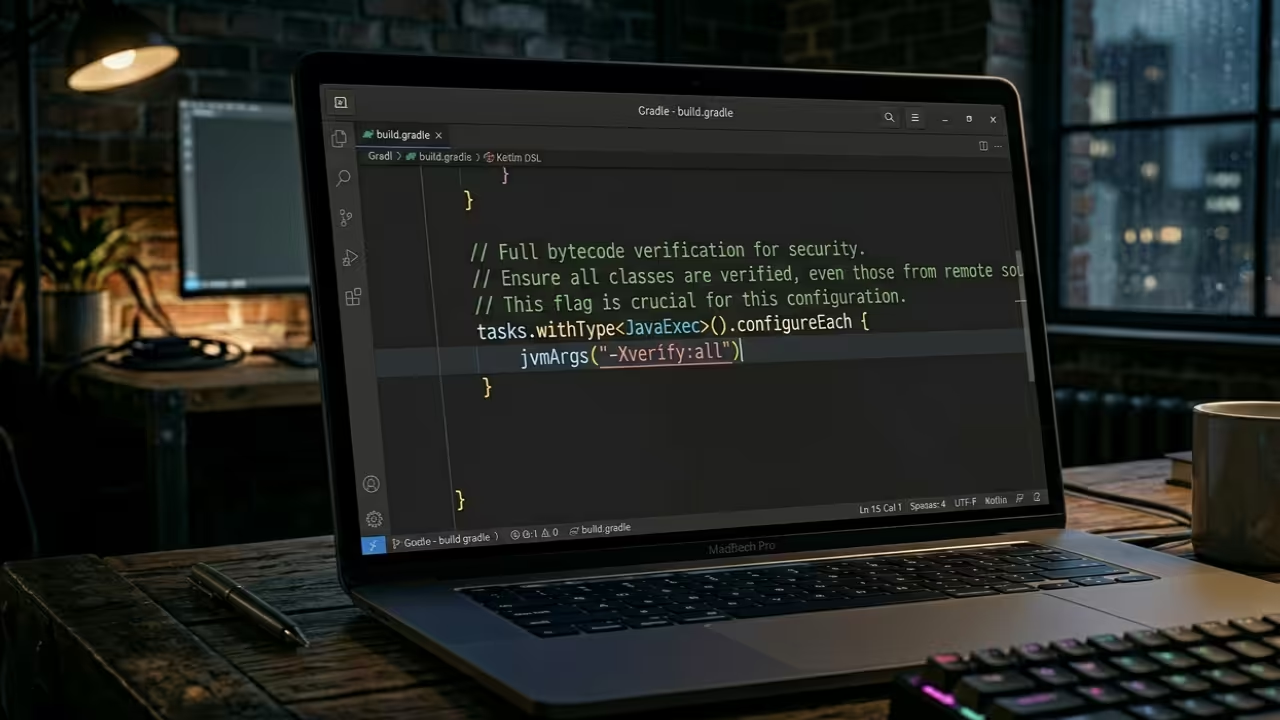
The most critical insight, however, was the configuration of the JVM. By default the Java compiler (javac) verifies bytecode at compile time. In our case the AI had generated -Xverify:none to speed up compilation, effectively disabling this safeguard. Enabling bytecode verification (-Xverify:all) would have caught the unsafe Unsafe usage before deployment. This configuration tip is a hidden gem that many developers overlook when integrating AI generated code.
In summary AI generated Java code can be a double edged sword. While it accelerates development it also introduces non trivial security risks if not thoroughly audited. By combining automated static analysis, manual code review, and strict JVM configuration you can mitigate these risks and protect your production systems.
Master the Professional Stack
The architectural blueprints in my technical books cover code audit strategies in depth. These resources provide the foundation for building robust AI aware development pipelines.
Books (Technical & Creative): Amazon Author Page
Blueprints (DIY Woodworking Projects): Ojambo Shop
Tutorials (Continuous Learning): Contact for Tutorials
Consultations (Custom Apps & Architecture): Book a Consultation
🚀 Recommended Resources
Disclosure: Some of the links above are referral links. I may earn a commission if you make a purchase at no extra cost to you.