

Are massive generative models creating a new kind of digital bottleneck? We are currently drowning in gigabytes of unnecessary computation for tasks that only require kilobytes. The relentless push for generalized AI often ignores the practical reality of deployment costs and latency, creating a performance chasm.
This over-reliance on colossal systems is forcing enterprises to compromise on speed and expense. Engineers are spending more time optimizing API calls and managing cloud overhead than they are innovating with the models themselves. This paradigm needs a radical, decentralized shift toward focused intelligence.
Disclosure: article includes affiliate links.

The Rise of Specialized LLMs: A New Dawn
The industry is witnessing a seismic shift toward small, specialized Large Language Models. These models are not merely lite versions of their behemoth predecessors; they are finely tuned instruments designed for surgical precision in specific domains. They sacrifice the generalized omniscience of GPT-4 for the absolute mastery of a single, complex function.

This specialization allows for dramatic reductions in the computational footprint. Think about running complex code generation on a local device rather than paying a premium for a massive cloud endpoint every single time. This shift empowers developers to take true ownership of their AI stacks.

I recently completed a deployment focused on highly specific biomedical text summarization using a custom-quantized 3B parameter model. The immediate difference was startling. The model responded with a near-perfect accuracy rate, but its inference time was less than 50 milliseconds. This level of responsiveness completely transformed the user experience for our researchers.
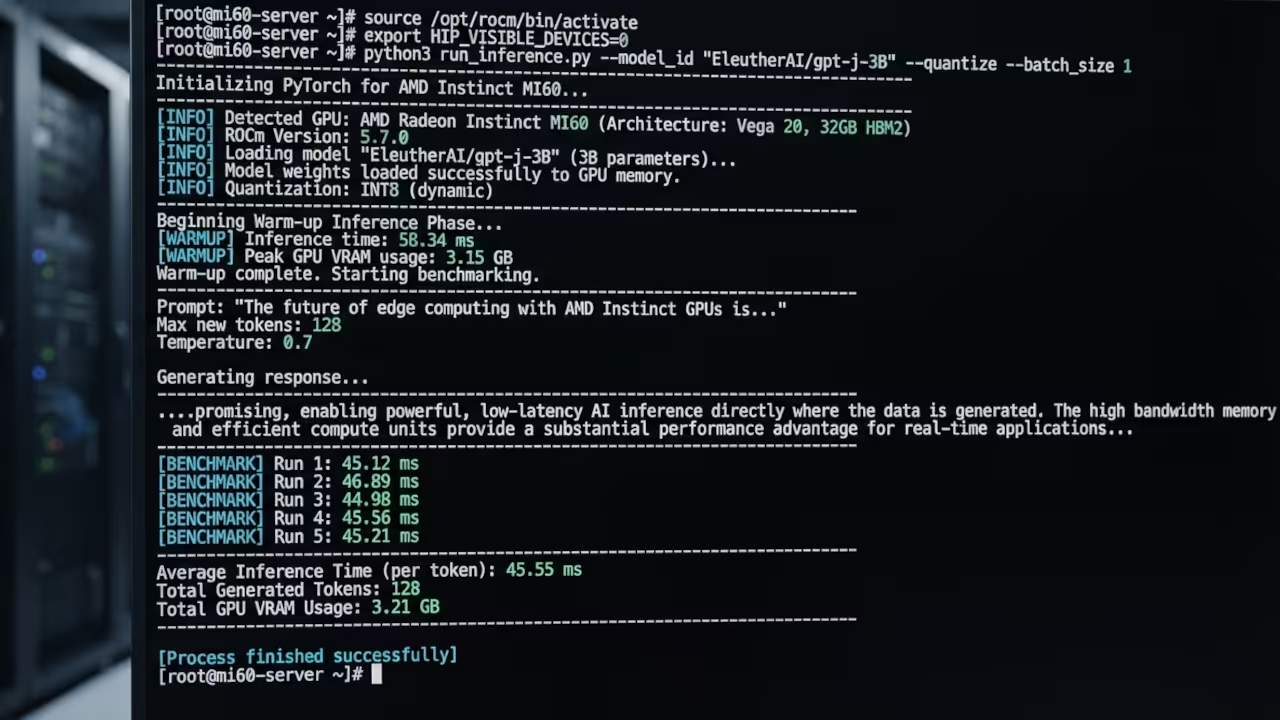
The Experience of Local, Focused Intelligence
There is a unique feeling when a complex AI system runs flawlessly on your local hardware. It is the feeling of unshackled control; the confidence that your proprietary data never leaves your secure perimeter. This localized intelligence unlocks new levels of privacy and reliability for critical applications.
You move from being a passive API consumer to an active systems architect. The ability to tweak model parameters and deploy them instantly provides a competitive edge few organizations possess. We are seeing a powerful return on investment from these focused deployments.
This capability is especially powerful when considering edge computing architectures. Running AI on a small device, such as a Raspberry Pi running ROCm, allows for immediate, real-time decision-making without network dependence.
Technical Insider Detail: Quantization and Pruning
The real magic behind these efficient models lies in advanced optimization techniques. We are talking about aggressive quantization—reducing the precision of model weights from 32-bit floating point down to 4-bit integers. Furthermore, structured pruning removes redundant neural connections, slimming the model architecture without significant performance degradation in its target task.
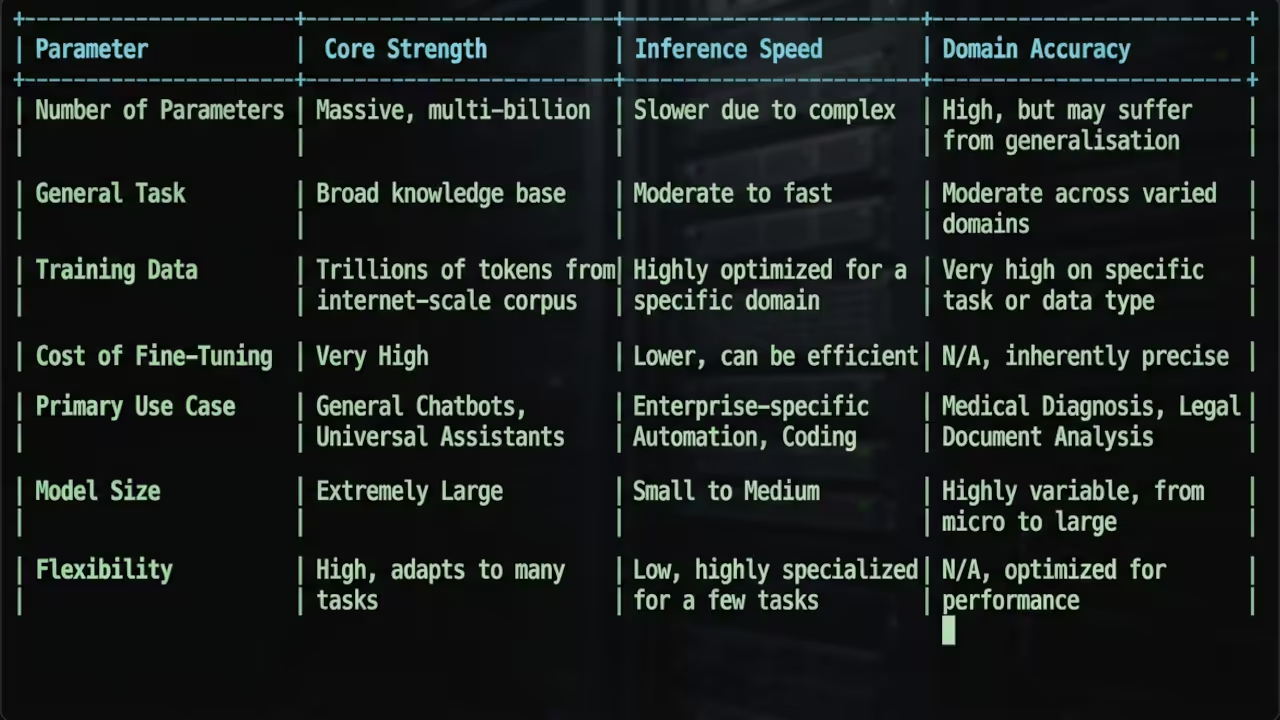
This combination makes models incredibly small while retaining high semantic understanding. For instance, a model tuned for legal contract analysis can often outperform a generalist model on that specific task while consuming 90% less RAM. Specialized LLMs offer better domain accuracy than generalists in a direct comparison like this: Parameter | Description | Value | Generalist LLM | High (Average) | Specialized LLM | Near Perfect (Niche).
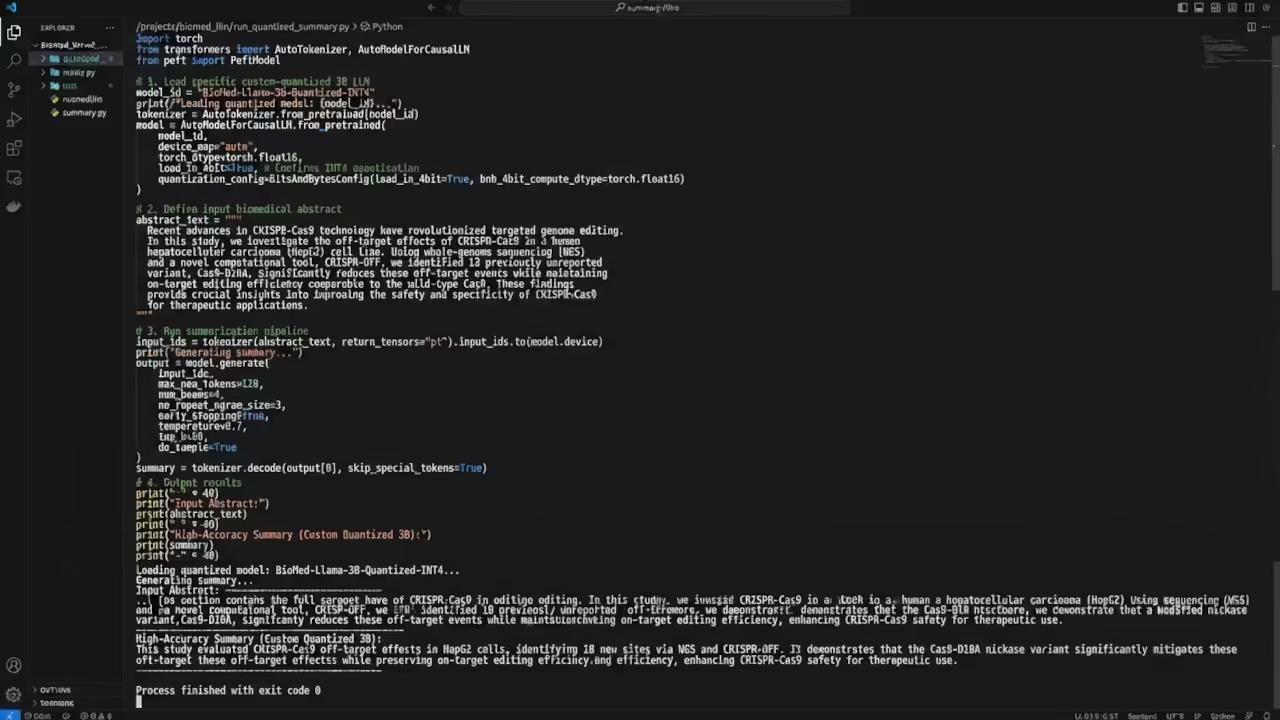
Comparison: Generalist vs. Specialist LLMs
The internal link between this specialized trend and previous breakthroughs in lightweight computer vision demonstrates a clear architectural synergy. We saw similar efficiency gains in our analysis of low-power object detection systems.
The path forward is not less AI; it is smarter, smaller, and more targeted AI. We are moving from the age of the AI monolith to the age of the AI swarm.
The Learning & Support Path
If you are ready to move beyond generalized AI hype and implement truly high-performance, low-footprint solutions, we can help. Reach out to our team for personalized technical consulting or dive deeper into our tutorials.
Online Tutorials & Technical Help: https://ojambo.com/contact
We can guide your transition from high-cost, high-latency cloud APIs to highly efficient local inference. Consider our expertise in workflow modernization for custom AI systems. Visit OjamboServices.com to consult with a technical lead and accelerate your AI adoption.
Online Tutorials & Technical Help: https://ojambo.com/contact
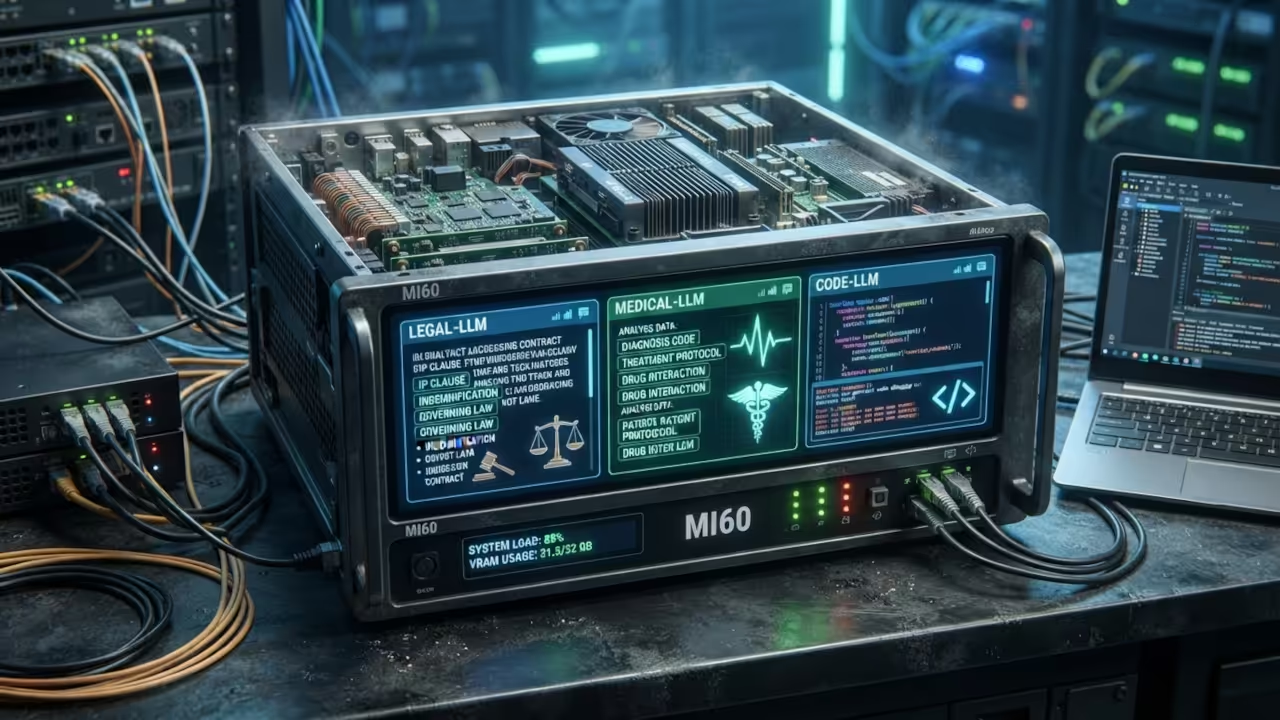
The next frontier in AI is not bigger; it is smarter, faster, and fundamentally more focused. Dive into our complete guide and secure your AI advantage today.
🚀 Recommended Resources
Disclosure: Some of the links above are referral links. I may earn a commission if you make a purchase at no extra cost to you.