
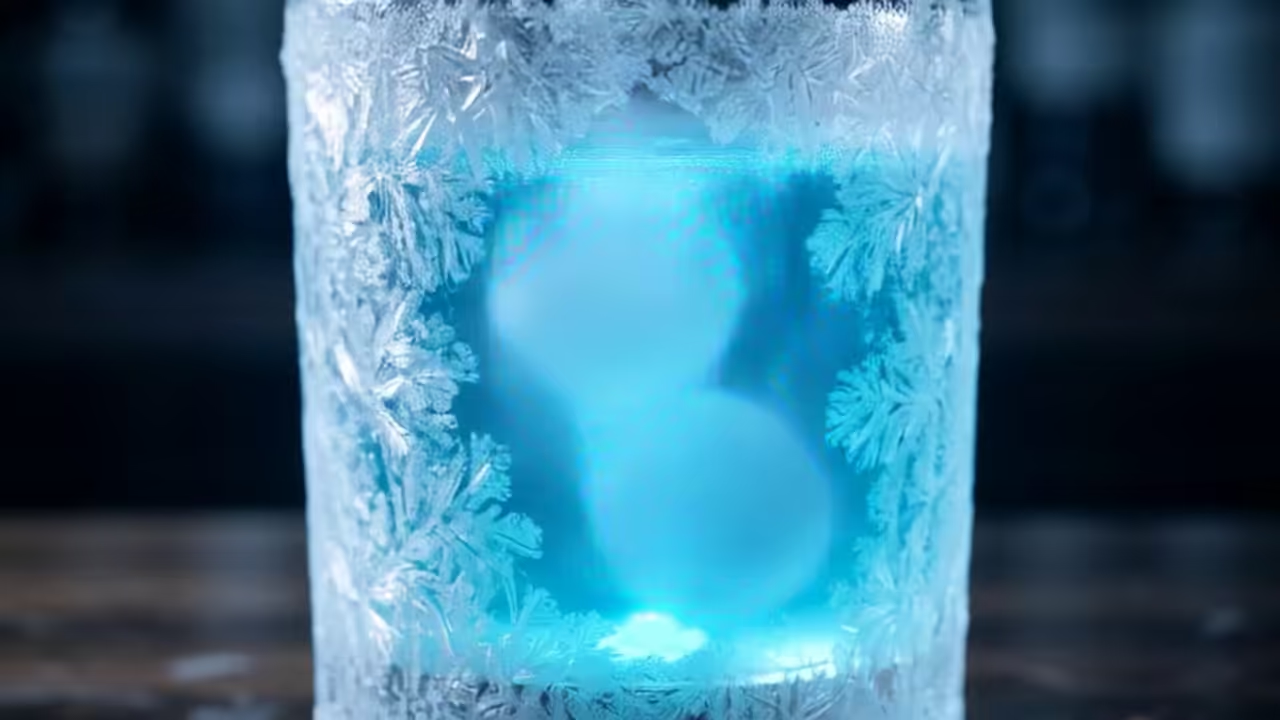
The world of high fidelity gastronomy often focuses on the visual appeal of a dish. However the true essence of the experience lies in the acoustic and sensory sound ASMR properties of the frost and the fizz. The Sonic Speed Carbonation Chain Reaction represents a peak in visceral culinary art.
THE PHYSICS OF FIZZ
The Role of the Catalyst
This process relies on the interaction between a super chilled liquid and a catalyst. A perfectly spherical ice core triggers a rapid nucleation event in the solution. Carbon dioxide escapes the liquid in a synchronized surge of high frequency bubbles.
The liquid is treated with an iridescent mineral blend to enhance visual clarity. This blend also stabilizes the bubble size for a consistent auditory experience. The result is a controlled explosion of gas within a liquid medium.
SONIC TEXTURES
To create a true sensory archive one must focus on the specific high fidelity audio produced by the reaction. These sensory triggers are what define the visceral nature of the experience.
The Crystalline Crackle
The auditory experience begins with a sharp crystalline crackle. This sound occurs as the glass reaches its dew point instantly. A layer of hoarfrost forms with a delicate snapping sound that echoes in the air.
The Rhythmic Pop
Then the carbonation takes over with a rhythmic popping sensation. Each micro bubble bursts with a high pitched click. This creates a dense sonic texture that feels almost tactile to the listener.
The deep resonating fizz provides a bass layer to the audio profile. It is a continuous rushing sound that mimics a distant waterfall. This contrast between sharp snaps and soft rushes defines the ASMR quality.
TECHNICAL SPECIFICATIONS
Thermal Precision
The temperature of the starting solution must be exactly minus five degrees Celsius. This ensures the liquid is on the verge of freezing without solidifying. Precision in this thermal gradient prevents the bubbles from collapsing too quickly.
The timing of the nucleation event is measured in milliseconds. The transition from stability to chaos is nearly instantaneous. This rapid shift is what creates the visceral impact for the observer.
The pressure within the glass is carefully monitored to avoid premature degassing. A stable environment allows the sonic peaks to reach their maximum potential.
EQUIPMENT AND INGREDIENTS
- Iridescent Solution (Super Chilled)
- Carbon Dioxide (Food Grade Saturated)
- Spherical Ice Core (Pure Distilled)
- Borosilicate Glass (Ultra Clear)
- Digital Thermometer (Precision 0.1C)
| Ingredient / Equipment | Specification | Quantity |
|---|---|---|
| Iridescent Solution | Super Chilled | 250 Milliliters |
| Carbon Dioxide | Food Grade | Saturated |
| Spherical Ice Core | Pure Distilled | 1 Unit |
| Borosilicate Glass | Ultra Clear | 1 Unit |
| Digital Thermometer | Precision 0.1C | 1 Unit |
PREPARATION STEPS
- Chill the iridescent solution to exactly minus five degrees Celsius.
- Polish the borosilicate glass using a microfiber cloth to remove all debris.
- Prepare a single pure distilled spherical ice core.
- Carefully place the ice core into the chilled solution to trigger nucleation.
- Monitor the nucleation event and the resulting sonic chain reaction.
CHEF DETAILS
One critical observation is the use of a spherical ice mold. The reduced surface area of the sphere controls the rate of degassing. This prevents the solution from overflowing during the chain reaction.
Another detail involves the specific mineral content of the iridescent solution. Certain ions enhance the stability of the micro bubbles. This leads to a longer and more consistent sonic performance during the loop.
The glass must be polished with a microfiber cloth to remove all dust. Microscopic debris can cause uneven nucleation and ruin the sonic pattern.
THE FINAL SENSORY ARCHIVE
The result is a shimmering display of temperature and sound. The frost provides a visual anchor while the fizz provides the energy. It is a masterclass in sensory precision and gastronomic engineering.
The experience leaves the diner in a state of focused calm. Every pop and snap is a reminder of the physics at play. This is the future of the frost and the fizz category.
The Sonic Speed Carbonation Chain Reaction is more than a recipe. It is a study in how sound can enhance the perception of taste. The visceral nature of the audio makes the coldness feel more intense.
Explore the Full Sensory Archive
🚀 Recommended Resources
Disclosure: Some of the links above are referral links. I may earn a commission if you make a purchase at no extra cost to you.