
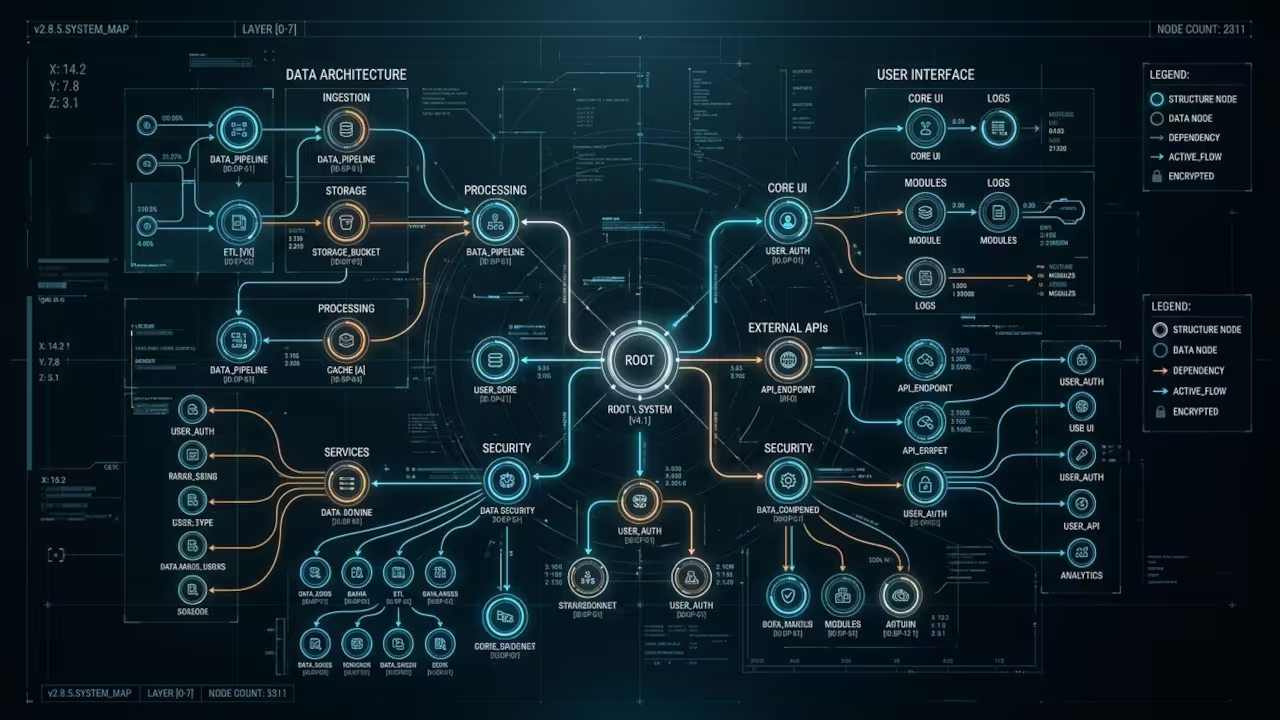
Modern web developers are currently drowning in a sea of bloated JavaScript frameworks that struggle with real-time 3D performance. React Three Fiber is impressive for simple scenes but often hits a massive performance wall during complex physics calculations.
The solution lies in treating your web application like a high-performance engine rather than a traditional document. This architectural shift ensures that hardware resources are utilized to their maximum potential through low-level API access.
The Feel of Raw Performance
Imagine the absolute thrill of seeing a complex 3D environment load instantly in a standard browser window. You feel the raw power of the hardware as the Vulkan backend translates seamlessly into highly optimized WebGL 2.0 instructions.
This is not just another shiny library but a fundamental shift in how we architect interactive digital experiences. The fluidity of movement and immediate response times create a professional atmosphere that standard DOM-based applications cannot replicate.
Optimizing the Export Pipeline
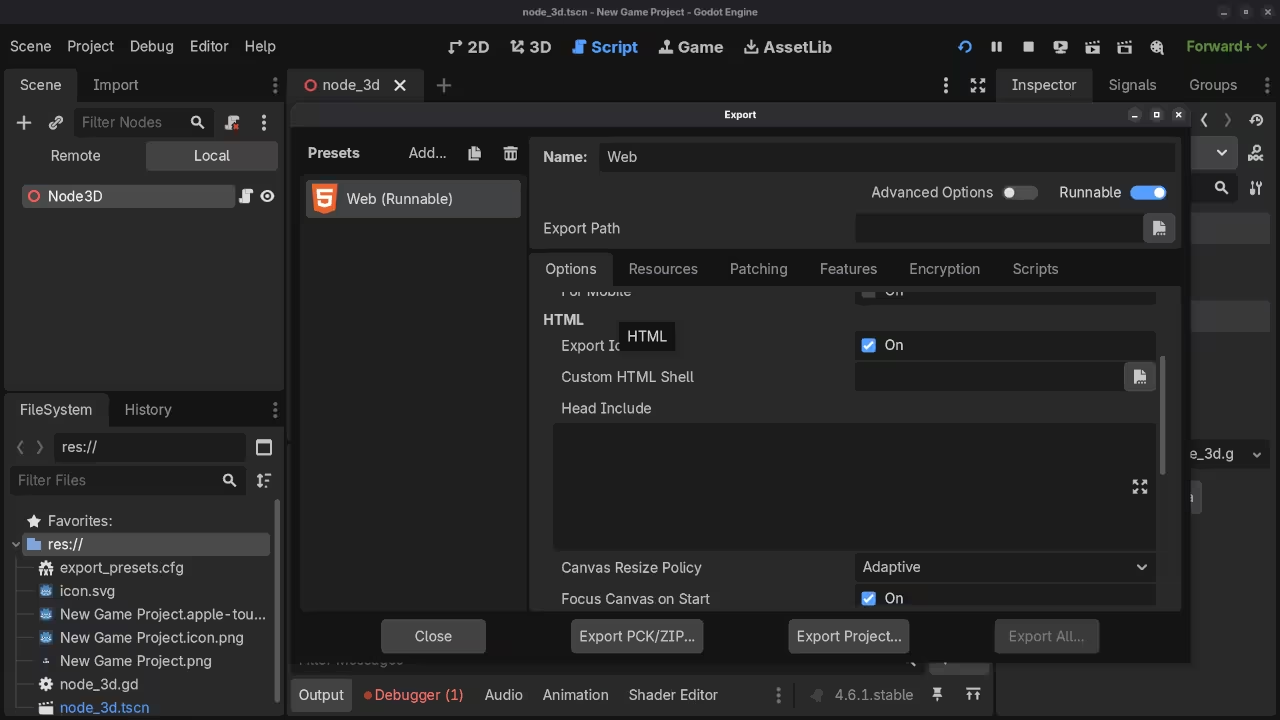
To achieve professional results you must master the Godot 4.x export pipeline specifically for high-compute environments like the MI60. One insider secret involves manually patching your export template to enable SharedArrayBuffer support for multi-threaded performance.
This specific configuration allows the engine to offload heavy mesh processing to worker threads without freezing the main UI. By utilizing these advanced settings you ensure that the browser remains responsive even under heavy computational loads.
Architectural Breakthroughs in Web Rendering
The architectural leap from DOM-based rendering to an atomic scene tree changes the entire development lifecycle. You no longer battle CSS z-index issues because the entire application exists within a single high-performance canvas element.
This approach mirrors the architectural breakthroughs discussed in our previous deep dives on headless server rendering. Centralizing logic within the engine allows for a cleaner separation between data processing and visual representation.
| Platform | Rendering Tech | Main Thread Load |
|---|---|---|
| React Three Fiber | Three.js / JS | High |
| Godot 4.x Web | WebGL 2.0 / WASM | Low |
| Unity WebGL | Emscripten / C++ | Medium |
| Platform | Rendering Tech | Main Thread Load |
Implementation and Scaling
When configuring your environment utilize the following GDScript to ensure your application dynamically scales its internal resolution based on the client hardware. This prevents thermal throttling on mobile devices while allowing desktop users to see full detail.
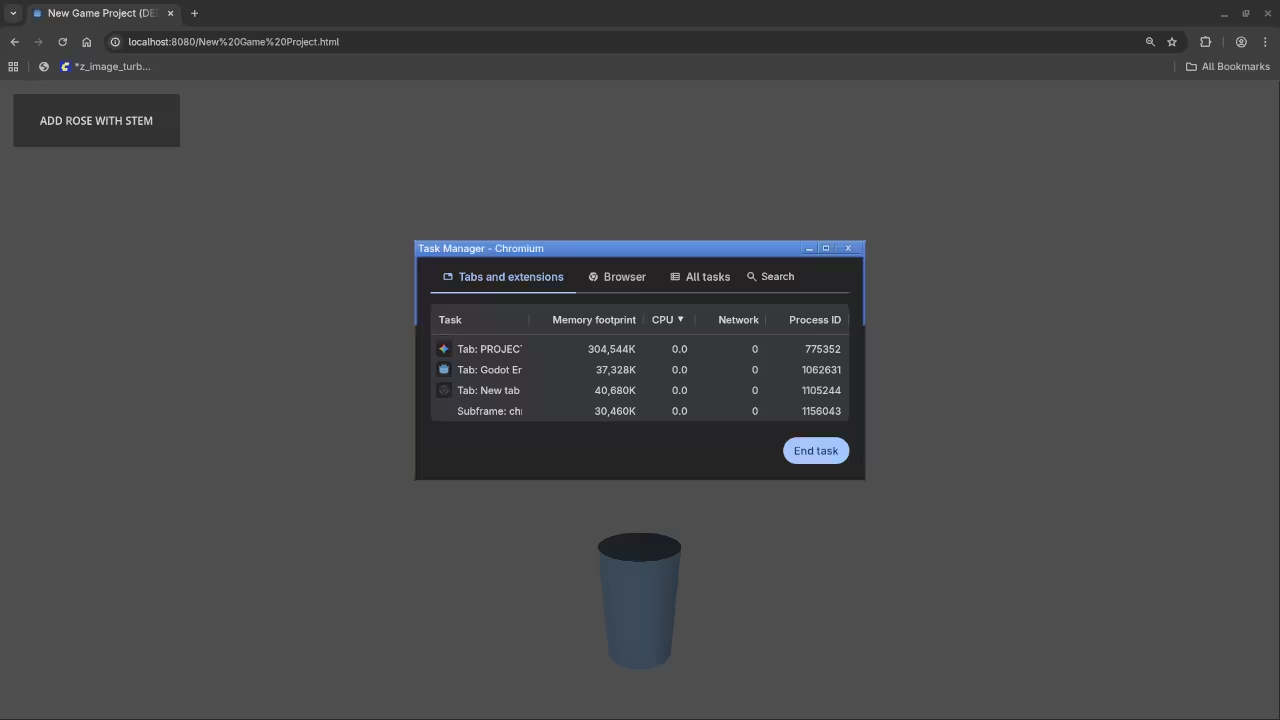
This script ensures that even users on lower-end mobile devices can experience smooth frame rates while desktop users get the full fidelity. You must also ensure your server headers are set correctly to allow Cross-Origin Isolation for advanced multithreading features.
Without these headers the browser will strictly block the high-performance memory sharing required for advanced 3D. Consistent testing across different environments is the only way to ensure a seamless user experience for every visitor.
Master the Professional Stack
Transitioning from raw engine logic to a structured professional roadmap ensures your technical growth remains consistent and scalable. These curated resources bridge the gap between hobbyist experimentation and enterprise-level systems architecture.
- Books (Technical Deep Dives): https://www.amazon.com/stores/Edward-Ojambo/author/B0D94QM76N
- Blueprints (DIY Woodworking Projects): https://ojamboshop.com
- Tutorials (Continuous Learning): https://ojambo.com/contact
- Consultations (Custom Architecture): https://ojamboservices.com/contact
Integrating these advanced Godot workflows into your stack provides a competitive edge that traditional web agencies simply cannot match. You are building the future of the spatial web today using tools designed for the next decade of hardware.
🚀 Recommended Resources
Disclosure: Some of the links above are referral links. I may earn a commission if you make a purchase at no extra cost to you.