Slow micro SD cards kill your creative momentum every single day. Modern AI and Blender projects demand massive data throughput right now.
The Raspberry Pi Zero W storage revolution starts here.
High Impact Performance for Compact Hardware
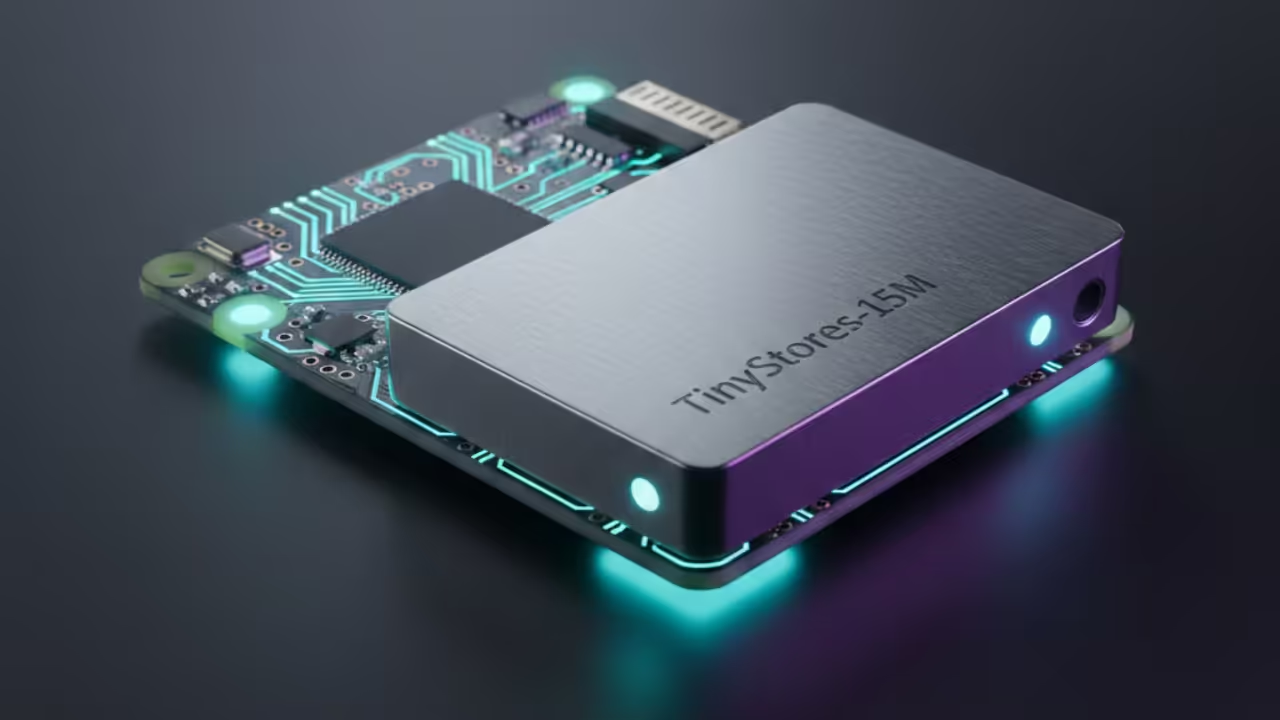
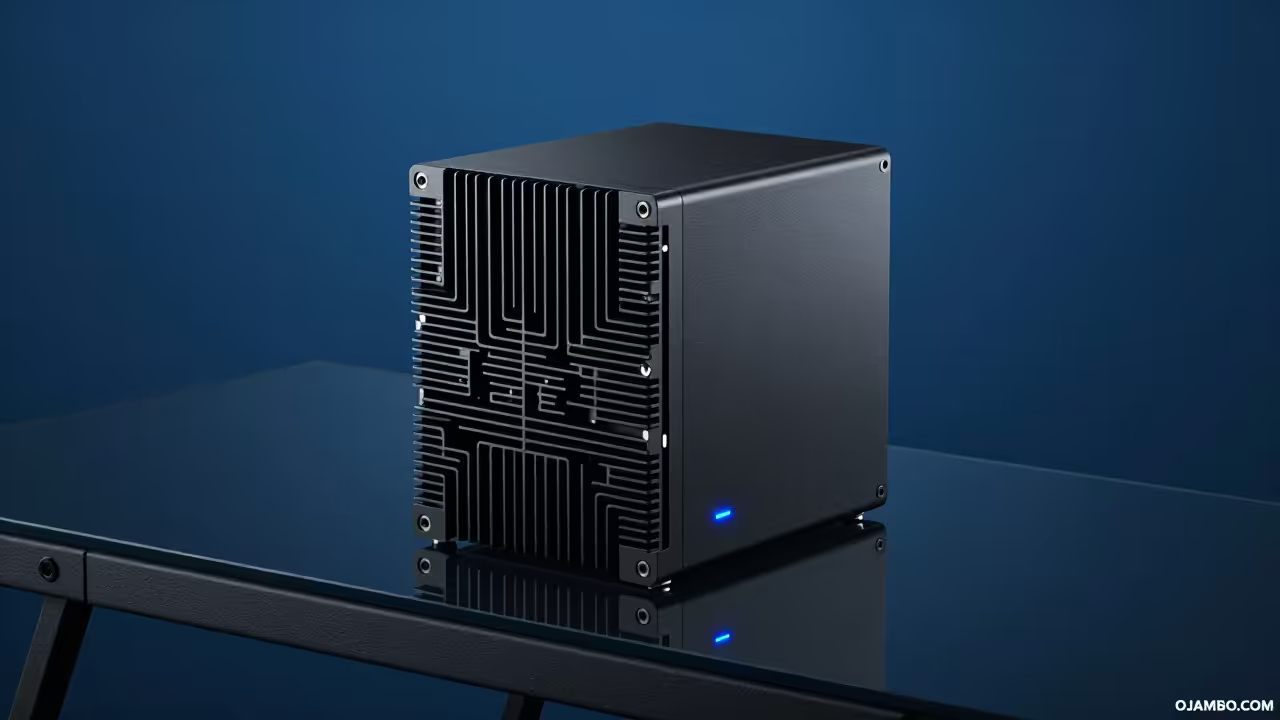
The Raspberry Pi TinyStores-15M solves this hardware bottleneck instantly. This compact setup brings enterprise speed to the smallest board ever.
Most makers struggle with lagging read speeds on tiny devices today. Standard storage fails under heavy artificial intelligence processing loads immediately.
The TinyStores-15M architecture unlocks hidden potential in your hardware. High speed data paths ensure your projects never face slow bottlenecks.
Live screencast of TinyStores-15M speed benchmarks.
Optimize Your Creative Workflow
You deserve a system that matches your fast professional speed. Stop waiting for progress bars to finish their very slow crawl.
This specific setup prioritizes maximum efficiency for small file sizes. Thousands of small assets load faster than ever before now.
Imagine rendering complex 3D scenes without any storage lag today. Blender users gain massive advantages from this specialized local storage.
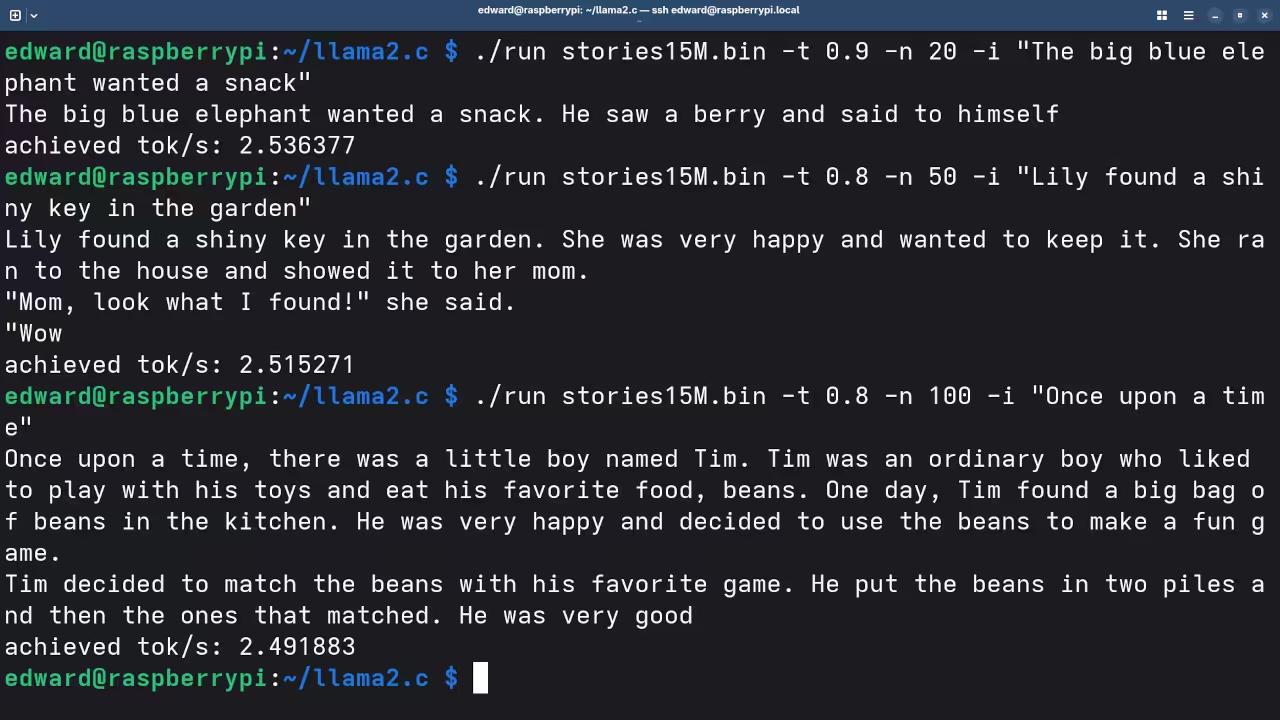
Optimized llama2.c for maximum throughput.
Data integrity remains a top priority for serious professional work. Redundant arrays protect your most valuable digital assets from loss.
Self hosting your own cloud becomes a reality with this gear. Take back control of your private data from big corporations.
Video broadcasting often feels like a locked door for many creative makers. Complex command lines and broken scripts frequently ruin your best live streams.
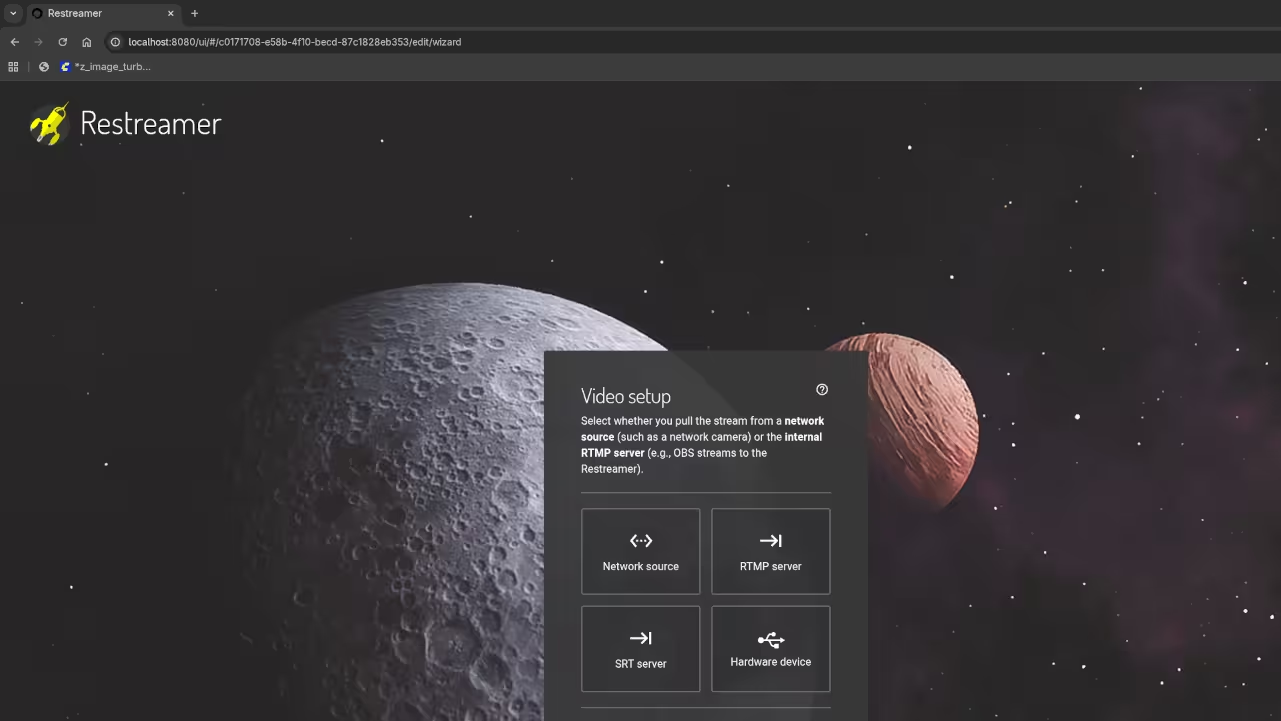
Restreamer changes everything by turning your workstation into a professional broadcast hub. It replaces ancient tools with a clean and modern containerized video engine.
Restreamer dashboard interface
Eliminate High Subscription Costs
Managing multiple stream destinations used to require expensive cloud subscription services. Now you can host your own distribution center with total data privacy.
This software handles the heavy lifting of video transcoding and protocol conversion. You get a sleek web interface that simplifies high level production tasks instantly.
Live software review and demonstration
Modern SRT Video Protocol Benefits
The secret lies in the efficient use of the SRT video protocol. SRT provides rock solid stability even when your network connection becomes highly unstable.
Standard RTMP simply cannot match the low latency of this modern transport. Your audience enjoys a smooth experience while you maintain full hardware control.
Deploying this solution requires very little time thanks to modern container technology. You can launch the entire system using a single simple terminal command.
A unified dashboard shows real time statistics for every active video bitstream. You can monitor CPU usage and frame rates without leaving your browser.
Performance monitoring gallery
Advanced Hardware Encoding Performance
The internal FFmpeg engine ensures that every frame remains perfectly crisp always. It leverages your graphics card to keep the processor cool during shows.
Setting up a secure SRT server requires only a few clicks total. You define a unique token to prevent unauthorized users from hijacking feeds.
Restreamer Connection Parameters
Parameter
Description
Value
SRT Protocol
Low Latency
Port 6000
Web UI
Easy Management
Port 8080
Multi streaming
Wide Reach
API Keys
GPU Encoding
High Efficiency
Driver Access
Parameter
Description
Value
Broadcast configuration overview
Optimizing Resource Allocation
Hardware acceleration is the key to running a professional 24/7 channel. Restreamer supports various hardware encoders to maximize your available system resources.
You can easily bypass the limitations of basic proprietary streaming software suites. Makers can now build customized workflows that truly fit their specific needs.
Conclusion and Final Steps
The interface allows you to create beautiful players for your own website. Stop relying on third party platforms that take a cut of your revenue.
Self hosting your stream stack is the ultimate power move for tech enthusiasts. It provides the flexibility that modern digital creators demand in a competitive market.
Follow these simple steps to revolutionize your current video broadcasting setup today. The transition from old tools to this platform is surprisingly fast and easy.
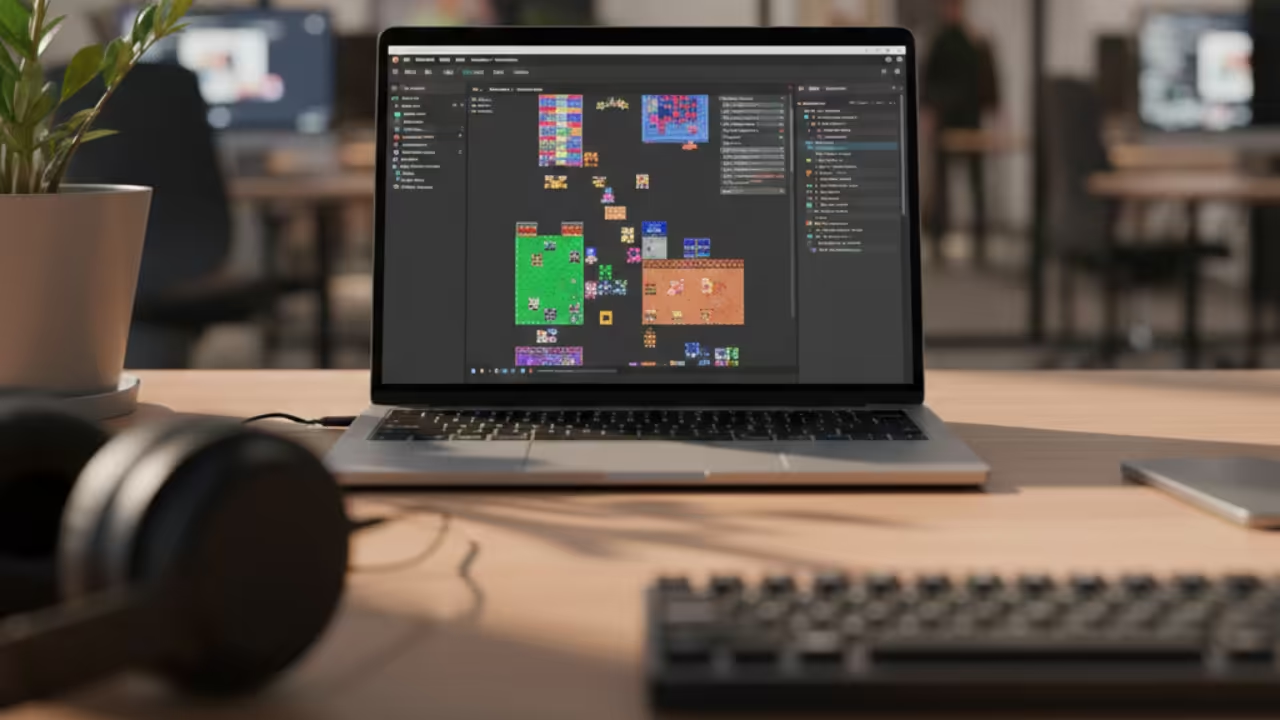
Game developers are increasingly frustrated with engine bloat. When a simple 2D platformer requires a massive download just for the engine core, it limits your audience. This project explores the efficiency of the Defold game engine.
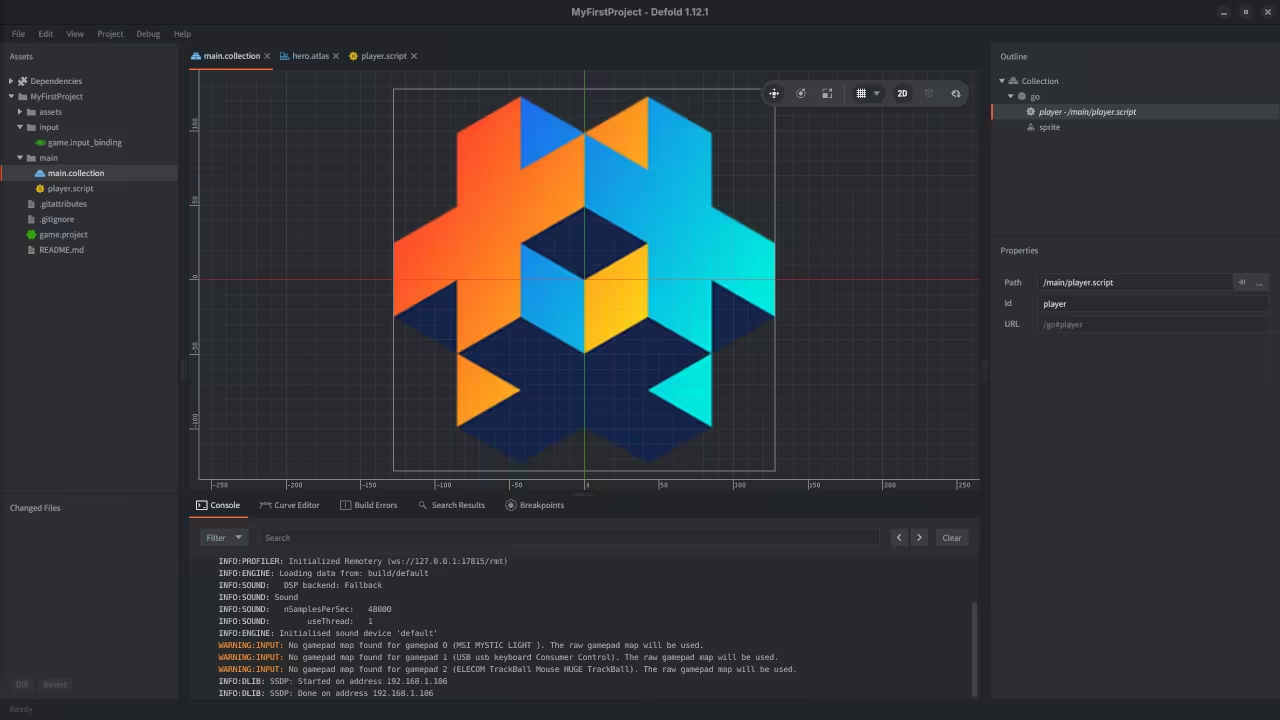
Defold provides a lightweight, high-performance environment for professional game development.
Defold is a completely self-contained engine designed for both 2D and 3D excellence. Unlike bloated frameworks, Defold is written in C++, ensuring your game maintains a consistent frame rate even on legacy hardware.
Watch the live screencast of the procedural generation process.
The engine utilizes the Lua scripting language to balance ease of use with low-level speed. This allows for rapid prototyping without sacrificing the final execution performance of the binary.
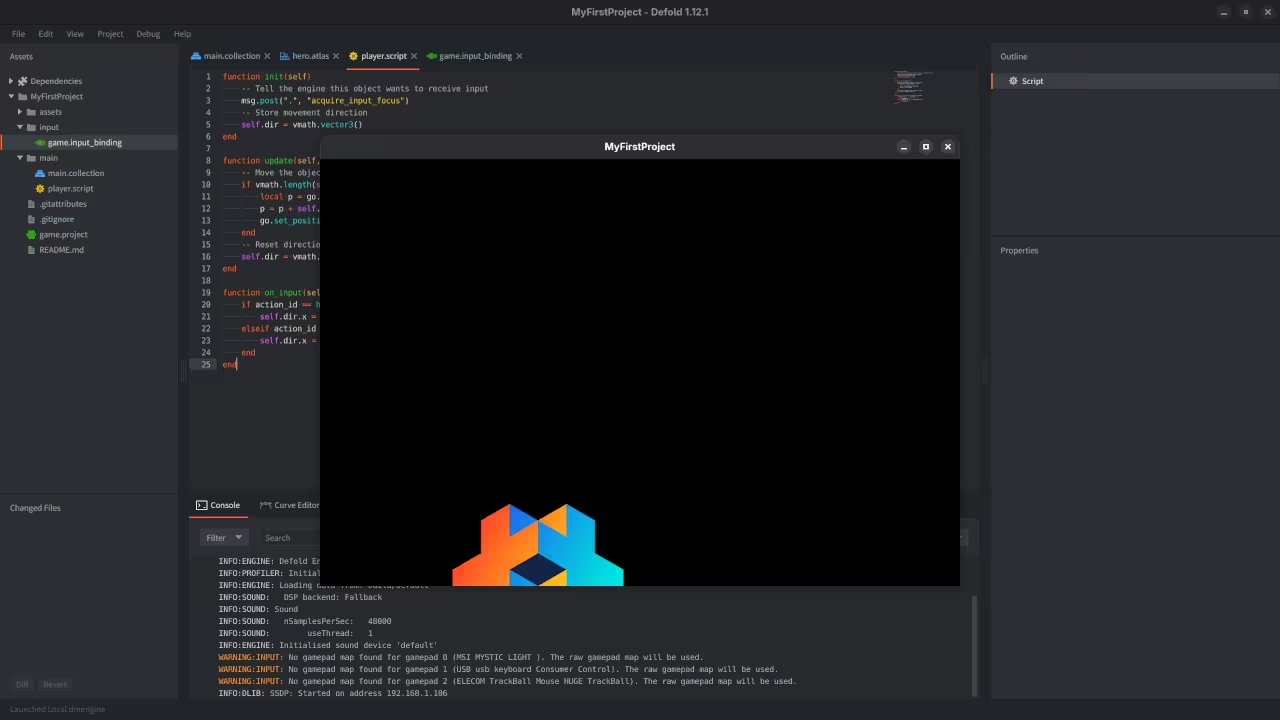
One of the standout features is the instant hot reloading capability. You can see your code changes in real-time within the running game, which drastically reduces the development iteration cycle.
Feature
Defold Engine
Standard Engines
Binary Size
Ultra Light
Heavy Bloat
Scripting
High-Speed Lua
Complex C# / C++
Build Speed
Instant Reload
Long Compile Times
Feature
Defold Engine
Standard Engines
Performance metrics for modern cross-platform engines.
Defold is a true cross-platform powerhouse. From a single codebase, you can target iOS, Android, HTML5, macOS, Windows, Linux, and major consoles without significant architectural changes.
The technical architecture uses Collection Proxies for memory management. This gives you absolute control over asset loading, enabling seamless transitions and no-loading-screen experiences.
By staying close to the metal, Defold avoids the overhead that typically plagues modern engines. This makes it the ideal choice for developers targeting mobile markets or web-based gaming platforms.
Stop fighting engine bloat and start building optimized games. The professional industry is moving toward lean, efficient frameworks that respect the player’s hardware.
You will experience faster build times and smaller project sizes. This data-driven approach is the secret to successful indie and professional game studio workflows.
The implementation of a Vaultwarden Enterprise Credential Shield marks a decisive transition toward absolute digital sovereignty for modern technical visionaries and scaling digital firms. By migrating away from restrictive third-party SaaS models toward a localized, Rust-driven ecosystem, firms can effectively execute a “SaaS-Killer” strategy—eliminating predatory subscription cycles while fortifying their internal defensive perimeter.
This technical guide details the orchestration of a high-resiliency Vaultwarden environment paired with sophisticated 2026 tax-compliance strategies. By adopting this infrastructure, corporations can leverage substantial hardware and software write-offs under prevailing IRS and CRA statutes, converting a baseline security requirement into a high-yield financial instrument.
The 2026 computational environment necessitates hardware capable of executing complex cryptographic handshakes with zero latency. For a professional-grade Vaultwarden Shield, we mandate the utilization of an Intel Core i5-13500H or a comparable Neoverse N1 ARM architecture to manage intensive AES-256-GCM encryption workflows without degrading the end-user experience. The infrastructure requires at least 16GB of DDR5 RAM to ensure the Bitwarden-integrated API and the back-end storage engine can facilitate rapid, high-concurrency synchronization across an increasingly mobile global workforce.
Data persistence strategies prioritize physical redundancy, requiring a mirrored NVMe RAID 1 array with at least 512GB per module to neutralize the risk of hardware-level data loss. Network dependencies involve a dedicated static IP or a robust Dynamic DNS configuration coupled with a Tier 1 SSL certificate authority using the ACME v3 protocol. The software stack is anchored by a minimized Linux kernel—specifically Ubuntu 24.04 LTS—ensuring that the most recent security primitives and containerization runtimes are operational for the duration of the 2026 business year.
Engineering Layout
The operational logic of the Vaultwarden Enterprise Credential Shield is built upon a zero-knowledge foundation where the central server is fundamentally incapable of viewing plaintext master keys or decrypted data packets. When an employee triggers a vault access request, the client-side module executes the primary key derivation via PBKDF2 or Argon2id. The resulting encrypted payload is then routed through a reinforced TLS 1.3 corridor managed by an Nginx reverse proxy. This proxy layer handles SSL termination and funnels traffic into the Vaultwarden Docker environment, which interfaces with a local MariaDB instance for secure record-keeping and metadata handling.
System hardening is enforced through aggressive fail2ban triggers and granular rate-limiting at the network edge to stifle automated brute-force attempts on the management interface. Every database snapshot is encrypted at rest using GPG-2048 keys before being offloaded to an S3-compliant storage node situated in a territory that satisfies the firm’s digital sovereignty mandates. This tiered defense ensures that even in the face of a physical hardware breach, the underlying password assets remain mathematically shielded from exploitation, protecting the firm’s most sensitive digital capital.
Sourcing of professional-grade nodes equipped with TPM 2.0 security chips and high-endurance storage to satisfy the 2026 benchmarks for enterprise-level uptime.
Phase 2: OS Decoupling and Hardening
Provisioning a stripped-down Linux environment followed by strict kernel optimization, disabling non-essential services, and activating AppArmor/SELinux enforcement.
Phase 3: Container Ecosystem Setup
Standardizing the Docker runtime by establishing non-privileged service accounts to govern the container lifecycle, effectively mitigating potential privilege escalation vectors.
Phase 4: Shield Deployment
Launching the Vaultwarden instance via Docker Compose, utilizing hardened environment variables for administrative authentication, SMTP gateways, and domain validation.
Phase 5: Gateway and Encryption Routing
Integrating Nginx Proxy Manager to automate SSL lifecycle management and provide a centralized dashboard for secure traffic orchestration and certificate pinning.
Phase 6: Database Performance Tuning
Configuring the MariaDB back-end with high-concurrency buffer pools designed to manage thousands of organizational entries without performance degradation.
Phase 7: Immutable Backup Protocols
Deploying Restic or Duplicati to facilitate hourly, incremental, and encrypted snapshots of the credential database to off-site, sovereign cloud repositories.
Phase 8: Universal MFA Mandate
Conducting the final 2026 Security Audit to enforce mandatory multi-factor authentication (MFA) across all endpoints using hardware keys (YubiKey) or verified TOTP tools.
2026 Fiscal Integration and Tax-Compliance Strategies
For organizations operating within the United States, the investment in server nodes and professional integration services qualifies for immediate expensing under IRS Section 179. This tax-compliance strategy permits companies to write off the entire cost of eligible hardware and software in the fiscal year it becomes operational. During the 2026 tax cycle, this provides a powerful mechanism for digital entrepreneurs to redirect taxable revenue into permanent, sovereign cybersecurity assets.
Canadian enterprises can apply CRA Class 50 for computer systems and related software, which offers a 55% declining balance for capital cost allowance. Under the current Accelerated Investment Incentive, many firms can claim an even larger deduction during the first year of the Shield’s deployment. To optimize these benefits, it is critical to classify the Vaultwarden unit as a specialized security appliance, distinguishing it from general-purpose office hardware during the 2026 audit process.
Architect’s Note: For 2026 filings, verify that your tax professional utilizes IRS Publication 946 for Section 179 expenditure caps. In Canada, ensure you are utilizing the “half-year rule” exemption provided by the Accelerated Investment Incentive for Class 50 hardware. Keeping a dedicated “Digital Sovereignty Ledger” ensures that your SaaS-Killer infrastructure is easily verifiable during a standard IRS or CRA review.
Consult with a Principal Systems Architect
Deploying the Vaultwarden Enterprise Credential Shield with this level of fiscal and technical rigor requires expert-level execution. I am available for high-level consultation to oversee your Intel NPU-based deployment, performance tuning, and 2026 tax-compliance mapping.
Availability: Limited Q1/Q2 2026 engagement windows for ojambo.com clients.
Preserving the integrity of the Vaultwarden Enterprise Credential Shield demands a systematic approach to patch management. Administrators must establish monthly cycles to refresh Docker images and ensure the host operating system is updated with the latest CVE remediations. Leveraging monitoring suites like Prometheus or Uptime Kuma allows technical leads to observe resource utilization and receive alerts if I/O or memory consumption hits enterprise thresholds.
Scaling the Shield as the business expands involves moving from a localized node to a distributed cluster utilizing a decoupled database and external load balancing. By migrating the MariaDB instance to a dedicated cluster and synchronizing attachments via a shared volume, the Vaultwarden frontend can be horizontally scaled to support a massive headcount. This ensures that the initial 2026 capital investment evolves into a perpetual asset, maintaining peak performance as the organization’s digital footprint grows.
Your expensive hardware is currently sitting idle while you struggle with latency. Most enthusiasts ignore the smallest boards because they fear low performance.
The Pi Zero W is actually a secret weapon for strategy fans. You can host an entire world on a chip smaller than gum.
Raspberry Pi Zero W board
Dominate the Digital Landscape
Modern gaming often requires constant internet and expensive monthly subscription fees. Self hosting your own server eliminates these costs and gives you total control.
This setup creates a private digital kingdom for you and your friends. You will dominate the digital landscape using minimal power and maximum efficiency.
Live Screencast of the Freeciv Installation.
Prepare Your Compact Tech Stack
First you must prepare the core operating system on a fast card. Use a headless configuration to save every bit of available memory resources.
Connecting via secure shell allows you to manage the device remotely easily. Update your local repositories to ensure the latest security patches are active.
Optimal Server Parameters
Parameter
Description
Value
CPU Usage
Server load during active play
45 Percent
Memory
RAM consumed by the game engine
120 Megabytes
Port
Standard communication channel for traffic
5556
Parameter
Description
Value
Silent and Efficient Deployment
The installation process requires only a few precise terminal commands now. Run the update command to refresh your package list for the server.
The server software is lightweight enough to run without a cooling fan. This makes your deployment silent and incredibly discreet for 24/7 operation.
GTK Freeciv Client On Fedora Linux
Configure Your Digital Kingdom
Configuration files allow you to set the rules of your world. You can adjust the map size to fit your specific needs.
Enable the backports repository if you need the latest protocol features. This ensures your desktop clients can connect without any version errors.
High performance gaming does not require a massive desktop tower anymore. Small boards provide the reliability and speed needed for deep strategy.
Your friends will be amazed by the stability of your private server. You are now a master of your own local digital infrastructure.
Always check your firewall settings to allow the server port through. This simple step prevents the frustrating connection refused errors during login.
Launch the server in the background using a terminal multiplexer tool. This keeps the session alive even after you close your laptop.
Strategy gaming builds better logical thinking and planning skills for everyone. Hosting locally ensures your data stays private and under your thumb.
The Pi Zero W handles the logic with surprising grace and speed. You have successfully bypassed the limitations of mainstream commercial gaming platforms.
Take this knowledge and build something that lasts for your community. Your journey into advanced self hosting has only just begun right now.
Your AI video dreams are dying in a sea of memory errors. Most creators believe expensive NVIDIA hardware is the only path to speed.
This massive lie keeps you from using the hardware you already own. You can actually generate cinematic videos on legacy AMD Instinct cards today.
Unlocking AMD Instinct Power
The AMD Instinct MI60 GPU architecture utilizes high bandwidth HBM2 memory
The AMD Instinct MI60 packs a staggering 32GB of HBM2 memory bandwidth. This raw power remains untapped by default due to missing official driver support.
You must force the system to recognize this beast as a modern accelerator. Setting the HSA_OVERRIDE_GFX_VERSION to 9.0.6 is your first critical step to success.
Live screencast of LTX2 optimization on AMD hardware.
Managing Memory and Swap
System RAM limitations often kill the final VAE decoding phase of video. You only have 28GB of usable memory after the iGPU takes its share.
A 16GB zram configuration creates a high speed buffer for critical model swapping. The 24GB swap file provides the ultimate safety net for massive latent tensors.
Optimized Environment Variables for AMD Instinct
Parameter
Description
Value
HSA_OVERRIDE_GFX_VERSION
Forces Vega 20 compatibility mode
9.0.6
HIP_VISIBLE_DEVICES
Selects the primary Instinct accelerator
0
MIOPEN_DEBUG_CONV_WINOGRAD
Disables unstable Winograd convolution kernels
0
Parameter
Description
Value
Quantization and Performance
Standard models are too bloated for efficient local image to video generation workflows. Switching to GGUF quantized weights reduces the VRAM footprint by fifty percent.
Using the TAESD decoder provides near instant previews during the generation process. This allows you to catch errors before wasting minutes on a bad seed.
System wide packages save gigabytes of precious storage compared to messy virtual environments. Linking models via extra_model_paths.yaml prevents duplicate files from eating your disk space.
The combination of HBM2 speed and optimized swap handles 720p clips easily. Your 5600GT handles the overhead while the MI60 does the heavy lifting.
This setup outperforms many modern consumer cards for long form video diffusion tasks. Unlock your hidden potential today and start creating professional AI cinema locally.
Cloud subscriptions are draining your bank account and stealing your privacy. You deserve a professional environment that operates entirely on your terms. Modern development requires massive speed and zero latency during heavy workloads. Your current setup is likely the bottleneck holding your career back.
Localized AI architecture and hardware connectivity
Optimizing the Command Line Interface
High performance starts with a terminal that moves at your speed. GPU acceleration transforms your command line into a blazing fast instrument. Custom shell themes provide instant feedback about your active code branches. You will never lose track of your environment variables again.
Core Terminal Performance Metrics
Parameter
Description
Value
Latency
Input to screen response time
Under 5ms
Throughput
Text rendering speed per second
800 FPS
Memory
Background process idle usage
120 MB
Parameter
Description
Value
Live screencast of Professional Setup.
Local AI for Private Workflows
Local AI is the ultimate secret weapon for the modern enthusiast. Running large language models locally ensures your data never leaves home. Ollama makes serving complex neural networks as simple as one command. You can integrate these models directly into your favorite text editor.
Imagine coding with a private assistant that knows your entire codebase. This setup eliminates the need for expensive and invasive cloud subscriptions. Blender rendering benefits immensely from a clean and optimized system kernel. Every extra cycle of CPU power goes toward your creative output.
Productivity and Window Management
Tiling window managers optimize every inch of your high resolution monitors. Focus increases when your windows arrange themselves into perfect logical grids. Minimalism is not just a style choice for professional creative makers. Reducing visual clutter prevents mental fatigue during long night coding sessions.
Containerization allows you to experiment without breaking your primary operating system. Use isolated environments to test new tools and risky software updates. Managing your own local infrastructure builds deep technical knowledge and confidence. You become the master of your digital tools and creative destiny.
Master the Professional Stack
Deepen your expertise by exploring our curated list of professional resources. These assets are designed to accelerate your journey to technical mastery. Your workstation is the most important investment in your professional life. Stop settling for default settings and start building your ultimate environment.
The future of technology belongs to those who own their hardware. Take the first step toward a faster and more private workflow. Invest in your local machine to unlock true independence and massive power.