

Sovereign Infrastructure Monitoring
The silent crash is the ultimate nightmare for any server administrator. You wake up to a dead website and zero alerts.
This failure is a symptom of outdated and fragile monitoring setups. You need a solution that is robust and independent.
Disclaimer: I may earn a commission from purchases made through these links at no extra cost to you.


The Modern Monitoring Dilemma
Most tools are too heavy or too complex to maintain. They often crash alongside the services they are supposed to monitor.
You need a decoupled system that remains rock solid. This ensures that your alerts are always active.
Podman Desktop provides the perfect bridge for this critical need. It manages containers without the overhead of a centralized daemon.
This architectural shift increases both security and overall system stability. It is the ideal choice for high availability environments.
Achieving Total Infrastructure Control
The experience of a fully automated dashboard is truly liberating. Every service is tracked with surgical precision in real time.
You finally feel the true power of owning your infrastructure. This is the foundation of digital sovereignty.
True digital independence requires a strategic approach to self hosting. The Sovereign Business book provides the definitive blueprint for this journey.
It includes a masterclass on the Uptime Kuma podman container. You can explore this resource at The Sovereign Business to secure your copy.
Rapid Deployment Strategies
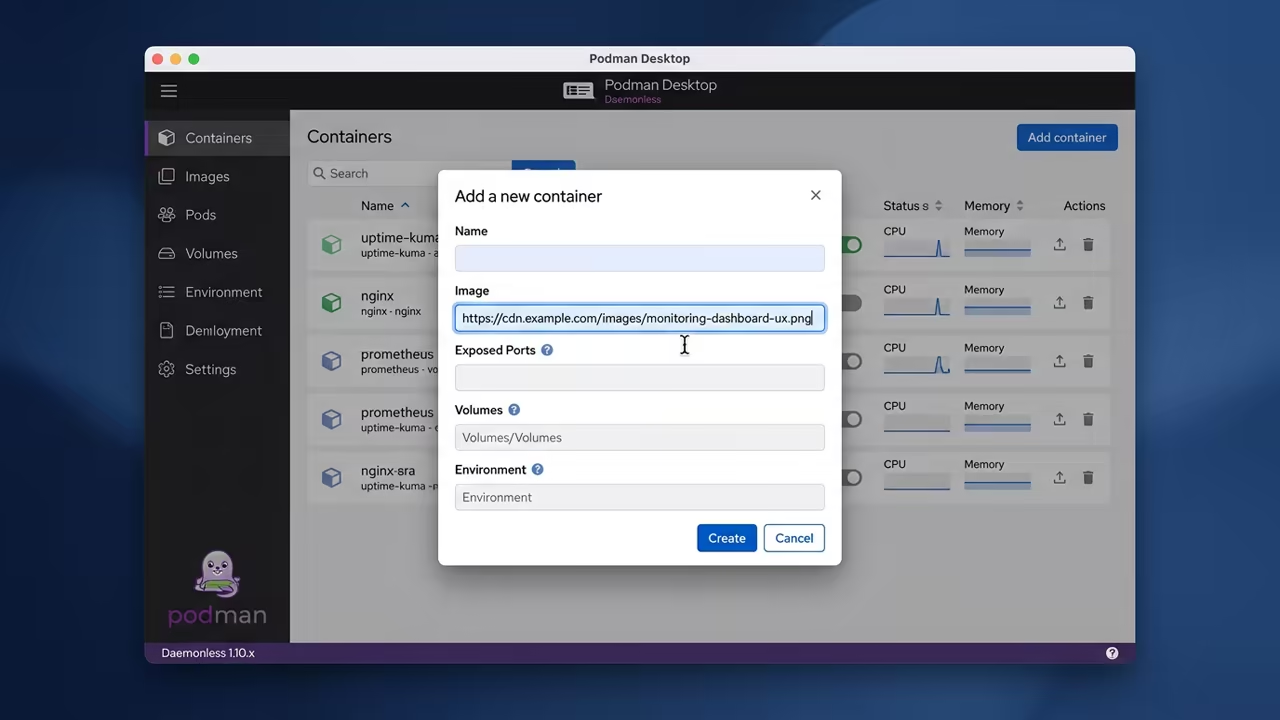
Deployment starts with the official Uptime Kuma image from the registry. Podman Desktop makes this process a simple click and paste operation.
You can launch the container in under sixty seconds. The efficiency is unmatched by traditional methods.
Mapping a persistent volume is the most critical deployment step. This ensures that your monitoring history is never lost.
Your data remains safe even after a full system reboot. This prevents the loss of critical uptime statistics.
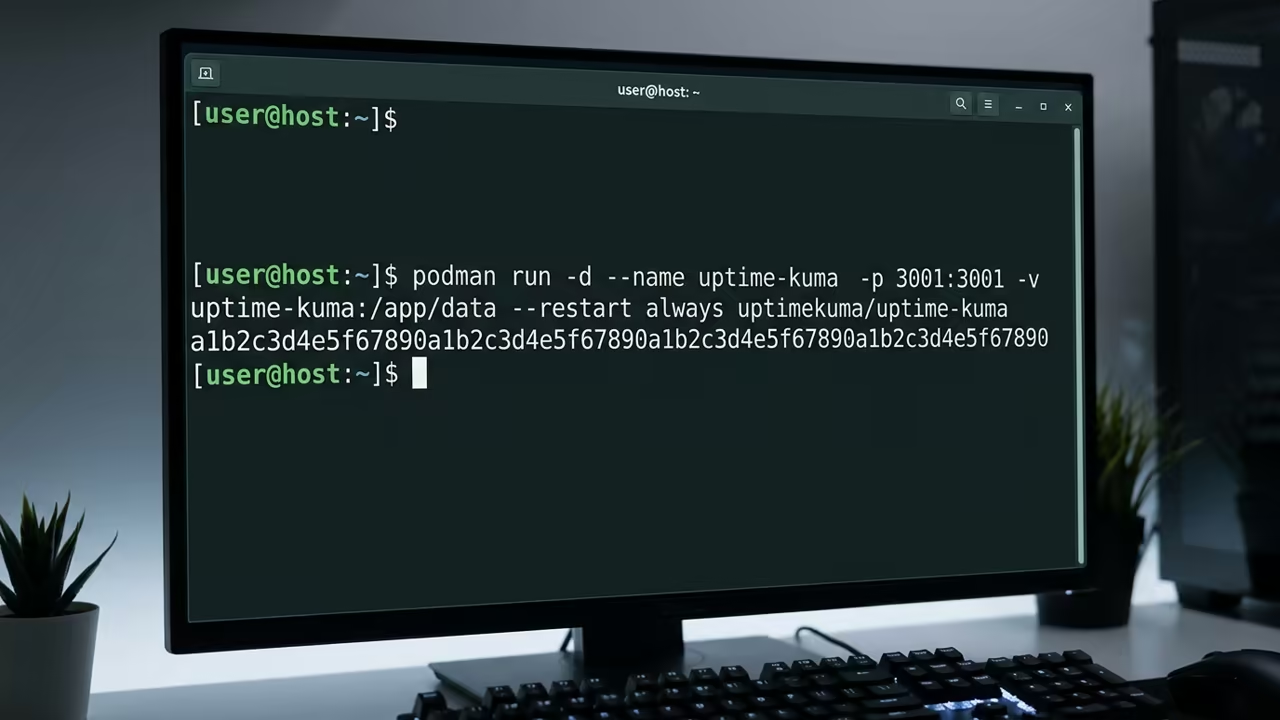
podman run -d --name uptime-kuma -p 3001:3001 -v uptime-kuma:/app/data louislam/uptime-kuma:latest
The Secret to 99.99 Percent Uptime
The real secret to absolute monitoring mastery is native systemd integration. Most users rely on restart policies that can fail.
A native system service is the only way to ensure stability. It connects the container to the core operating system logic.
Podman can generate a systemd unit file for any active container. This transforms your container into a standard Linux system service.
It allows for precise control over boot order and dependencies. Your monitoring tool starts before other network services.
podman generate systemd --name uptime-kuma --files
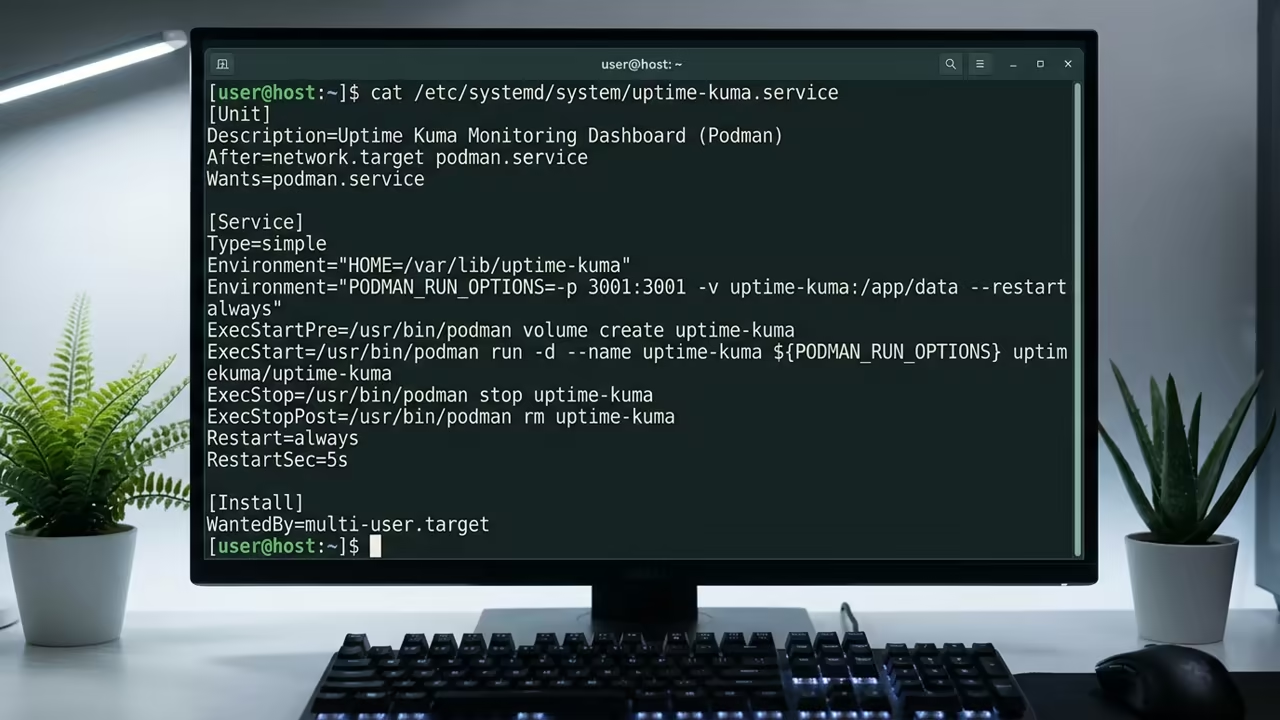
Move this file to the systemd directory and enable it. Your monitoring tool now starts automatically at the hardware level.
This is the secret to achieving 99.99 percent uptime. It removes the risk of manual intervention.
Architectural Comparison
This methodology aligns with high impact architectural breakthroughs. It mirrors the efficiency of high throughput syncing and secure API middleware.
You are building a professional grade production stack. This is how elite architects manage their sovereign nodes.
| Parameter | Podman Desktop | Traditional Docker |
|---|---|---|
| Daemonless | Yes | No |
| Rootless | Native | Optional |
| Systemd | Built-in | Complex |
| Resource Use | Low | Moderate |
Comparing these tools reveals why Podman is the superior choice. It offers rootless execution that protects your host from container exploits.
Docker requires a root daemon that increases the attack surface. Podman eliminates this single point of failure.

The result is a monitoring environment that is virtually indestructible. You no longer guess if your services are currently online.
Your sovereign stack provides the truth in real time. This is the ultimate goal of any technical lead.
This level of control is essential for any serious tech enthusiast. It removes the dependency on third party cloud monitoring services.
You own the data and you own the uptime. Your infrastructure is finally your own.
Professional Support and Scaling
If you want to scale this architecture for a business, seek professional help. Custom automation can turn a simple tool into a revenue engine.
Senior architects can optimize your entire server fleet. This ensures maximum efficiency across all nodes.
- Implement custom AI alert systems for proactive maintenance.
- Optimize server security with malicious content scanning.
- Deploy high throughput syncing for global data availability.
Online Tutorials & Technical Help: https://ojambo.com/contact
Reach out today for personalized technical guidance on your infrastructure. Dive deeper into our library of professional open source tutorials.
🚀 Recommended Resources
Disclosure: Some of the links above are referral links. I may earn a commission if you make a purchase at no extra cost to you.
Leave a Reply