
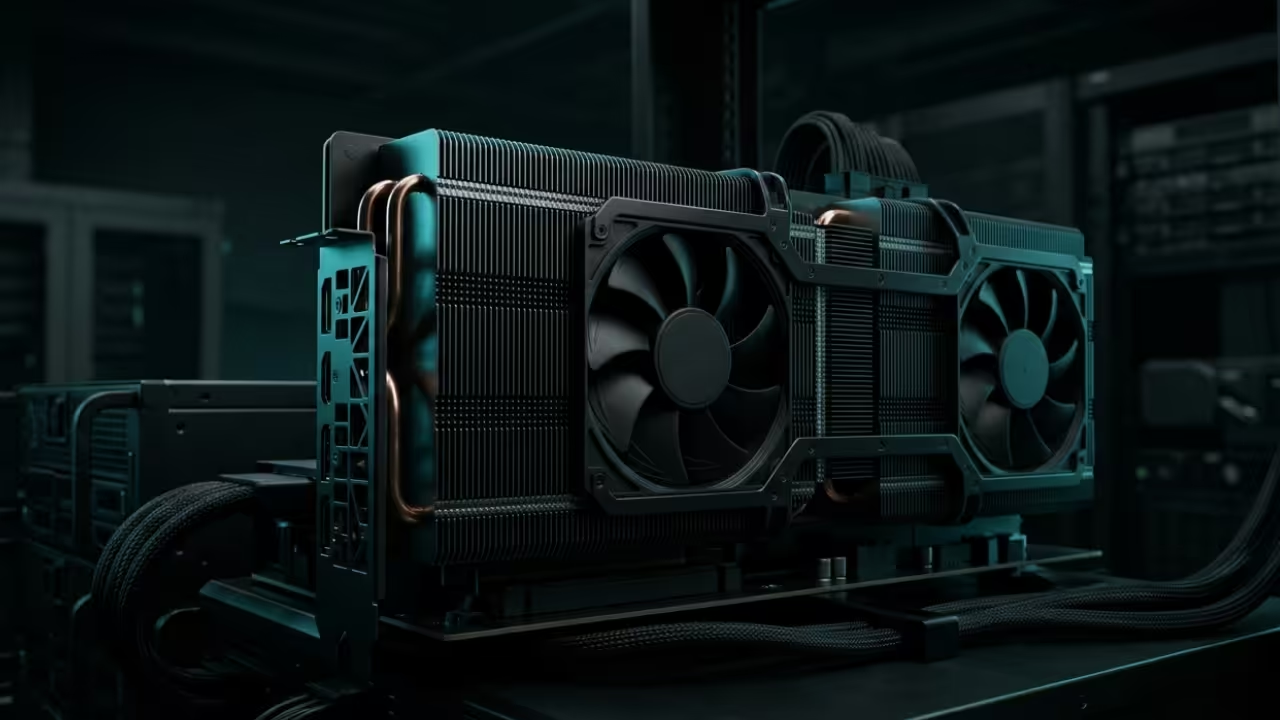
The hardware industry is officially holding your creativity hostage in 2026 with prices that defy any logical economic sense. You are being forced to choose between paying for a used car or buying an RTX 5090 to finish a project.
This manufactured scarcity has created a digital divide where only elite studios can afford to run high end local generative models. It is time to stop playing their game and look toward the enterprise secondary market for a real escape hatch.
The Feeling of Pure Technical Freedom
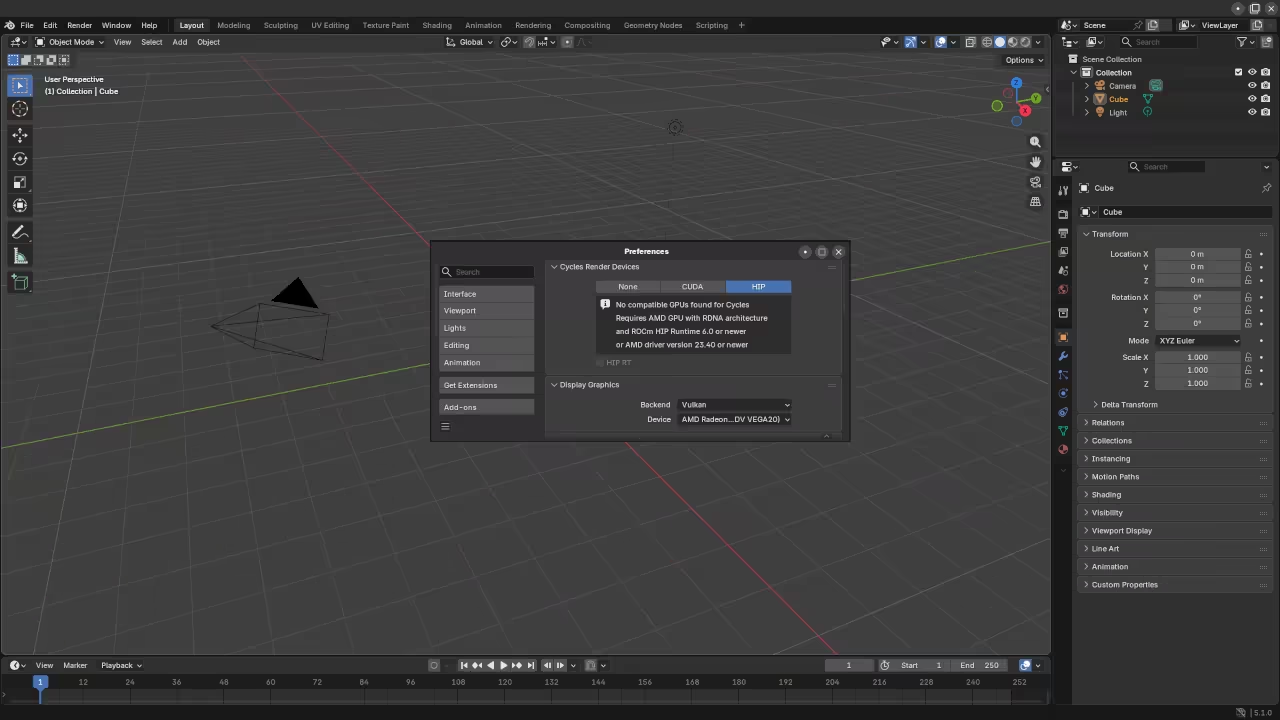
Implementing an AMD Instinct MI60 in a modern workstation feels like discovering a hidden frequency in a crowded radio spectrum. The moment the fans spin up and the ROCm environment initializes is when you realize the consumer marketing was a lie.
You watch 32GB of high bandwidth memory fill up with complex textures while your competitors are still waiting for their swap files. It is an empowering sensation of technical freedom that justifies every moment of your specialized system architecture journey.
Bypassing Driver Limitations
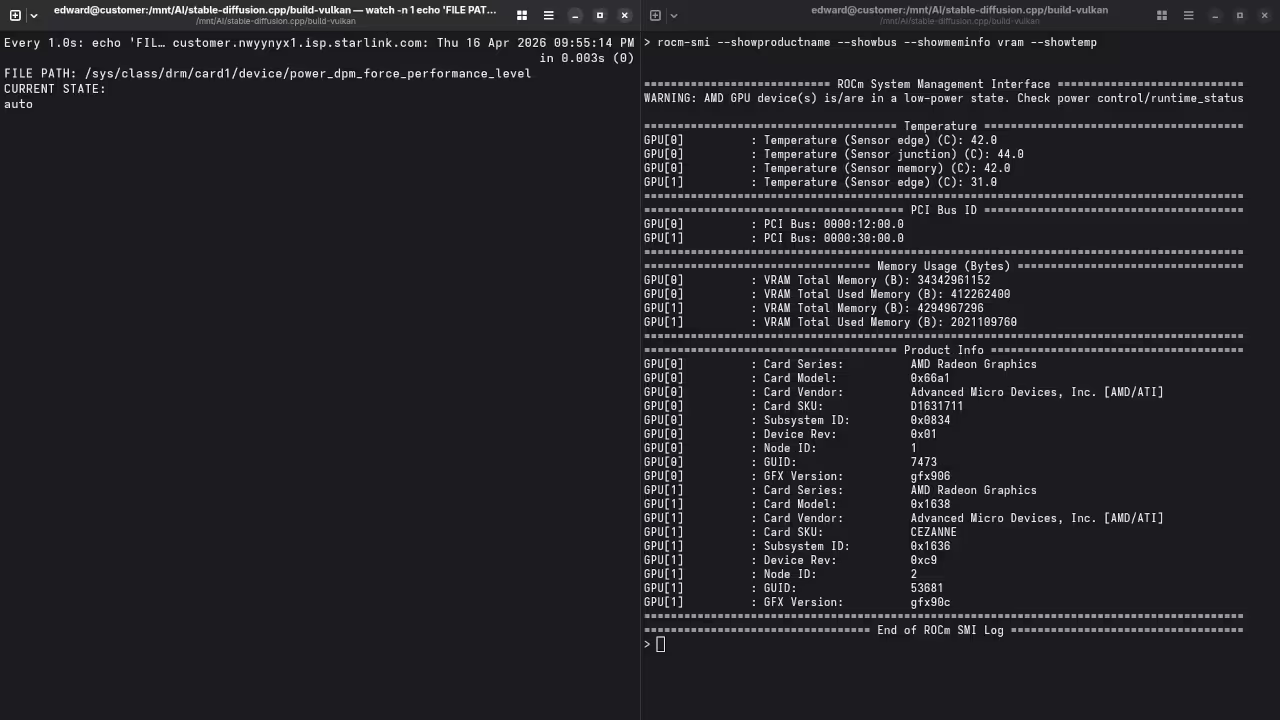
The secret to this setup is bypassing the standard driver layer and utilizing a specific sysfs power state override. You must navigate to the device power dpm force performance level file and set it to manual for maximum stability.
Then you lock the system clock to the highest available state to prevent the enterprise thermal management from down clocking your renders. This simple adjustment ensures that your compute throughput remains consistent even during massive forty eight hour batch processing sessions.
Mastering the 2026 Performance Stack
We have discussed architectural breakthroughs in past deep dives but this shift to repurposed enterprise silicon is the most significant. Comparing the raw specifications of these units reveals why the industry wants you to ignore these older high end monsters.
| Device | VRAM | Bandwidth | 2026 Street Price |
|---|---|---|---|
| AMD MI60 | 32GB HBM2 | 1TB/s | $550 |
| RTX 5070 Ti | 16GB GDDR7 | 600GB/s | $1100 |
| RTX 5090 | 32GB GDDR7 | 1.8TB/s | $3750 |
| Device | VRAM | Bandwidth | Price |
Architectural Integration
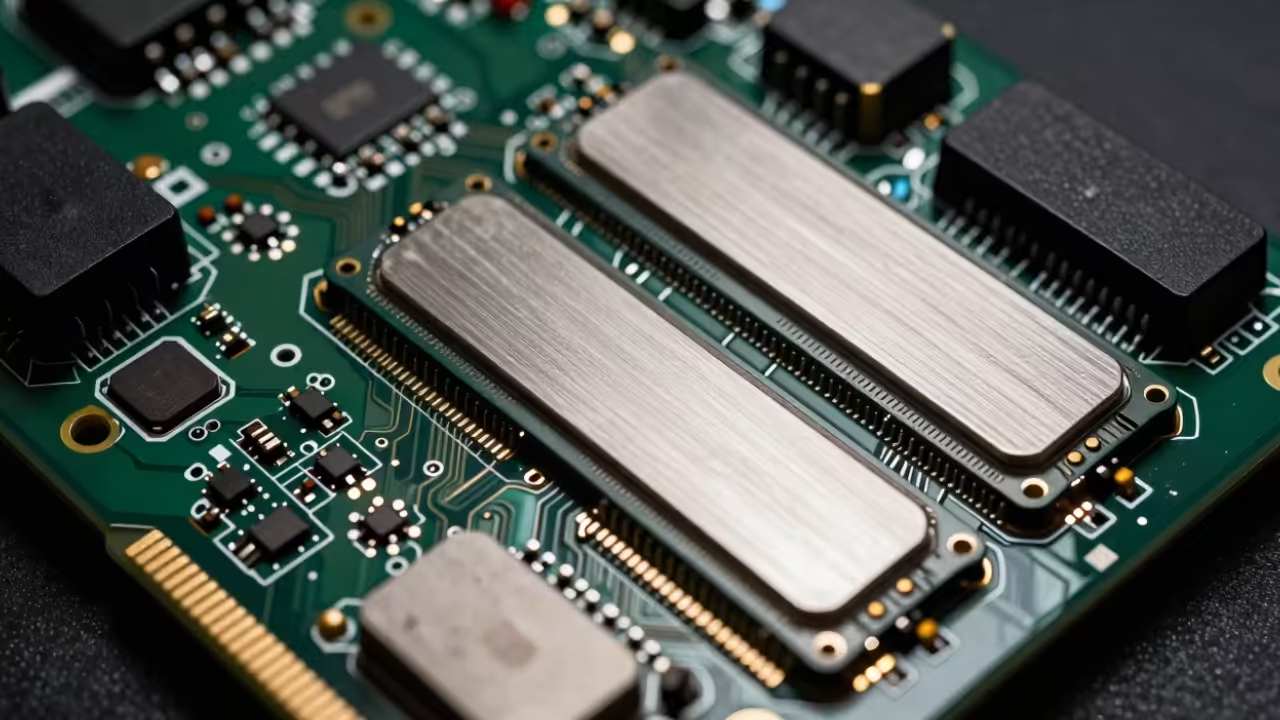
The memory bandwidth on the MI60 is what truly saves your workflow when handling large language models or complex geometry. While consumer cards struggle with bus bottlenecks the HBM2 architecture allows for nearly instantaneous data movement across the entire compute stack.
You can bridge this hardware with previous explorations in distributed rendering to create a localized farm that rivals commercial clouds. This approach is the only way to maintain a competitive edge without surrendering your entire budget to retail manufacturers.
Professional Systems Blueprint
The following architectural blueprints provide the foundation you need to scale these optimizations across any high tier professional production environment. By mastering these specific system configurations you ensure that your technical capabilities remain independent of volatile consumer hardware trends.
- Books (Technical Deep Dives): https://www.amazon.com/stores/Edward-Ojambo/author/B0D94QM76N
- Blueprints (DIY Woodworking Projects): https://ojamboshop.com
- Tutorials (Continuous Learning): https://ojambo.com/contact
- Consultations (Custom Architecture): https://ojamboservices.com/contact
🚀 Recommended Resources
Disclosure: Some of the links above are referral links. I may earn a commission if you make a purchase at no extra cost to you.