

Stop trusting your AI coding assistant with your production kernel. Most developers blindly paste LLM generated C++ into their projects without realizing they are inviting catastrophic memory leaks and buffer overflows into their system.
This blind faith in synthetic code is the biggest security hole in modern software architecture.
Implementing a rigorous security audit workflow changes everything for a lead developer. You move from praying the code works to knowing exactly where every single byte lives in memory.
There is a profound sense of control when you strip away the AI hallucinations and replace them with hardened production ready logic.
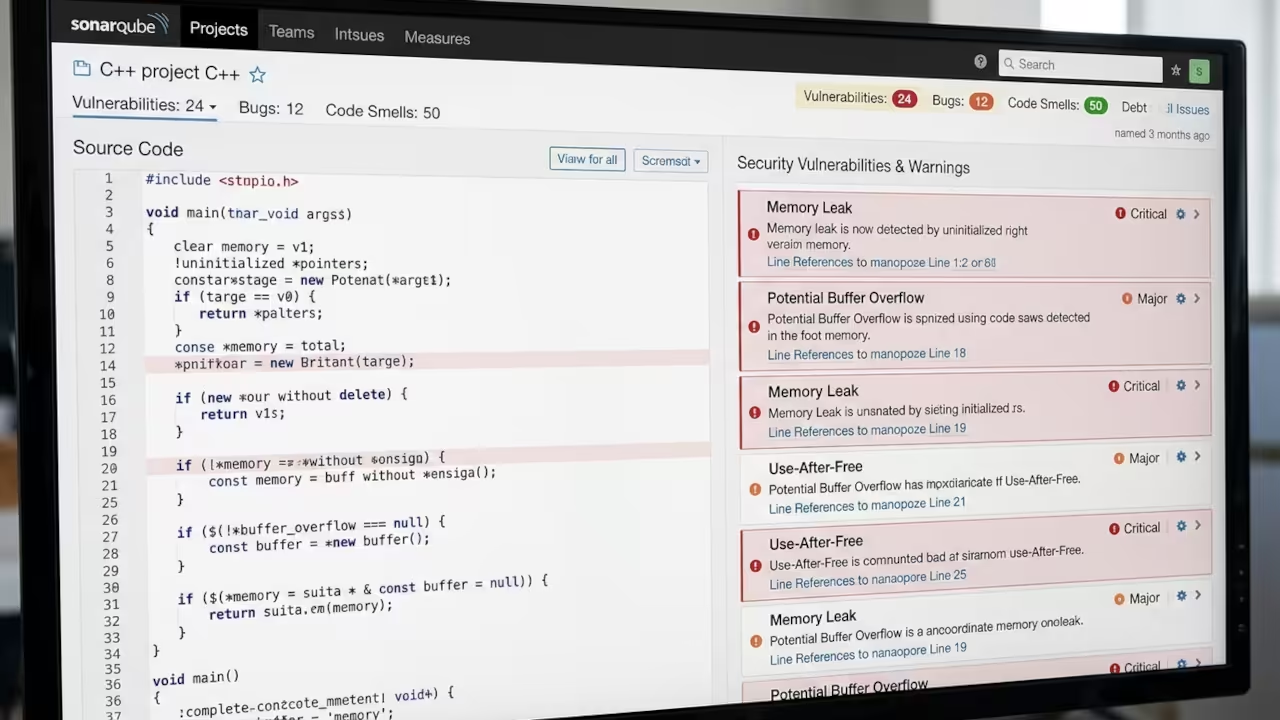
Identifying Synthetic Failure Points
The first step is identifying the common failure points in synthetic C++ logic. AI models often struggle with ownership semantics in complex smart pointer chains.
They frequently suggest outdated patterns that lead to use after free vulnerabilities in multi threaded environments.
Hardening the Software Stack
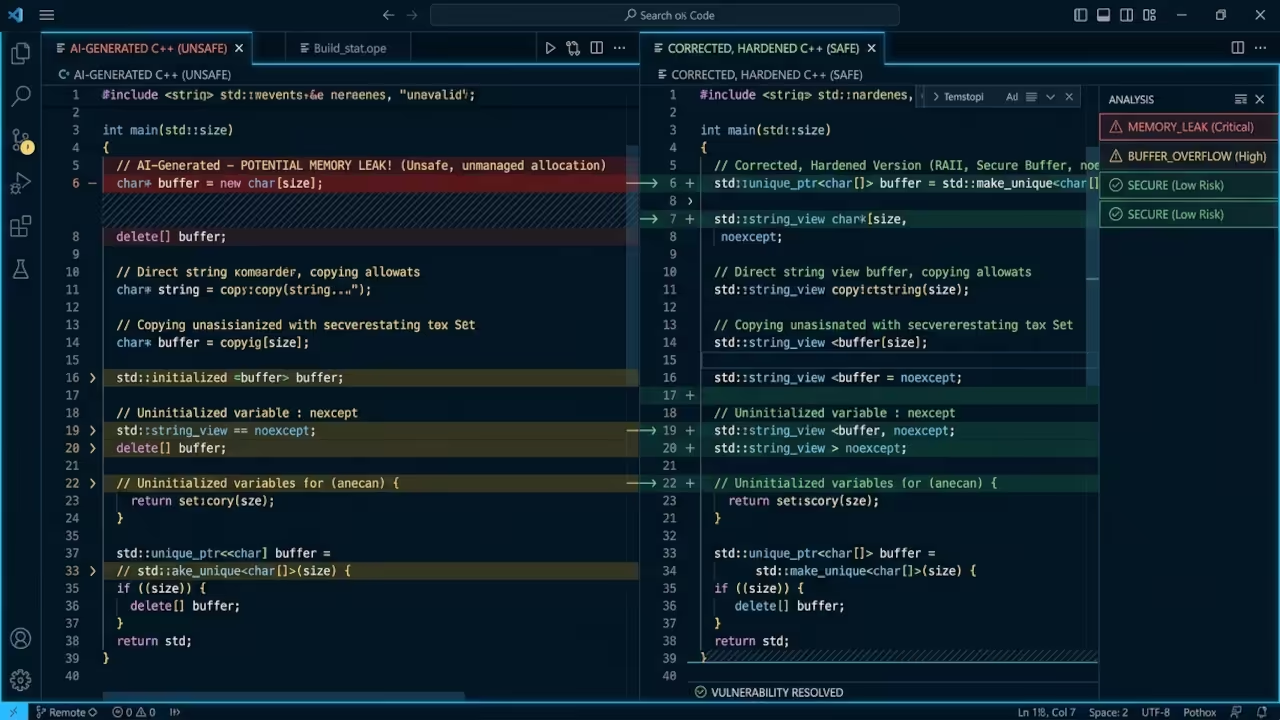
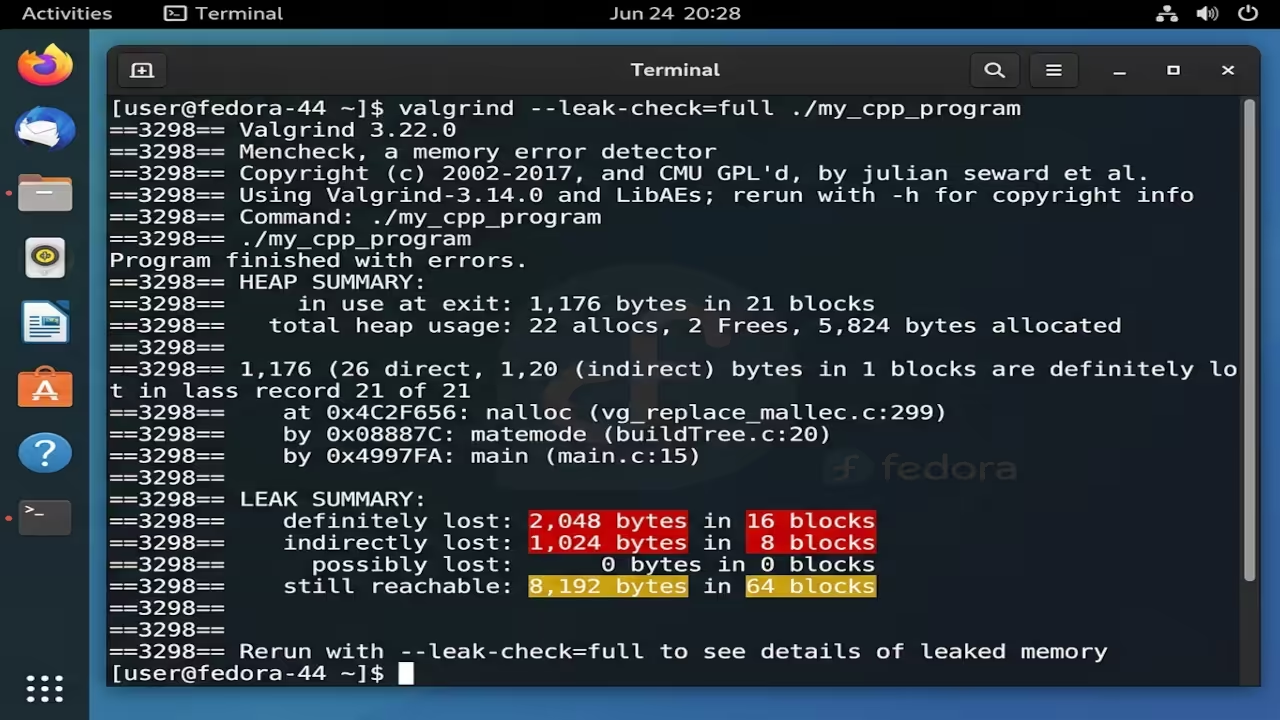
To truly harden your code you must employ a combination of static analysis and dynamic instrumentation. Using a specialized toolchain allows you to catch null pointer dereferences before they ever hit the compiler.
This is where the difference between a hobbyist and a senior architect becomes clear.
The Insider Audit Strategy
One insider secret for auditing AI code is the use of custom clang tidy checks specifically tuned for memory safety. By creating a strict profile that forbids raw pointer arithmetic in high risk modules you force the AI to adhere to modern C++20 standards.
This eliminates an entire class of security vulnerabilities instantly.
| Parameter | Description | Value |
|---|---|---|
| Memory Safety | Risk of Leaks | Zero Leak Guarantee |
| Concurrency | Race Conditions | Thread Safe Architecture |
| Optimization | Generic Performance | Hardware Specific Tuning |
| Security | Potential Backdoors | Hardened Attack Surface |
| Parameter | Description | Value |
Integrating this audit process connects directly to our previous deep dives on low level system optimization and memory mapping breakthroughs. When you combine these security audits with a hardened kernel you create an impenetrable software stack.
The raw code for a basic memory boundary check should be integrated into your audit script.
void check_boundary(size_t index, size_t size) {
if (index >= size) {
throw std::out_of_range("Memory access violation detected");
}
}
Master the Professional Stack
Elevate your technical execution by combining these security audits with our industry leading blueprints. These resources provide the theoretical and practical foundation required for high tier system architecture.
- Books (Technical & Creative): https://www.amazon.com/stores/Edward-Ojambo/author/B0D94QM76N
- Blueprints (DIY Woodworking Projects): https://ojamboshop.com
- Tutorials (Continuous Learning): https://ojambo.com/contact
- Consultations (Custom Apps & Architecture): https://ojamboservices.com/contact
🚀 Recommended Resources
Disclosure: Some of the links above are referral links. I may earn a commission if you make a purchase at no extra cost to you.