
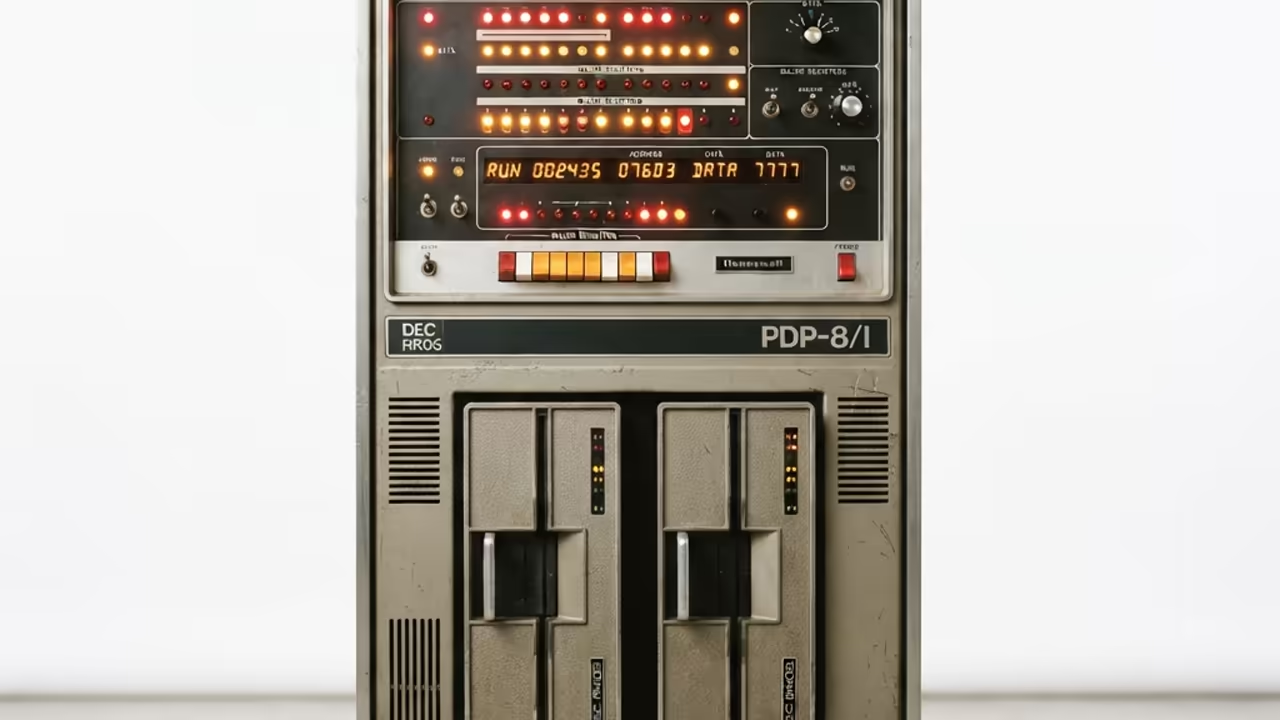
THE SONIC ORIGINS
The air in the Berkeley lab was thick with electric energy. A deep sixty hertz hum emanated from the massive minicomputers. This low frequency drone created a heavy atmosphere of academic intensity.
The percussive thock of mechanical keyboards filled the silent spaces. Each keystroke produced a sharp metallic clatter during rapid data entry. These sounds signaled the birth of a post relational experiment.
Disclaimer: I may earn a commission from purchases made through these links at no extra cost to you.


The system architecture was designed to handle complex data types. Michael Stonebraker envisioned a system that could evolve beyond simple tables. The historical baseline required the architecture to be flexible and structurally sound.
ACOUSTIC SIGNATURES OF THE VAX ERA
The industrial cooling fans created a rushing roar in the hallways. This sound was akin to a small jet engine idling nearby. It masked the faint electronic whine of the power supplies.
Disk drives produced a steady high speed acoustic whine. Seeking operations caused rhythmic mechanical clatter and sharp ratcheting clicks. The read write heads darted across the platters with precision.
CRT monitors added a needle sharp tone to the room. This was the result of the high voltage flyback transformer. It hung in the air as a constant sonic anchor.
The tape drives produced sudden bursts of high speed whirring. Abrupt mechanical thunks occurred during the loading of magnetic reels. These sounds defined the physical reality of data storage.
ENGINEERING BREAKTHROUGHS
The transition to PostgreSQL brought a new level of stability. The team introduced multi version concurrency control to handle data visibility. This system is a core part of the operational metrics.
“The system uses xmin and xmax values in the row headers to manage data visibility without locking tables.”
Readers and writers no longer block each other during operations. This allows the database to maintain high performance under load. It is a masterclass in structural engineering.
The multi version concurrency control manages data visibility with extreme precision. It ensures that every transaction sees a consistent snapshot of the data. This prevents the system from locking up during heavy writes.
“The generalized inverted index allows for efficient multi valued data search while the generalized search tree enables custom index shapes.”
These innovations make the system incredibly versatile. They allow the engine to process complex objects with the same efficiency as simple integers.
TECHNICAL SPECIFICATIONS
B tree index deduplication reduces storage overhead for repeated values. Parallel query execution distributes heavy workloads across multiple processor cores. These optimizations ensure the engine remains bulletproof.
The system supports table inheritance for complex data hierarchies. It allows users to define custom types and operators natively. This makes it a truly extensible platform.
The engine utilizes an advanced query planner to optimize execution paths. This reduces the computational cost of complex joins and aggregations. It ensures the system scales linearly with data growth.
| Component | Specification | Acoustic Profile |
|---|---|---|
| VAX 11 780 | Minicomputer | Low frequency drone |
| DEC VT100 | Terminal | Percussive thock |
| RM03 Disk | Hard Drive | Rhythmic clatter |
| CRT Monitor | Display | High pitch whine |
MODERN OPERATIONAL METRICS
The engine now powers the most critical cloud native architectures. It handles petabytes of data with absolute precision. The stability is the result of decades of community refinement.
JSON processing speeds have increased through specialized indexing techniques. The system bridges the gap between relational tables and fluid documents. It is the gold standard for data integrity.
The sonic landscape has changed from roars to whispers. Modern solid state drives operate in near total silence. The power of the engine is now felt in latency instead of sound.
The transition to cloud native environments required new scaling strategies. Partition pruning allows the system to ignore irrelevant data slices. This dramatically reduces the input output overhead for large datasets.
The global community continues to refine the core engine daily. Each release improves the efficiency of the B tree index. This ensures the system remains the fastest tool for structured data.
🚀 Recommended Resources
Disclosure: Some of the links above are referral links. I may earn a commission if you make a purchase at no extra cost to you.
Leave a Reply