

Stop Paying for Proprietary Voxel Engines
Stop pretending that proprietary voxel engines are the only option for creative game development. The industry has trapped millions of aspiring developers behind paywalls and license restrictions. Luanti shatters that illusion completely.
This open source voxel game engine delivers professional grade creation tools with zero cost barriers. You get a fully featured C++ core powered by a forked Irrlicht rendering pipeline. The Lua modding API lets you build entire game worlds from scratch. Every texture, every biome, and every crafting recipe sits under your complete control.
Origins and Evolution of the Engine
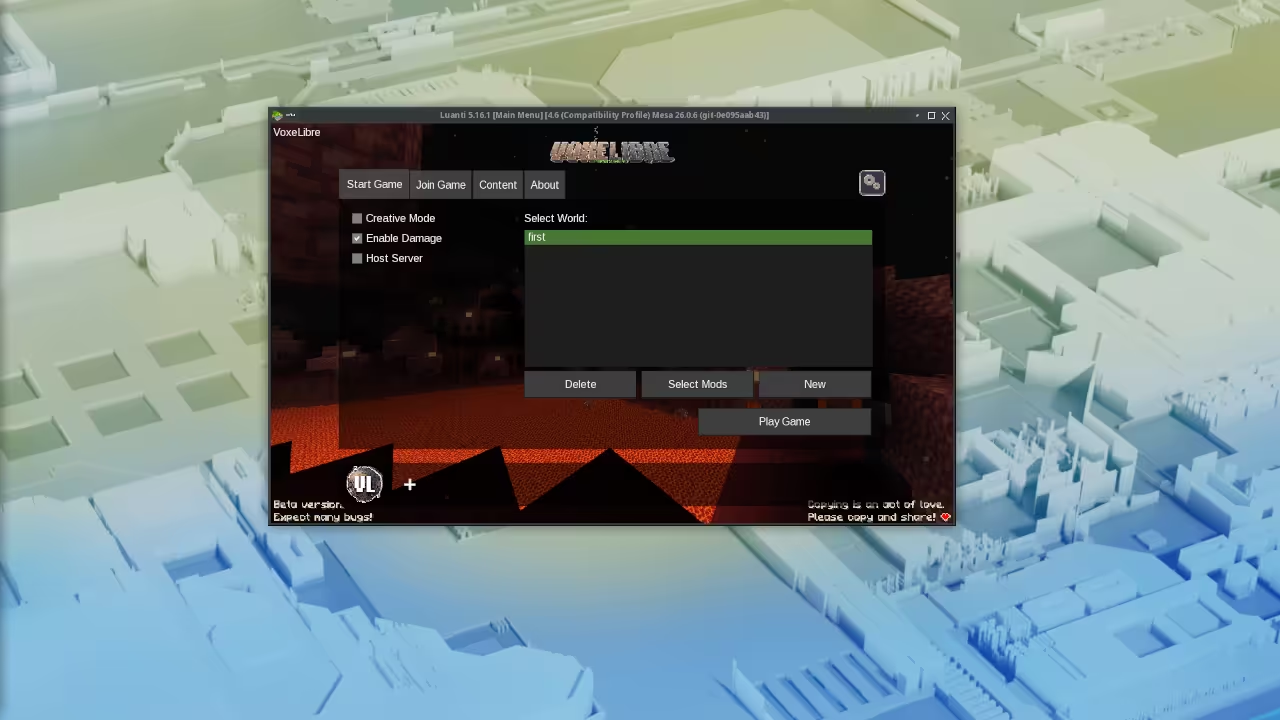
The Luanti project traces its roots back to October 2010 when Perttu Ahola created the original Minetest project. The engine has evolved dramatically since those early days. It now supports Windows, macOS, GNU/Linux, BSD systems, and Android devices. The community has grown into a thriving ecosystem of modders and game creators. ContentDB serves as the central hub for discovering mods, games, and texture packs. You can install everything directly from within the game client.
The Experience of Running Luanti
I remember the exact moment Luanti changed my perspective on open source game development. I fired up the engine on my Fedora system and loaded VoxeLibre within seconds. The survival sandbox experience felt incredibly polished and deeply satisfying. Mining ores and building structures became a meditative process rather than a chore. The engine handled massive world generation without stuttering or frame drops. That smooth performance on my hardware stack made me realize how far open source gaming has come.
Luanti proves that community driven development can rival commercial engines in both quality and flexibility. My AMD Instinct Mi60 with 32GB VRAM handles Luanti worlds without breaking a sweat. The engine scales beautifully from integrated graphics to high end discrete GPUs.
Mastering the Lua Modding API
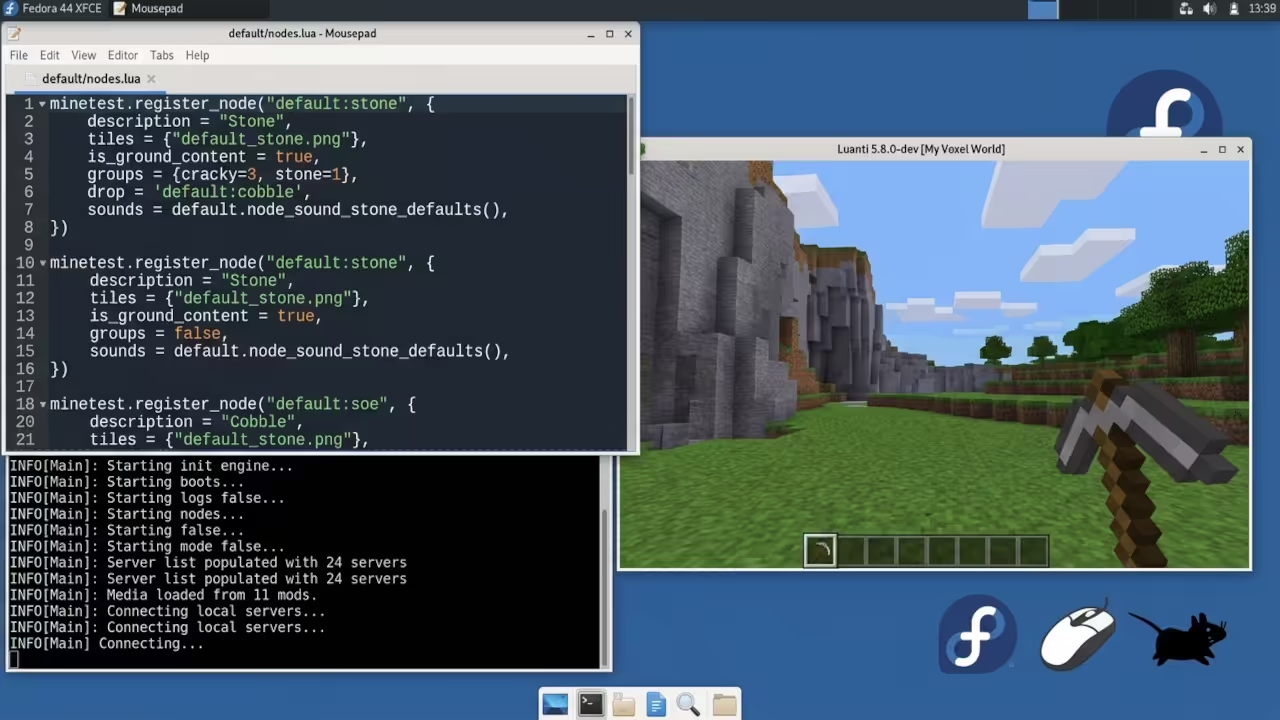
The Lua scripting API represents the true power behind Luanti. Every mod operates as a self contained package with scripts, textures, and configuration files. You define nodes, entities, tools, and inventory items through clean Lua tables. The runtime loading system means you can tweak gameplay without restarting the engine. This hot reloading capability saves hours of development time compared to traditional game engines. Advanced users can hook into the C++ core for performance critical operations.
Here is a basic node registration example that demonstrates the Lua API clarity.
minetest.register_node("mygame:stone", {
description = "Stone Block",
tiles = {"stone.png"},
groups = {cracky = 3},
drop = "mygame:stone",
sounds = default.node_sound_stone_defaults()
})
This single block of code creates a fully functional game node with collision, drop behavior, and sound effects. Commercial engines require dozens of configuration steps to achieve the same result. The simplicity of Luanti modding attracts developers who want results without bureaucratic setup procedures.
Rendering Architecture Deep Dive
The rendering architecture deserves serious attention for technical enthusiasts. Luanti uses a forked version of the Irrlicht engine specifically maintained by the Luanti team. This fork continues receiving updates even though the original Irrlicht project has been abandoned. The engine currently supports OpenGL rendering with active development toward Vulkan backend integration. Issue tracking on the GitHub repository shows serious architectural discussions about abstracting graphics API layers. This means future versions could support Direct3D 12 and Vulkan simultaneously through a unified codebase.
The voxel meshing system generates optimized geometry on the fly. Only visible faces get rendered, which dramatically reduces draw calls in large worlds. This technique keeps framerates stable even when exploring massive procedurally generated landscapes.
Hardware Performance Comparison
| Parameter | Description | Value |
|---|---|---|
| Budget System | Dual Core 2.0GHz CPU, Integrated Vega GPU, 8GB DDR4 RAM | 30 FPS Low Settings, 32 Nodes Render Distance |
| Mid Range System | Ryzen 5 5600GT 6 Cores, AMD Radeon RX 6600, 32GB DDR5 RAM | 60 FPS High Settings, 64 Nodes Render Distance |
| High End System | Threadripper 16 Cores, AMD Instinct Mi60 32GB VRAM, 64GB DDR5 RAM | 120+ FPS Ultra Settings, 96+ Nodes Render Distance |
| Parameter | Description | Value |
Game Content Ecosystem
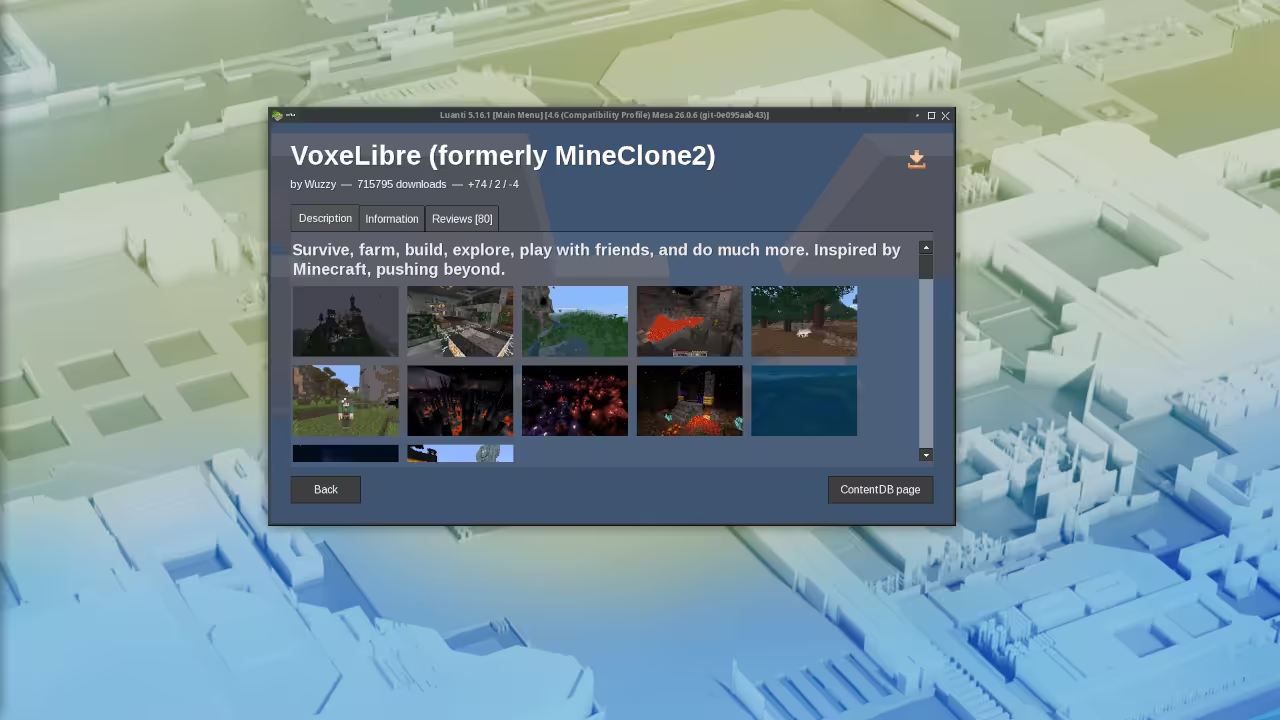
The game content ecosystem rivals any commercial platform. VoxeLibre stands as the flagship survival sandbox game pack. It delivers a complete Minecraft inspired experience with unique mechanics and extended content. Mineclonia offers a family friendly alternative with colorful biomes and creative building focus. The ContentDB platform hosts hundreds of additional games, mods, and texture packs. Every single piece of content remains free and open source forever.
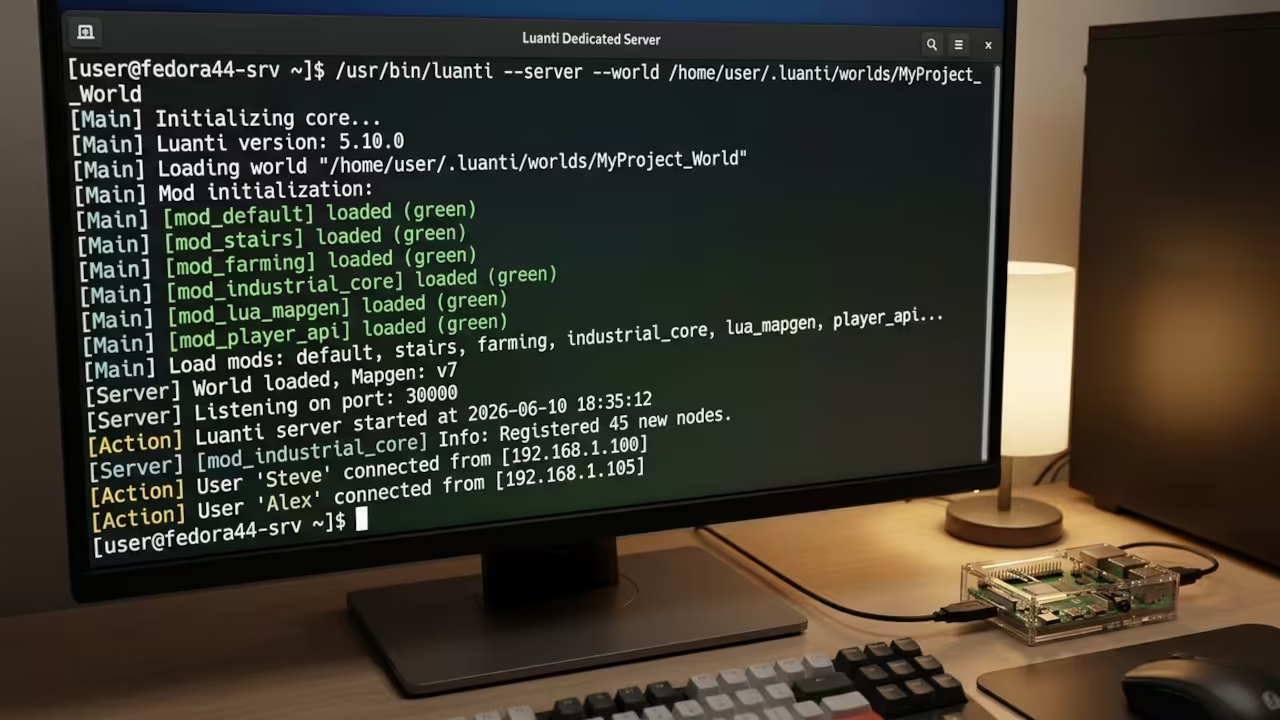
Luanti also excels as a dedicated server platform. You can run headless server instances on lightweight hardware like the Raspberry Pi Zero W. The server handles world simulation, player connections, and mod execution without any graphical overhead. This makes Luanti perfect for self hosted multiplayer gaming sessions. Your friends connect over the internet and explore worlds you have designed yourself.
The modding community creates tools that extend the engine far beyond traditional sandbox gaming. Technical mods add redstone like logic systems, factory automation, and programming languages inside the game world. Creative mods introduce new biomes, creatures, and weather systems. The possibilities are genuinely unlimited when you combine the Lua API with the passionate developer community.
Master the Professional Stack
These technical insights represent just the surface of what serious game architecture demands. My books and blueprints provide the deep structural knowledge that transforms hobbyists into professional creators.
- Books (Technical and Creative): https://www.amazon.com/stores/Edward-Ojambo/author/B0D94QM76N
- Blueprints (DIY Woodworking Projects): https://ojamboshop.com
- Tutorials (Continuous Learning): https://ojambo.com/contact
- Consultations (Custom Apps and Architecture): https://ojamboservices.com/contact
🚀 Recommended Resources
Disclosure: Some of the links above are referral links. I may earn a commission if you make a purchase at no extra cost to you.
Leave a Reply