

Your AI is lying to you about memory safety. You prompt for a high performance C++ function and the LLM delivers a syntactically perfect disaster.
It looks clean but hides a ticking time bomb of buffer overflows and race conditions. Most developers trust the output because it compiles without warnings.
This is a fatal mistake in professional systems architecture. A successful compile is not a proof of security.
The moment you stop trusting the AI is the moment you become a real engineer. I remember the first time I caught a subtle off by one error in an AI generated pointer arithmetic block.
The feeling of preventing a potential remote code execution vulnerability is an unmatched professional high. It transforms your workflow from passive consumption to active mastery.
You no longer hope the code works. You know exactly why it is secure.
The first rule of auditing AI C++ is the zero trust policy. You must treat every line of AI code as a malicious contribution from an untrusted source.
Focus your energy on the boundaries where data enters the system. AI often struggles with the complex ownership models of modern C++.
It will mix raw pointers with smart pointers in ways that create dangling references. Always verify the lifetime of every object created by the LLM.
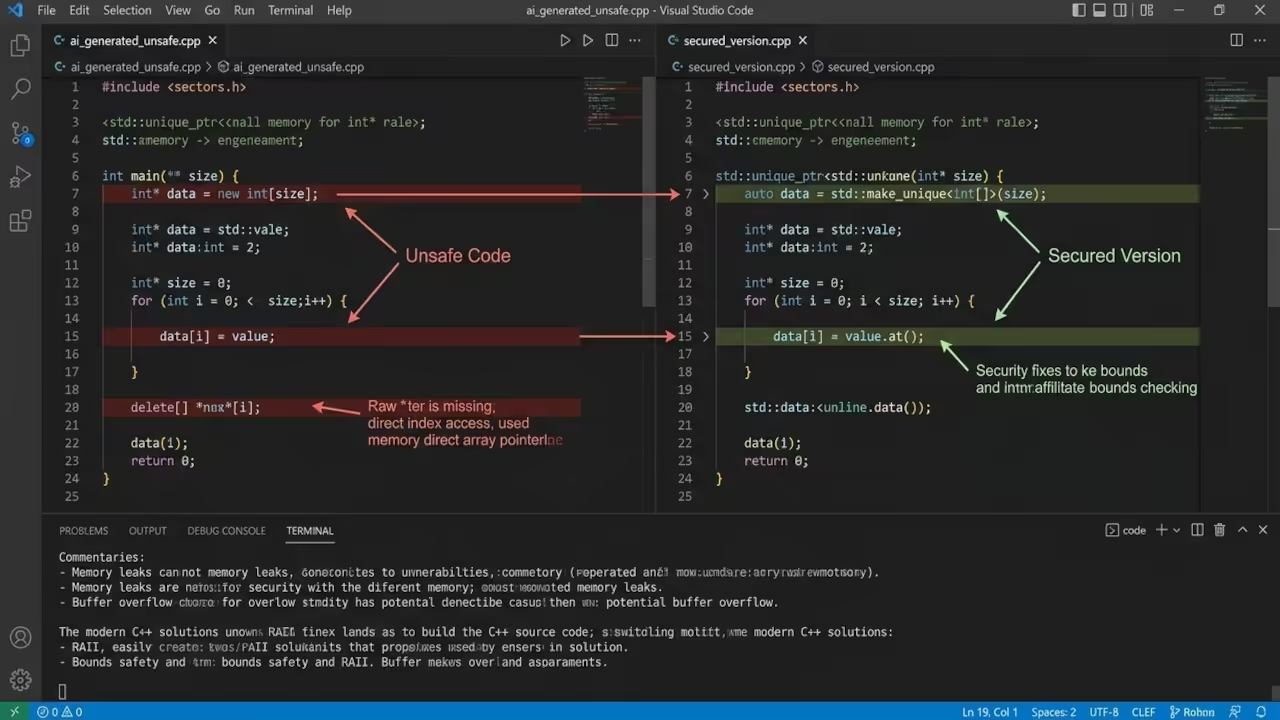
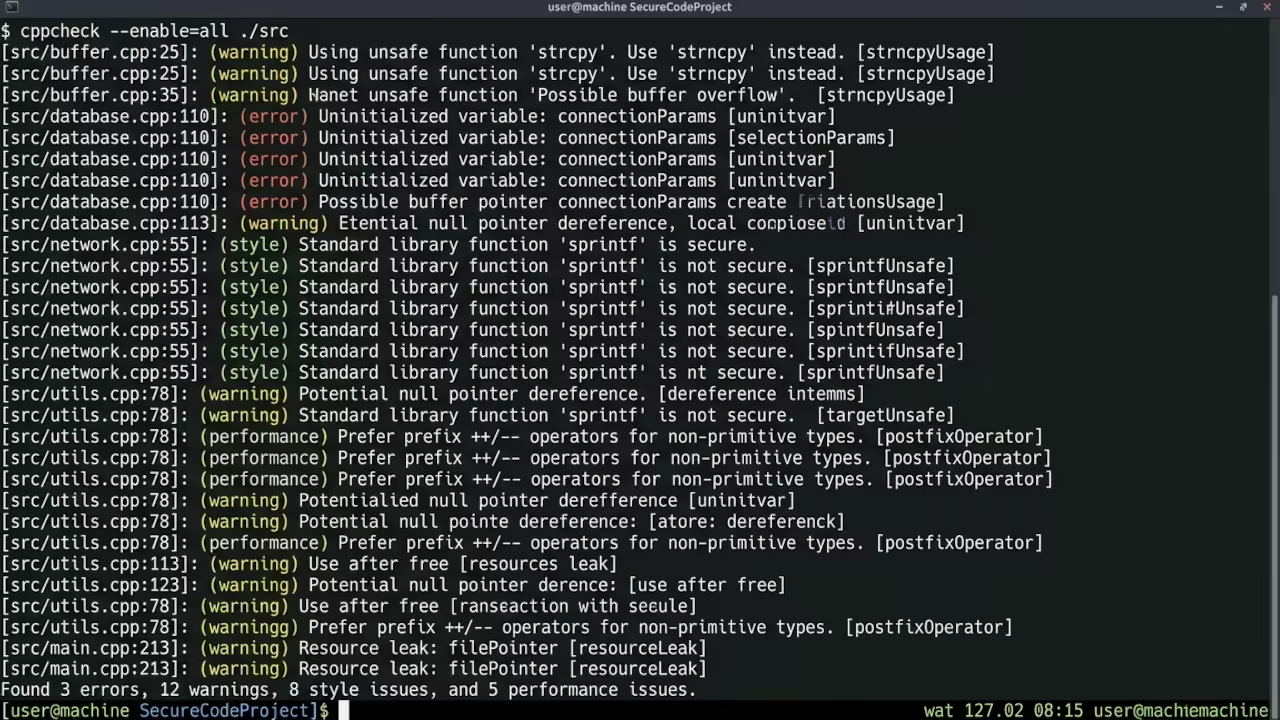
Check for the classic AI hallucination of missing bounds checks in loops. The AI loves to assume the input size is always valid.
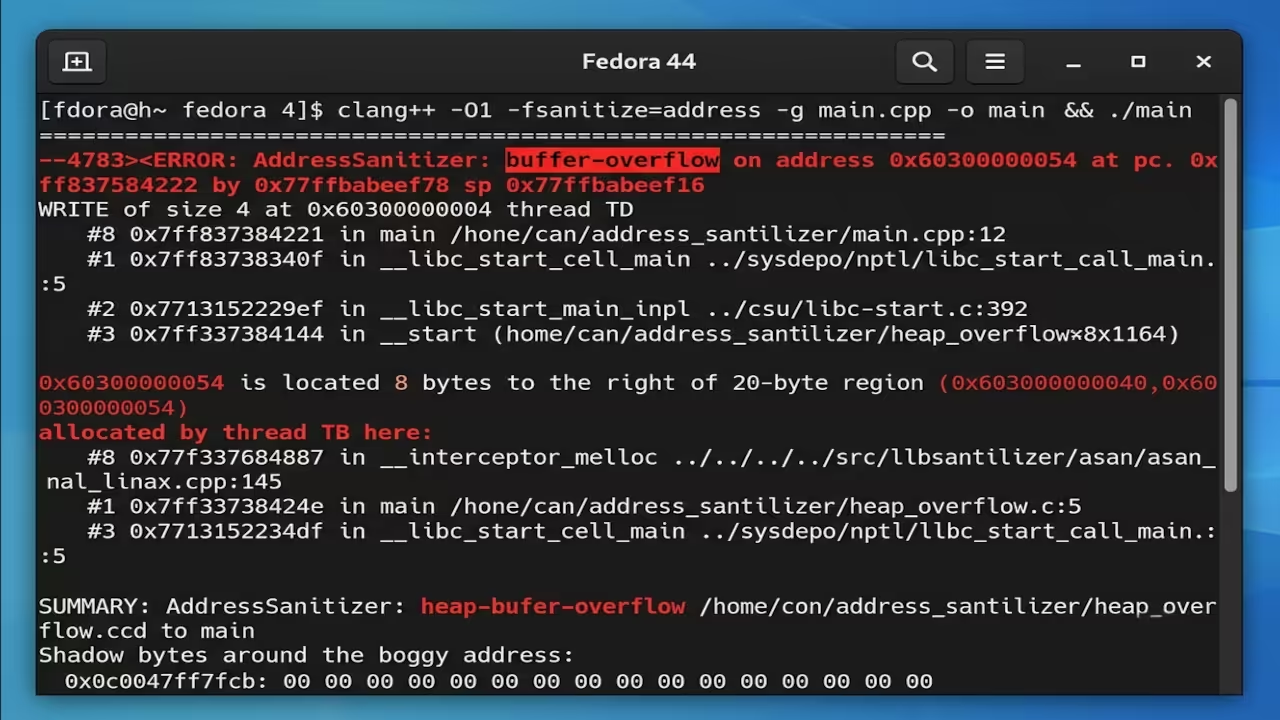
This is exactly how memory corruption vulnerabilities enter your codebase. One insider detail for the pros is the use of AddressSanitizer during the audit phase.
Run your AI code through ASan with a heavy fuzzing suite to find the leaks the AI tried to hide.
| Parameter | Description | Value |
|---|---|---|
| Manual Review | Detection Rate | High |
| Static Analysis | Effort Level | Low |
| Dynamic Fuzzing | Performance Impact | High |
| AI Self Review | Detection Rate | Low |
| Parameter | Description | Value |
This process mirrors the architectural breakthroughs we discussed in our previous deep dives on system stability. Security is not a feature but a foundational requirement of the stack.
Raw code snippets for the audit process should focus on replacing unsafe functions with secure alternatives. Swap out strcpy for strlcpy or use std string to eliminate buffer risks entirely.
// UNSAFE AI GENERATED CODE
void process_data(char* input) {
char buffer[64];
strcpy(buffer, input); // VULNERABLE TO BUFFER OVERFLOW
}
// SECURE CONSULTANT AUDITED CODE
void process_data_secure(const std::string& input) {
if (input.length() > 64) {
throw std::out_of_range("Input too large");
}
std::vector<char> buffer(input.begin(), input.end());
// Memory managed safely by std::vector
}
Master the Professional Stack
Elevate your technical execution by integrating these industry standard resources into your daily workflow. These blueprints provide the theoretical and practical edge needed for high tier architecture.
- Books (Technical & Creative): https://www.amazon.com/stores/Edward-Ojambo/author/B0D94QM76N
- Blueprints (DIY Woodworking Projects): https://ojamboshop.com
- Tutorials (Continuous Learning): https://ojambo.com/contact
- Consultations (Custom Apps & Architecture): https://ojamboservices.com/contact
🚀 Recommended Resources
Disclosure: Some of the links above are referral links. I may earn a commission if you make a purchase at no extra cost to you.