
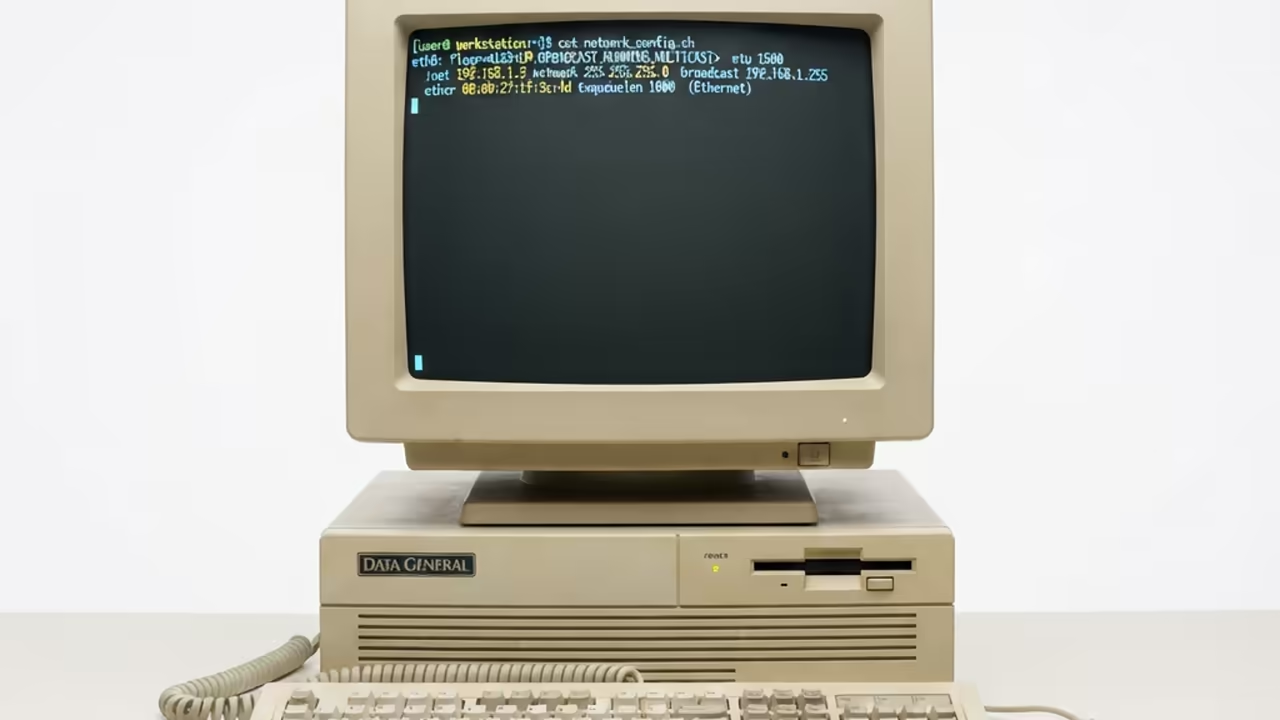
Timeline: 1976 to 1991
Execution: C Language
Scale: Global Developer Standard
Core Metric: Memory under 50MB
The history of the Vim editor is a study in the absolute removal of friction. This system architecture establishes a historical baseline for efficiency. The operational metrics indicate a high performance state machine for text. It represents a critical leap from the constraints of nineteen seventy six.
Disclaimer: I may earn a commission from purchases made through these links at no extra cost to you.


THE EVOLUTIONARY ORIGINS
The Foundation of Vi
The journey began with Bill Joy and the original vi editor. It was a tool built for the slow modem connections of the era. The software minimized screen redraws to save precious bandwidth.
The Rise of Vim
The work of Bram Moolenaar transformed this utility into a powerhouse in nineteen ninety one. He created Vim for the Amiga to solve critical developer needs. This evolution shifted the editor from a simple tool to a platform.
SONIC TEXTURES
The Auditory Signature
The operational environment of Vim is defined by a specific auditory signature. There is the rhythmic clack of mechanical keyboard switches. Each keystroke is a sharp and decisive event in the silence.
“The auditory experience is one of pure tactile precision where the air remains still as the central processing unit stays cool.”
This sound replaces the wet slide of a plastic mouse. The absence of a heavy cooling fan whir is notable. Lean C code does not trigger aggressive thermal throttling. It is a quiet and focused engineering sanctuary.
The only sound is the rapid fire sequence of keys. It is a percussive symphony of productive engineering. This auditory clarity mirrors the clarity of the code itself. There is no waste in the movements or the sound.
TECHNICAL SPECIFICATIONS
Resource Management
The core architecture of Vim is a masterclass in resource management. It maintains a memory footprint often below fifty megabytes. This is achieved through efficient heap allocation and minimal dependencies.
The Undo Tree
One mesmerizing detail is the complexity of the undo tree. This system allows for non linear backtracking of text changes. It manages a complex graph of state changes with minimal overhead.
“The modal state engine separates the input stream into distinct functional modes which reduces the number of required keystrokes for complex operations.”
Another engineering marvel is the modal state engine. This design ensures that the transition between modes is instantaneous and invisible.
OPERATIONAL DATA
The efficiency of the editor is visible in the system requirements. It runs on hardware that modern editors would find insufficient.
| Feature | Original Vi | Vim | Modern IDE |
|---|---|---|---|
| RAM Use | Under 1 MB | Under 50 MB | Over 500 MB |
| Language | C | C | Electron JS |
| Modality | Strict Modal | Enhanced Modal | Modeless |
| Undo | Single Level | Multi Level Tree | Linear History |
ENGINEERING OBSERVATIONS
The GN Text Object
The use of the “gn” text object is a significant optimization. It allows the user to target specific search matches. This eliminates the need for complex regular expression replacements.
The Redraw Cycle
The editor also utilizes a highly optimized redraw cycle. Setting “lazy redraw” prevents unnecessary screen updates during macro execution. This reduces the latency between the key press and the result.
- C Language Core
- Modal State Machine
- Multi Level Undo Tree
- Vimscript Extensibility
The modal shift from Normal mode to Insert mode is critical. It removes the need for modifier keys for basic navigation. This reduces the physical strain on the fingers during long sessions.
The dot command is another piece of engineering brilliance. It allows the user to repeat the last change with one keystroke. This creates a recursive loop of efficiency.
The overall experience is the ultimate expression of keyboard centric power. Every command is a deliberate action. Every sound is a marker of progress. This is the infinite evolution of a tool perfected over decades. It remains the gold standard for professional text manipulation. The system proves that lean engineering always wins.
🚀 Recommended Resources
Disclosure: Some of the links above are referral links. I may earn a commission if you make a purchase at no extra cost to you.