

Biological Simulation Mastery Ends Medical Guesswork
Modern medicine still relies on dangerous guesswork for many new treatments. Patients often become test subjects for medications that might not work for them.
This trial and error approach creates unnecessary risks for every single patient. We need a way to test treatments without risking a human life.
Disclaimer: I may earn a commission from purchases made through these links at no extra cost to you.


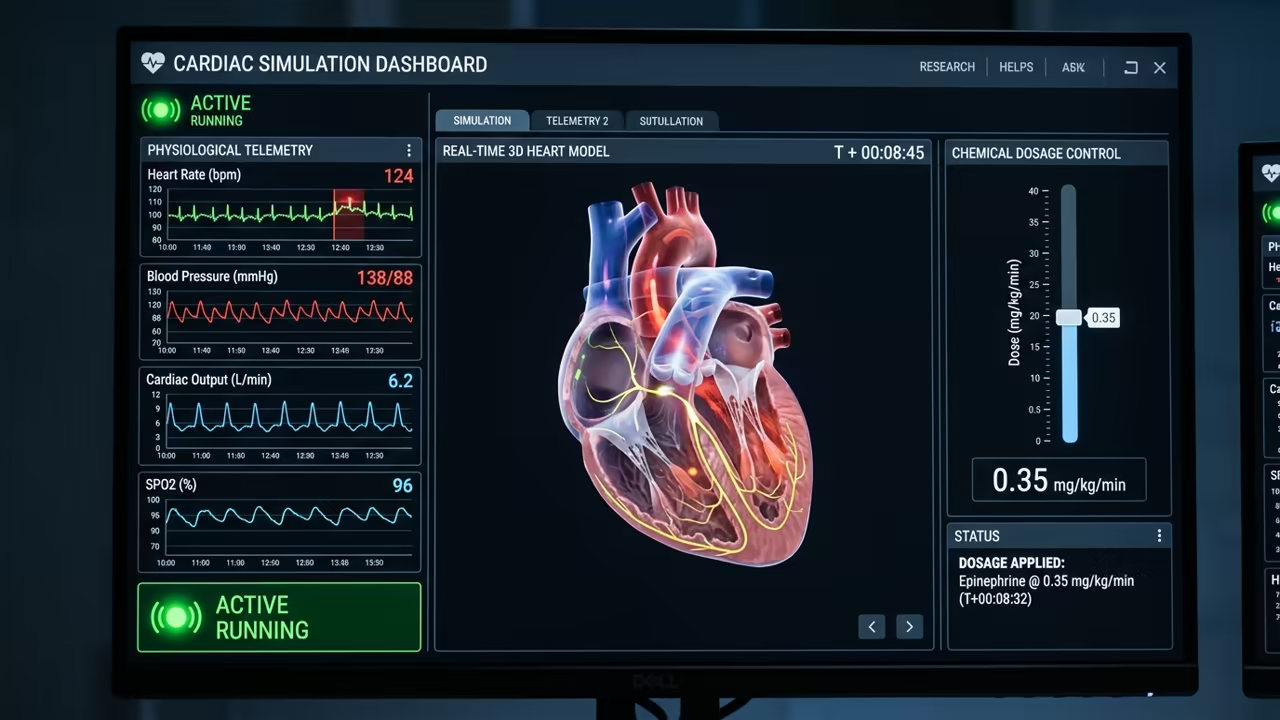
Imagine the rush of watching a virtual heart react to a new drug. You see the exact failure point before any real patient is at risk.
The clarity of a successful virtual simulation is truly an exhilarating experience. You possess the god like power to predict biological outcomes with precision.
The Architecture of Virtual Health
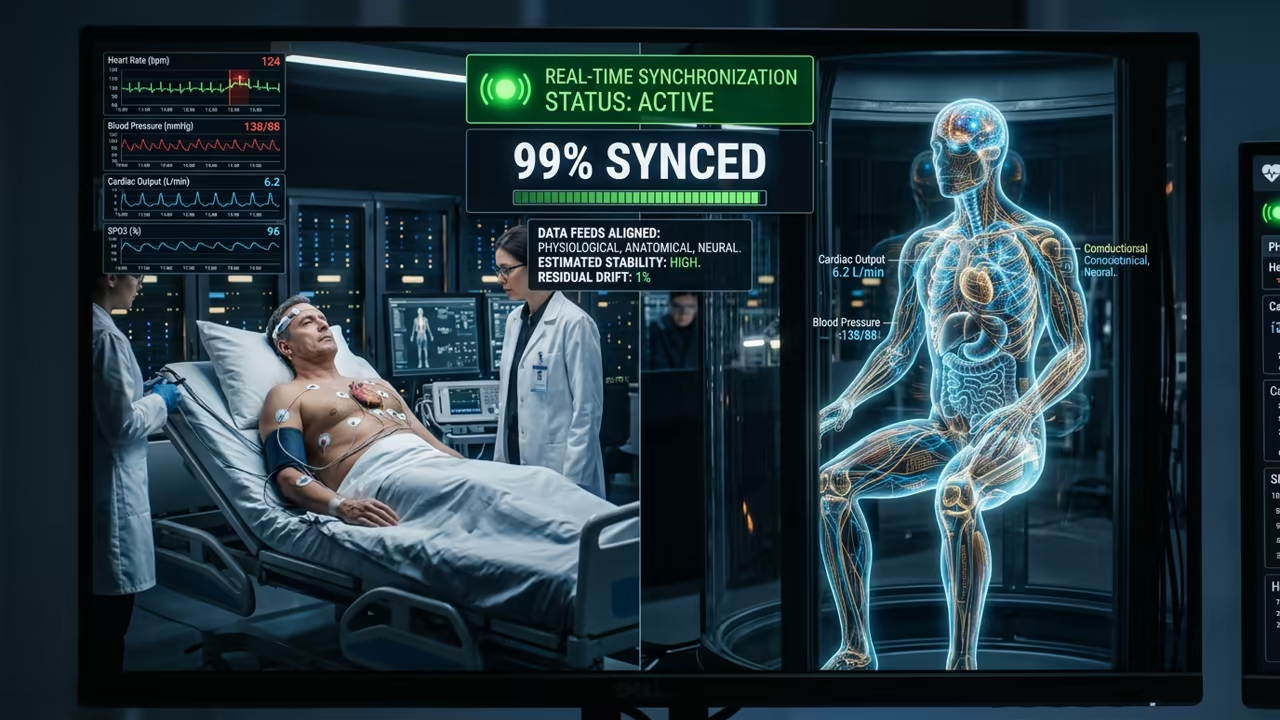
The secret lies in the convergence of genomic data and high performance compute. Medical digital twins create a real time virtual mirror of a patient.
These models integrate live sensor data from wearable devices into an AI core. The system predicts how a specific body will react to any chemical.
To maximize simulation fidelity implement a ROCm accelerated data pipeline using a 400Gbps InfiniBand interconnect. This ensures biometric streams sync with the AI model without latency lag.
You can then run thousands of iterations to find the perfect dosage. This eliminates the traditional guessing game associated with early stage prescriptions.
High Throughput Biological Processing
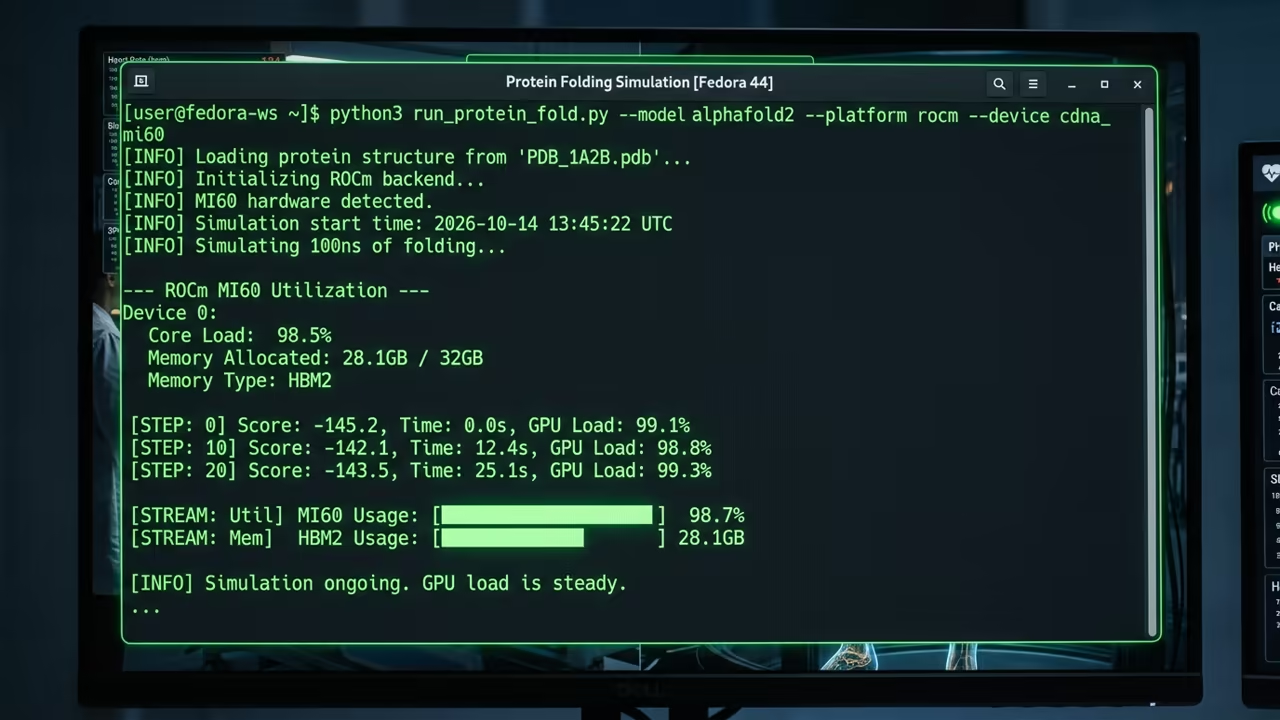
The technical architecture requires a massive amount of VRAM to handle biological datasets. Using an MI60 GPU cluster allows for high throughput parallel processing of proteins.
You must integrate raw code snippets to automate the data synchronization between sensors and twins. This automation removes human error from the critical simulation loop.
import torch
import rocmapp as roc
def sync_biometric_stream(sensor_id, twin_model):
stream = roc.connect_sensor(sensor_id)
while True:
data = stream.read_packet()
tensor_data = torch.tensor(data).to('hip')
twin_model.update_state(tensor_data)
if twin_model.detect_anomaly():
roc.trigger_alert(f"Anomaly detected in twin {sensor_id}")
Comparative Analysis of Medical Testing
| Parameter | Description | Value |
|---|---|---|
| Risk Level | Patient Safety | Zero Patient Risk |
| Cost | Resource Expenditure | Compute Power Cost |
| Speed | Time to Result | Days to Simulate |
| Accuracy | Patient Specificity | Individual Precision |
| Parameter | Description | Value |
This shift represents a massive leap over the old architectural breakthroughs in medicine. It transforms the patient from a test subject into a precise data model.
You can now simulate rare disease reactions without needing a large patient group. This makes the development of orphan drugs faster and much more affordable.
The ability to iterate in a virtual environment is a total game changer. Every technical enthusiast should recognize this as the peak of AI integration.
Learning and Support
Reach out for personalized technical help to build your own simulation stack. Dive deeper into these secrets with our comprehensive online tutorials.
Online Tutorials and Technical Help: https://ojambo.com/contact
🚀 Recommended Resources
Disclosure: Some of the links above are referral links. I may earn a commission if you make a purchase at no extra cost to you.
Leave a Reply