

Escape the Root Daemon Trap
Most DevOps engineers are still paying the hidden HashiCorp tax. They are trapped by restrictive licenses and dangerous root daemon vulnerabilities.
This creates a massive liability for any serious business owner. The solution is a sovereign stack using Podman Desktop and OpenTofu.
This combination eliminates the background daemon and the licensing traps. You finally gain total control over your digital foundation.
Disclaimer: I may earn a commission from purchases made through these links at no extra cost to you.


The Sovereign Experience
Implementing this stack feels like breaking a set of heavy chains. You can deploy complex infrastructure without fearing a surprise licensing audit.
Your local environment becomes a fortress of efficiency and security. Mastering this level of independence is the core of the professional stack.
You can learn these high level strategies in the book The Sovereign Business at https://amzn.to/4ugGEYr. It is the ultimate guide for technical independence.
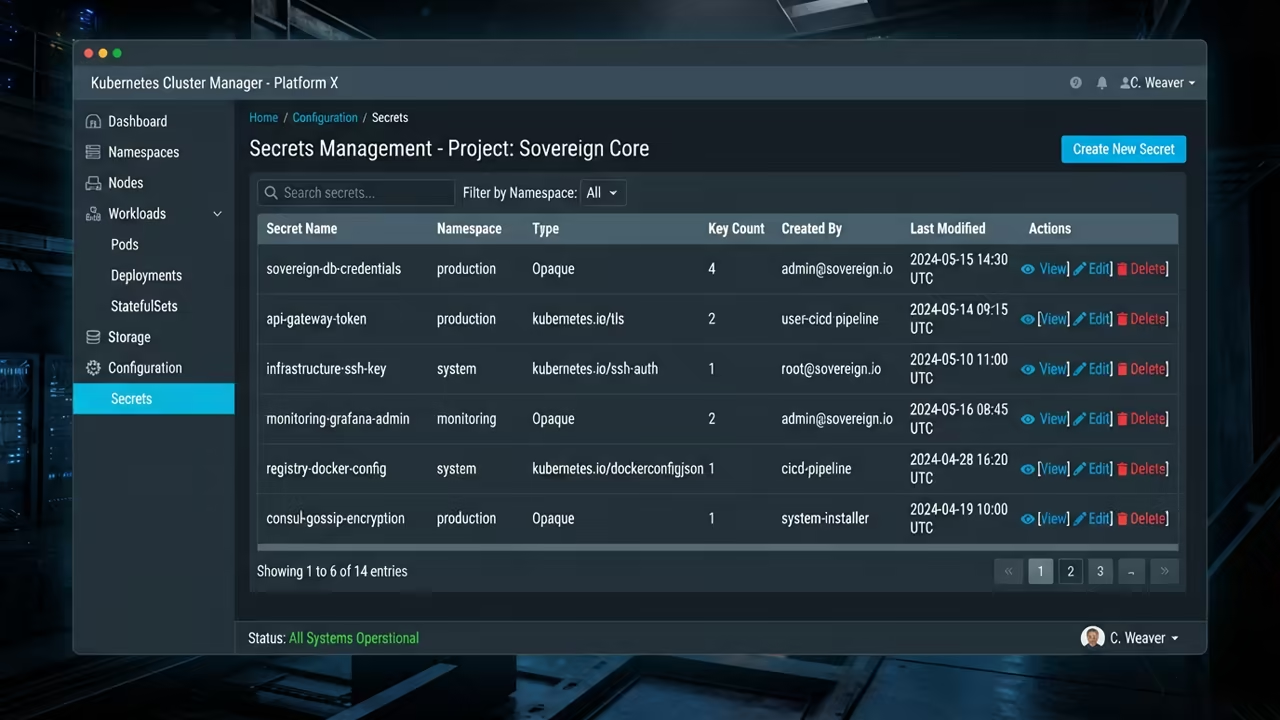
Sovereign Infrastructure Workflow
The modern sovereign workflow relies on Podman Desktop 2026. It provides a native GUI for secrets management and CA certificate syncing.
This removes the need for complex volume mounting scripts. You can now run OpenTofu v1.12 within a rootless Podman container.
This ensures your host system remains protected from container escapes. It is a critical requirement for any sovereign business.
Secure Container Execution
Use this multi stage Containerfile to create a minimal and secure runner. This reduces the attack surface of your infrastructure pipeline.
FROM ghcr.io/opentofu/opentofu:1.12-minimal AS tofu-source
FROM alpine:3.20
RUN apk add --no-cache git openssh-client aws-cli
COPY --from=tofu-source /usr/local/bin/tofu /usr/local/bin/tofu
WORKDIR /workspace
ENTRYPOINT ["/usr/local/bin/tofu"]
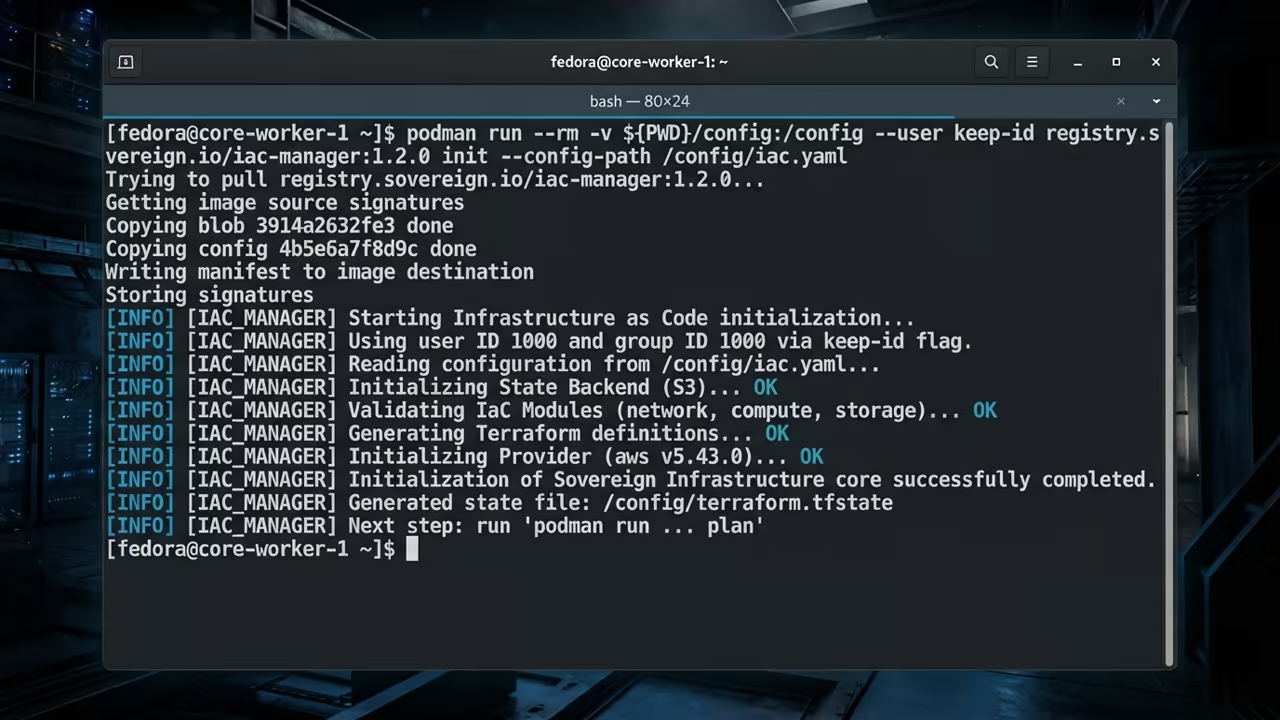
Execution requires the keep id flag to prevent file ownership mismatch. This is a common failure point in rootless containerization.
Use the Z flag for SELinux compatibility on Fedora.
podman run --rm -it -v "$(pwd)":/workspace:Z --userns=keep-id ghcr.io/opentofu/opentofu:1.12-minimal init
Professional Scaling Secrets
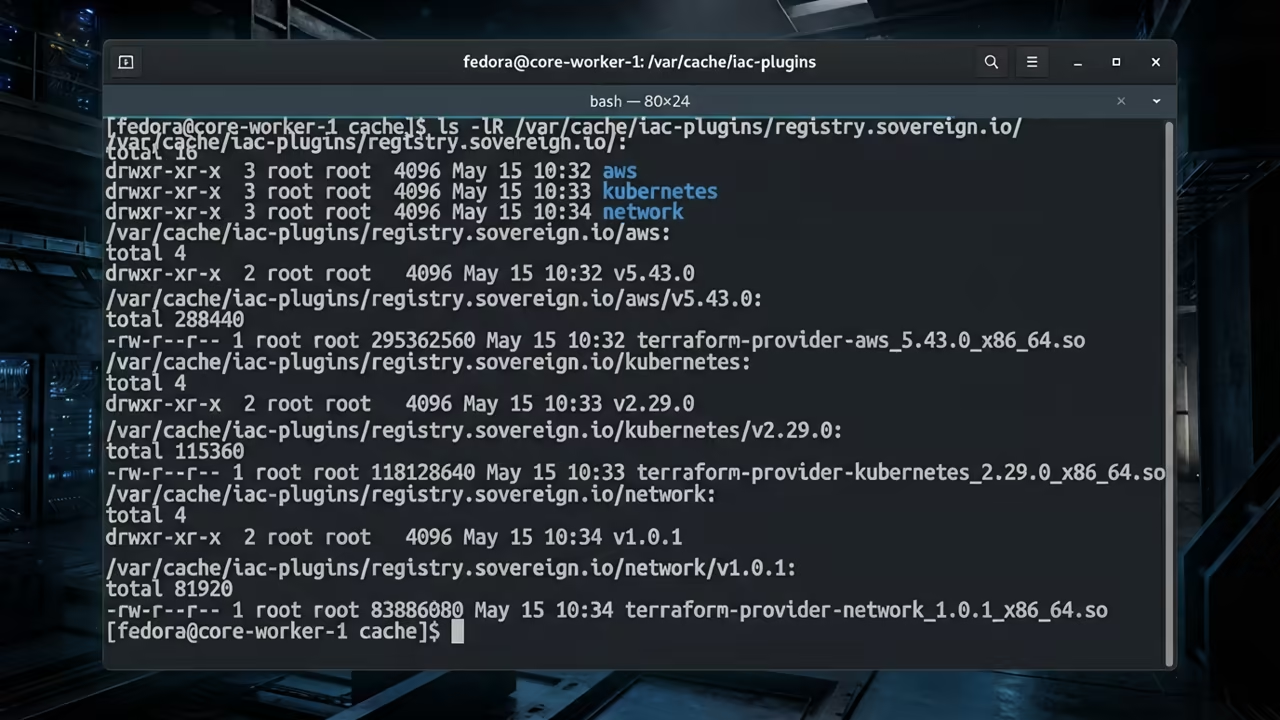
An insider secret for scaling is using OCI registry mirrors. This prevents the provider lock file bottleneck during massive parallel runs.
It is how the pros maintain high speed CI CD pipelines. Configure your parallelism to thirty in your environment variables.
This forces OpenTofu to handle more concurrent plugin runs. It drastically reduces the total time for a full apply.
export TF_PLUGIN_CACHE_DIR="/workspace/.tofu_plugin_cache"
export TF_CLI_ARGS_plan="-parallelism=30"
export TF_CLI_ARGS_apply="-parallelism=30"
This approach connects deeply to previous technical deep dives into architectural breakthroughs. It replaces the bloated legacy stacks with a lean and mean execution engine.
The result is a professional grade deployment cycle.
| Challenge | Traditional Stack | Sovereign Solution |
|---|---|---|
| Security | Root Daemon Risks | Rootless by Default |
| Licensing | Restrictive BUSL | Mozilla Public License |
| Resources | Heavy Daemon Bloat | Daemonless Architecture |
| Drift | Manual Compose Tweaks | Declarative OpenTofu State |
Your infrastructure should be an asset and not a liability. Moving to a sovereign stack is the only way to ensure long term stability.
Stop relying on proprietary platforms that can change the rules overnight.
Learning and Support
Reach out for personalized technical help to scale your sovereign stack. You can also dive deeper with the online tutorials for advanced implementation.
Online Tutorials & Technical Help: https://ojambo.com/contact
🚀 Recommended Resources
Disclosure: Some of the links above are referral links. I may earn a commission if you make a purchase at no extra cost to you.