

The Death of Centralized Urban Logic
The cloud is dying for real time urban needs. Latency kills autonomous vehicles in milliseconds.
You cannot wait for a server in Virginia to stop a crash. This bottleneck is the silent killer of modern city planning.
Disclosure: article includes affiliate links.


Most urban systems rely on distant data centers for simple decisions. This architecture is fundamentally broken for high stakes automation.
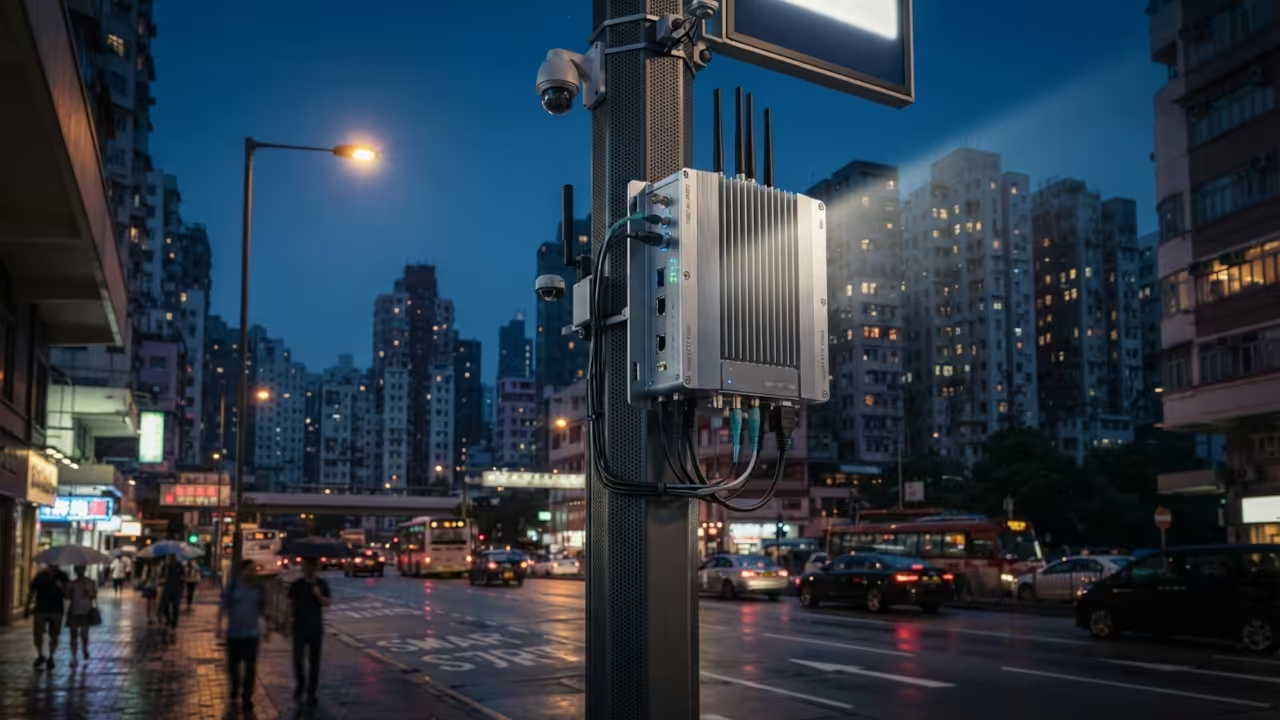
Edge computing solves this by pushing the brain to the street. Processing happens at the sensor level or the local pole.
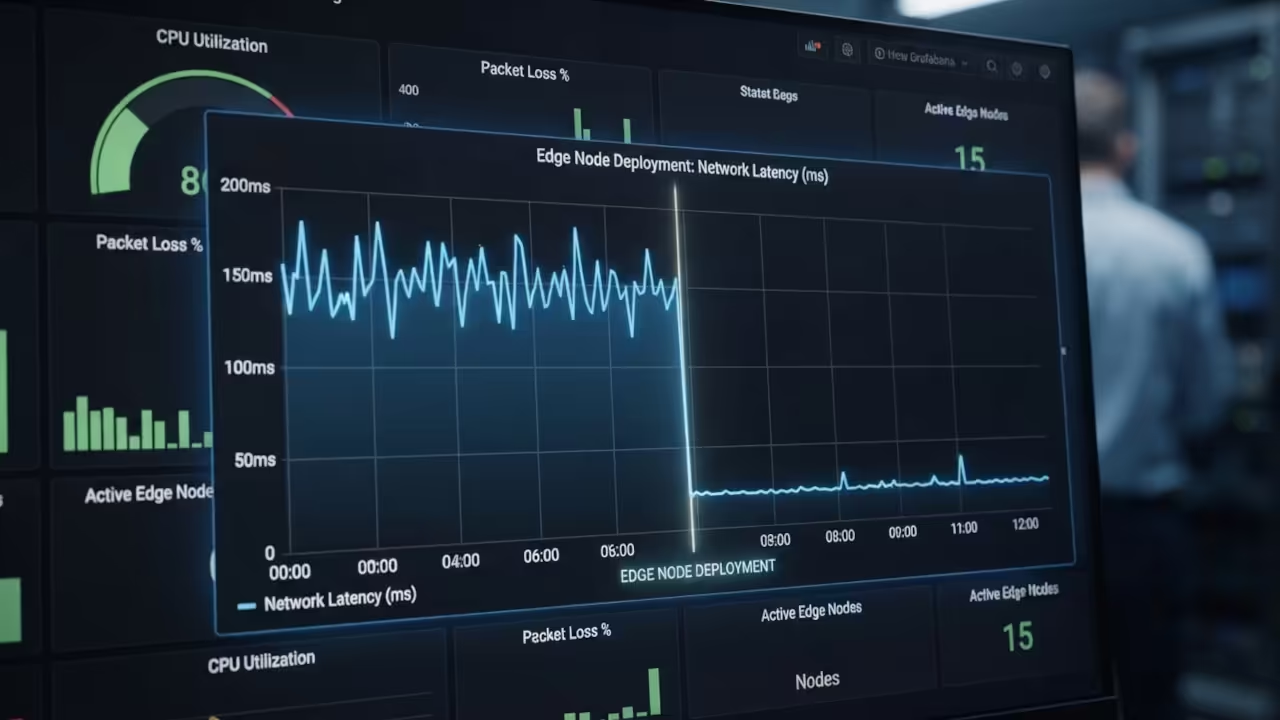
This shift eliminates the round trip to the cloud.
The Experience of Instant Response
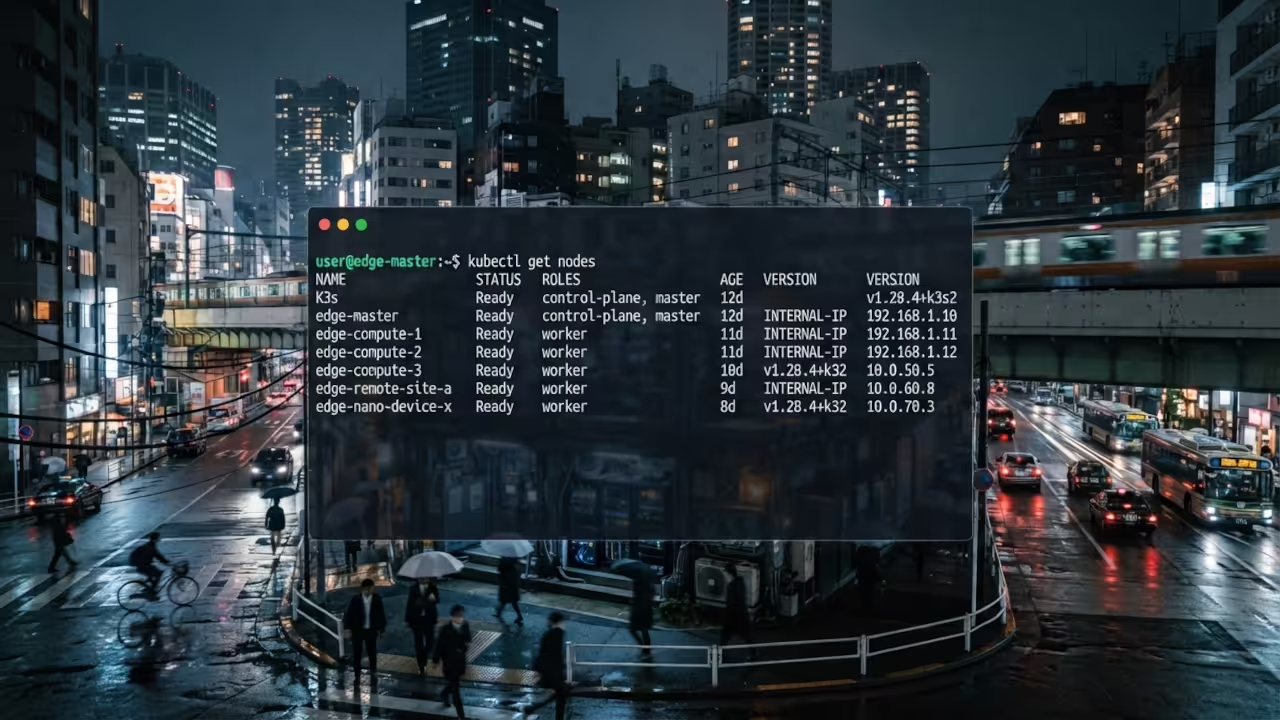
The first time I deployed a K3s cluster across edge nodes was magic. Data flowed locally without hitting the backhaul.
The system response was nearly instant. It feels like the city finally woke up.
You can see traffic lights adjusting in real time based on actual flow. The lag that plagued early IoT projects is gone.
The Secret to Urban Message Stability
To master this you must optimize your message brokers. Configure your MQTT broker with a low keep alive interval for urban sensors.
This prevents stale connections in high interference zones. Use a lightweight JSON payload to save bandwidth.
This insider trick ensures your nodes stay synchronized under heavy load.
# Mosquitto Edge Configuration
listener 1883
allow_anonymous true
persistence true
persistence_location /var/lib/mosquitto/
keepalive 60
Architectural Breakthroughs in Distribution
This architectural breakthrough mirrors my previous deep dives into GPU optimizations. Scaling local compute is the only way to handle real time AI.
The shift to the edge is inevitable. Modern urban intelligence requires a distributed mindset.
You stop thinking about one big server. You start thinking about ten thousand tiny brains.

| Parameter | Description | Value |
|---|---|---|
| Latency | Response Time | Edge is Ultra Low |
| Resilience | Failure Point | Edge is Distributed |
| Bandwidth | Data Flow | Edge is Localized |
The Future of Autonomous Urbanism
The future depends on this decentralized power. We are seeing this in projects like NEOM already.
The integration of 5G and edge nodes is a game changer. You can now run heavy AI models on the street.
This allows for instant facial recognition for safety. It enables predictive maintenance for water pipes and power grids.
The hardware requirements are shifting toward efficient ARM based systems. Using specialized accelerators at the edge reduces power consumption.
This is where the real revolution happens. The synergy between local compute and global orchestration is key.
You need a way to sync local data back to the core. This creates a loop of continuous urban learning.
This process is similar to how we handle high throughput syncing in e-commerce. The goal is always to reduce the distance between data and action.
Learning and Support
Reach out for personalized technical help with your urban edge deployments. Dive deeper into the blueprints with our online tutorials.
Online Tutorials and Technical Help
🚀 Recommended Resources
Disclosure: Some of the links above are referral links. I may earn a commission if you make a purchase at no extra cost to you.
Leave a Reply