
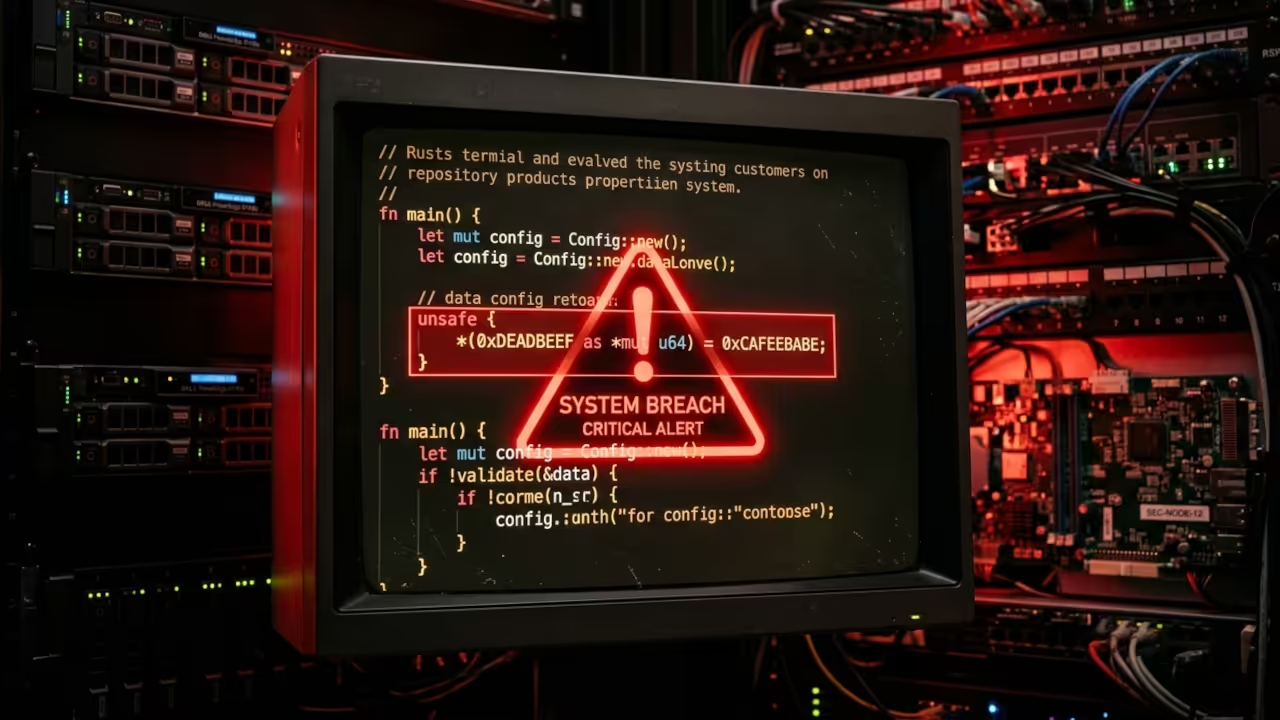
You trust Rust to keep your memory safe. You trust the borrow checker to catch every dangling pointer. Then you paste an LLM generated function into your codebase and suddenly that guarantee means nothing.
Forty five percent of AI generated code introduces OWASP Top 10 vulnerabilities according to Veracode testing across over one hundred large language models. Rust code is no exception. The compiler will happily accept unsafe blocks that an LLM hallucinated without any real understanding of memory semantics.
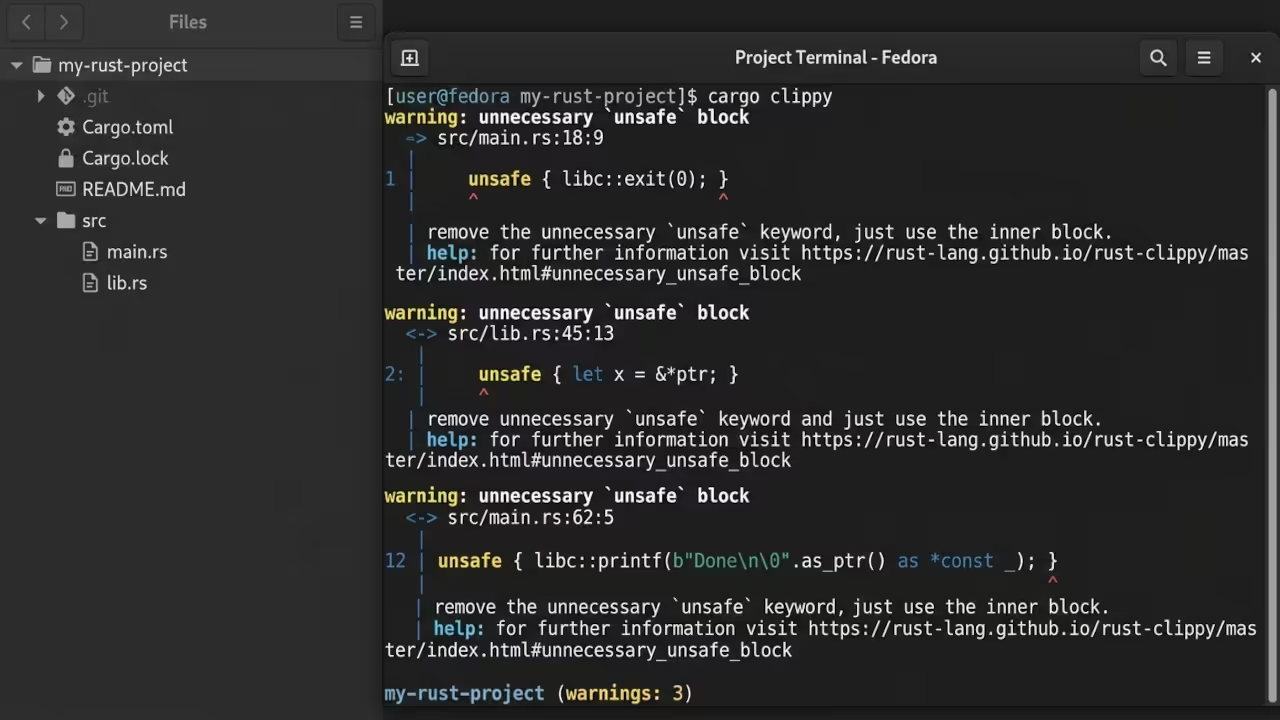
I have audited dozens of Rust projects where developers assumed AI generated code was production ready. The pattern is always the same. The code compiles and the tests pass.
The vulnerabilities hide in plain sight inside unsafe blocks, unchecked unwrap calls, and FFI boundaries that the model simply copied from outdated sources. You need a systematic audit process before any AI generated Rust touches your repository.
The Experience of Discovery
The feeling of discovering a critical vulnerability in AI generated code is uniquely frustrating. You spent hours reviewing the logic and the architecture looked sound.
Then you find an unsafe block performing raw pointer arithmetic with no bounds checking. The LLM generated it because it saw a similar pattern in training data. The model had no concept of what it was doing.
The Three Patterns of LLM Generated Unsafe Blocks
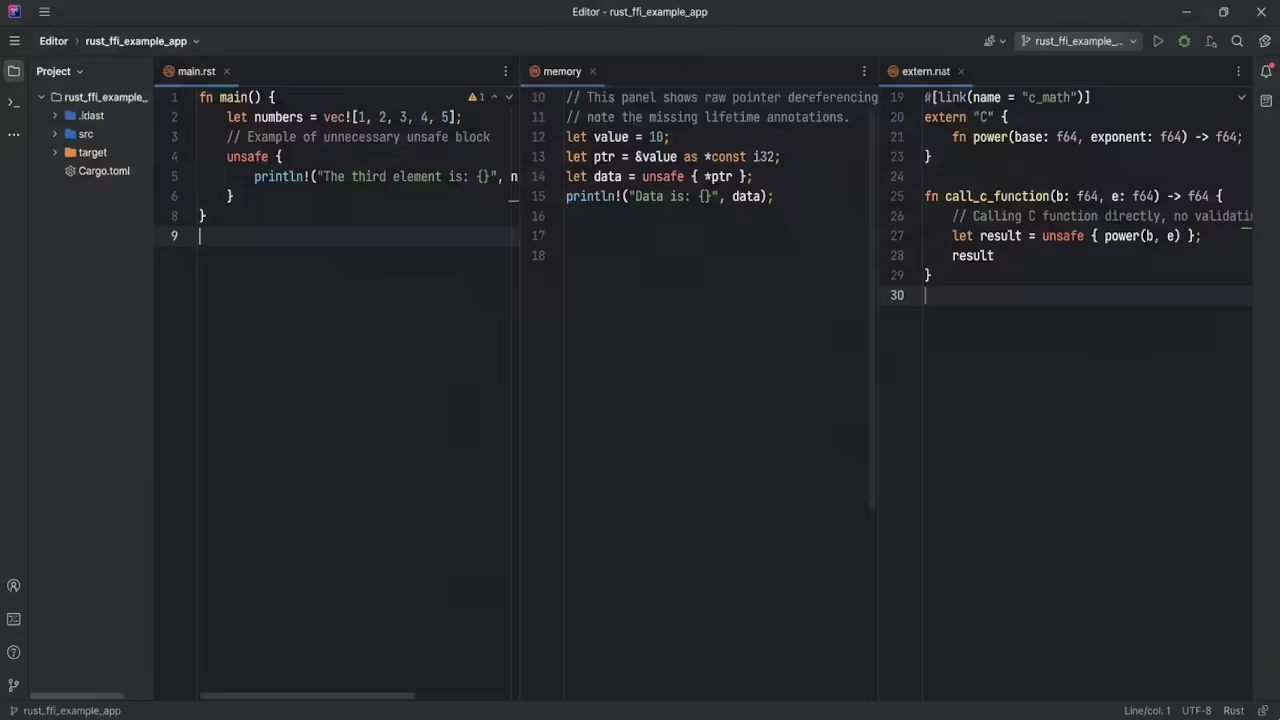
Three patterns appear repeatedly in LLM generated unsafe code. The first is unnecessary unsafe blocks that wrap operations which have safe alternatives. The model generates unsafe because it saw unsafe in training examples.
The second pattern is raw pointer dereferencing without proper lifetime guarantees. The third pattern is FFI calls without input validation on the Rust side. Each pattern represents a different category of risk that requires specific audit techniques.
Here is an example of the first pattern where an LLM wraps a safe operation in unnecessary unsafe code.
fn get_first_element(vec: &Vec<i32>) -> i32 {
unsafe {
let ptr = vec.as_ptr();
*ptr
}
}
The safe alternative is simply vec.first().copied().unwrap_or(0). The LLM generated the unsafe version because pointer dereferencing appears more frequently in training data for this operation. The unsafe block provides no performance benefit and introduces a maintenance liability.
The Audit Toolchain
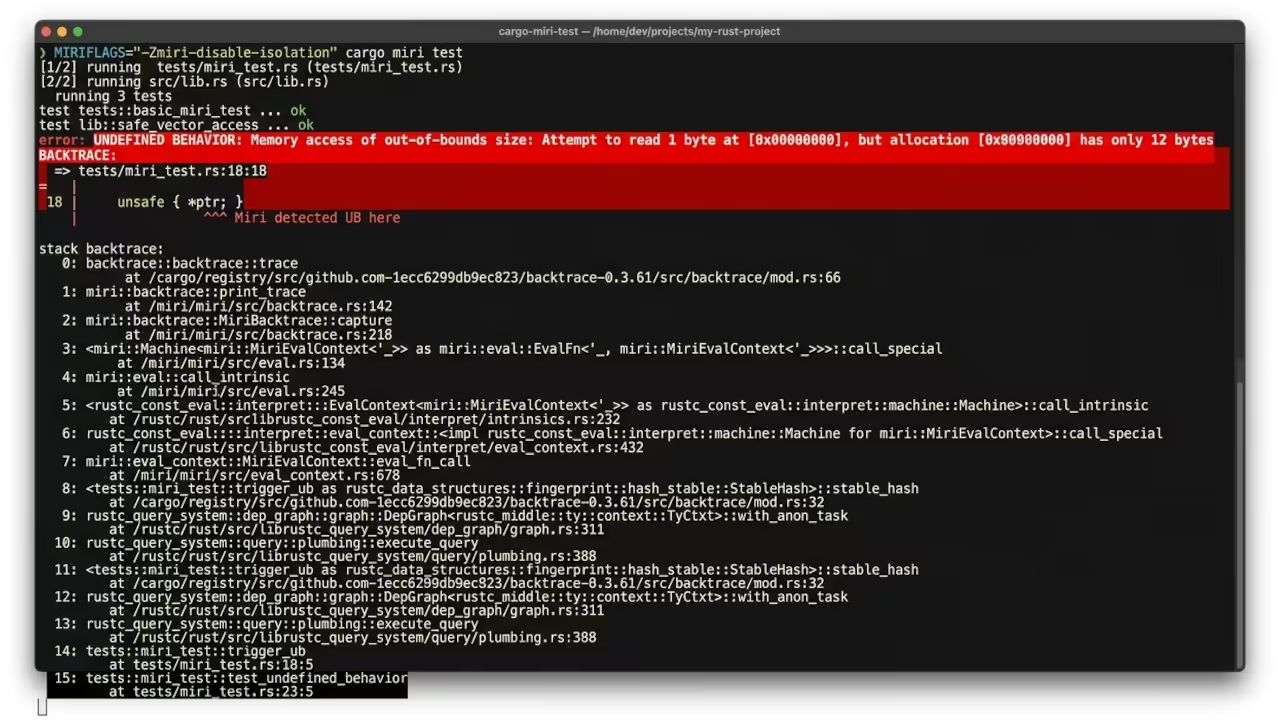
A comprehensive audit requires multiple tools working in concert. Clippy catches style violations and some unsafe patterns. Miri detects undefined behavior in unsafe code through interpretation.
Cargo audit scans dependencies for known CVEs. You need all three because each tool covers different vulnerability classes. Running only one tool leaves blind spots that LLM generated code exploits.
The insider detail most developers miss is configuring Miri with the isolation flag disabled. By default Miri runs in isolated mode which prevents filesystem access. AI generated code frequently includes file operations that appear safe in isolated mode but fail catastrophically when interacting with the real filesystem.
MIRIFLAGS="-Zmiri-disable-isolation" cargo miri test
| Parameter | Description | Value |
|---|---|---|
| Clippy | Static analysis for style and common patterns | Zero runtime overhead |
| Miri | Undefined behavior detection via interpretation | Five to ten times slower than native |
| Cargo Audit | Dependency CVE scanning against RustSec database | Seconds per project |
| Rust Analyzer | Realtime IDE integration for borrow checker errors | Near instant feedback |
| Swc Rust | Experimental LSP for large monorepo indexing | Moderate memory usage |
| Parameter | Description | Value |
Master the Professional Stack
Master the tools that separate professional Rust developers from casual experimenters. The architectural blueprints below provide the theoretical foundation and practical implementation guides you need for production grade security audits.
- Books (Technical and Creative): https://www.amazon.com/stores/Edward-Ojambo/author/B0D94QM76N
- Blueprints (DIY Woodworking Projects): https://ojamboshop.com
- Tutorials (Continuous Learning): https://ojambo.com/contact
- Consultations (Custom Apps and Architecture): https://ojamboservices.com/contact
This topic connects directly to the security architecture principles discussed in previous technical deep dives about systems programming and memory safety. The same audit methodology applies whether you are reviewing hand written code or AI generated output.
🚀 Recommended Resources
Disclosure: Some of the links above are referral links. I may earn a commission if you make a purchase at no extra cost to you.