

Many titles consume gigabytes of RAM just to render a simple menu screen. Unciv shatters this trend by delivering a deep strategy experience in a tiny package.
The game provides a complete open source reimplementation of a classic empire builder. It runs flawlessly on Android and desktop platforms using the LibGDX framework. This project proves that complexity does not require massive system requirements.
Disclosure: article includes affiliate links.


The Experience of Open Source Strategy
Loading a custom ruleset for the first time feels like unlocking a secret. You feel the raw power of a truly open project on your screen. It is liberating to control every single variable in your virtual empire.
The transition from standard play to modded gameplay is nearly instantaneous. You experience a sudden surge in strategic depth and mechanical variety. This is the pinnacle of lean software design in the gaming world.
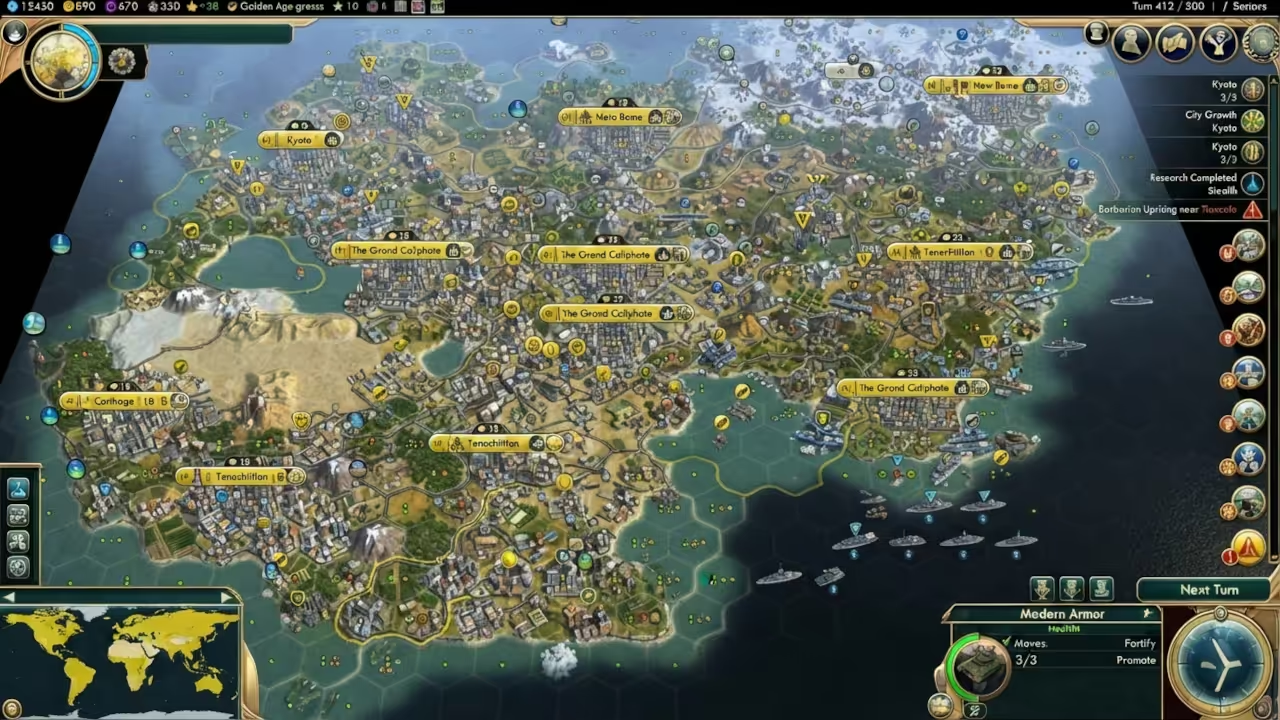
Technical Architecture Breakdown
To master this system you must look into the core project structure. The game separates platform independent logic from the Android and desktop wrappers. This architectural choice allows for seamless cross platform save compatibility.
You can find more details in my previous deep dives on LibGDX architecture. Those breakthroughs in Java performance are essential for understanding how Unciv scales. The efficiency of the core loop is truly impressive.
The JVM Insider Secret
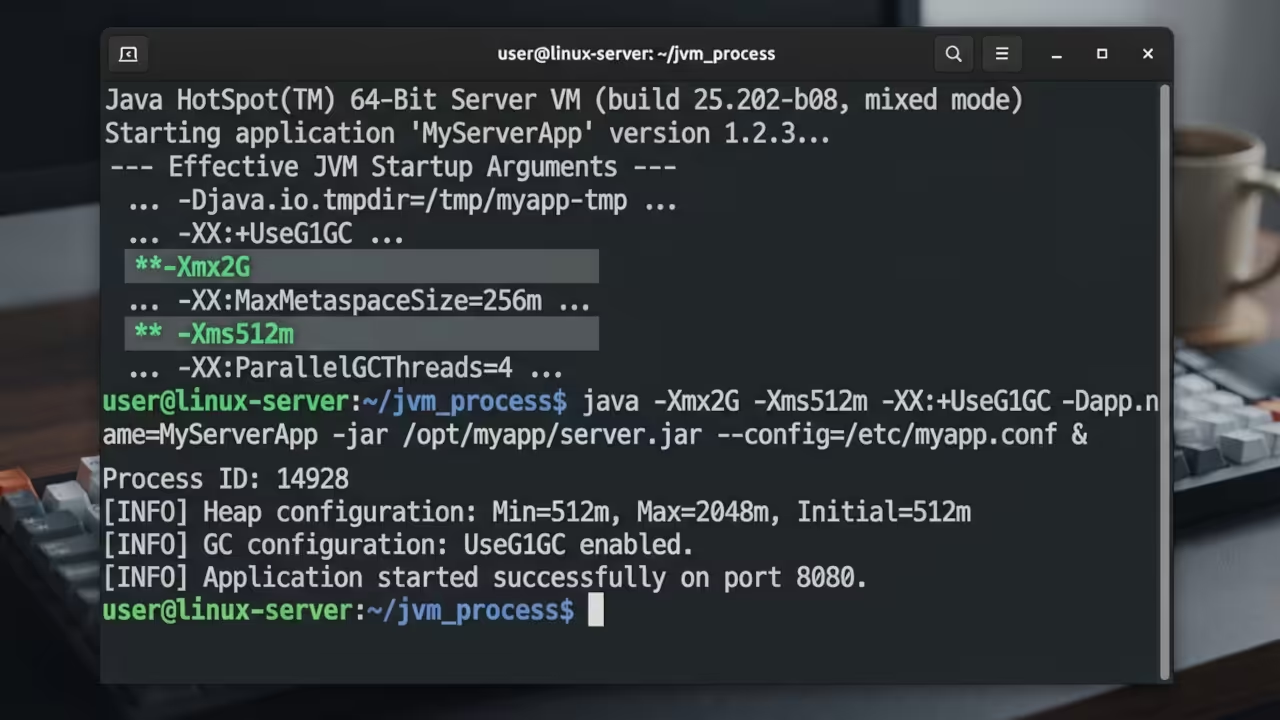
A critical insider secret for power users involves tuning the Java Virtual Machine. You should set your initial heap size to 512MB and max heap to 2GB. This configuration prevents frequent garbage collection spikes during late game turn processing.
-Xms512m -Xmx2G -XX:+UseG1GC
Using the G1GC garbage collector further stabilizes the frame rate on mobile devices. These tweaks ensure that the game remains responsive even with massive maps. It is a must for anyone running the game on a Raspberry Pi.
Modding and System Flexibility
The modding system relies on simple JSON files for game definitions. You can add new nations or buildings without touching the source code. This allows the community to iterate on game balance in real time.
For those who want to go deeper you should examine the rulesets folder. Modifying these values allows you to create entirely new game genres. It transforms a strategy game into a laboratory for social experiments.
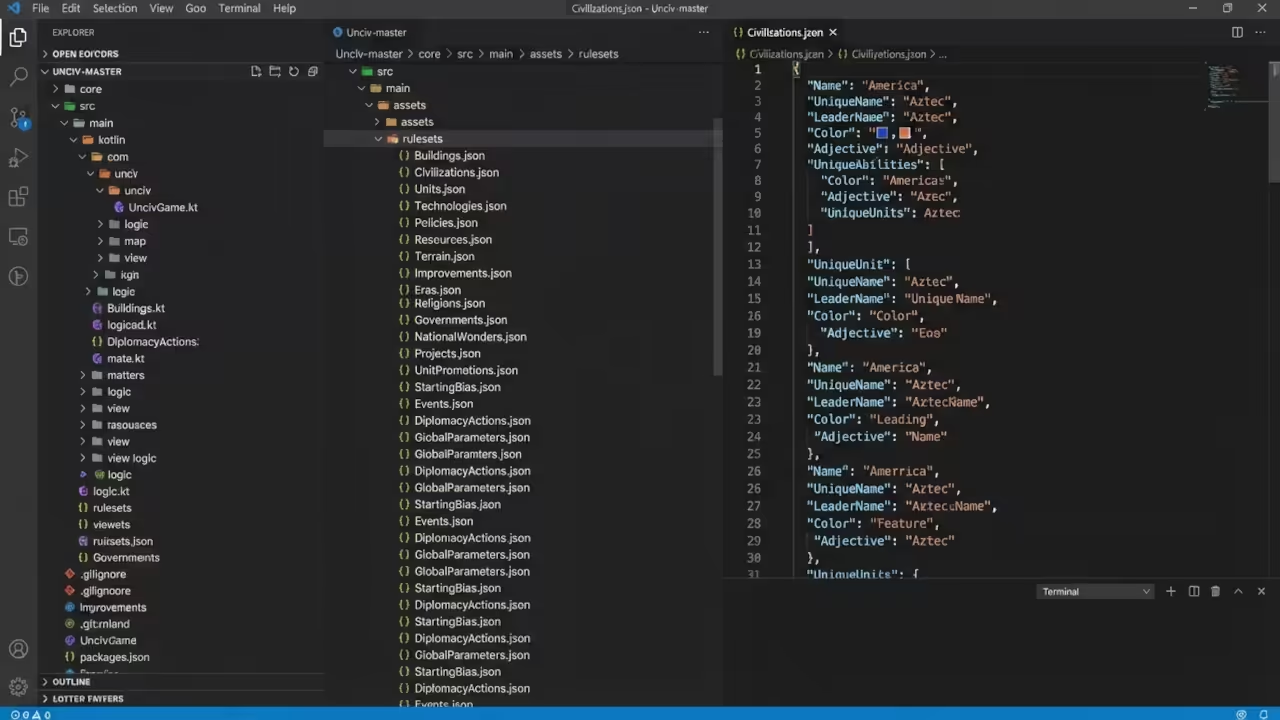
Implementing these changes requires a basic understanding of data structures. You can use a simple text editor to rewrite the empire logic. The results are immediately visible upon the next game launch.
This workflow mirrors professional software development cycles in a gaming environment. It encourages a mindset of experimentation and rapid prototyping. You are no longer just a player but a system designer.
| Parameter | Description | Value |
|---|---|---|
| Open Source | Source code availability | Yes |
| Modding | Method of modification | JSON based |
| Footprint | System resource usage | Minimal |
| Price | Cost of acquisition | Free |
| Parameter | Description | Value |
Learning and Support
Reach out for personalized technical help to optimize your installation. Dive deeper into the architectural secrets through my online tutorials.
Online Tutorials and Technical Help: https://ojambo.com/contact
🚀 Recommended Resources
Disclosure: Some of the links above are referral links. I may earn a commission if you make a purchase at no extra cost to you.