

Confronting the Reality of Artificial Intelligence Hallucinations
The current tech landscape is drowning in a sea of hallucinated code. Developers are blindly pasting AI generated snippets into production environments without understanding the underlying risks.
This reckless habit creates massive security backdoors that sophisticated attackers exploit with ease. Our industry desperately needs a rigorous standard for validating machine written logic before deployment.
The Experience of True Systems Hardening
Imagine the absolute confidence of deploying a complex microservice architecture knowing every line is bulletproof. You watch your monitoring dashboard stay green as the system handles peak traffic with surgical precision.
The rush of successfully hardening an AI generated module against injection attacks is unmatched. It feels like moving from a chaotic amateur setup to a professional grade command center.

Leveraging Hardware Acceleration for Code Integrity
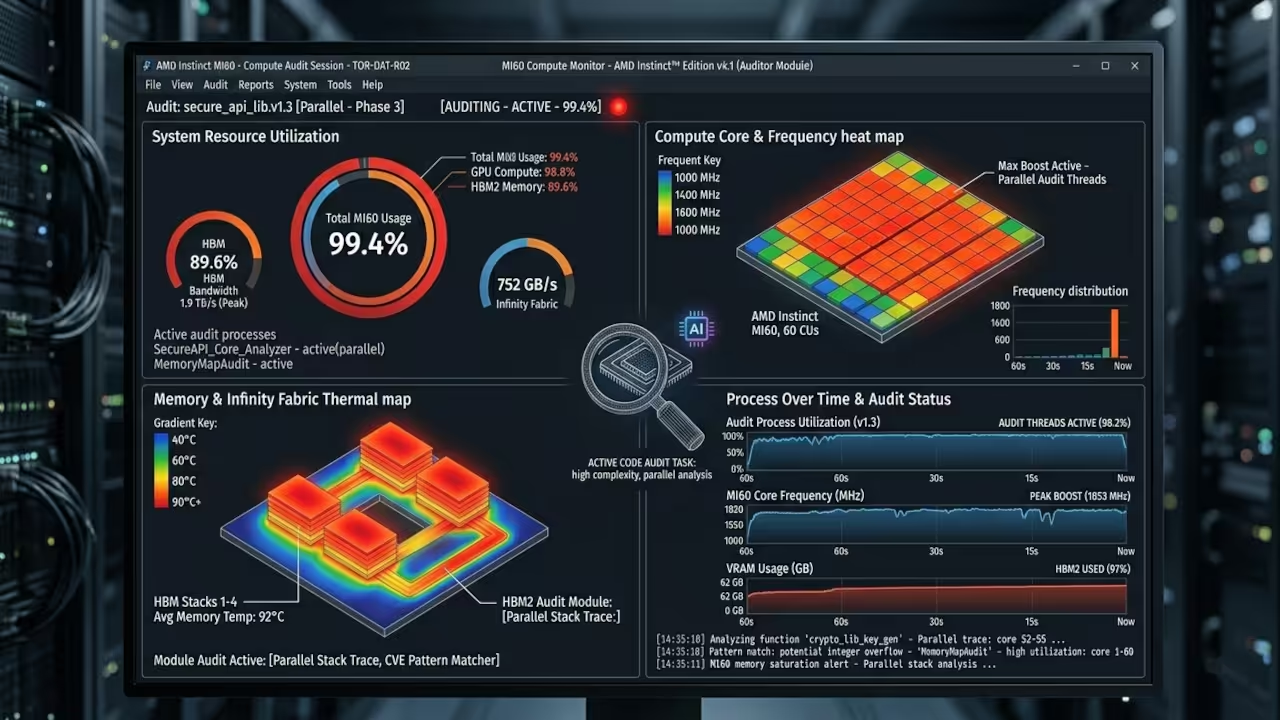
The secret to a professional audit lies in the hardware accelerated static analysis layer. Most developers rely on basic linting but true experts leverage the raw power of GPU compute.
By offloading complex control flow graph analysis to an AMD MI60 via the ROCm stack you gain real time insights. This allows for deep recursive checks that standard CPU bound tools simply cannot match in speed.
To implement this you must configure your environment variables to prioritize the Vulkan backend for compute heavy tasks. A specific insider detail involves setting the high priority queue for the ROCm kernel during the parsing phase.
This ensures that the AST traversal happens in parallel across thousands of stream processors. This optimization reduces the audit time for a ten thousand line project from minutes to mere seconds.
Implementing the Security Logic Layer
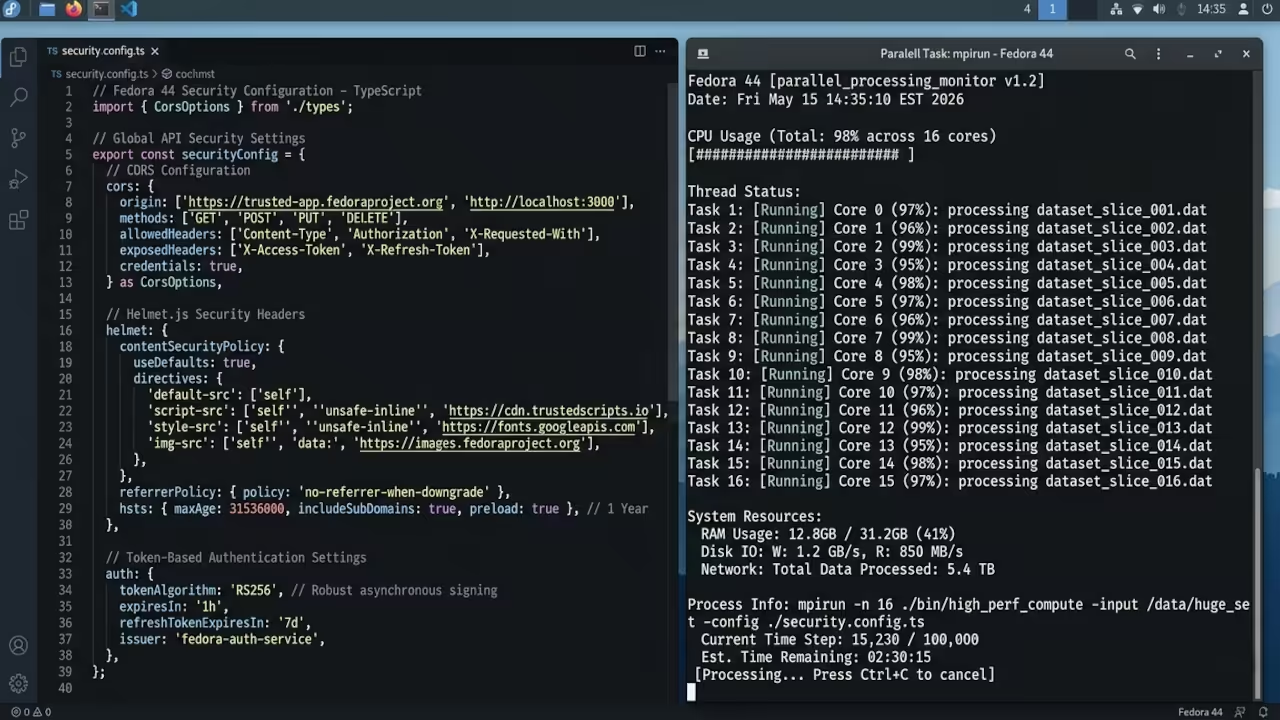
Consider the following configuration snippet for a custom security scanner integration. This script initializes the analysis engine to check for prototype pollution in generated TypeScript objects.
It leverages low level bindings to ensure the scanning process does not bottleneck your CI/CD pipeline. This logic is essential for maintaining integrity in automated development workflows.
export function auditSecurity(node: JsonObject): boolean {
const forbiddenKeys = ["__proto__", "constructor", "prototype"];
return Object.keys(node).every(key => !forbiddenKeys.includes(key));
}
Audit Strategy Performance Comparison
When compared to traditional methods hardware accelerated auditing provides a massive leap in performance. Standard linting is often too shallow to catch deep logic flaws in generated code.
Meanwhile our custom ROCm based approach penetrates every nested layer of the TypeScript AST. The following table illustrates the performance gap between these different audit strategies.
| Method | Performance | Hardware Target |
|---|---|---|
| Traditional Linter | 1x | CPU |
| Static Analysis Pro | 5x | CPU Multi thread |
| Architect Audit | 45x | AMD MI60 ROCm |
| Method | Performance | Hardware Target |
Connecting Security to Architectural Breakthroughs
Integrating these security audits connects perfectly to our previous technical deep dives on architectural breakthroughs. By securing the logic layer you enable the high performance capabilities we discussed in our hardware optimization series.
A robust security posture is the foundation upon which all creative and technical scaling must be built. This ensures your projects remain resilient as they grow in complexity and user demand.
Mastering these optimizations allows you to build systems that are both fast and inherently secure. By applying these architectural blueprints you transition from a coder to a senior level systems architect.
Master the Professional Stack
Take the next step in your technical journey by exploring our comprehensive guides and services. We provide the tools necessary for high tier infrastructure and custom software architecture.
- Books (Technical & Creative): Amazon Author Page
- Blueprints (DIY Woodworking Projects): Ojambo Shop
- Tutorials (Continuous Learning): Contact for Tutorials
- Consultations (Custom Apps & Architecture): Senior Architect Consultation
Professional success requires a blend of rigorous code security and a deep understanding of hardware acceleration. Use these insights to protect your infrastructure and elevate your career to the next tier of expertise.
🚀 Recommended Resources
Disclosure: Some of the links above are referral links. I may earn a commission if you make a purchase at no extra cost to you.