
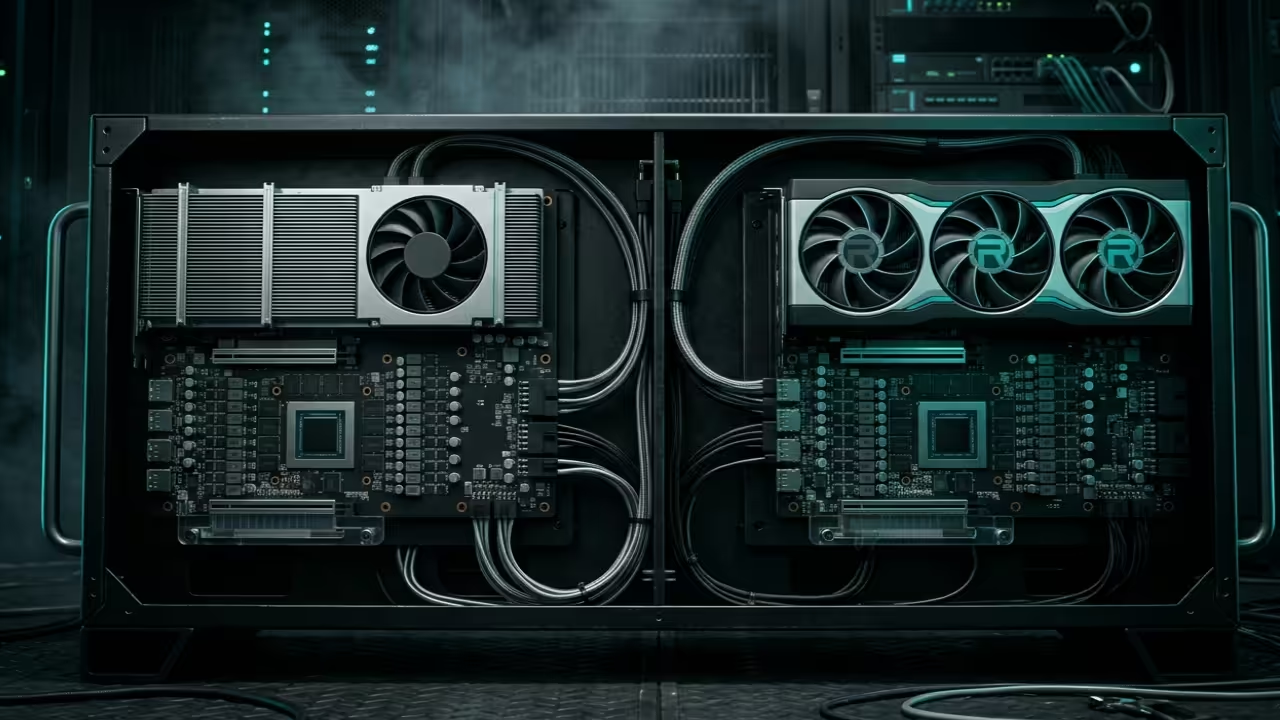
The era of paying the hidden NVIDIA tax for every single gigabyte of VRAM has finally reached a breaking point. Most independent developers are trapped in a cycle of overpaying for proprietary hardware that limits their creative technical freedom.
The arrival of ROCm 7.3 changes the entire calculation by unlocking massive compute power on affordable open source hardware stacks. You no longer need a corporate budget to run high parameter language models or complex stable diffusion video generation workflows.
The Experience of Hardware Sovereignty
Imagine the sheer rush of seeing your Instinct MI60 or RX 9000 series card outpace traditional commercial setups in raw throughput. The initial configuration hurdle disappears as the new kernel fusion optimizations take over your Linux system with seamless efficiency.
There is a profound sense of technical sovereignty when your local machine handles 70B parameter models without breaking a sweat. You are no longer a guest in a closed ecosystem but a master of your own high performance workstation.
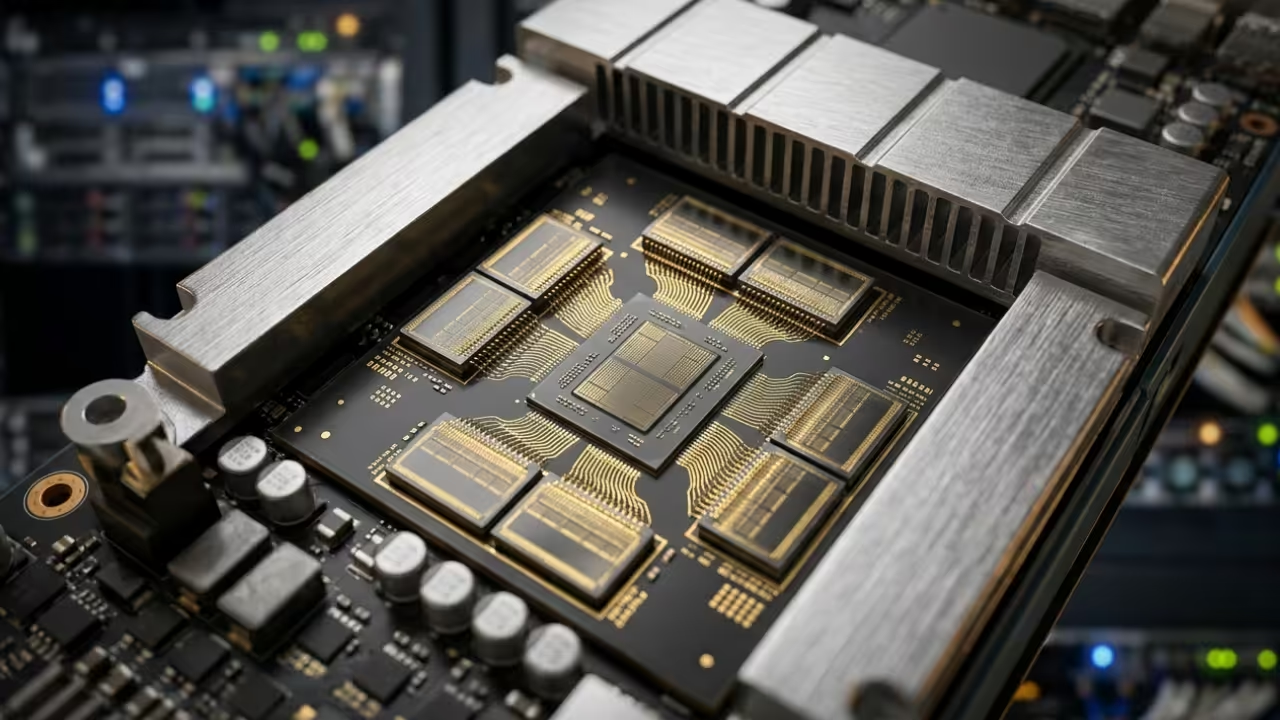
Technical Configuration Secrets for Fedora 44
To achieve peak efficiency on Fedora 44 you must manually set the HSA OVERRIDE GFX VERSION environment variable to target your specific architecture. For the Instinct MI60 using the command export HSA OVERRIDE GFX VERSION equals 9.0.6 ensures the compiler utilizes every available compute unit without fallback latency.
This simple adjustment allows the ROCm 7.3 stack to bypass generic instruction sets and hit the hardware metal directly. These micro optimizations are the difference between a sluggish inference session and a lightning fast production environment for indie creators.
| Parameter | NVIDIA RTX 5090 (CUDA) | AMD Instinct MI60 (ROCm) |
|---|---|---|
| VRAM Capacity | 32 GB GDDR7 | 32 GB HBM2 |
| Memory Bus | 512 bit | 4096 bit |
| Software Stack | Proprietary | Open Source HIP |
| Parameter | Value High | Value Elite |
The transition to ROCm 7.3 allows for native Wayland support and GNOME 50 integration without the typical driver flickering issues. By utilizing the latest Vulkan layers developers can bridge the gap between heavy AI workloads and real time 3D rendering.
The freedom to modify your source code and optimize the stack for your specific hardware is a massive advantage. You are building a future where your tools belong to you and not a multi billion dollar hardware gatekeeper.


Master the Professional Stack
Explore these high authority resources to accelerate your next technical breakthrough and system architecture project.
- Books: Edward Ojambo Amazon Store
- Blueprints: Ojambo Shop Blueprints
- Tutorials: Contact for Technical Tutorials
- Consultations: Professional Systems Consultation
🚀 Recommended Resources
Disclosure: Some of the links above are referral links. I may earn a commission if you make a purchase at no extra cost to you.