

The Fragile State of Modern Coding
Modern coding feels like building a house with a thousand fragile instructions. You fight with dependency hell and bloated frameworks every single day.
This fragility kills productivity and drains the creative spirit of every developer. You need a tool that prioritizes results over rigid academic structure.
Disclaimer: I may earn a commission from purchases made through these links at no extra cost to you.


The Power of Practical Extraction
Larry Wall released Perl in 1987 to solve this exact problem. He created a language that focused on practical extraction and reporting.
The result was a powerhouse that became the duct tape of the internet. It held the early web together during the wild dot com boom.
The feeling of deploying a single line of code to fix a massive system is intoxicating. You feel the raw power of a tool built for real world chaos.
It is the same rush you get when a complex regex finally clicks. Everything just works without needing a massive project configuration file.

The Secret for Modern System Architects
You can process gigabytes of raw log data using a simple one liner. This capability makes Perl an essential secret for modern system architects.
Try using the perl command with a regex replacement for instant file editing. This avoids the need for heavy editors on remote production servers.
perl -pe 's/old_text/new_text/g' target_file.txt
The CPAN Ecosystem and Open Source Survival
The Comprehensive Perl Archive Network remains one of the greatest achievements in software. It provided the original blueprint for modern package management systems.
You can find a module for almost any technical task imaginable today. This ecosystem proves that community driven open source can survive any shift.

Perl connects deeply to previous technical deep dives on Unix architecture. It represents the ultimate evolution of the shell scripting philosophy.
These architectural breakthroughs in open source set the stage for everything we use now. Understanding Perl is like learning the DNA of the modern internet.
| Parameter | Description | Value |
|---|---|---|
| Regex | Text Processing Capability | Elite |
| Library | Package Ecosystem Scale | CPAN |
| Speed | Execution Velocity | High |
| Flexibility | Implementation Versatility | High |
| Parameter | Description | Value |
Integrating Legacy Pipelines
You can integrate Perl into almost any legacy pipeline without causing a crash. Its ability to handle irregular data is still unmatched by newer languages.
This versatility is why the language refuses to disappear from professional environments. It simply adapts to the needs of the current hardware stack.
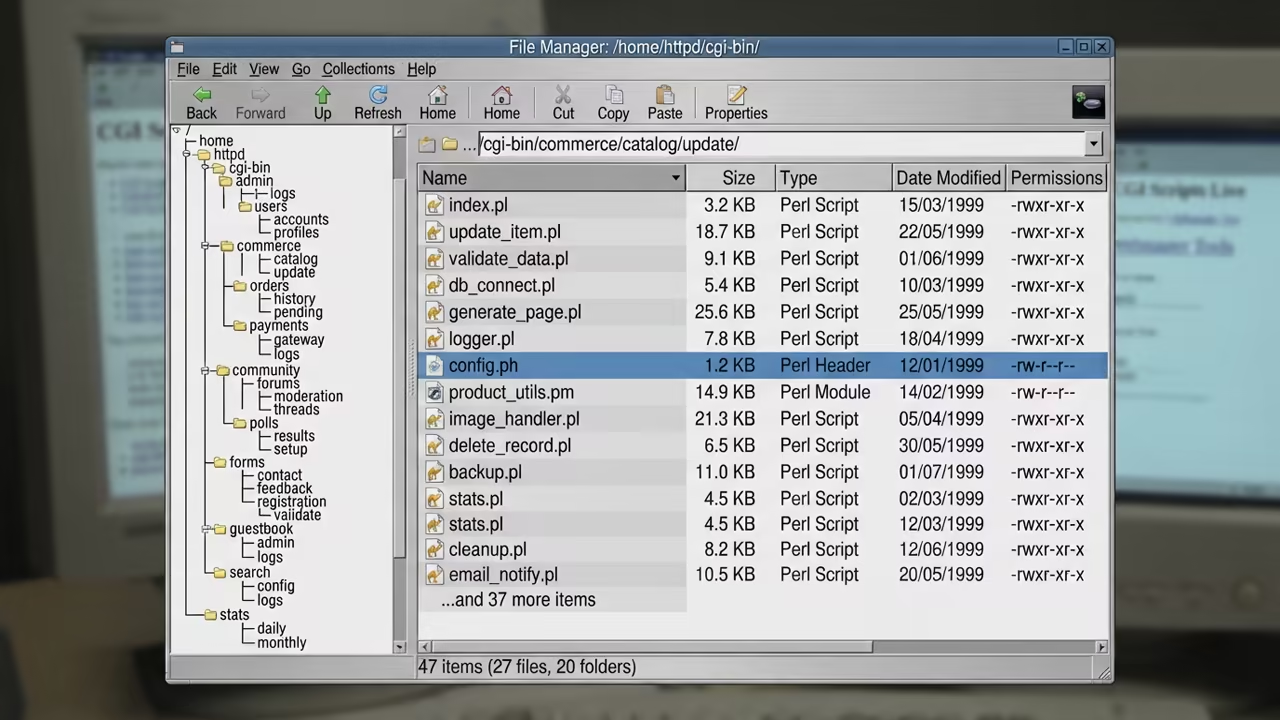
The real secret is using Perl for the glue and Python for the logic. This hybrid approach maximizes efficiency and system stability across the board.
It allows you to move faster than teams relying on a single monolithic language. You gain a competitive edge by using the right tool for each task.
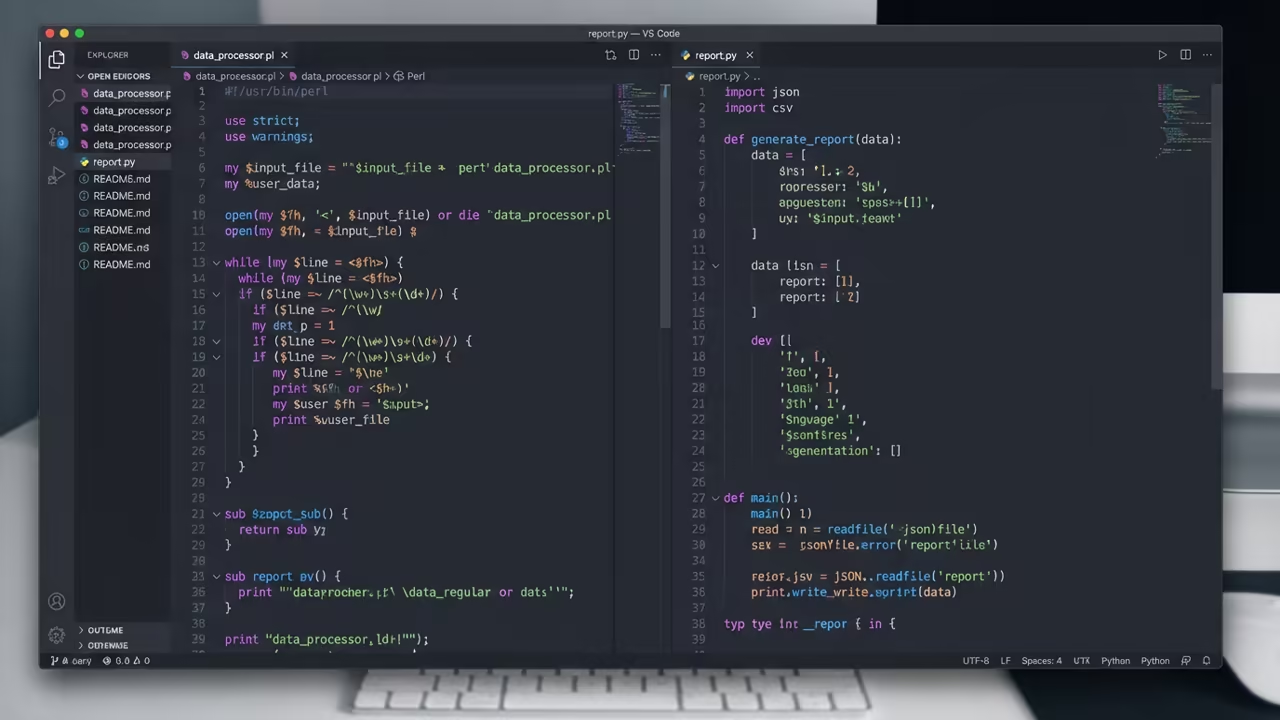
Learning and Support
Reach out for personalized technical help to optimize your automation workflows. Dive deeper with the online tutorials to master these legacy secrets.
Online Tutorials and Technical Help: https://ojambo.com/contact
🚀 Recommended Resources
Disclosure: Some of the links above are referral links. I may earn a commission if you make a purchase at no extra cost to you.
Leave a Reply