
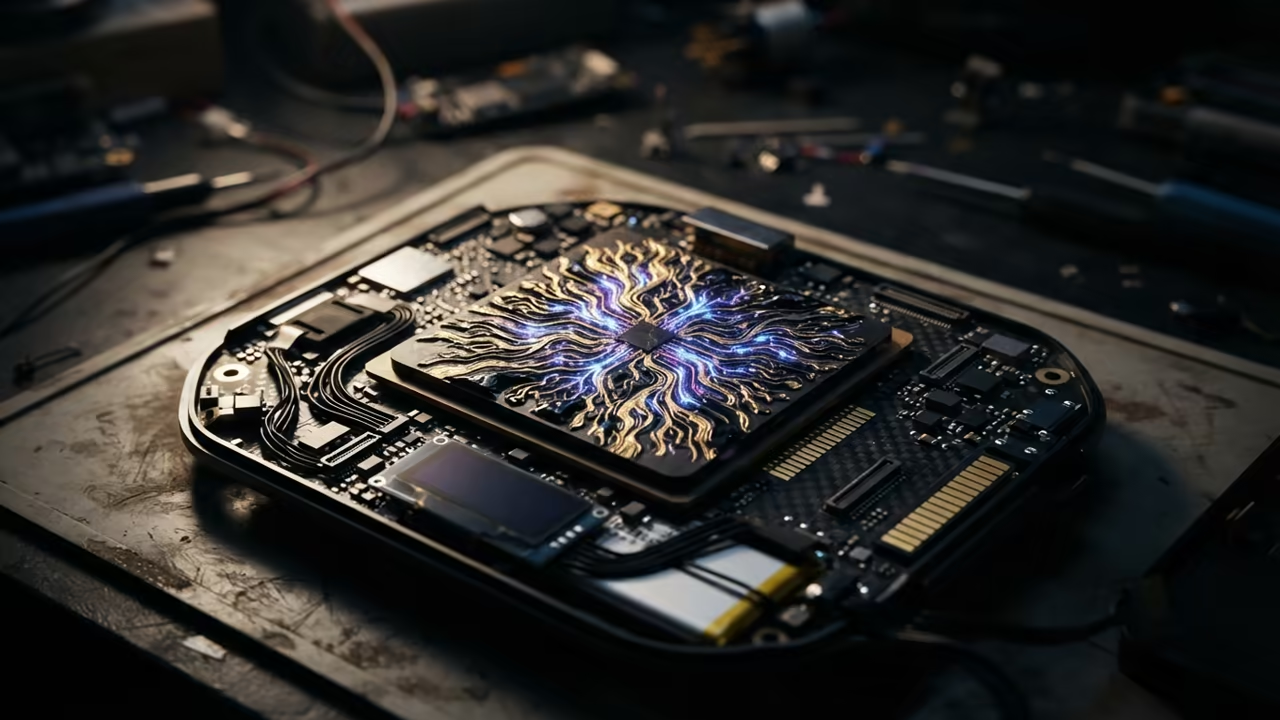
Your favorite smartwatch is currently a glorified notification center. It drains its battery in hours when trying to run basic local AI tasks.
The industry has hit a wall called the power bottleneck. Traditional silicon cannot handle real time intelligence without melting your wrist.
Disclaimer: I may earn a commission from purchases made through these links at no extra cost to you.


Neuromorphic hardware finally shatters this limitation by mimicking the human brain. It replaces constant power flow with sparse event driven spikes.
The Edge Experience
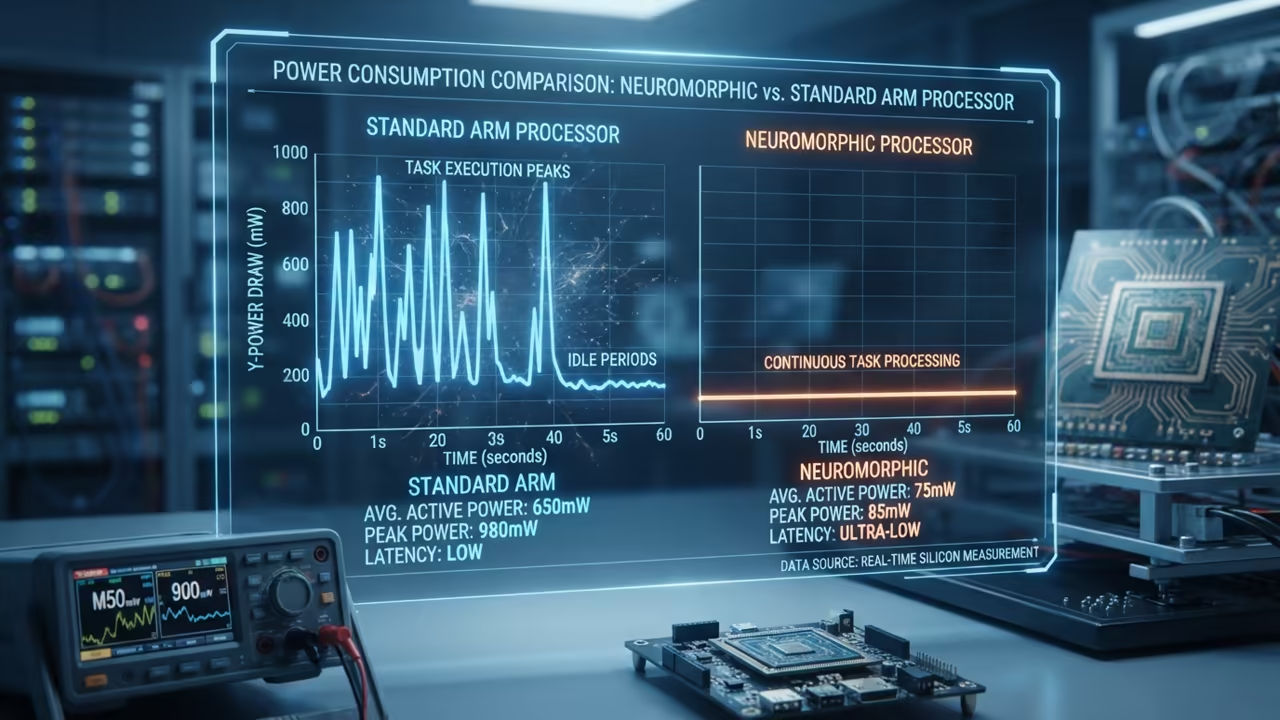
Implementing this technology feels like stepping into a different dimension of computing. Your device remains cool to the touch while processing complex vision data.
The latency disappears because data no longer travels to a distant cloud server. You feel the raw speed of local intelligence responding in milliseconds.
Spiking Neural Networks
The secret lies in Spiking Neural Networks instead of standard artificial ones. These systems only activate neurons when a specific signal threshold is met.
This event based architecture eliminates the waste found in traditional GPU cycles. Power consumption drops by orders of magnitude during idle periods.
The Adaptive Threshold Secret
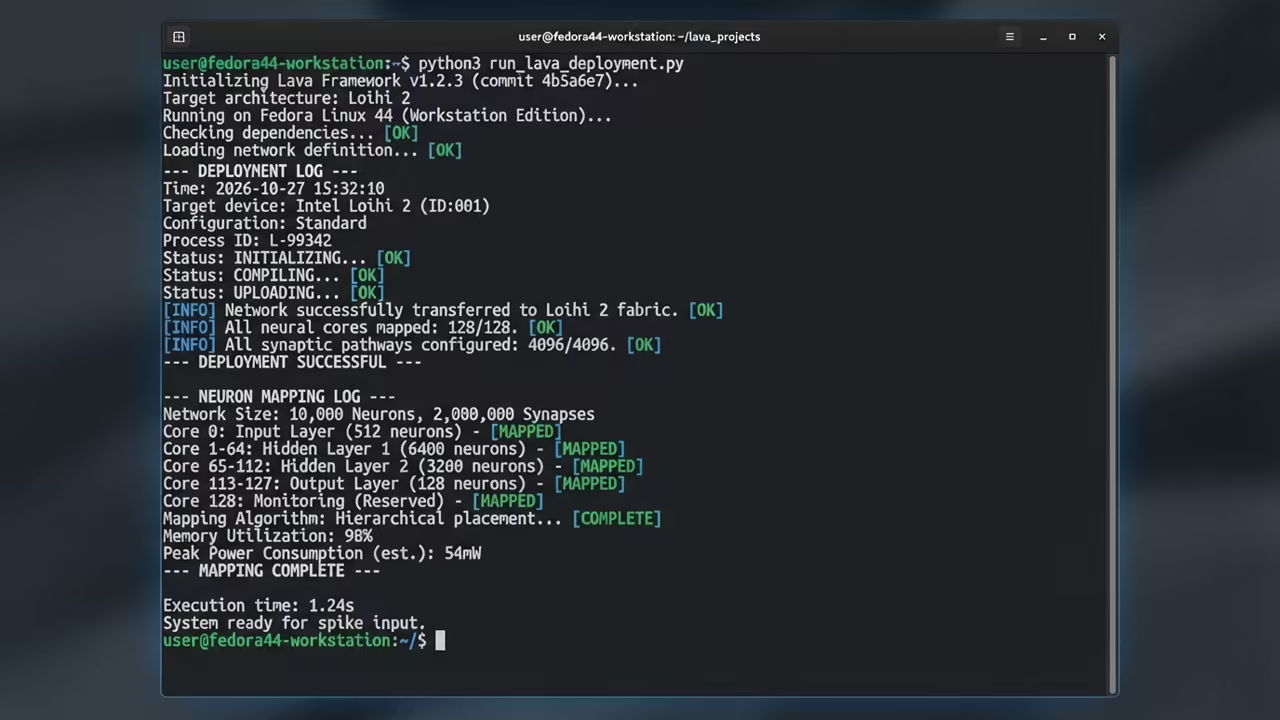
You can optimize these systems using an adaptive threshold mechanism for better precision. This insider trick reduces noise by dynamically adjusting neuron sensitivity.
Lowering the spike rate prevents power leakage during low priority background tasks. This ensures your watch battery lasts weeks instead of mere days.
import lava as lava
def create_neuromorphic_process():
proc = lava.process.Process(
name="EdgeAI_Core",
neurons=1000,
synapses=120000,
threshold=0.5,
adaptive=True
)
return proc
edge_core = create_neuromorphic_process()
edge_core.deploy()
This leap in efficiency connects directly to previous architectural breakthroughs in sovereign computing. Moving workloads to the edge requires the same mindset as podman containerization.
The transition from cloud dependency to local autonomy is a technical revolution. It turns a simple wearable into a powerful cognitive assistant.
| Parameter | Description | Value |
|---|---|---|
| Compute Style | Execution method | Event Driven |
| Power Draw | Energy usage | Milliwatts |
| Latency | Response speed | Instant Local |
| Scaling | Density limit | Density Optimized |
| Memory | Architecture | Co located Synapses |
| Parameter | Description | Value |
The Software Shift
Integrating these chips requires a complete rethink of the software stack. You cannot simply port a standard TensorFlow model to a spiking system.
Developers must learn to encode data as temporal spikes for maximum efficiency. This shift creates a new class of hyper efficient edge applications.
Reach out for personalized technical help to optimize your own hardware builds. Dive deeper into these secrets with our comprehensive online tutorials.
Online Tutorials and Technical Help
🚀 Recommended Resources
Disclosure: Some of the links above are referral links. I may earn a commission if you make a purchase at no extra cost to you.
Leave a Reply