Shattering the Cloud Infrastructure Trap
The traditional cloud pipeline is a bloated trap for modern developers. Most professionals waste hours fighting Docker daemon permissions and complex cloud configurations.
Terraform integrated with Podman Desktop shatters this cycle instantly. You no longer need to sacrifice your system security for infrastructure agility.
Rootless containers allow you to build enterprise grade stacks on a local machine. This approach removes the dangerous dependency on a centralized root daemon.
Disclaimer: I may earn a commission from purchases made through these links at no extra cost to you.


Experience Total Local Sovereignty
Deploying your first containerized stack via an IaC provider feels like pure magic. You finally possess total control over your local environment without root privilege nightmares.
Grab the definitive blueprint in The Sovereign Business at https://amzn.to/4ugGEYr to master these containers. This technical sovereignty allows you to iterate faster than any corporate team.
You can spin up entire environments with a single command and zero friction. It transforms your development workflow into a streamlined engine of raw productivity.
Universal Orchestration Logic
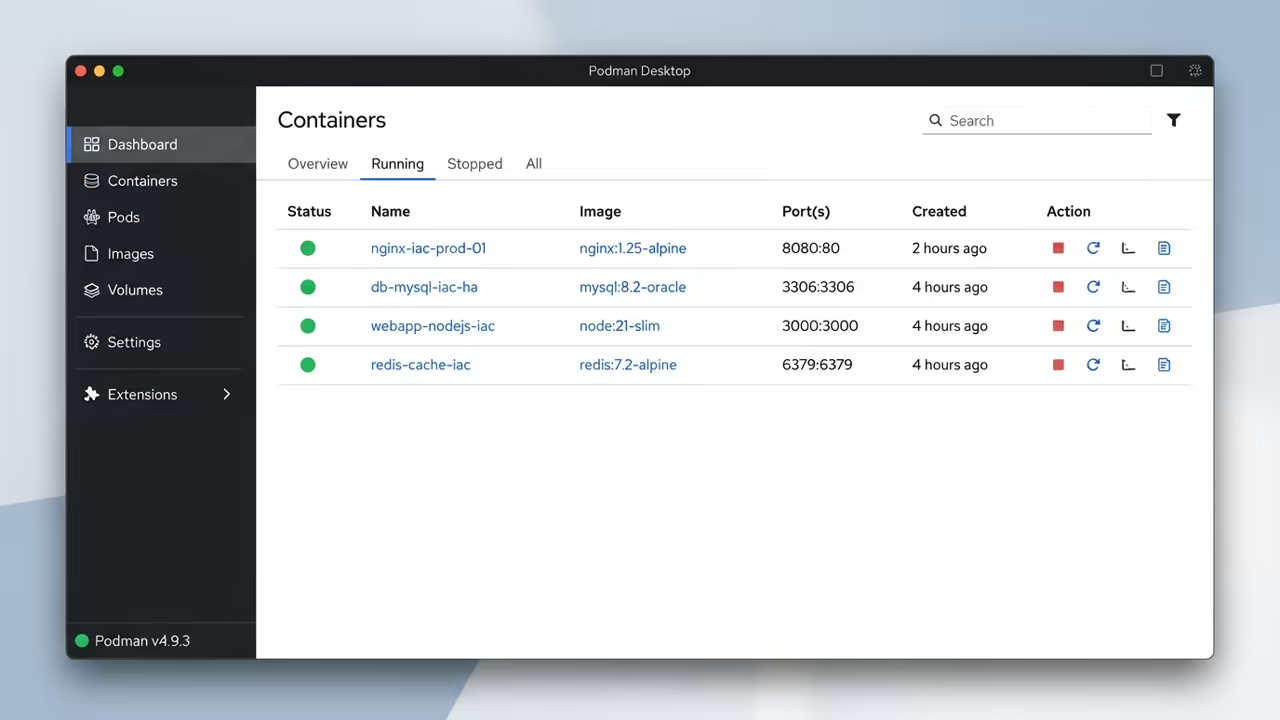
The real power lies in the seamless orchestration of multiple container engines. Terraform acts as the universal translator for both Podman and Docker environments.
You can switch providers without rewriting your entire architectural logic. One critical insider secret involves the Podman machine socket mapping process.
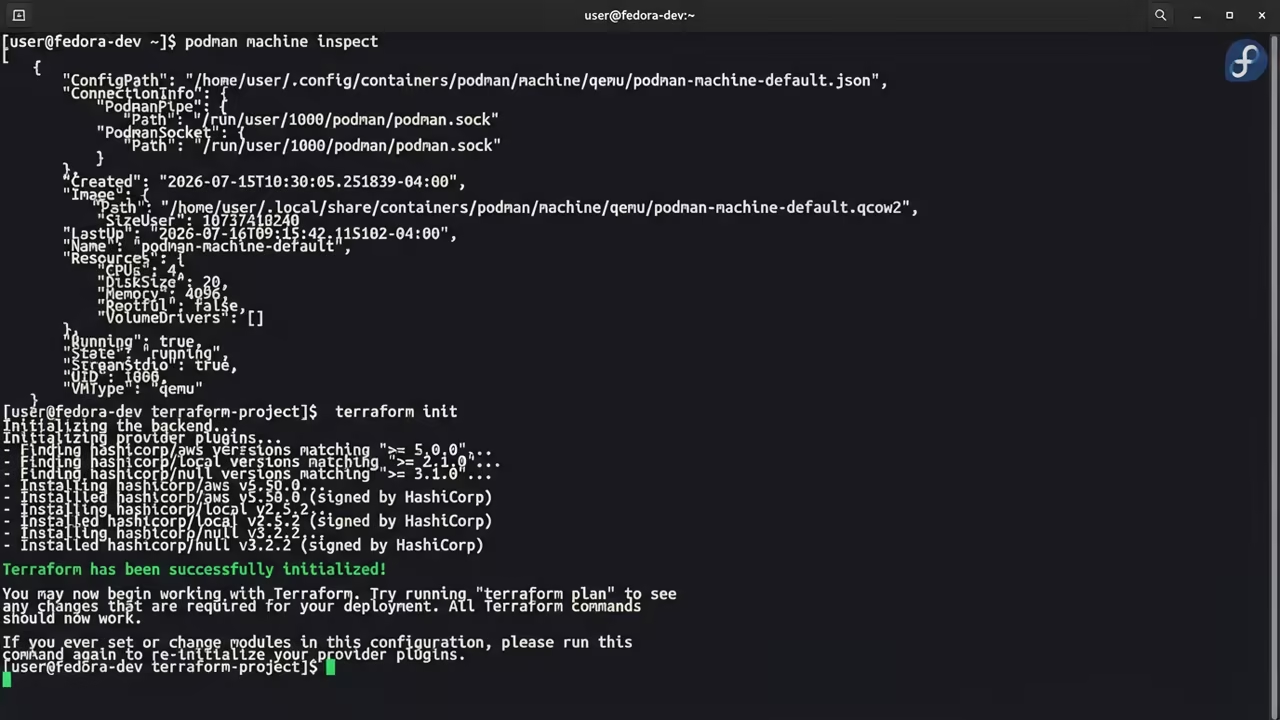
Run the podman machine inspect command to locate your specific socket path. Map this path directly into your Terraform provider block for maximum performance.
Optimizing the Technical Stack
This configuration bypasses the typical network overhead associated with legacy container wrappers. It ensures that your infrastructure state remains perfectly synchronized with the actual runtime.
Your deployments become predictable and incredibly fast across all local targets. You will find this method connects perfectly to my previous ROCm GPU orchestration guide.
Integrating GPU acceleration into these containers creates a powerhouse for AI development. It mirrors the efficiency found in the Raspberry Pi Zero W networking secret.
The following technical breakdown requires a raw code snippet for the provider block. Define the podman provider with the specific host endpoint for your system.
terraform {
required_providers {
podman = {
source = "hashicorp/podman"
version = "~> 1.0"
}
}
}
provider "podman" {
host = "unix:///run/user/1000/podman/podman.sock"
}
Ensure the versioning matches the current 2026 release for full feature support. Another raw code snippet is needed for the resource definition of the container.
resource "podman_container" "app_server" {
name = "sovereign-app"
image = "nginx:latest"
ports {
internal = 80
external = 8080
}
}
Specify the image and ports exactly to avoid conflicts with other local services. This ensures a clean deployment that does not interfere with your host OS.
Comparative Architecture Analysis
Compare these two industry leaders to see why the shift is happening now. Podman Desktop offers a more secure and flexible approach to local IaC.
Docker remains powerful but carries significant legacy baggage and permission hurdles. The table below highlights the clear victory for rootless container management today.
| Parameter | Description | Value |
|---|---|---|
| Daemonless | Runs without a root daemon | Podman: Yes / Docker: No |
| Rootless | Native non root operation | Podman: Native / Docker: Optional |
| IaC Sync | Integration with Terraform | Podman: Instant / Docker: Moderate |
| Parameter | Description | Value |
Security is no longer an afterthought but a core part of the design. This is the standard for any developer seeking true technical independence.
The Path to Senior Architecture
Mastering these tools puts you in the top one percent of systems architects. You can now manage complex clouds and local containers with one single tool.
The barrier between local development and production has finally vanished completely. This workflow is the foundation for the high impact strategies discussed in my books.
True professional growth comes from mastering the underlying plumbing of the tech stack. Stop relying on automated scripts that you do not fully understand.
Take a deep dive into the configuration files to optimize your resource allocation. Fine tune the memory limits for each container to maximize your hardware output.
This level of detail separates the amateurs from the true senior architects. You are now equipped to build a resilient and scalable local infrastructure.
The combination of Terraform and Podman Desktop is a game changer for 2026. Your ability to deploy rapidly will become your greatest competitive advantage.
Learning and Support
Reach out for personalized technical help to scale your local infrastructure. Dive deeper with the online tutorials to master these advanced orchestration patterns.
Online Tutorials and Technical Help: https://ojambo.com/contact
🚀 Recommended Resources
Disclosure: Some of the links above are referral links. I may earn a commission if you make a purchase at no extra cost to you.