

The Death of the Passive Assistant
Stop settling for chatbots that just talk while your work remains unfinished. The era of the passive assistant is dead and buried.
Most users still treat their AI like a glorified search engine with a personality. This approach wastes the true potential of the current architectural shift.
Disclosure: article includes affiliate links.


We are moving from simple prompt and response loops to fully autonomous agentic workflows. This is the difference between asking for a recipe and having a chef.
The Experience of True Autonomy
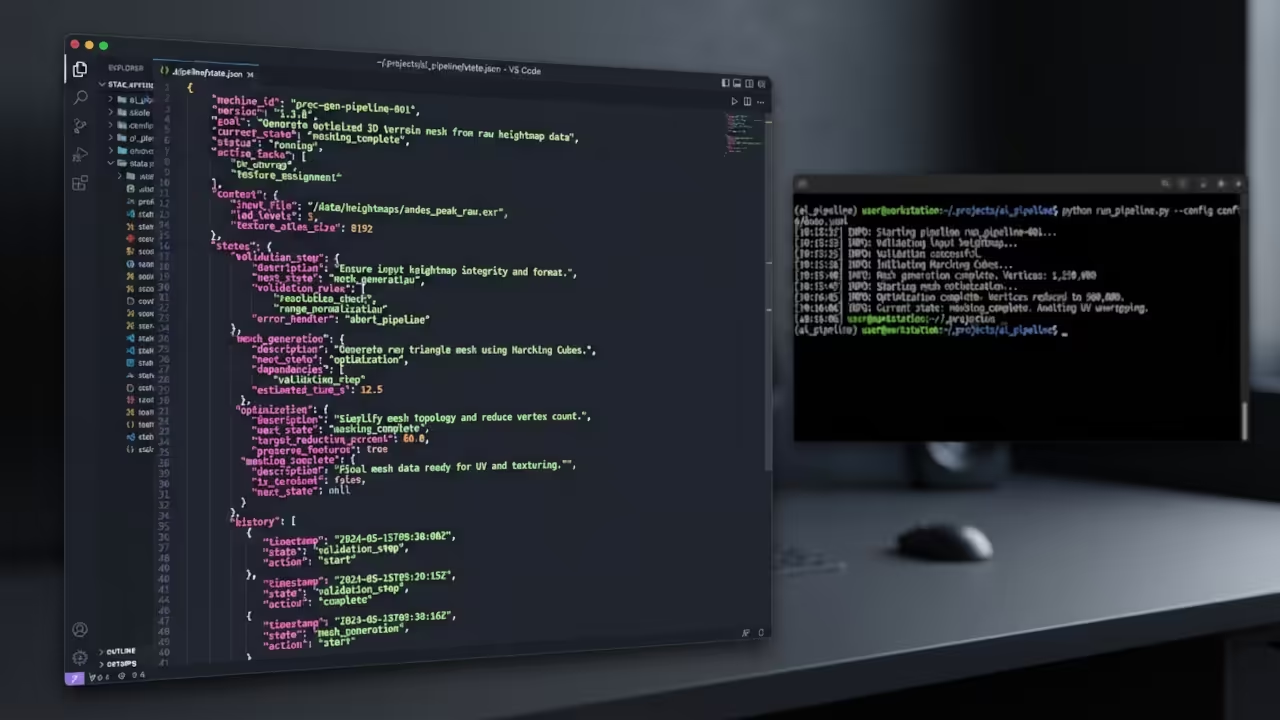
Imagine waking up to a fully synchronized project environment every single morning. Your autonomous agents have already handled the API migrations and updated the documentation.
You feel a sudden surge of productivity as the manual drudgery disappears. The system no longer asks for permission to perform repetitive data entries.
It simply executes the goal and presents the final verification report for your review. This is the peak of technical efficiency in the modern era.
Implementing Stateful Graph Orchestration
The secret to this transition lies in the implementation of stateful graph orchestration. Basic assistants are stateless and forget the nuance of a complex goal.
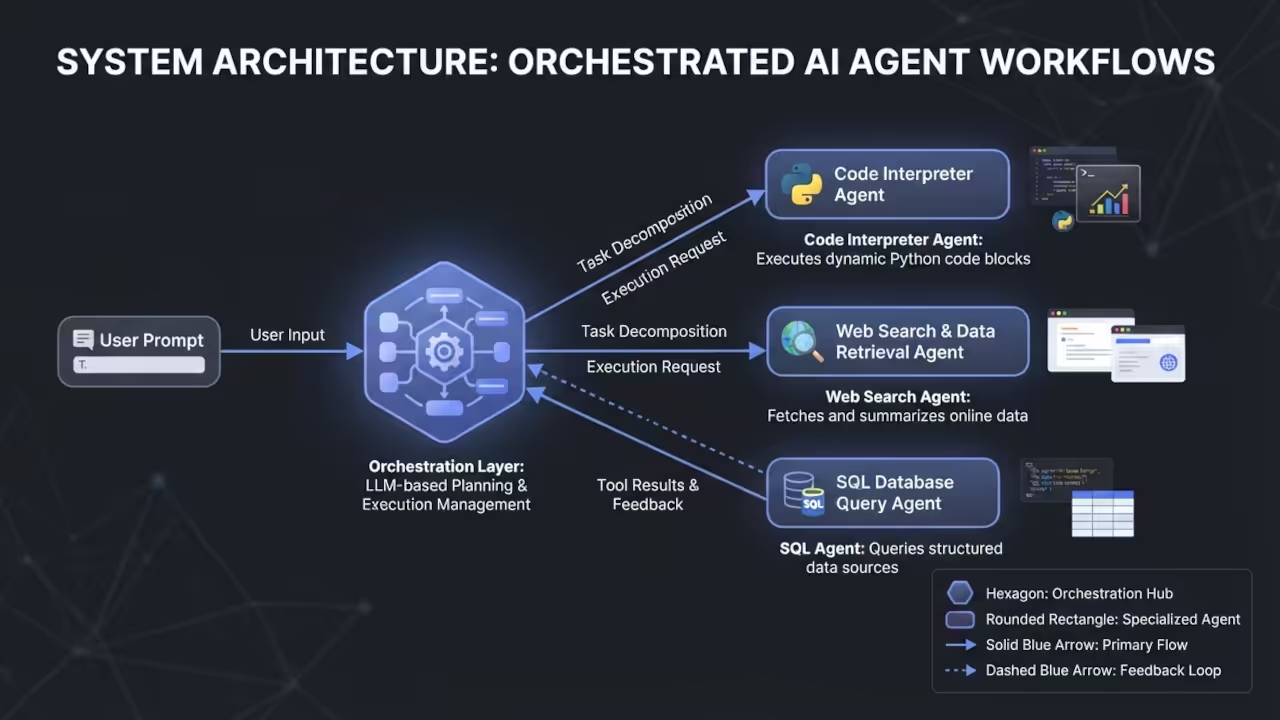
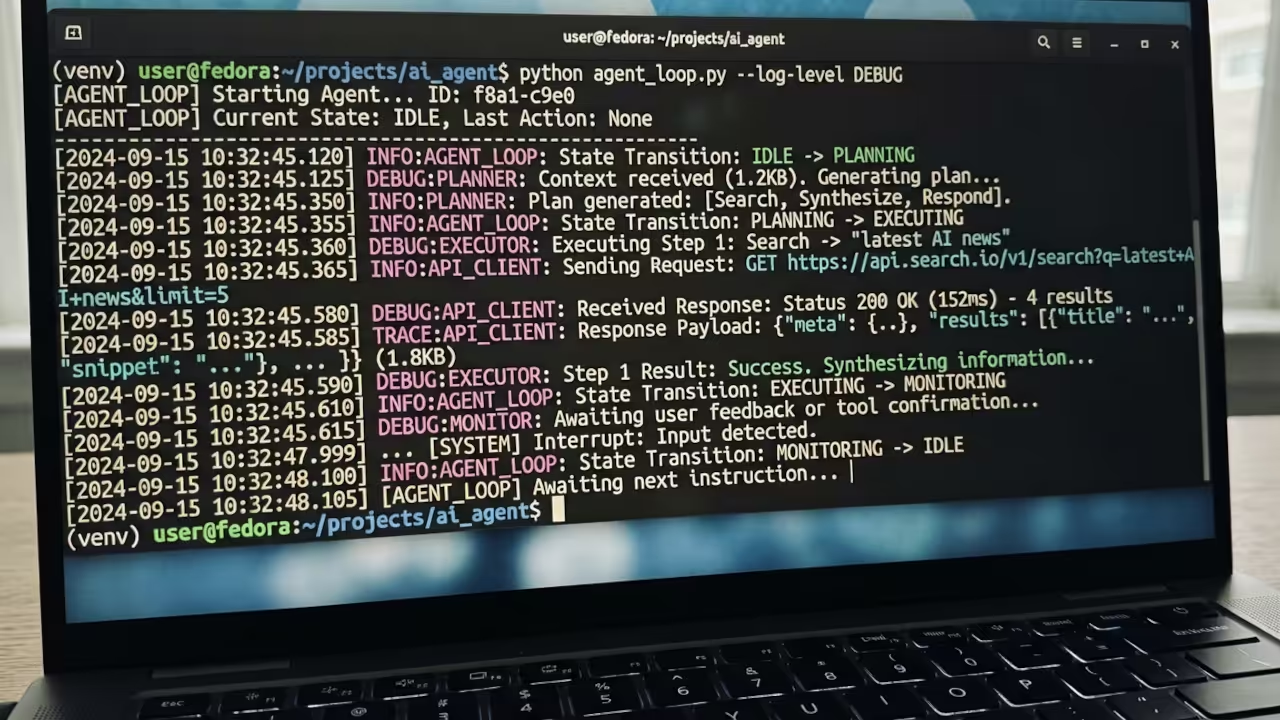
Agents use persistent memory layers to track state across multiple asynchronous tool calls. They can pause a task and resume it once an external API responds.
To prevent hallucination spirals you must implement a recursive state verification loop. Use a JSON based state machine to track goal progress across every single call.
{
"goal": "deploy_app",
"current_state": "awaiting_dns",
"verification_step": "check_records",
"retry_count": 2
}
Hardware Requirements for Agentic Latency
This shift mirrors the architectural breakthroughs we discussed in our previous deep dives on local LLM optimization. The transition requires high throughput hardware to maintain low latency.
A robust network mesh ensures that multi agent systems communicate without packet loss. This is where the infrastructure meets the intelligence of the agent.
Comparing Assistants and Autonomous Agents
Comparing these two paradigms reveals a massive gap in operational utility and power. The following table breaks down the core differences between the old and new.
| Parameter | Assistant | Agent |
|---|---|---|
| Primary Function | Replies to prompts | Executes complex goals |
| Memory State | Stateless | Persistent memory |
| Execution Style | Requires manual steps | Autonomous orchestration |
| Behavioral Mode | Reactive | Proactive |
You can see that the agent is an evolution of the assistant. It moves from being a tool to being a digital employee.
Integrating these systems requires a mindset shift toward goal oriented programming. Stop writing prompts and start defining desired end states for your agents.
This allows the AI to determine the most efficient path to the result. You provide the destination and the agent handles the navigation.
Learning and Support
Reach out for personalized technical help to optimize your autonomous agent stack today. Dive deeper with our online tutorials to master the art of orchestration.
Online Tutorials and Technical Help
🚀 Recommended Resources
Disclosure: Some of the links above are referral links. I may earn a commission if you make a purchase at no extra cost to you.