

The Invisible Scala Breach That AI Just Wrote For You
You just pasted a perfect Scala function from an AI assistant into your production branch. It compiles instantly and passes every single unit test in your suite.
You feel like a god of productivity.
Disclosure: article includes affiliate links.


Beneath the surface a security disaster is waiting to explode. One wrong dependency or a bypassed type check could open a back door to your entire database.
The industry is currently blinded by the speed of AI generation. We are trading long term stability for short term velocity.
The feeling of catching a critical privilege escalation bug in a seemingly perfect snippet is electric. You transition from the edge of a corporate catastrophe to the hero of the engineering team in one afternoon.
This absolute confidence comes from a rigorous audit framework. You can secure your high tier technical projects by hiring a senior architect today.
Visit https://ojamboservices.com/contact to lock down your architecture.
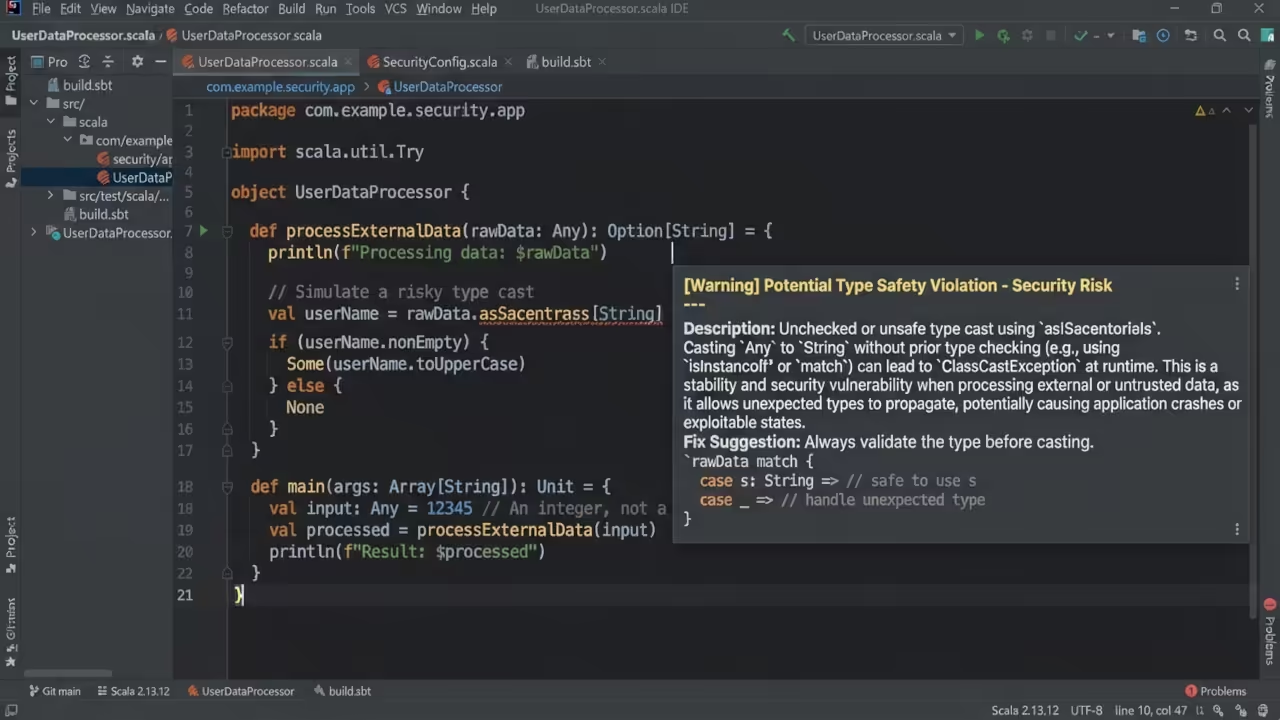
Most AI models struggle with the strictness of the Scala type system. They often take shortcuts by using any or asInstanceOf to make the code compile faster.
This creates invisible trust boundaries where the compiler is blind. An attacker can exploit these gaps to inject malicious data into your backend.
You must force the AI to use refined types and algebraic data types. This is the secret to turning an AI hallucination into a production ready asset.
// Dangerous AI generated pattern
def processData(input: Any): String = {
val data = input.asInstanceOf[UserRequest]
data.id
}
// Secure audited pattern
sealed trait UserRequest
case class ValidRequest(id: String) extends UserRequest
def processData(input: UserRequest): String = {
input match {
case ValidRequest(id) => id
}
}
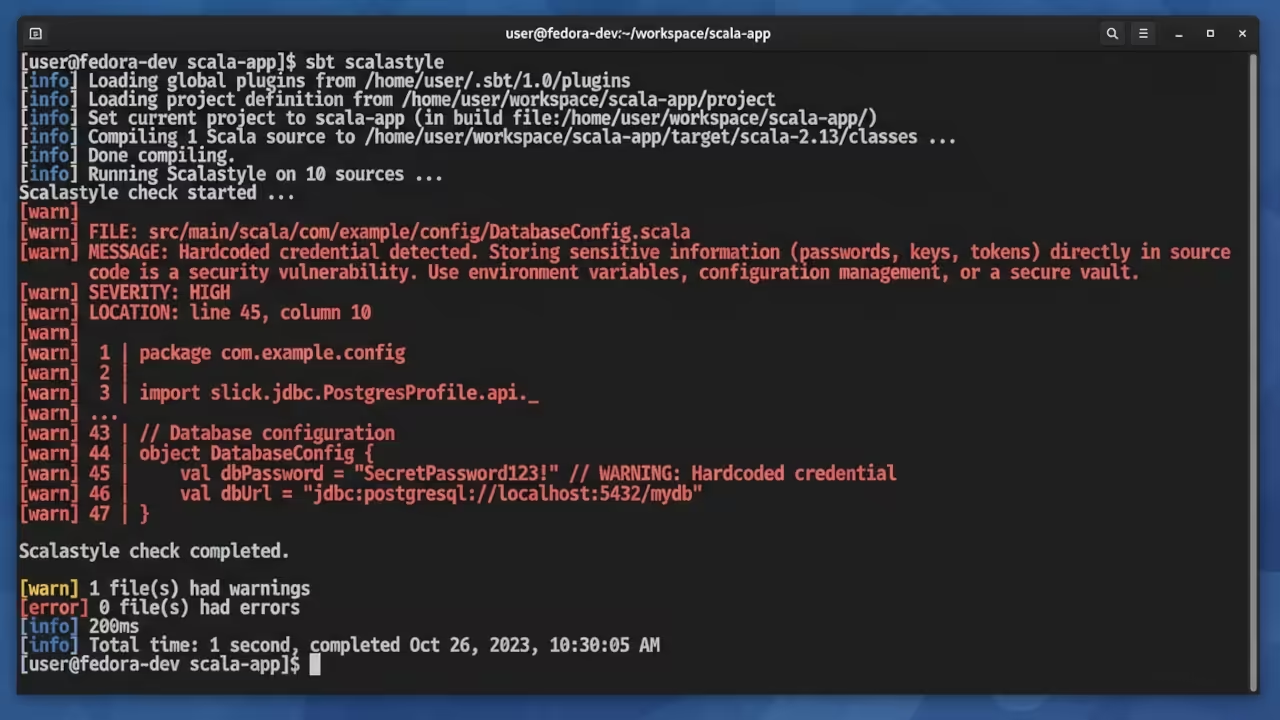
Always integrate a static analysis security testing tool like Snyk or SonarQube into your pipeline. These tools catch the hardcoded credentials and insecure patterns that humans often overlook.
Ensure you verify every single dependency the AI suggests. Hallucinated packages are a growing threat that can lead to supply chain attacks.
Check how this audit process connects to our previous technical deep dives on secure backend orchestration. It is the final piece of the professional stack.


| Parameter | Description | Value |
|---|---|---|
| Type Safety | Uses any/asInstanceOf | Strong algebraic types |
| Error Handling | Try-catch blocks | Either/ZIO-Effect |
| Dependencies | Hallucinated libraries | Verified SHA-256 |
| Input Validation | Implicit trust | Strict boundary checks |
| Parameter | Description | Value |
One insider detail for Scala developers is the TypePilot approach. Instead of asking for code you should ask the AI to first define the safety guarantees using the type system.
By forcing the AI to define a refined type for an input it cannot accidentally generate a vulnerability. This flips the script from auditing code to auditing requirements.
This method eliminates an entire class of injection attacks before a single line of logic is written. It is the ultimate secret for high impact Scala development.
Learning & Support
Reach out for personalized technical help to secure your codebase. Dive deeper with our comprehensive online tutorials.
Online Tutorials & Technical Help: https://ojambo.com/contact
🚀 Recommended Resources
Disclosure: Some of the links above are referral links. I may earn a commission if you make a purchase at no extra cost to you.