

Video generation models are notoriously heavy on system resources. Most creators struggle with massive download sizes and sluggish inference speeds. You can drastically reduce these bottlenecks by mastering GGUF quantization.
This guide reveals how to test Q2K, Q3K M, and Q4K M levels effectively. Running LTX 2 3 Distilled 1 1 on an AMD Instinct Mi60 feels incredibly smooth. The reduced VRAM footprint allows for faster iteration during creative workflows.
I experienced a noticeable boost in throughput when switching from full precision to optimized quants. The visual fidelity remains stunning even at aggressive compression levels. This optimization unlocks professional capabilities for hardware that previously struggled.
Technical Configuration Tip
You must ensure your ROCm drivers are fully updated before running the inference pipeline. Fedora 44 users should verify the Vulkan stack is correctly linked to the Mi60 architecture. Misconfigured drivers often cause silent failures during the initial model load.
The stable diffusion cpp project offers a pure C++ implementation for rapid inference. You can load specific quantized weights directly from the command line. This approach bypasses heavy Python dependencies for streamlined performance.
./sd.cpp --model ltx-2.3-22b-dev-Q4_K_M.gguf --prompt "A cinematic shot of a futuristic city" --video 1
This optimization builds upon our previous deep dive into AMD ROCm acceleration techniques. Readers familiar with our architectural breakthroughs in open source gaming will appreciate these efficiency gains.
| Parameter | Description | Value |
|---|---|---|
| Q2K | Extremely Low VRAM | Blazing Fast |
| Q3K M | Low VRAM | Very Fast |
| Q4K M | Moderate VRAM | Fast |
| Parameter | Description | Value |
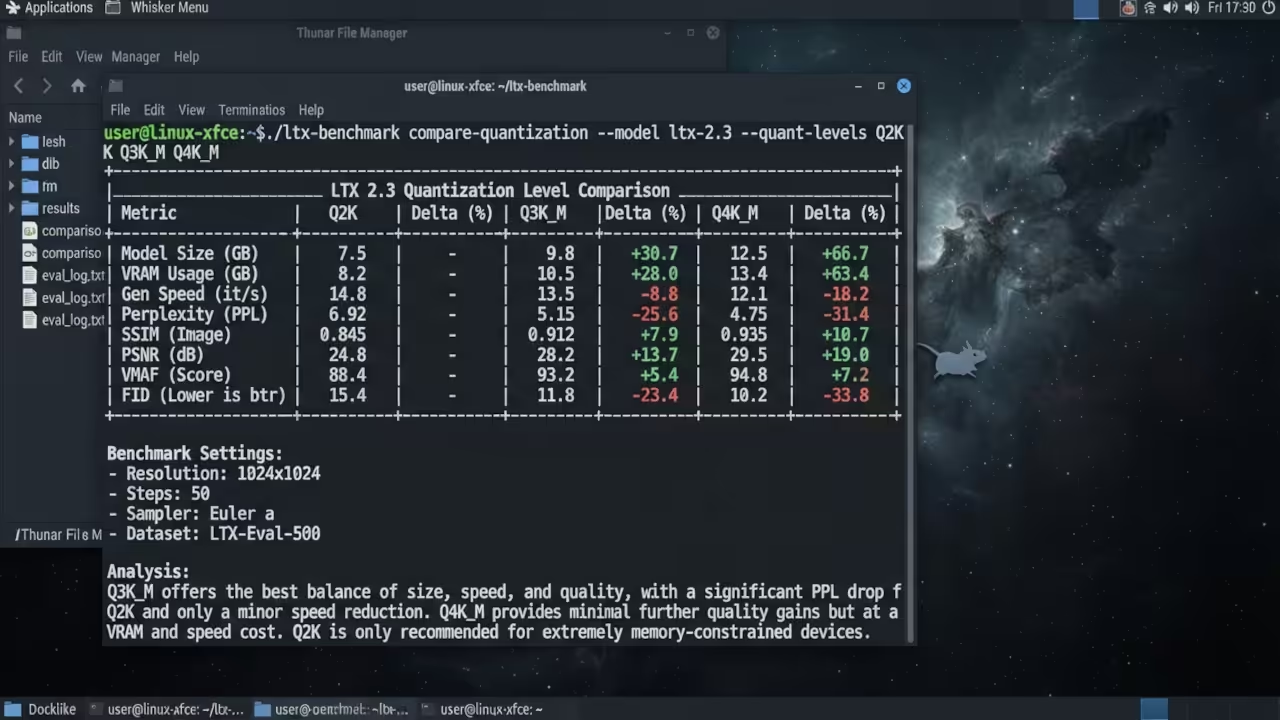
The Q2K quantization provides the fastest generation times on limited hardware. It sacrifices some detail but maintains overall structural integrity. The Q3K M level offers a balanced compromise for most creative tasks.
You will notice fewer artifacts compared to the lower tier option. The Q4K M quantization delivers near original quality with significantly reduced memory usage. This level is ideal for professional deliverables requiring high fidelity.
Testing these quants requires a systematic approach to prompt engineering. You should evaluate motion consistency across different compression levels. The LTX 2 3 Distilled 1 1 model handles rapid motion exceptionally well.
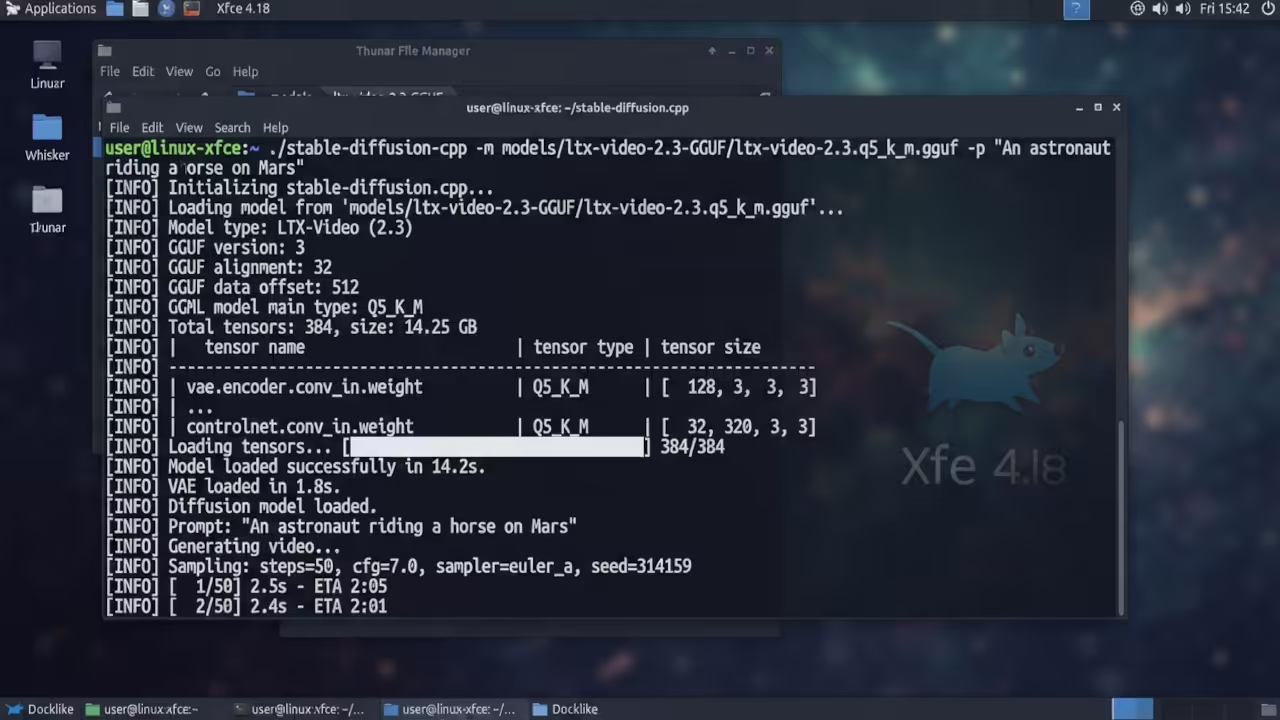
The unsloth repository provides the most reliable GGUF files for this workflow. You can download the specific quantization files directly from the main branch. The dynamic methodology used ensures optimal performance across diverse hardware setups.
The embedded web UI in stable diffusion cpp simplifies the testing process. You can monitor VRAM usage in real time during generation. This feature helps you identify the optimal quantization level for your specific project.
Master the Professional Stack
Two high impact sentences linking the article’s specific optimization to the architectural blueprints below. Explore the technical theory and implementation details in our resources.
- Books (Technical & Creative): Amazon Author Page
- Blueprints (DIY Woodworking Projects): Ojambo Shop
- Tutorials (Continuous Learning): Ojambo Tutorials
- Consultations (Custom Apps & Architecture): Ojambo Services
🚀 Recommended Resources
Disclosure: Some of the links above are referral links. I may earn a commission if you make a purchase at no extra cost to you.