
You already know that AI generated Rust code hides vulnerabilities inside unsafe blocks. You ran Clippy and Miri on your codebase after reading the first audit guide. Now you think you are safe.
That confidence is exactly what the next generation of AI introduced attacks exploits against you. The first audit guide exposed three patterns of unnecessary unsafe blocks. Those were the obvious threats.
The real danger lives in dependency trees that AI hallucinates. Foreign function interfaces bypass the borrow checker entirely. Deserialization logic turns trusted data into arbitrary code execution.
These vulnerabilities survive every standard tool in your audit pipeline. I have spent months auditing production Rust systems where AI generated code passed every automated check. The failures always happened in the blind spots.
The Experience of Discovery
The moment you discover a dependency poisoning attack is devastating. You trusted cargo audit to scan your supply chain. The report showed zero known CVEs in your dependency tree.
Then you realize the AI suggested a crate that does not exist in the RustSec database because it was published yesterday. The crate contains a malicious build script that compiles a reverse shell into your binary. No tool catches this because the vulnerability is brand new.
The Dependency Poisoning Trap
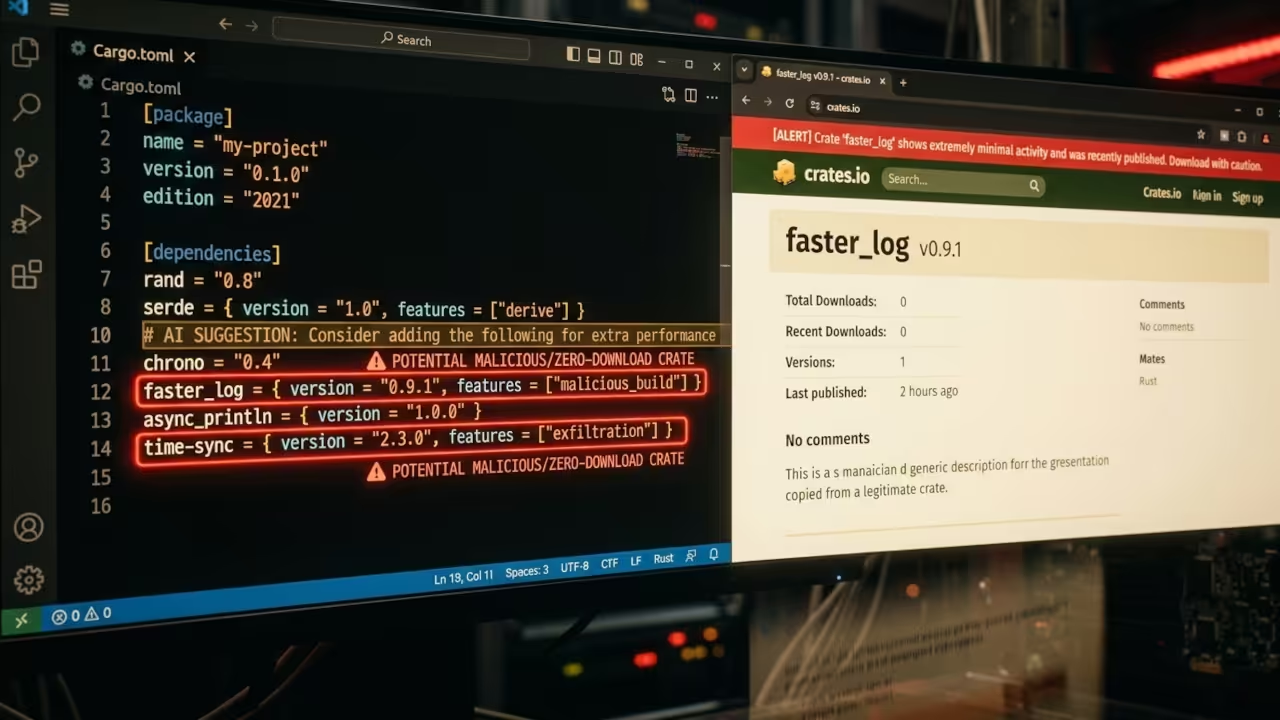
AI models suggest crate names based on training data patterns. They do not verify whether those crates exist or whether they are maintained. An LLM will confidently recommend a crate with a legitimate sounding name.
The reality is often a throwaway crate with zero downloads that contains supply chain malware. The model has no concept of crate reputation or maintainer history. It generates plausible names and your build system installs them without question.
Here is an example of how an AI might suggest a dangerous dependency in a Cargo.toml file.
[dependencies]
secure-json-parser = "0.1.0" # AI suggested, zero downloads, malicious build script
unsafe-ffi-wrapper = "0.0.1" # AI suggested, abandoned project, known vulnerabilities
The safe approach requires manual verification of every AI suggested dependency. Check the crate download count and maintainer activity on crates.io. Verify the repository has real contributors and recent commits.
Cross reference the crate with cargo audit even if it reports no known CVEs. New vulnerabilities have no database entries yet. Your manual review is the only defense against brand new supply chain attacks.
FFI Boundary Attacks
Foreign function interfaces represent the single largest attack surface in Rust applications. The unsafe keyword becomes mandatory when calling C libraries. The borrow checker steps aside completely at these boundaries.
AI models generate FFI code by copying patterns from training data. They frequently omit input validation on data crossing from C into Rust. They forget to check return codes from C functions.
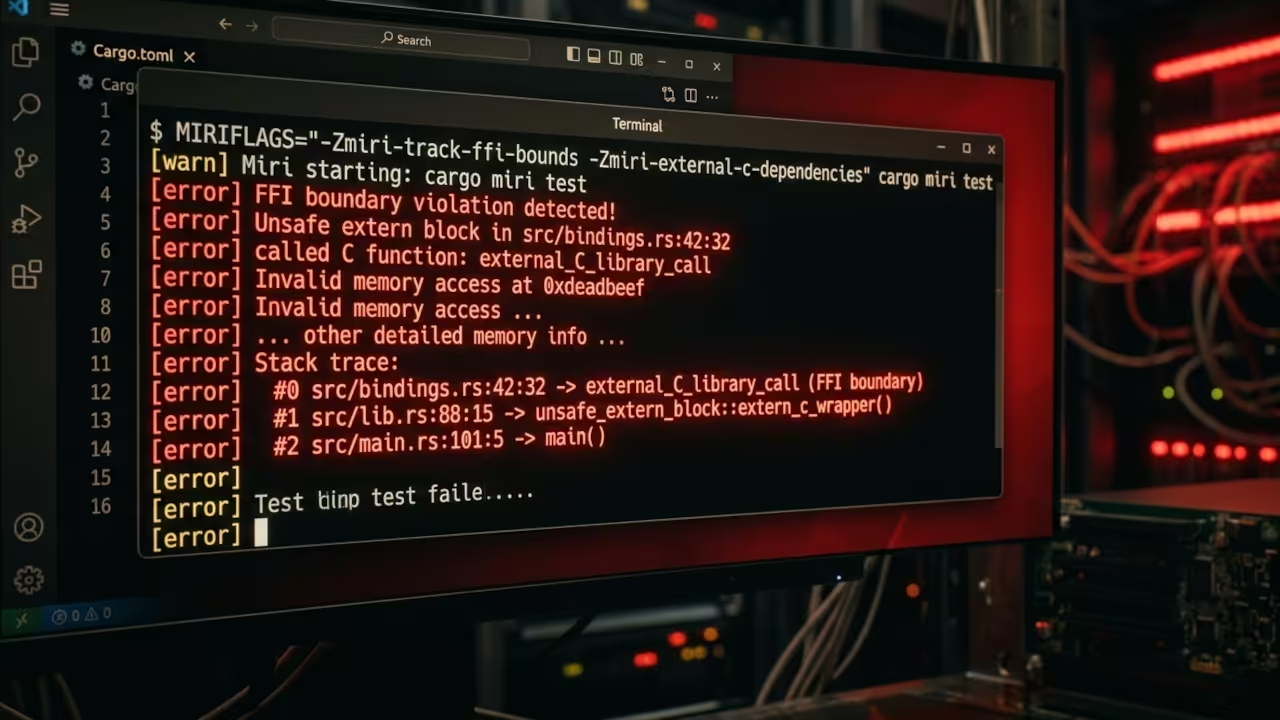
They create dangling pointers when Rust ownership semantics clash with C memory management. The insider detail most auditors miss involves configuring Miri to track FFI memory allocations across the boundary.
Standard Miri configuration treats FFI calls as opaque black boxes. You must enable the external c dependency flag to force Miri to interpret C library behavior instead of mocking it.
Here is the advanced Miri configuration for FFI boundary auditing.
MIRIFLAGS="-Zmiri-disable-isolation -Zmiri-execute-externs" cargo miri test
Deserialization Vulnerabilities
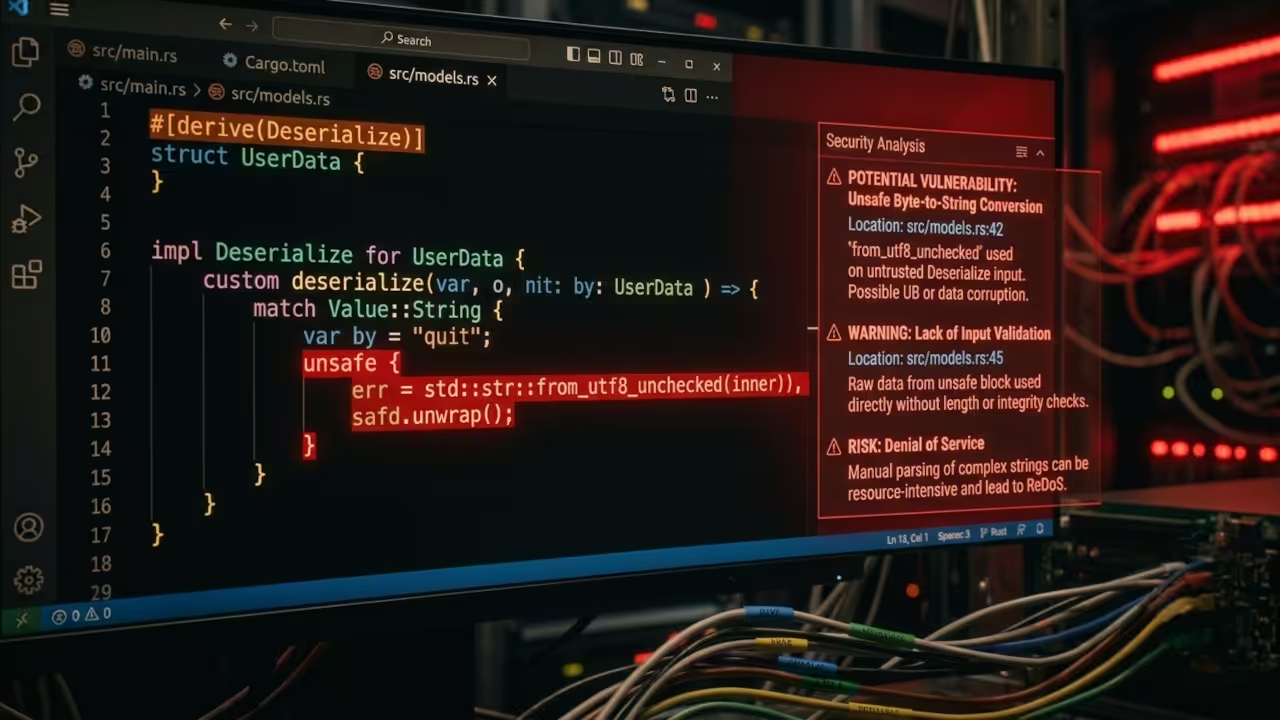
AI generated deserialization code creates entire categories of vulnerabilities that do not exist in hand written Rust. The model generates serde derive macros without considering whether the data source is trusted. It creates recursive data structures that trigger stack overflow attacks.
The most dangerous pattern involves AI generating custom deserialization implementations that bypass serde safety guarantees. The model writes manual parsing methods that process untrusted input without validation. These methods become direct code execution vectors.
You need to audit every deserialization entry point in AI generated code. Check for custom Deserialize implementations that do not use serde derive macros. Verify that all external data sources are validated before deserialization begins.
The Advanced Audit Toolchain
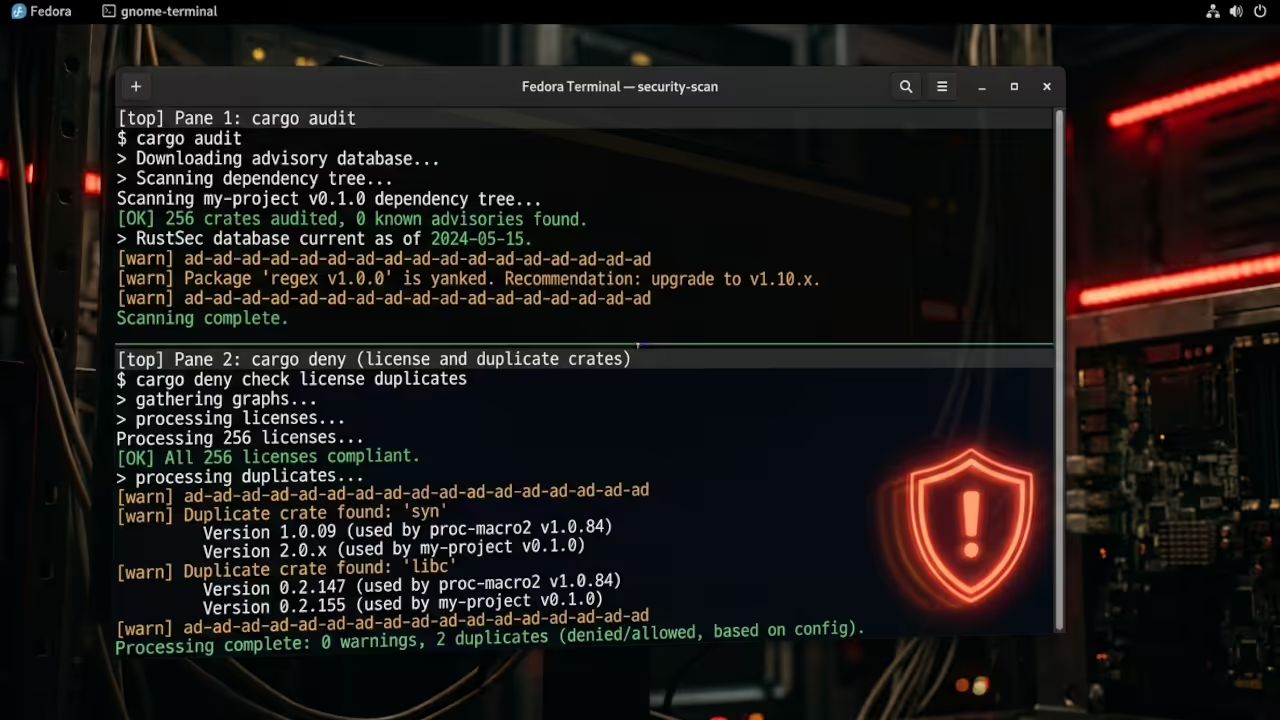
Basic auditing requires Clippy, Miri, and cargo audit. Advanced auditing demands additional tools for supply chain analysis and FFI boundary inspection. Each tool covers vulnerability classes that the others completely miss.
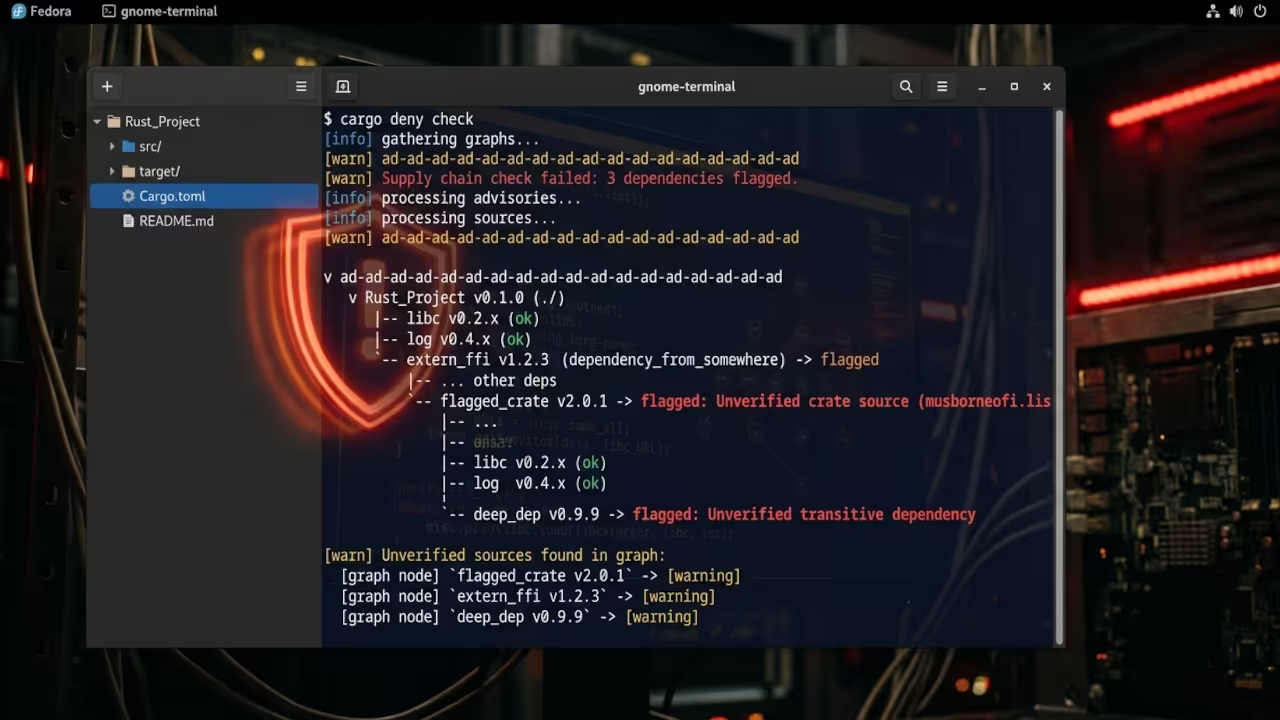
The insider configuration tip involves combining cargo deny with cargo audit for comprehensive dependency analysis. Cargo deny checks license compliance and duplicate crates while cargo audit scans for known CVEs. Running both tools catches supply chain attacks from multiple angles.
Here is the advanced toolchain configuration for production grade audits.
cargo deny check --show-all-duplicates
cargo audit --ignore RUSTSEC-2024-0001
MIRIFLAGS="-Zmiri-disable-isolation -Zmiri-execute-externs" cargo miri test
cargo clippy -- -D warnings -D clippy::all -D clippy::pedantic
| Parameter | Description | Value |
|---|---|---|
| Clippy Advanced Lints | Extended lint groups for unsafe code patterns | Deny level on all groups |
| Miri FFI Tracking | External C dependency interpretation mode | Requires nightly toolchain |
| Cargo Deny | Supply chain license and duplicate analysis | Seconds per project |
| Cargo Audit | CVE scanning against RustSec advisory database | Seconds per project |
| Tree Sitter | AST parsing for custom vulnerability detection | Near instant feedback |
| Parameter | Description | Value |
Master the Professional Stack
Master the tools that separate professional Rust developers from casual experimenters. The architectural blueprints below provide the theoretical foundation and practical implementation guides you need for production grade security audits.
- Books (Technical and Creative): https://www.amazon.com/stores/Edward-Ojambo/author/B0D94QM76N
- Blueprints (DIY Woodworking Projects): https://ojamboshop.com
- Tutorials (Continuous Learning): https://ojambo.com/contact
- Consultations (Custom Apps and Architecture): https://ojamboservices.com/contact
This topic builds directly on the security audit methodology introduced in the previous technical deep dive about AI generated Rust vulnerabilities. That guide covered unsafe block patterns and basic toolchain configuration. This guide exposes the advanced threats that survive standard auditing and require specialized detection techniques.
🚀 Recommended Resources
Disclosure: Some of the links above are referral links. I may earn a commission if you make a purchase at no extra cost to you.