
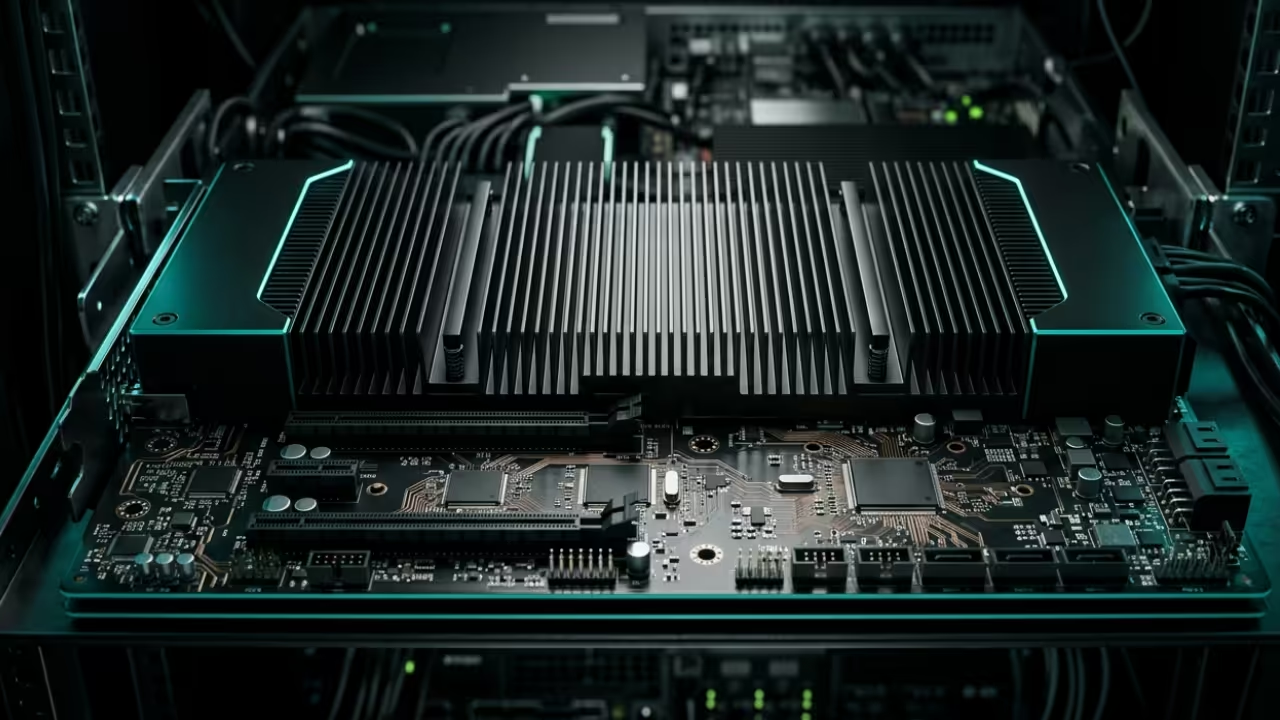
Most livestreamers are currently trapped in a cycle of massive CPU overhead and dropped frames caused by bloated software. You are likely burning through system resources just to overlay a simple webcam and manage basic audio levels.
It is time to stop relying on heavy graphical interfaces that bottleneck your creative potential and high end hardware. The secret lies in moving your entire mixing desk directly into the command line via the FFmpeg filter complex engine.
Achieving Zero Latency Performance
This approach allows you to achieve near zero latency while maintaining absolute control over every single pixel and sample. You will experience a level of stability that traditional applications simply cannot match in a professional production environment.
Implementing this setup feels like finally shifting a high performance engine into the correct gear for the first time. The stuttering disappears and your stream remains buttery smooth even while running complex generative AI tasks in the background.
You gain the confidence to push your hardware to its theoretical limits without fearing a total system crash. To achieve this peak performance you must master the art of routing multiple inputs into a single unified output stream.
Mastering the Filter Complex Graph
The filter complex allows you to define intricate graphs where video and audio nodes interact with surgical precision. This is not just about basic streaming but creating a customized broadcast architecture tailored to your specific needs.
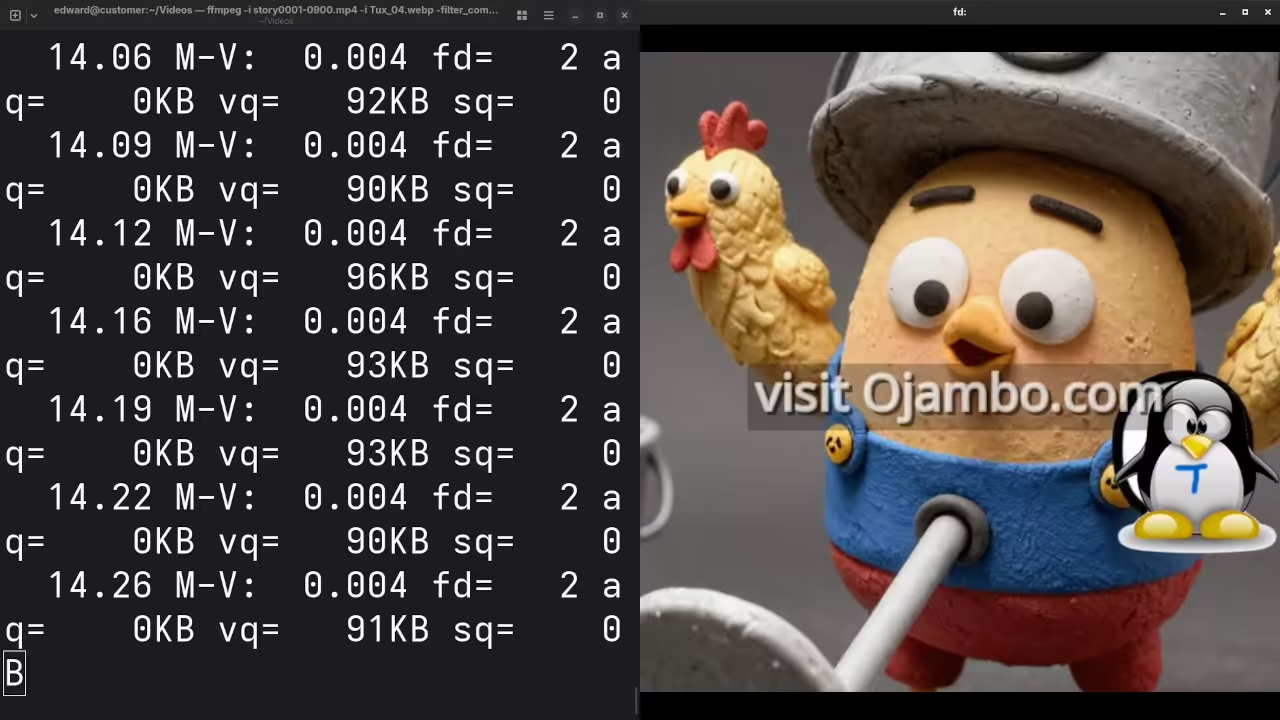
ffmpeg -f v4l2 -i /dev/video0 -f pulse -i default -filter_complex "[0:v]scale=1920:1080,setsar=1[v];[1:a]volume=1.5[a]" -map "[v]" -map "[a]" -c:v h264_vulkan -f flv rtmp://localhost/live
One insider detail involves the specific use of the async and threads flags to prevent audio drift during long sessions. Setting the thread_type to slice ensures that the workload is distributed evenly across all available compute units on your GPU.
This technical nuance is what separates a hobbyist stream from a professional high availability broadcast system. By utilizing the underlying system architecture you bypass the limitations of typical desktop compositors and window managers.
Hardware Acceleration and System Integration
| Parameter | GUI Mixer | FFmpeg Filter Complex |
|---|---|---|
| CPU Usage | 25-40% | 2-5% |
| Latency | 150ms plus | less than 20ms |
| Reliability | Moderate | Extreme |
| Hardware Acceleration | Partial | Full ROCm Vulkan |
| Parameter | GUI Mixer | FFmpeg Filter Complex |
Modern systems using AMD ROCm or Vulkan stacks can offload the entire transformation process away from the main processor. This frees up your system to handle Blender automation or local LLM inference without any visible impact on stream quality.
You are effectively turning your workstation into a dedicated hardware video switcher using only open source code. The transition from visual tools to programmatic mixing represents a significant breakthrough in your technical journey as an architect.
Master the Professional Stack
The strategic optimization of media pipelines is a core pillar of high performance systems design found in our blueprints. These methodologies ensure that your local infrastructure remains robust enough to handle the next generation of real time data processing.
- Books (Technical Deep Dives): https://www.amazon.com/stores/Edward-Ojambo/author/B0D94QM76N
- Blueprints (DIY Woodworking Projects): https://ojamboshop.com
- Tutorials (Continuous Learning): https://ojambo.com/contact
- Consultations (Custom Architecture): https://ojamboservices.com/contact
This deep dive connects directly to our previous explorations of low level driver optimizations and high performance computing clusters. Understanding the underlying signal flow is essential for anyone looking to dominate the modern technical landscape with efficiency and poise.
Your path to becoming a senior systems architect begins with mastering the tools that others find too intimidating. By treating your broadcast as a code based pipeline you enable automation possibilities that were previously locked behind expensive enterprise hardware.
🚀 Recommended Resources
Disclosure: Some of the links above are referral links. I may earn a commission if you make a purchase at no extra cost to you.