
The Invisible Interface Revolution
The screen fatigue is real and it is killing your productivity. You spend your entire day switching between isolated apps on a glass slab.
This app switching tax drains your mental energy and breaks your focus. Ambient computing solves this by removing the physical interface entirely.
Technology is no longer a destination you visit on a screen. It becomes a silent layer woven into the fabric of your environment.
Disclaimer: I may earn a commission from purchases made through these links at no extra cost to you.


Implementing this shift feels like gaining a digital sixth sense. You no longer search for a toggle or a specific app menu.
The environment simply responds to your presence and your immediate intent.
Proactive Environmental Intelligence
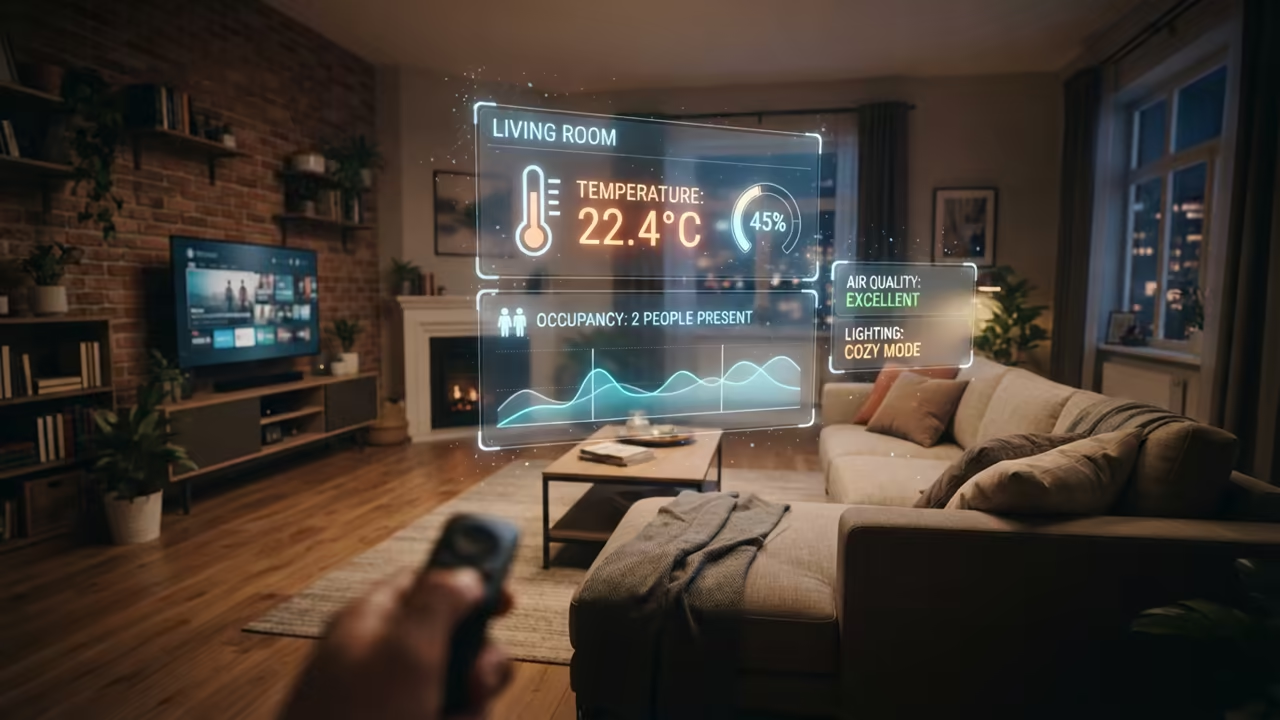
Your home transforms into a proactive partner that anticipates every single need. The lights shift based on your circadian rhythm without a single command.
Coffee begins brewing the moment your sleep cycle hits the optimal wake point.
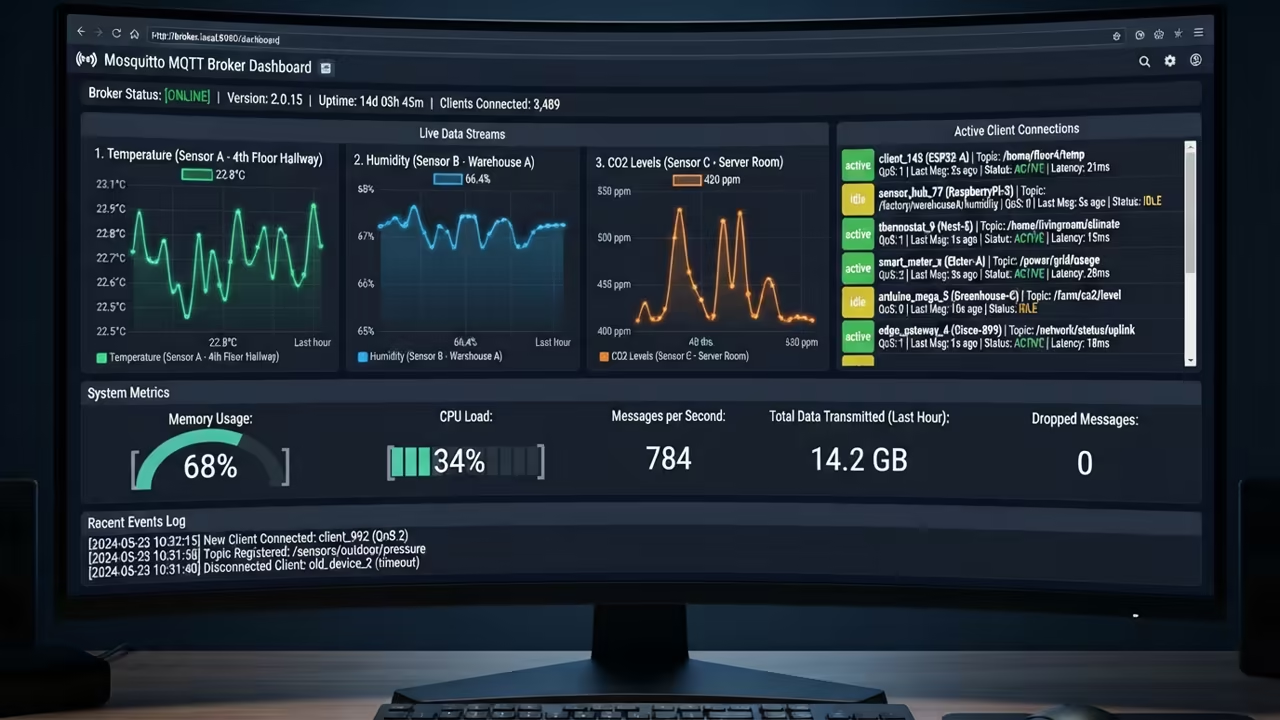
This experience is only possible through a distributed intelligence architecture. We must move away from centralized cloud processing to avoid massive latency.
Local edge nodes now handle the heavy lifting of real time context.
Local Edge Configuration Secrets
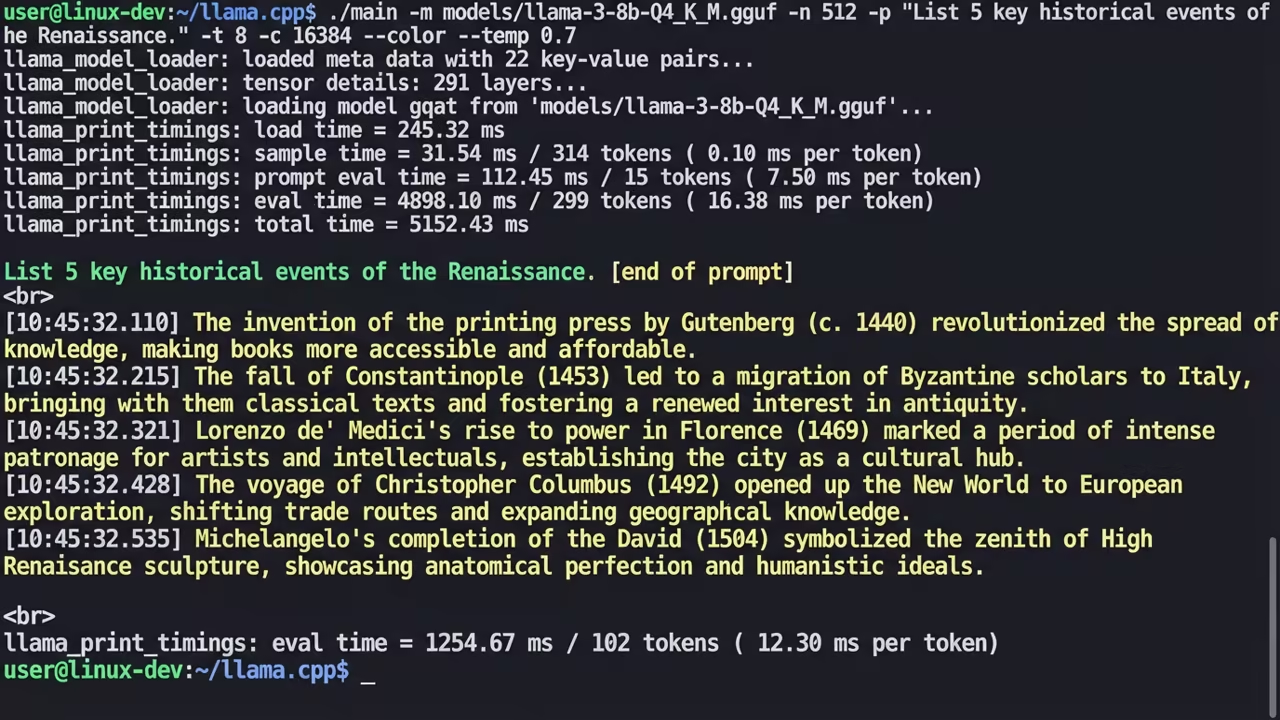
The secret to this setup lies in local SLM quantization. Run a Llama 3 8B model quantized to 4 bit GGUF.
Deploy this on an edge gateway using an MQTT event mesh. This configuration allows for sub fifty millisecond response times for voice triggers.
It ensures your private data never leaves the local network perimeter. You can see the raw orchestration logic in the code snippets below.
The narrative of modern tech requires a total shift in hardware philosophy. We are moving from device centric design to environment centric orchestration.
This is the same breakthrough we discussed in our distributed intelligence deep dive.
Check out the difference between the legacy smartphone era and the ambient epoch.
| Parameter | Smartphone | Ambient Computing |
|---|---|---|
| Interface | Siloed Apps | Distributed Agents |
| Input | Manual Input | Proactive Intent |
| Boundary | Screen Bound | Invisible Interface |
| Processing | Cloud Rely | Edge First |
| Nature | Reactive | Predictive |
| Parameter | Smartphone | Ambient Computing |
Implementing the Sensor Fusion Layer
The transition requires a robust sensor fusion layer for accurate environmental awareness. Use high precision PIR sensors combined with ultrasonic distance mapping for presence.
This data feeds directly into the local agent orchestration layer for action.
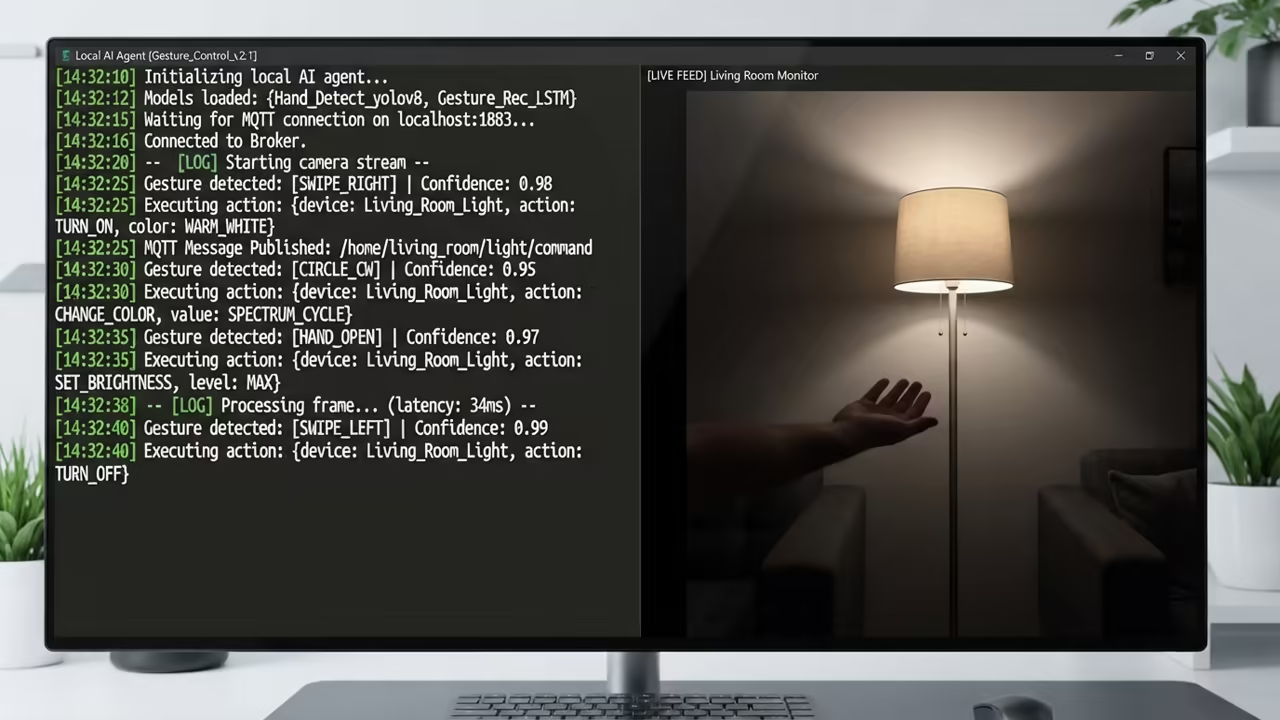
You will need to implement a custom Python wrapper for the MQTT broker. This wrapper should handle priority queuing for critical ambient triggers.
The following code block demonstrates the essential event listener for this setup.
import paho.mqtt.client as mqtt
import json
def on_message(client, userdata, msg):
payload = json.loads(msg.payload.decode())
event = payload.get('event')
if event == 'presence_detected':
print('Ambient trigger activated: Adjusting environment')
client.publish('home/ambient/lights', payload=json.dumps({'state': 'on'}))
client = mqtt.Client()
client.on_message = on_message
client.connect('localhost', 1883, 60)
client.subscribe('sensors/presence')
client.loop_forever()
Integrating these systems creates a seamless loop of digital interaction. You stop managing tools and start experiencing outcomes in real time.
This is the ultimate evolution of the human computer interaction model.
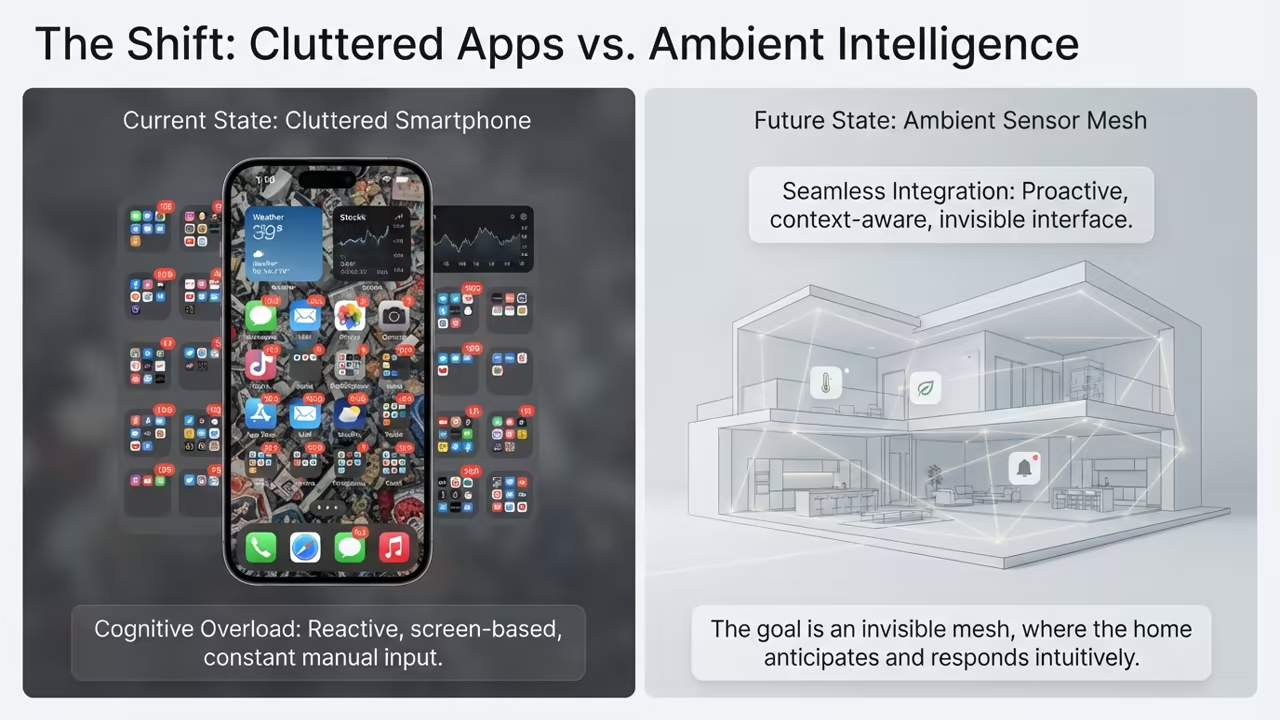
Our previous architectural breakthroughs in edge computing paved the way for this. The shift to invisible interfaces is not a dream but a technical reality.
It is time to leave the glass slab behind for good.
Learning and Support
Reach out for personalized technical help to build your own ambient mesh. Dive deeper into these secrets with our comprehensive online tutorials.
Online Tutorials and Technical Help: https://ojambo.com/contact
🚀 Recommended Resources
Disclosure: Some of the links above are referral links. I may earn a commission if you make a purchase at no extra cost to you.
Leave a Reply