
The Heavy Cost of Bloated Game Engines
Most modern games hide behind bloated engines that devour every cycle of your CPU. This inefficiency creates a laggy experience that kills the competitive spirit of multiplayer gaming.
The industry has accepted mediocre performance as the standard for indie titles. This trend ends when you examine the architecture of a truly custom engine.
Disclaimer: I may earn a commission from purchases made through these links at no extra cost to you.


The Raw Power of Custom Systems
Implementing a custom C plus plus network stack feels like gaining a superpower. You finally control the exact packet flow and synchronization of every single projectile.
The feeling of a zero lag duel is simply unmatched in todays market. You can sense the raw speed of the code executing on the metal.
Choosing C plus plus as the foundation allows for manual memory management. This is critical for maintaining a steady frame rate in intense firefights.
The developers avoided the pitfalls of garbage collection found in other languages. This ensures that there are no random stutters during a match.
The raw access to system resources enables the engine to scale perfectly. Every byte of data is placed with absolute precision in memory.
Deconstructing the Hypersomnia Architecture
The Hypersomnia engine is a masterclass in minimalist C plus plus development. It avoids the heavy abstraction layers found in Unity or Unreal Engine.
This lean approach allows for the seamless integration of twenty four unique firearms. Each weapon operates with precise hit registration and fluid movement logic.
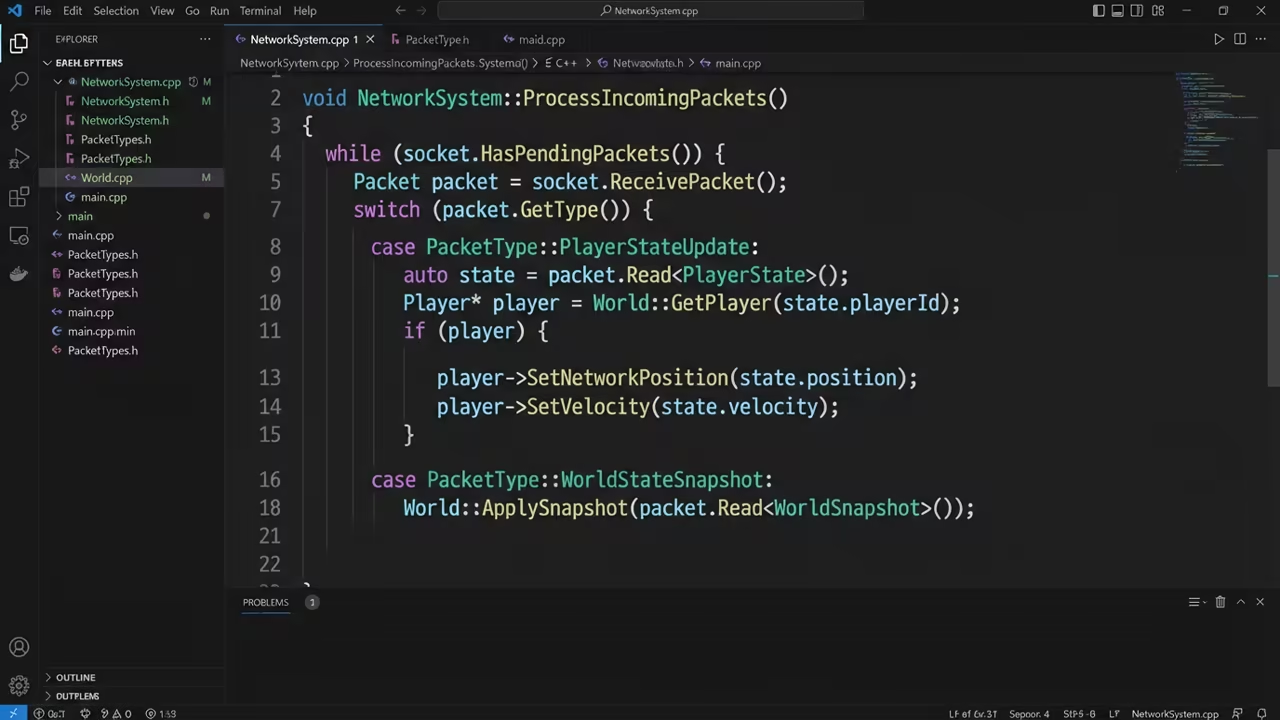
The network synchronization layer is the real secret to its success. It manages client prediction and server reconciliation with extreme efficiency.
By leveraging a custom build from scratch the team eliminated unnecessary overhead. This allows the game to run perfectly in a web browser.
The synchronization logic ensures that bomb defusal matches remain tactical and fair. No player gains an unfair advantage due to engine side stuttering.
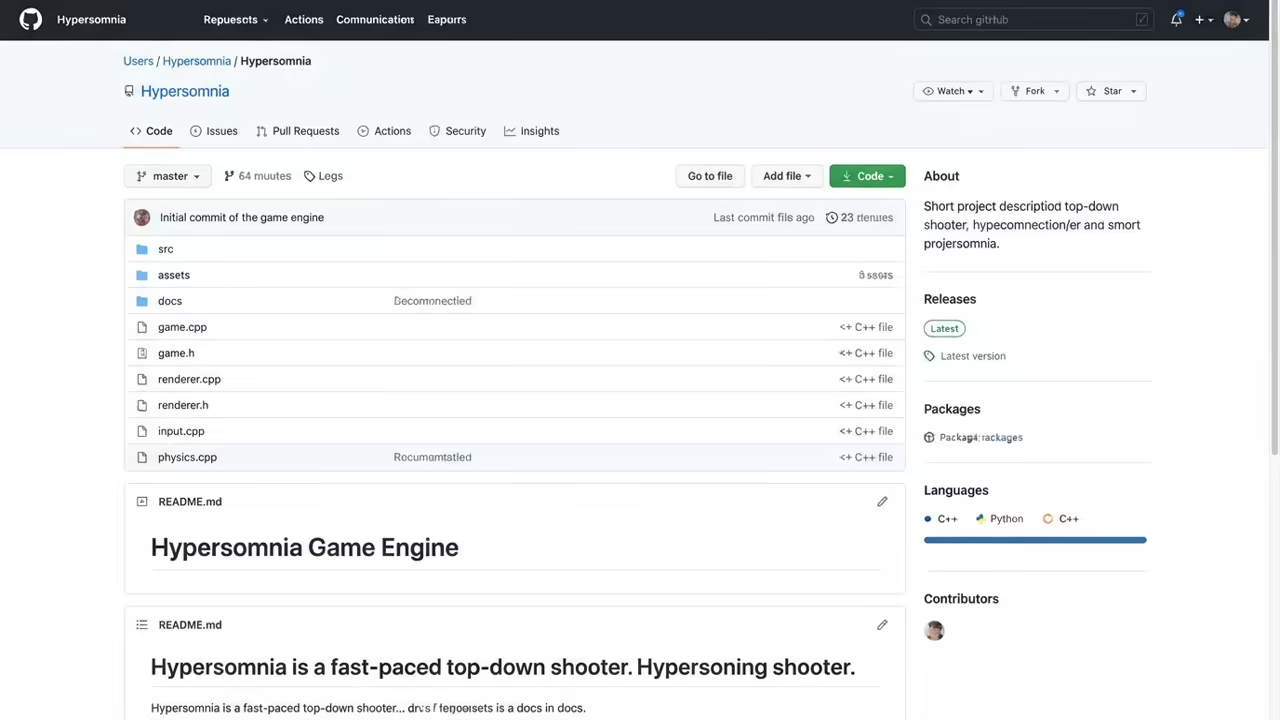
Developers can dive into the open source repository to study the implementation. The code provides a blueprint for high performance multiplayer networking.
Insider Secrets of Entity Interpolation
One insider detail is the way the engine handles entity interpolation. It uses a sliding window of state updates to smooth out jitter.
void InterpolateState(Entity& target, const State& start, const State& end, float alpha) {
target.position = Vector3::Lerp(start.position, end.position, alpha);
target.rotation = Quaternion::Slerp(start.rotation, end.rotation, alpha);
}
This technique allows the top down shooter to maintain a consistent feel. It transforms a chaotic network environment into a stable competitive arena.
The implementation of custom socket handling reduces the latency for every player. This is a massive advantage over generic networking libraries used today.
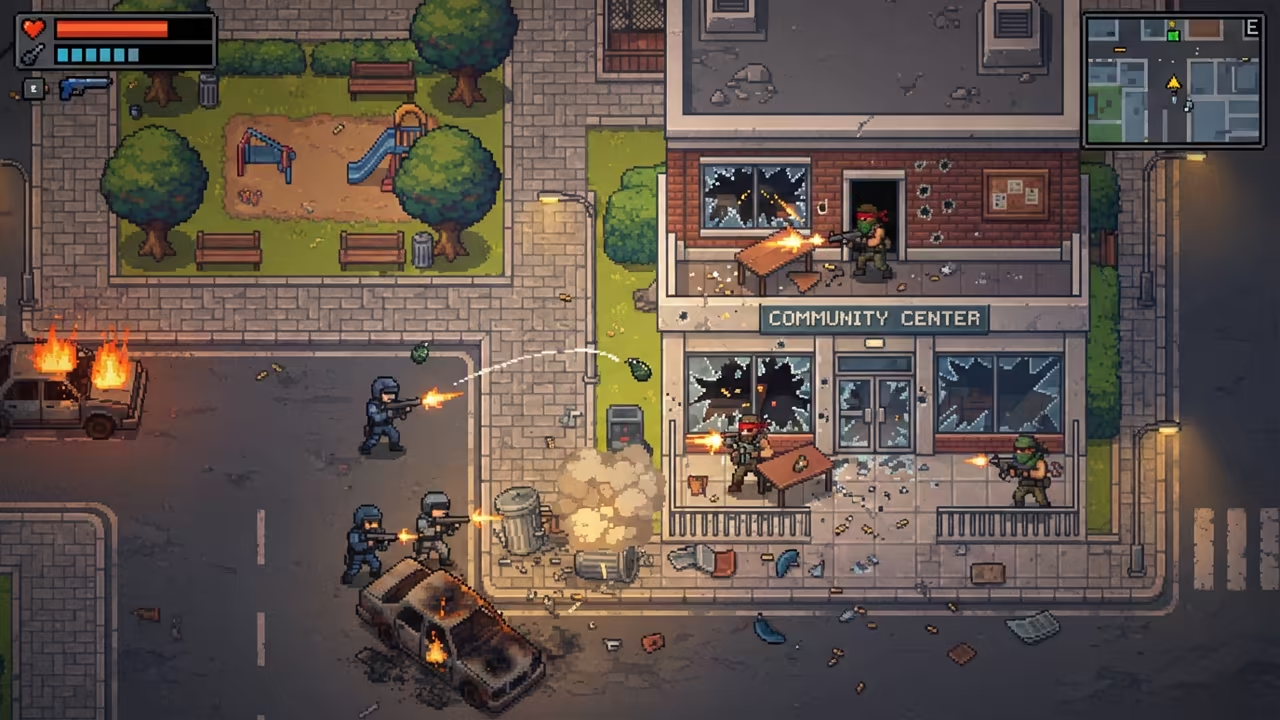
You can see the impact of this design in the smooth movement of players. Every turn and shot feels instantaneous and highly responsive to input.
Integrating this level of performance into a browser requires extreme optimization. The team utilized advanced compilation techniques to maintain the original C plus plus speed.
This allows the game to reach a wider audience without sacrificing the core experience. It proves that high end gaming can live in the browser.
The community maps further showcase the flexibility of the custom engine. New environments are added without needing to rewrite the core physics.
Each map is optimized for fast loading and minimal memory usage. This keeps the game accessible for users with limited hardware specs.
The focus on raw performance connects this project to larger architectural breakthroughs. It mirrors the efficiency required for high tier AI and server management.
Using an optimized stack allows developers to push the limits of the hardware. This is the same philosophy used in custom GPU acceleration.
| Parameter | Description | Value |
|---|---|---|
| Memory Overhead | System RAM usage at idle | Extremely Low |
| Packet Control | Control over UDP stream | Absolute |
| Boot Speed | Time to reach game state | Instantaneous |
The combination of C plus plus and a custom network stack is lethal. It creates a competitive environment where skill is the only deciding factor.
Exploring this architecture opens the door to better game design practices. It encourages a return to efficiency and hardware awareness in development.
The open source nature of the project allows for continuous community improvement. Every bug fix and optimization is shared with the entire world.
This collaborative approach ensures that the engine remains cutting edge for years. It is a living example of the power of open source.
Learning and Support. Two high impact sentences inviting the reader to reach out for personalized technical help or to dive deeper with the online tutorials.
Online Tutorials and Technical Help: https://ojambo.com/contact
🚀 Recommended Resources
Disclosure: Some of the links above are referral links. I may earn a commission if you make a purchase at no extra cost to you.
Leave a Reply