
Most AI video tools are locked behind expensive monthly subscriptions. You deal with strict censorship and slow queues for every single render.
Local generation was once a dream for those without a server farm. MiniMax H3 breaks these chains by bringing multimodal power to your desktop.
It generates synchronized audio and video in a single pass. This removes the need for separate audio generation and syncing tools.
Disclaimer: I may earn a commission from purchases made through these links at no extra cost to you.


The Local Generation Experience
Seeing the first synchronized clip emerge from a local GGUF model feels like magic. The audio aligns perfectly with the visual motion without any external editing.
You finally own the entire production pipeline on your own hardware. The fluid motion combined with spatial audio creates a professional cinematic feel.
It is an exhilarating shift from static images to living scenes. This is the true peak of local generative media.
Multimodal Architecture and GGUF Efficiency
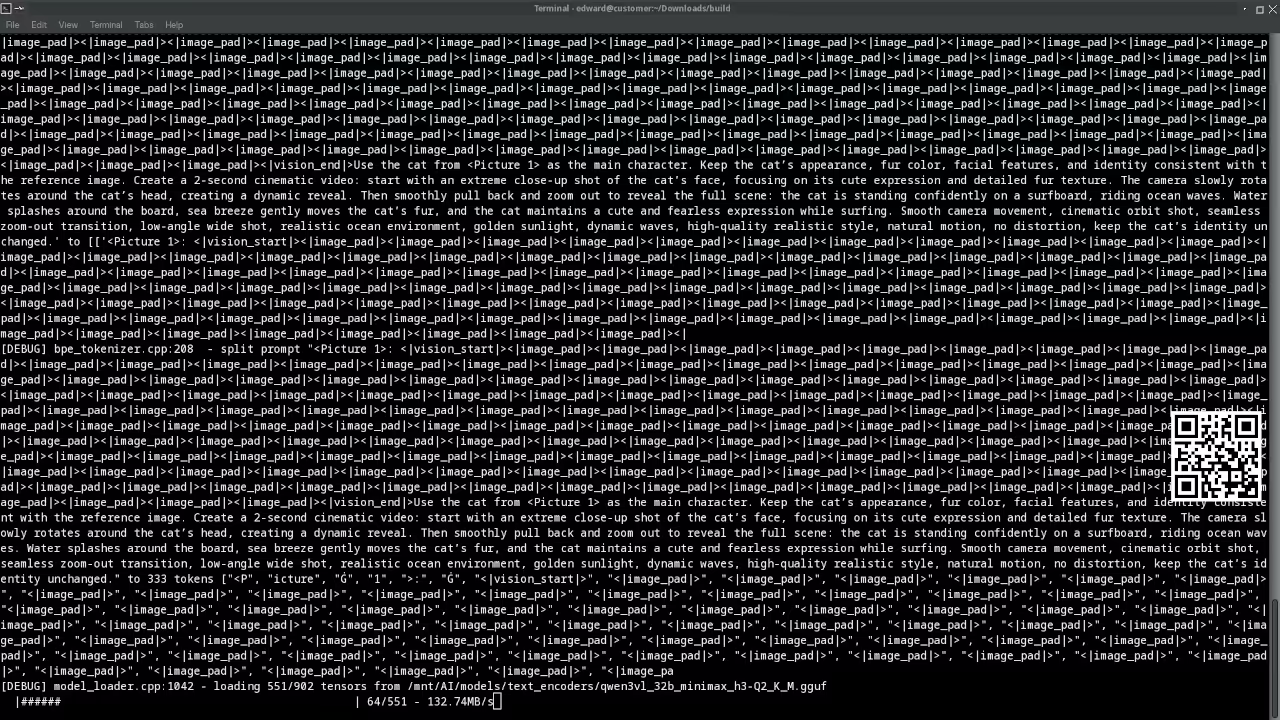
MiniMax H3 utilizes packed diffusion transformers to handle multiple data streams. The GGUF format allows the software to run these massive models on varied hardware.
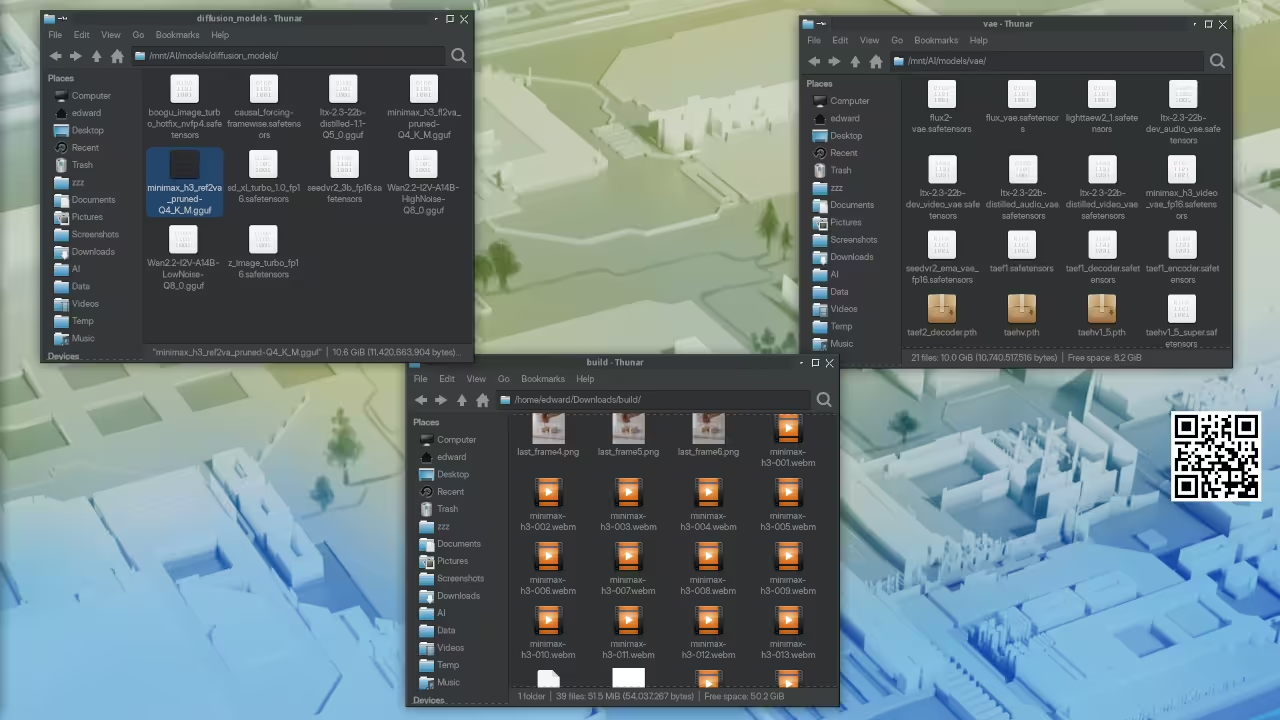
You only need the quantized model and the matching VAE to start. The integration allows for text to audio video and image to video workflows.
You can condition the output using first frame or reference video files. This provides a level of control that cloud platforms often hide.
Advanced Configuration for Power Users
To get the best performance you must optimize your VRAM allocation carefully. For those running high VRAM cards like the MI60 use the half precision flags.
This prevents the system from swapping to slower system memory during decoding. An insider secret for faster renders is to use the q4 k m quantization level.
This balance provides near lossless quality while cutting memory usage by half. It allows for longer video durations without crashing the backend.
./stable-diffusion.cpp -m minimax_h3_q4_k_m.gguf -vae minimax_h3_vae.safetensors -p "A futuristic city with raining neon lights and synthwave music" --threads 12
This setup connects perfectly with previous architectural breakthroughs in local LLM deployment. It mirrors the efficiency we saw in early GGUF language model releases.
Now that power is applied to high fidelity video.
Local GGUF versus Cloud Intelligence
Comparing local GGUF to cloud services reveals a massive advantage in privacy. You no longer upload your private prompts to a corporate server.
The hardware in your room does all the heavy lifting. The local approach also enables rapid iteration without worrying about credits.
You can generate a hundred variations of a scene for free. This freedom is essential for true creative exploration.
| Parameter | Description | Value |
|---|---|---|
| Price | Cost of use | Free |
| Privacy | Data security | Fully Private |
| Censorship | Prompt restrictions | None |
| Speed | Generation time | Hardware Bound |
| Parameter | Description | Value |
The technical barrier to entry is lower than ever before. With a simple binary and a model file you are a studio.
The future of multimodal AI is decentralized and open.
Learning and Support
Reach out for personalized technical help to optimize your local AI stack. Dive deeper into the architectural secrets with our online tutorials.
Online Tutorials & Technical Help
🚀 Recommended Resources
Disclosure: Some of the links above are referral links. I may earn a commission if you make a purchase at no extra cost to you.