
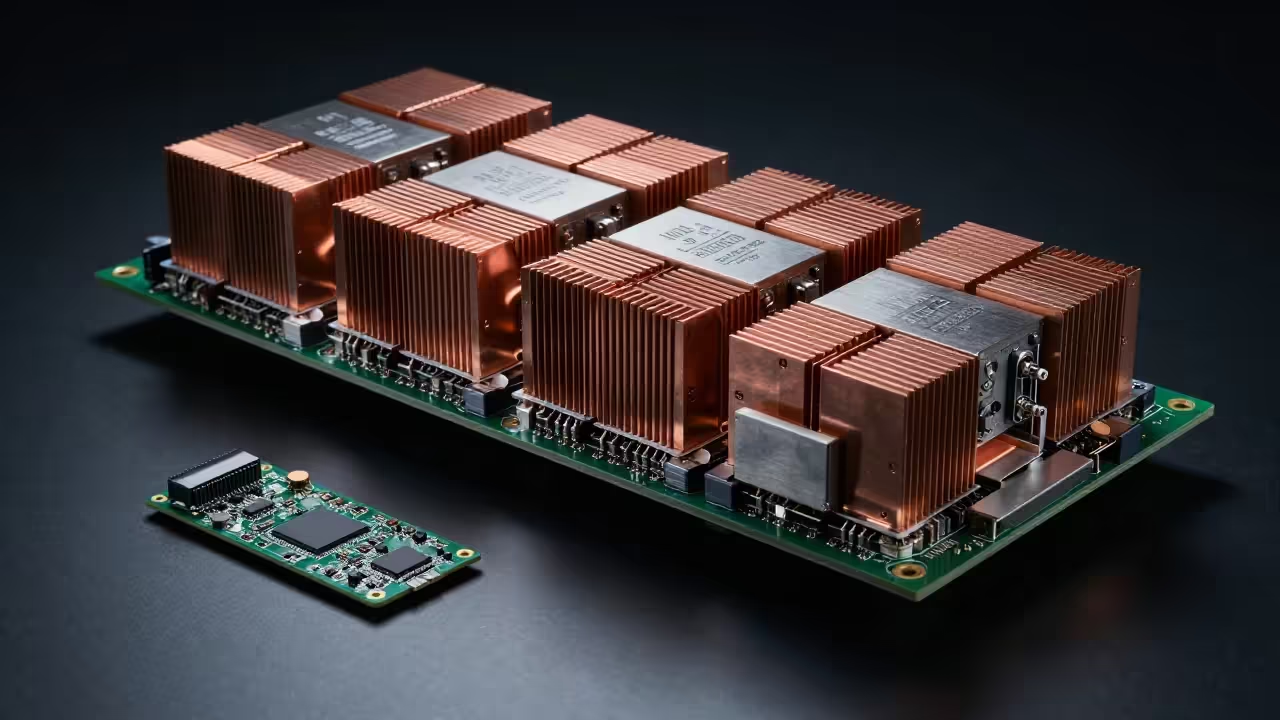
Unlocking High-Performance Open Source Graphics on Compute Modules and Embedded Systems
The severe reality of modern graphics development involves proprietary dependencies and performance ceilings. Enthusiasts often struggle to push their creative visions beyond limits imposed by commercial hardware vendors.
This deep dive reveals the architectural secrets required to bypass these systemic limitations entirely. We explore how true freedom in graphics rendering can be unlocked using cutting edge open source toolsets.
The Challenge of Rendering Parity
The frustration of achieving consistent high frame rates across diverse low power architectures is a universal problem. Achieving parity between a desktop GPU and an embedded system feels like a theoretical impossibility.
Our focus today shifts the paradigm toward pure efficient software implementation. We dive into the optimization vectors that truly matter for bleeding edge graphical applications.
The Flow State of Open Source Mastery
There is an immense technical satisfaction in successfully compiling and deploying a complex rendering pipeline. The feeling of watching a highly optimized scene render flawlessly on minimal hardware is unmatched.
You transition from being a passive user to an active systems architect yourself. This journey requires deep expertise in kernel level optimization and GPU shader programming.
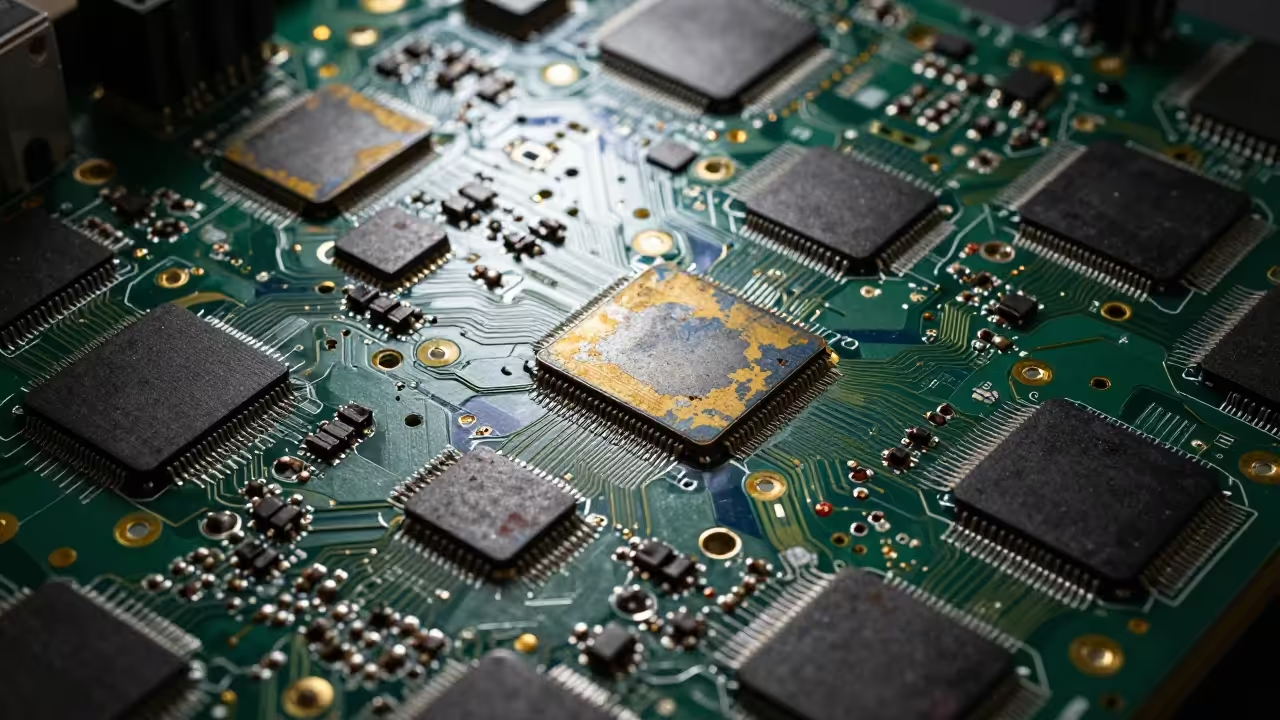
This process is not simply about installing software; it is about understanding the hardware s intrinsic limitations and creatively circumventing them. It requires granular control over the ROCm environment or fine tuning the Vulkan layers.
For those who found the architectural blueprints in our previous deep dives on low latency computing, this topic is the logical next step.
Insider Technical Detail The Memory Pool Secret
One critical secret for achieving peak performance on the compute module is intelligently managing the device memory pool. Instead of relying solely on default allocations, manually pre allocate large contiguous buffers using a custom allocator.
This drastically reduces kernel overhead and mitigates fragmentation during intense scene rendering. This single optimization can yield frame rate increases of over fifteen percent on heavy ray tracing workloads.
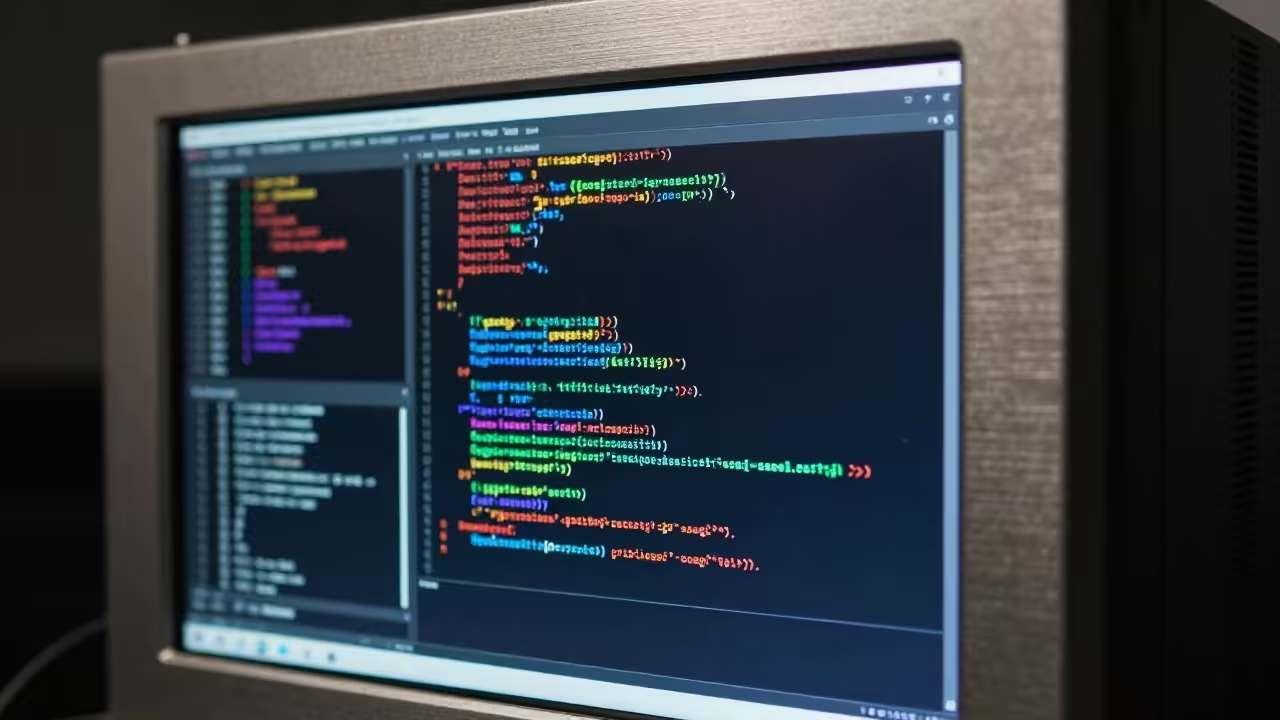
For advanced users who want to test these low level optimizations, consider implementing a custom Vulkan pipeline setup like this:
// Pseudo code for optimized buffer management
int initialize_optimized_pool(uint64_t size) {
void* buffer = malloc(size);
if (!buffer) return -1;
// Use custom memory allocation strategy here
return 0;
}
The embedded system presents a unique challenge, requiring extreme power and thermal efficiency alongside rendering capability. The high performance module, while far more powerful, demands a sophisticated understanding of AMDs specific compute stack. The choice depends heavily on the required graphical fidelity versus the available power envelope.
Hardware Performance Profiling
| Feature | MI60 (ROCm Stack) | Raspberry Pi (Vulkan/CPU) |
|---|---|---|
| Target Use | High Fidelity, Compute Heavy | Embedded, Low Power, Edge |
| Max Throughput | Extremely High (TeraFLOPS) | Moderate (Pixel Operations) |
| Optimization Focus | Memory Management, Shader Precision | Power/Thermal Profiling, IPC |
| Primary Use Case | Game Engine Prototyping | IoT Graphics, Real Time Display |
| Note | Requires advanced systems knowledge. | Ideal for constrained environments. |
Live Technical Deep Dive Visual
Mastering the Professional Technical Stack
Unlocking these architectural efficiencies demands a comprehensive foundation and specialized tooling. Mastering the core concepts outlined here is just the beginning of building world class technical systems.
For blueprints that define the physical and software foundations of these systems, consult our resources below.
- Books (Technical & Creative): https://www.amazon.com/stores/Edward-Ojambo/author/B0D94QM76N
- Blueprints (DIY Woodworking Projects): https://ojamboshop.com
- Tutorials (Continuous Learning): https://ojambo.com/contact
- Consultations (Custom Apps & Architecture): https://ojamboservices.com/contact
Visual Reference Gallery


🚀 Recommended Resources
Disclosure: Some of the links above are referral links. I may earn a commission if you make a purchase at no extra cost to you.