
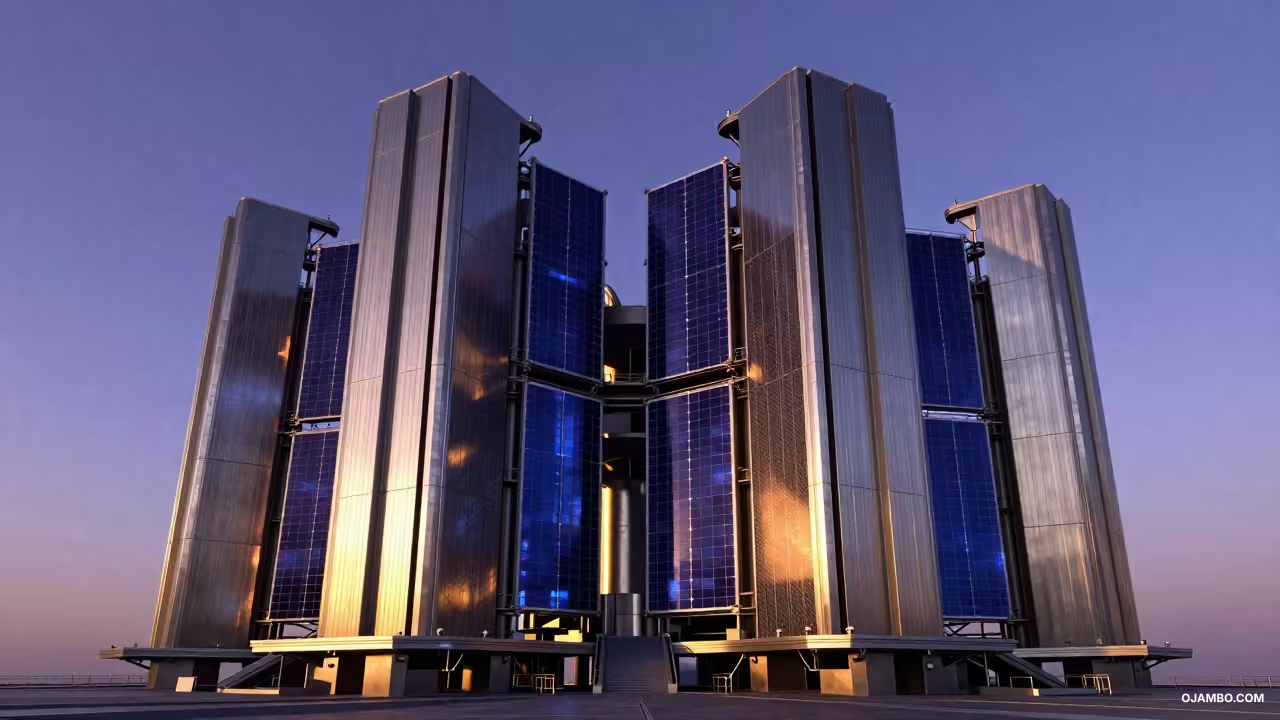
The 2026 Class 43.2 Clean Energy Power Framework provides a strategic roadmap for tech entrepreneurs to integrate renewable energy production with high-availability digital infrastructure. By aligning hardware procurement with specific capital cost allowance provisions, digital entities can realize immediate 100 percent write-offs for green energy assets. This framework ensures that power-hungry server environments remain fiscally sustainable while meeting modern environmental compliance standards.
2026 Class 43.2 Clean Energy Power Framework Quick-Reference Blueprint
Essential data for your 2026 technical audit and CRA/IRS filing.
- ✓ Primary Tax Code: CRA Class 43.2 / IRS Section 179
- ✓ Deployment Time: 6 – 10 Weeks
- ✓ Projected Annual ROI: 22% – 35% Energy Reduction + 100% Year-1 Write-off
Quick Specs
Hardware Requirements: Tier 4 Microgrid Controller, Bi-facial Solar Array, Lithium Iron Phosphate Storage. Software Stack: OpenEMS 2026.1, Grafana Enterprise, Prometheus Monitoring, Linux Kernel 6.12. Estimated Setup Cost: 45,000 to 125,000 USD. Difficulty Level: Advanced (Professional Electrical and Systems Integration Required).
Architecture and Requirements
The primary architectural requirement for the 2026 framework involves a decoupled power distribution unit capable of managing dual-input sources with sub-millisecond switching latency. Systems must utilize 720W Bi-facial N-Type solar modules to maximize albedo gains, paired with high-frequency 15kW hybrid inverters supporting the IEEE 1547-2018 standard for grid interconnection. On the computing side, the blueprint demands server hardware equipped with Titanium-rated power supplies (96% efficiency) to ensure that energy harvested through renewable means is not dissipated as thermal waste.
Storage requirements are strictly defined by the use of 51.2V 280Ah LiFePO4 battery modules arranged in a scalable rack configuration to provide a minimum of 48 hours of autonomy for a 5kW continuous load. Networking dependencies include a dedicated VLAN for the Energy Management System (EMS) to isolate industrial control traffic from standard data production environments. Software orchestration is handled via OpenEMS 2026.1, which manages the sophisticated logic required for peak shaving and automated load shedding during periods of low irradiance.
Technical Layout
The data flow within the Class 43.2 framework begins at the PV Array and Wind Turbine interface, where DC energy is normalized by the Maximum Power Point Tracking (MPPT) controllers before entering the battery storage bus. The Energy Management System (EMS) acts as the central nervous system, polling the hybrid inverters and smart meters via Modbus TCP at 100ms intervals to calculate real-time energy balances. Security hardening is implemented at the gateway level by utilizing a unidirectional data diode that allows performance metrics to exit to the cloud while preventing external command injection into the local power grid.
By isolating the power control plane from the general-purpose internet, we mitigate the risk of state-sponsored actors or automated botnets disrupting the physical power supply of the digital infrastructure. The architectural design incorporates a “Zero Trust” model for every hardware component, requiring cryptographic signatures for any firmware updates applied to the inverters or battery management systems. This ensures that the clean energy infrastructure remains a hardened asset that contributes to the overall digital sovereignty of the enterprise without introducing new vectors for cyber-physical attacks.
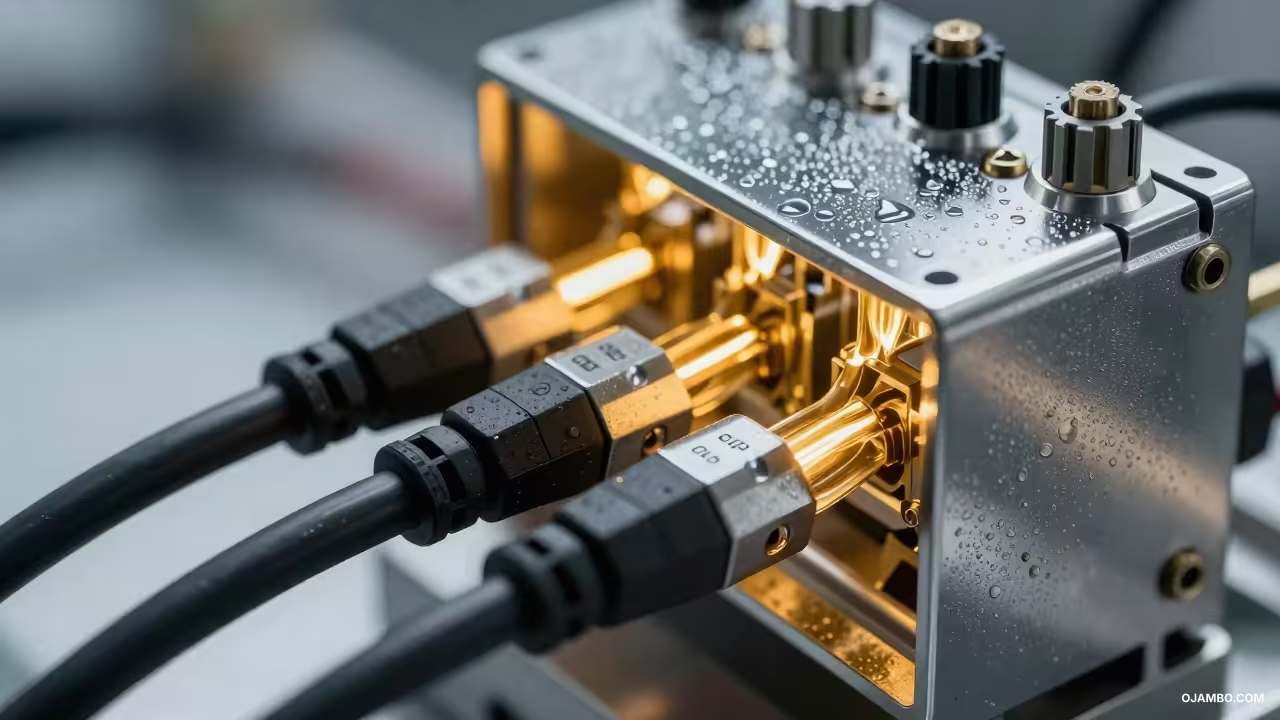
Step-by-Step Implementation
Phase 1: Site Analysis and Solar Irradiance Mapping
Initial deployment begins with a comprehensive site assessment using LiDAR data to determine the optimal placement of renewable collectors. We utilize specialized software to model shading patterns for the fiscal year 2026, ensuring that the projected energy yield meets the minimum requirements for Class 43.2 eligibility.
Phase 2: Structural Integration and Racking
Once the site is mapped, we install heavy-duty racking systems designed to withstand 140 mph wind loads, which is a common requirement for commercial insurance in many jurisdictions. All structural components must be bonded and grounded according to NEC 2023/2026 standards to prevent electromagnetic interference with nearby server racks.
Phase 3: DC Bus and Storage Array Configuration
The battery storage system is assembled using pre-balanced LiFePO4 cells and integrated with a high-current Busbar system. We prioritize the installation of active cell balancing technology to extend the life of the storage medium beyond the standard ten-year depreciation cycle.
Phase 4: Hybrid Inverter and Microgrid Controller Setup
Central to the power framework is the installation of the 15kW hybrid inverters which serve as the bridge between the DC storage and AC server loads. These units are configured in a parallel arrangement to provide N+1 redundancy, ensuring that a single inverter failure does not result in a system-wide power outage.
Phase 5: Low-Voltage Data Integration
Communication lines are established between the power hardware and the monitoring server using shielded Cat6a cabling. We implement RS485 to Ethernet bridges to bring legacy hardware data into the modern Prometheus-based monitoring stack for real-time analysis.
Phase 6: Software Orchestration and Logic Calibration
The OpenEMS software is deployed on a dedicated industrial PC running a hardened Linux kernel. We program the specific logic for “Self-Consumption Optimization,” which prioritizes using stored solar energy during peak utility rate hours to maximize the internal rate of return.
Phase 7: Load Migration and Testing
Critical server loads are migrated to the new power framework in a staged approach, beginning with non-essential development environments. We perform “Pull-the-Plug” tests to verify that the transition from grid-tie to off-grid mode occurs without dropping any network packets or triggering server reboots.
Phase 8: Final Commissioning and Compliance Audit
The final phase involves a professional engineer (PE) sign-off on the electrical installation and a tax strategist review of the procurement records. This documentation is essential for defending the Class 43.2 or Section 179 claims during a standard audit by the CRA or IRS.
2026 Tax and Compliance
Under the Canadian Income Tax Act, Class 43.2 provides a 100 percent accelerated Capital Cost Allowance (CCA) for specified clean energy equipment acquired before 2027. This allows the business to deduct the entire cost of the solar and storage system in the first year of operation, significantly reducing the net effective cost of the hardware.
For United States-based entities, IRS Section 179 remains a potent tool for immediate expensing of green energy hardware up to the annual limit of 1.2 million dollars. Additionally, the Investment Tax Credit (ITC) under Section 48 can be stacked with Section 179 to provide a 30 percent credit on the total system cost, further enhancing the ROI.
Qualified hardware must meet the “High-Efficiency” criteria defined by the 2026 regulatory updates, which include a minimum round-trip efficiency of 85 percent for battery systems. It is also important to note that only the portion of the equipment used for energy production and storage is eligible, meaning common building infrastructure like general-purpose wiring may be excluded from the accelerated deduction.
Hardware Comparison and ROI Analysis
| Metric | Standard Grid |
|---|---|
| Initial Outlay | $12,000 |
| Year 1 Deduction | $2,400 |
| Monthly Power | $850 |
| Metric | Class 43.2 Framework |
|---|---|
| Initial Outlay | $58,000 |
| Year 1 Deduction | $58,000 |
| Monthly Power | $45 |
Request a Principal Architect Audit
Implementing 2026 Class 43.2 Clean Energy Power Framework at this level of technical and fiscal precision requires specialized oversight. I am available for direct consultation to manage your clean energy hardware deployment, system optimization, and 2026 compliance mapping for your agency.
Availability: Limited Q2/Q3 2026 Slots for ojambo.com partners.
Maintenance and Scaling
Maintaining the 2026 Clean Energy Power Framework requires a shift from passive monitoring to proactive thermal management. We recommend bi-annual physical inspections of the PV array and quarterly infrared thermography of all high-current electrical connections to identify hot spots before they lead to hardware failure.
Scaling the infrastructure is achieved by adding modular battery units to the existing DC bus and expanding the PV array in 5kW increments. The software stack is designed to be horizontally scalable, allowing a single Energy Management System to control multiple microgrids across different geographic locations via a secure VPN tunnel.
Future-proofing the system involves selecting hardware that supports the “Open Charge Point Protocol” (OCPP) even if you do not currently operate an EV fleet. As energy markets move toward bidirectional “Vehicle-to-Grid” (V2G) integration, having a framework that can absorb and discharge energy from mobile assets will provide an additional layer of fiscal and operational resilience.
2026 Class 43.2 Clean Energy Power Framework Quick-Reference Blueprint
Essential data for your 2026 technical audit and CRA/IRS filing.
- ✓ Primary Tax Code: CRA Class 43.2 / IRS Section 179
- ✓ Deployment Time: 6 – 10 Weeks
- ✓ Projected Annual ROI: 22% – 35% Energy Reduction + 100% Year-1 Write-off
🚀 Recommended Resources
Disclosure: Some of the links above are referral links. I may earn a commission if you make a purchase at no extra cost to you.