
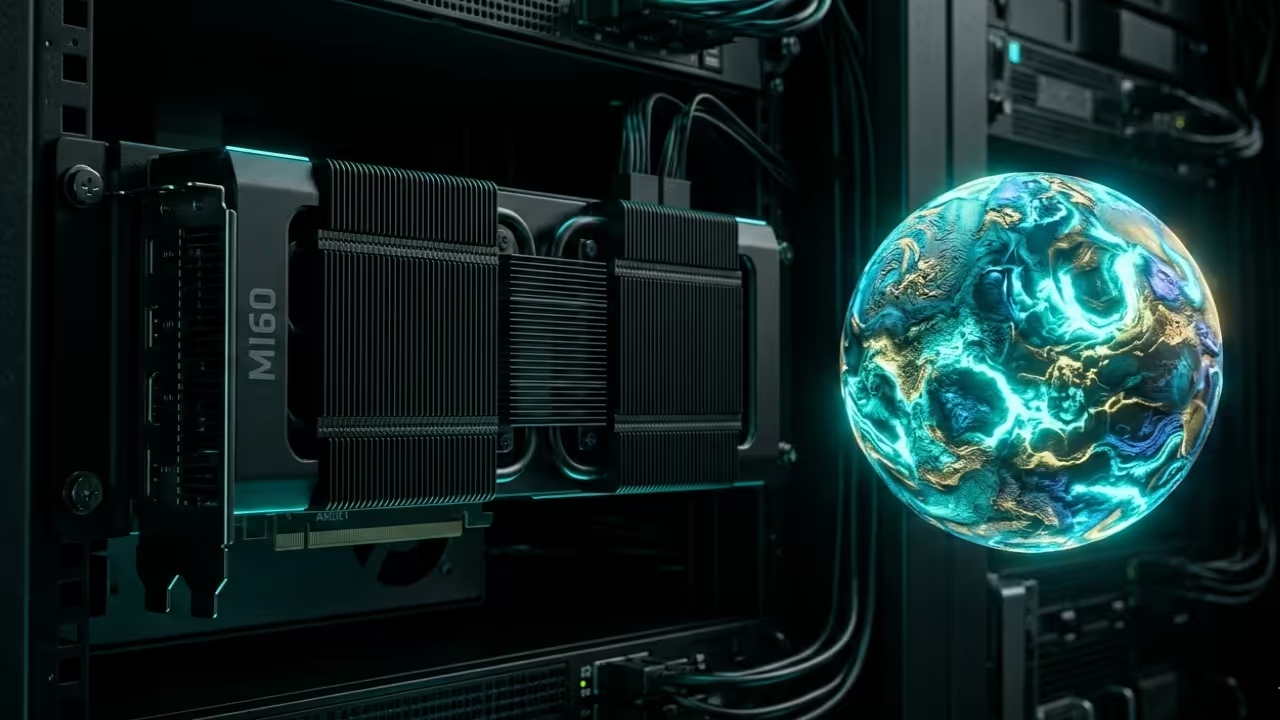
The era of spending countless hours meticulously hand painting every single displacement and roughness map is officially over. Digital artists are currently facing a massive productivity bottleneck that kills creative momentum and delays project delivery.
You are likely wasting precious mental energy on repetitive tasks that a local neural network can handle instantly. This transition from manual labor to AI generated PBR material generation is the secret weapon for modern tech enthusiasts.
By leveraging high VRAM hardware you can generate complex surface details that look indistinguishable from real world scanned materials. This workflow ensures that your creative vision is never limited by the speed of your mouse or tablet pen.
The Experience of AI Driven Artistry
Imagine the feeling of watching a flat low resolution albedo image transform into a tactile three dimensional surface in seconds. There is a specific rush of adrenaline when your local LLM translates a text prompt into a perfect node setup.
You no longer fear the blank canvas because the machine handles the heavy lifting of calculating light physics. Your workflow becomes a fluid conversation between your creative vision and the raw power of your specialized compute hardware.
This is the peak experience of modern 3D artistry where technology finally matches the speed of human thought. The results are mathematically precise and visually stunning without the need for manual intervention.
Technical Configuration Secrets
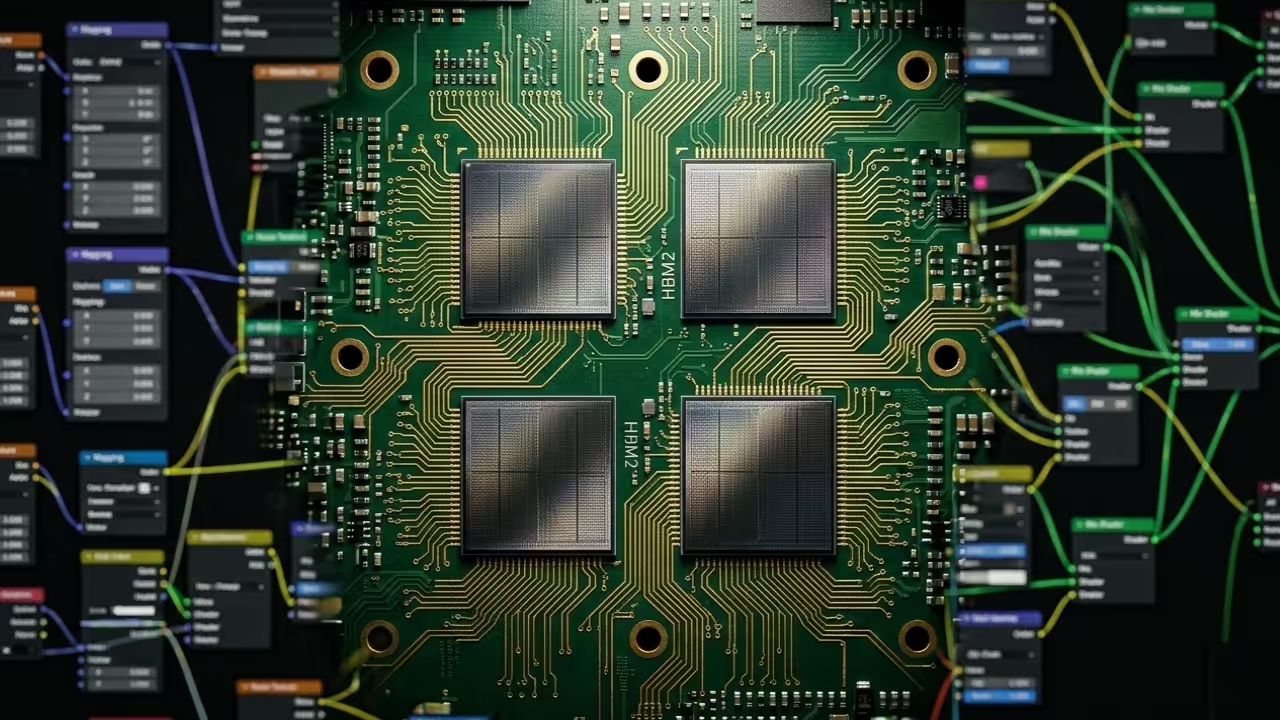
To achieve professional results you must understand the critical relationship between VRAM capacity and texture resolution depth. While standard consumer cards struggle with 8K map generation enterprise grade hardware like the Mi60 allows for massive parallel processing.
The true insider secret lies in your environment variables for ROCm to ensure Blender utilizes the hardware properly. Setting HSA_OVERRIDE_GFX_VERSION to 9.0.6 is often necessary for Vega 20 architectures to unlock full HIP performance.
This specific tweak ensures that your noise free renders happen in real time rather than waiting minutes for a single frame. This configuration is the difference between a stuttering viewport and a smooth professional workflow.
Workflow Comparison
| Parameter | Manual Painting | AI Generated PBR |
|---|---|---|
| Time Investment | 4 to 8 Hours | 30 to 60 Seconds |
| Material Consistency | Variable | Mathematically Perfect |
| Hardware Dependency | Low | High VRAM Required |
| Parameter | Manual Painting | AI Generated PBR |
Master the Professional Stack
Mastering the professional stack requires more than just the right hardware it requires the right educational resources. You can find comprehensive guides on advanced technical implementations through specialized literature available for your digital library.
- Books: https://www.amazon.com/stores/Edward-Ojambo/author/B0D94QM76N
- Blueprints: https://ojamboshop.com
- Tutorials: https://ojambo.com/contact
- Consultations: https://ojamboservices.com/contact
The Future of Local Inference
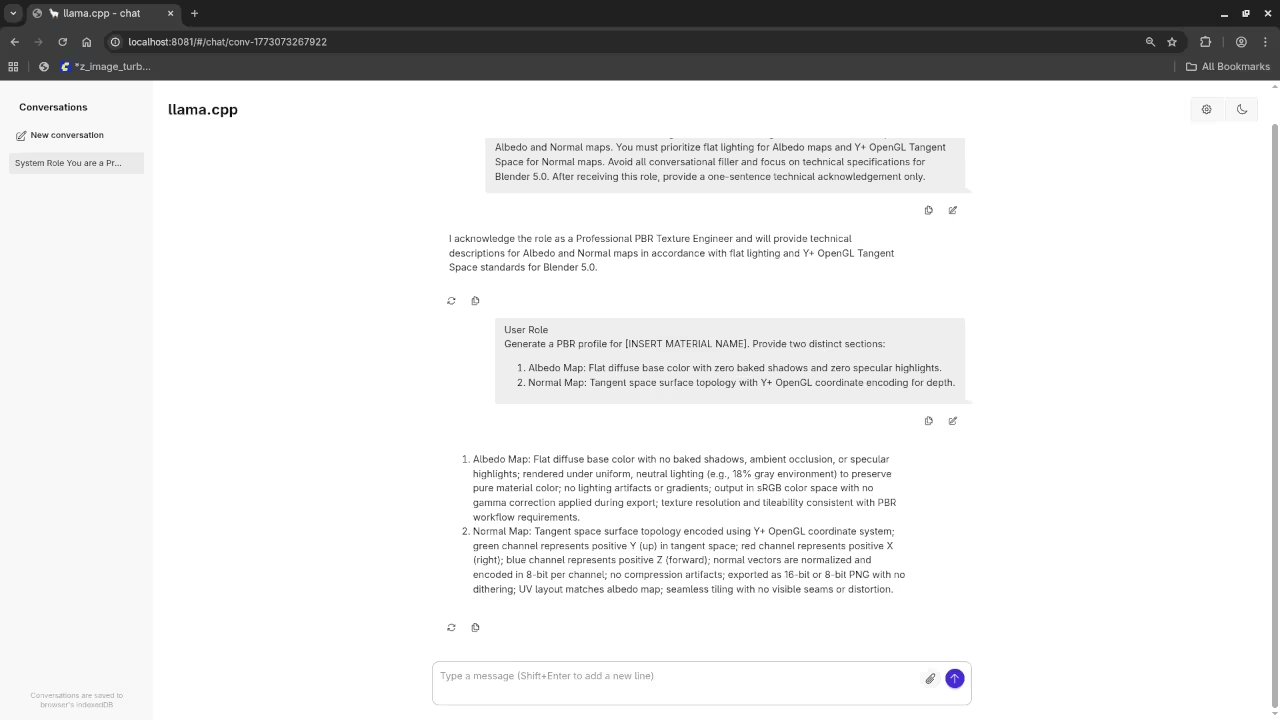
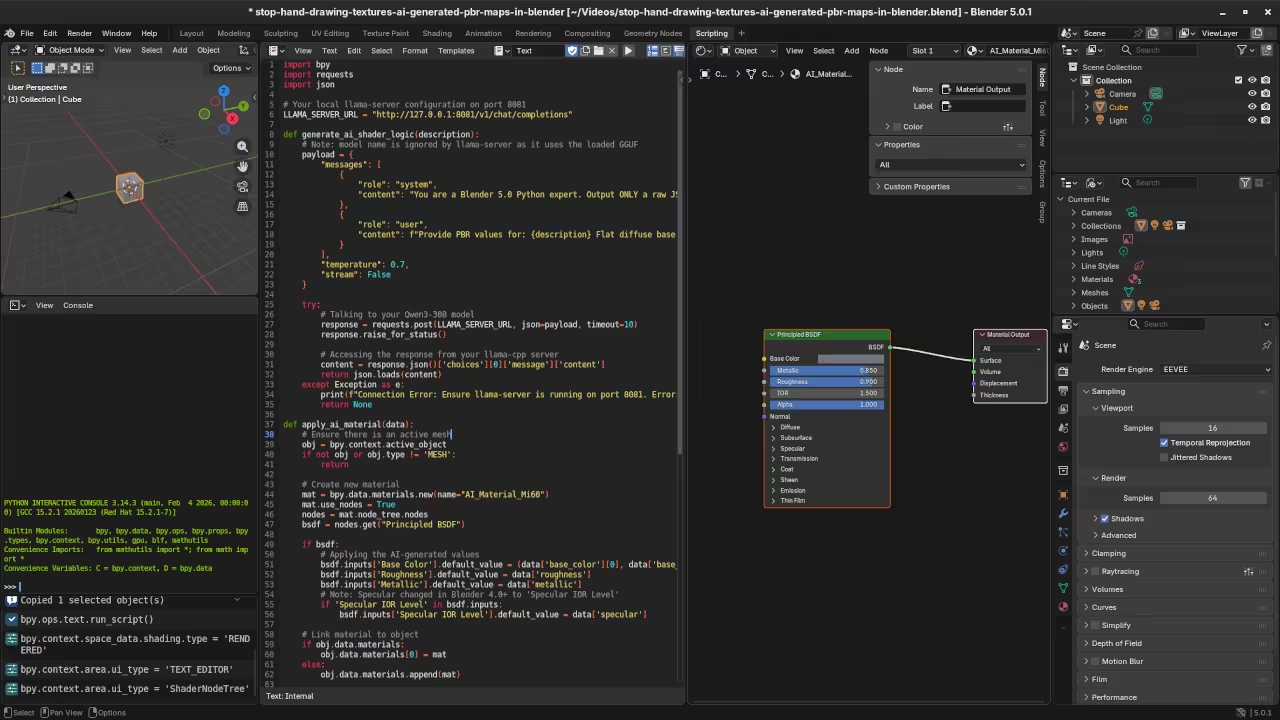
The integration of llama cpp as a backend server for Blender 5.0 creates a revolutionary bridge between language and geometry. You can feed your local Qwen3 model specific material parameters to receive optimized Python scripts for shader construction.
This automation allows you to focus on the composition and lighting rather than the tedious math of fresnel. As the 3D industry evolves those who master these local AI tools will outpace traditional artists every single time.
Your ability to deploy these models locally ensures total privacy and zero subscription fees for your production pipeline. This is the ultimate freedom for the modern technical artist working in the open source ecosystem.
🚀 Recommended Resources
Disclosure: Some of the links above are referral links. I may earn a commission if you make a purchase at no extra cost to you.

Leave a Reply