
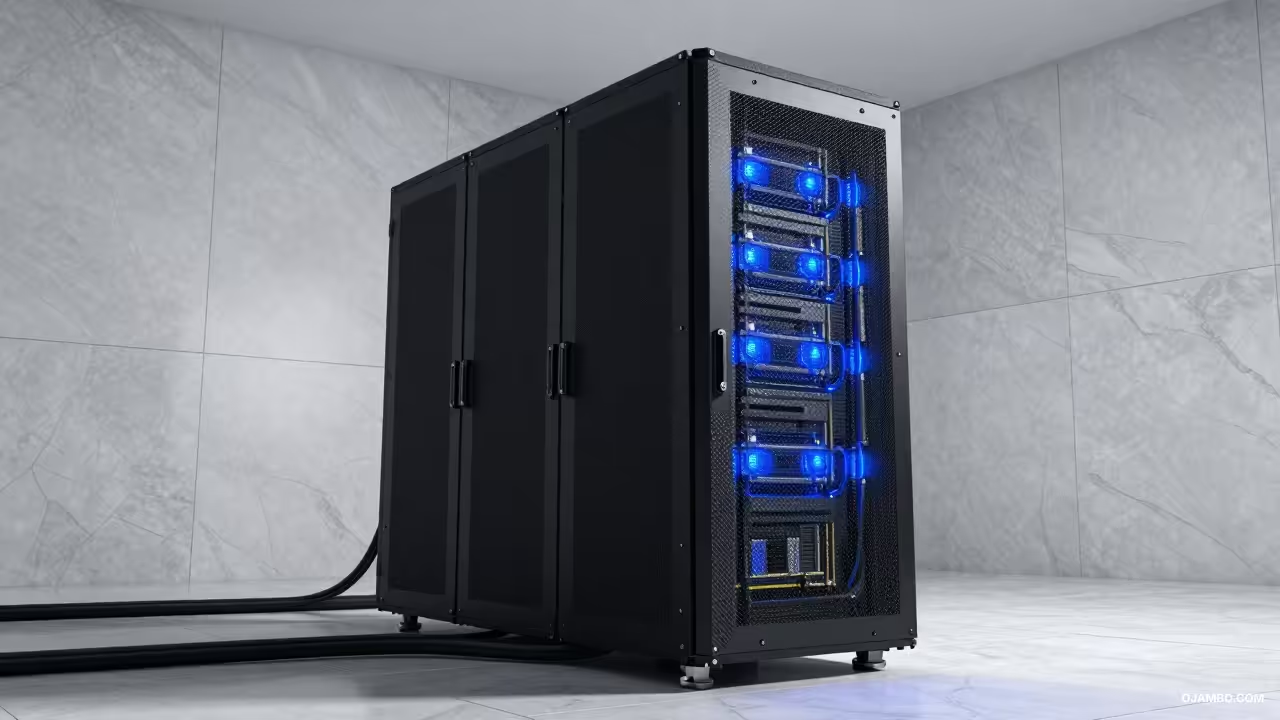
The convergence of aggressive fiscal policy and advanced generative AI hardware in 2026 has created a unique window for high-net-worth tech entrepreneurs to repatriate their data stacks. By leveraging IRS Section 179 or CRA Class 50/53, businesses can achieve a 100 percent first-year write-off on sovereign data center deployments. This blueprint provides the technical specifications and legal framework required to transition from OpEx-heavy SaaS models to a CapEx-advantaged, self-hosted infrastructure.
IRS Section 179 for Sovereign Data Centers Quick-Reference Blueprint
Essential data for your 2026 technical audit and IRS/CRA filing.
- ✓ Primary Tax Code: IRS Section 179 / CRA Class 50
- ✓ Deployment Time: 4 – 6 Weeks
- ✓ Projected Annual ROI: 320% Hardware Equity vs SaaS
Quick Specs
Hardware Requirements: NVIDIA Blackwell B100/B200 Clusters, PCIe 6.0 NVMe Arrays, 800G InfiniBand Networking.
Software Stack: Proxmox VE 9.1, Kubernetes v1.32, Ubuntu 26.04 LTS, Tailscale Enterprise.
Estimated Setup Cost: $45,000 – $250,000 USD (Scalable based on compute density). Difficulty Level: Advanced / Enterprise Systems Architecture.
Architecture & Requirements
The 2026 sovereign data center requires a foundational shift toward liquid-cooled, high-density compute to handle modern transformer-based workloads. At the heart of this deployment is the NVIDIA Blackwell B100 accelerator, providing the FP4 precision necessary for local LLM inference and private data training. We specify a minimum of 512GB of DDR5-8400 ECC memory per node to ensure data integrity during massive parallel processing tasks. Storage must utilize PCIe 6.0 lanes to sustain the 25GB/s throughput required by modern NVMe ZFS pools.
Networking dependencies have evolved, necessitating 800Gbps InfiniBand or specialized Ultra Ethernet Consortium (UEC) compliant switches to eliminate latency bottlenecks. Software environments are strictly containerized using Kubernetes v1.32, ensuring that all sovereign data remains isolated within encrypted namespaces. For the host operating system, we utilize Ubuntu 26.04 LTS for its extended security maintenance and native support for the latest kernel-level AI optimizations. This stack ensures that the hardware remains eligible for specialized tech-focused depreciation schedules under current 2026 tax interpretations.
Technical Layout
The server architecture follows a Zero-Trust Sovereign model where the control plane is physically separated from the data plane. Traffic enters through a redundant pair of hardware firewalls running pfSense Plus, which terminates encrypted tunnels via WireGuard at the kernel level. From the gateway, requests are routed to a load-balancing tier that distributes high-concurrency traffic across a cluster of Blackwell-enabled worker nodes. Data persistence is managed by a distributed Ceph cluster, utilizing NVMe-over-Fabrics (NVMe-oF) to deliver local-disk performance across the internal 800G network fabric.
Security hardening is applied at every layer, beginning with TPM 2.0-verified boot sequences and extending to hardware-level encryption of all data at rest. We implement micro-segmentation within the Kubernetes environment to ensure that even if one service is compromised, the lateral movement to sensitive financial or proprietary datasets is programmatically impossible. This architecture specifically addresses the data residency requirements often cited in 2026 compliance audits. By maintaining physical possession of the encryption keys and the underlying silicon, the entity qualifies for the “Active Business Use” test required by the IRS.
Step-by-Step Implementation
Phase 1: Procurement and Tax-Basis Verification
Identify vendors capable of providing 2026-spec Blackwell systems and ensure all invoices are dated within the current fiscal year. Confirm that the equipment is designated for business use exceeding 50 percent to satisfy the Section 179 primary use requirements.
Phase 2: Physical Environment Preparation
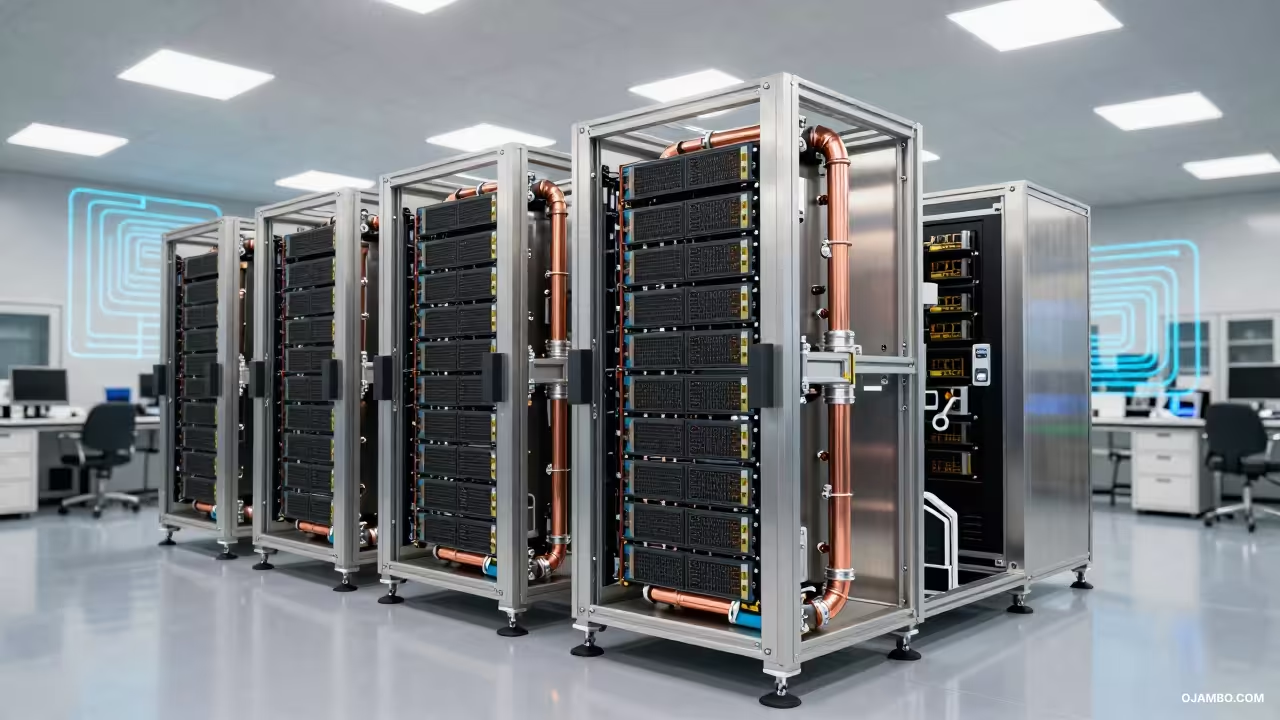
Install 42U liquid-cooled racks capable of dissipating the 120kW thermal loads generated by high-density AI clusters. Ensure redundant power feeds (2N) are connected to dedicated sub-panels with enterprise-grade UPS backup systems to prevent data corruption during transitions.
Phase 3: Core Network Fabric Deployment
Configure the 800G InfiniBand switches with isolated VLANs for management, storage, and compute traffic. Implement Link Aggregation Control Protocol (LACP) across all uplinks to provide the bandwidth necessary for real-time data synchronization between sovereign nodes.
Phase 4: Host OS and Hypervisor Installation
Deploy Proxmox VE 9.1 or a bare-metal Kubernetes distribution on the primary nodes using automated PXE boot scripts. Configure the ZFS file system with LZ4 compression and set up automated snapshots to protect against ransomware and accidental data loss.
Phase 5: GPU Driver and Toolkit Integration
Install the latest NVIDIA 550+ series drivers and the CUDA 13.x toolkit to unlock the full potential of the Blackwell FP4 engines. Validate the installation using synthetic benchmarks to ensure the hardware is performing within the thermal envelopes specified by the manufacturer.
Phase 6: Sovereign Data Layer Configuration
Initialize the Ceph storage cluster and define the CRUSH map to ensure data is replicated across multiple physical disks and nodes. Enable end-to-end encryption for the storage fabric to comply with modern data privacy mandates and tax-audit security standards.
Phase 7: Application Orchestration and Workload Migration
Deploy the containerized business applications using Helm charts, ensuring that all resource limits are strictly defined for the GPU-accelerated pods. Test the auto-scaling groups to confirm that the infrastructure can handle burst loads without compromising system stability.
Phase 8: Security Hardening and Compliance Audit
Execute a comprehensive penetration test and vulnerability scan against the local network and all exposed services. Document the security controls and physical access logs to provide a “Defensible Tax Position” in the event of a 2026 IRS or CRA audit.
2026 Tax & Compliance
Architect’s Note: For the 2026 fiscal year, the IRS Section 179 deduction limit has been adjusted to $1,250,000, with a phase-out threshold beginning at $3,100,000. This makes the purchase of high-end AI servers particularly attractive for profitable agencies looking to zero out their taxable income. In the Canadian context, CRA Class 50 (55% CCA) or the permanent immediate expensing measures for certain CCPCs allow for rapid recovery of capital costs on “General-purpose electronic data processing equipment.”
The IRS Section 199A deduction may also be applicable for pass-through entities that utilize this hardware to perform Qualified Business Income (QBI) generating activities. By owning the infrastructure, the business owner avoids the “SaaS Tax Trap,” where rising subscription costs provide no year-end asset value. Documentation is critical; keep detailed logs of system uptime and specific business tasks performed by the Blackwell clusters to prove professional intent.
Request a Principal Architect Audit
Implementing IRS Section 179 for Sovereign Data Centers at this level of technical and fiscal precision requires specialized oversight. I am available for direct consultation to manage your NVIDIA Blackwell B100 deployment, system optimization, and 2026 compliance mapping for your agency.
Availability: Limited Q2 2026 Slots for ojambo.com partners.
Maintenance & Scaling
Maintaining a 2026-grade data center requires a shift from reactive to predictive maintenance protocols. We recommend utilizing AI-driven thermal monitoring that adjusts coolant flow in real-time based on the computational load of the NVIDIA clusters. Firmware updates for the PCIe 6.0 controllers and InfiniBand switches should be staggered across redundant nodes to ensure zero-downtime availability.
Scaling is achieved through a “Pod-Based” modular approach, where new compute nodes are added in increments of four to maintain optimal InfiniBand fabric balance. As software requirements evolve toward more complex neural architectures, the Blackwell platform provides the necessary headroom for the next 36 to 48 months. Future-proofing your investment involves maintaining a clean audit trail and ensuring all hardware remains under active manufacturer support for the duration of its depreciation schedule.
IRS Section 179 for Sovereign Data Centers Quick-Reference Blueprint
Essential data for your 2026 technical audit and IRS/CRA filing.
- ✓ Primary Tax Code: IRS Section 179 / CRA Class 50
- ✓ Deployment Time: 4 – 6 Weeks
- ✓ Projected Annual ROI: 320% Hardware Equity vs SaaS
🚀 Recommended Resources
Disclosure: Some of the links above are referral links. I may earn a commission if you make a purchase at no extra cost to you.